

ZamTalk Messenger
About ZamTalk Messenger
The mainstream messaging market has settled around two models. One-to-one and small-group apps like WhatsApp, Signal, and Telegram, where you message people you already know. Server-based community platforms like Discord, where you join topical servers and participate in ongoing channels. ZamTalk Messenger belongs to neither of these.
It is a chat-room application built around the older model of public and private voice rooms, where strangers gather to talk by voice and video, and the room itself is the social unit rather than a contact list.
This format peaked commercially in the early 2000s with applications like PalTalk and Camfrog, and it persists in pockets of the global internet where the rooms became cultural institutions.
ZamTalk Messenger is particularly popular in Arabic-speaking communities and parts of South Asia, where the room-based model maps well to how communities actually want to socialize online (open gathering spaces with rotating attendance rather than scheduled group calls).
The chat room model and why it still exists
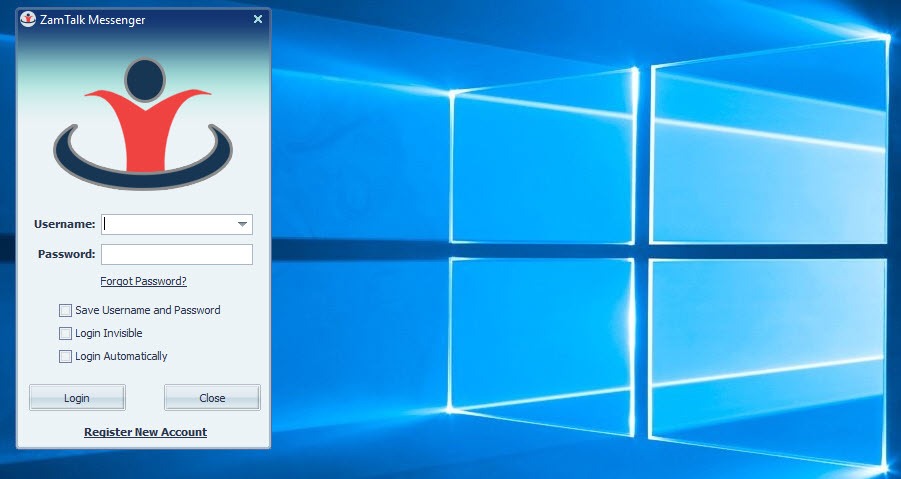
You open the application, log into your account, and see a directory of rooms organized by topic, language, and region. Music rooms, religious discussion rooms, comedy rooms, language-practice rooms, gaming rooms, country-specific rooms. Each room has an owner, a set of moderators, and an open audience that comes and goes throughout the day. You join a room, you can listen to whoever currently has the microphone, request to speak yourself, and chat in text alongside the voice activity.
This is different from a Discord server in an important way. Discord servers are built around persistent communities organized by interest, with channels for different topics within that community.
ZamTalk Messenger rooms are built around live voice presence, the way a real-world café or majlis works. People show up when they are around, listen or talk, and leave when they need to. The text chat is secondary to who currently has the voice channel. For audiences that prefer ambient social presence over async messaging, this still works.
The application also supports one-to-one private messaging and direct voice/video calls between contacts, but these are less central to how most users actually engage. People use Discord or Telegram for private chats and ZamTalk Messenger for the public rooms.
The voice and video pipeline
Voice quality varies considerably between sessions, and the reasons are not always under user control. The application runs on its own server infrastructure, and audio quality depends on which servers are healthy, how many users are in the room, and which subscription tier the room owner and active speakers hold. Higher tiers get access to higher-bitrate audio encoding. Free users get a working but compressed audio path.
Video is similar. Webcam streams broadcast at modest resolutions by default, and higher quality unlocks at higher tiers. In a busy room with twenty cameras active simultaneously, bandwidth gets divided among them and individual quality drops.
This is technically defensible (live multipoint video conferencing scales nonlinearly with participant count) but practically it means video in busy rooms looks rough compared to what modern platforms achieve.
The codec stack is older than what current applications use. There is no obvious indication of Opus, AV1, or H.265 in use. Connections seem to rely on traditional VoIP codecs from the early SIP era, which is part of why bandwidth requirements stay low but quality ceilings stay low too. On lower-bandwidth connections the application works adequately, on a fast connection you do not get a proportional quality upgrade.
Subscription tiers and the cosmetic economy
This is where the application diverges most sharply from modern messaging norms. Beyond the free tier, there are paid plans with names like Active, Extra, Royal, Extreme, VIP, Special VIP, and Prime Plus. Each tier unlocks combinations of features and visible status markers, including colored nicknames, colored room names, crown icons next to your name, additional friend list slots, and access to higher-quality audio and video.
The cosmetic side of this (a crown next to your name, a colored nickname that stands out in the user list) is the kind of in-app economy that has migrated to gaming platforms but persists here in classic form.
For users in the communities this software serves, these visible badges of status are part of the cultural fabric. For users coming from free-and-flat messengers like Signal, the tier system feels archaic. Both reactions are correct.
Payments go through CashU, PayPal, Western Union, and Moneybookers (now Skrill), which signals the platform’s primary geographic market. These are the payment processors of users in regions where credit card penetration is lower and money transfer services are how people pay for online subscriptions.
Room creation, moderation, and the room-owner economy
Anyone can create a public room or a private one. Public rooms appear in the directory and are discoverable to all users. Private rooms are invite-only. Room owners moderate their own spaces, granting and revoking voice access, kicking disruptive users, and assigning co-moderators. The owner role is meaningful because regular room hosts (especially in popular cultural or music rooms) build their own audiences and effectively run small communities inside the larger platform.
The moderation tools are functional. Mute, kick, ban, restrict voice, restrict text. There is no machine-assisted content moderation, no AI filtering, no centralized abuse reporting in the modern sense.
This is a platform from before that became standard, and the consequence is that quality of experience in any given room depends heavily on the owner’s diligence. Well-moderated rooms feel safe and welcoming, poorly moderated ones do not.
Auto-welcomer, themes, and the surface customization
Some smaller features that long-time users care about. The auto-welcomer can be configured to greet new arrivals in a room with a custom message, which sounds trivial but matters in a room culture where consistent hospitality is part of the social contract. The application supports interface themes, letting users skin the chat window to taste. Emoticons are extensive (the older internet-era animated kind, not modern Unicode emoji), and custom emoticons can be added.
File transfer between users is supported, with no obvious size limits documented but practical limits set by connection speed. Compared to a dedicated video chat platform, the surface customization is similar in scope, which makes sense given both applications target similar audiences and serve similar social patterns.
Reliability concerns that come up in user feedback
This needs to be in the article honestly because it appears repeatedly in user discussion. Server outages, login failures, audio dropouts, and webcam reliability problems are recurring complaints from paying users. The application depends entirely on its own server infrastructure (there is no peer-to-peer fallback), so when the central servers have problems, the entire user base is affected at once.
The development cadence is slow, the last major version is from 2024 (version 13.0.1), and there is no public roadmap or changelog of fixes. For users who already have established social ties in particular rooms, the platform continues to be used despite these issues because the alternative (rebuilding those connections elsewhere) is harder than tolerating downtime.
For new users evaluating the platform fresh, the reliability question is real and worth weighing against more current alternatives like Discord.
Privacy posture and account creation
Account creation requires a nickname and email. There is no end-to-end encryption claim, and given the room-based architecture, true E2E for public voice rooms would not be meaningful anyway. Private messages and direct calls go through the central servers and are presumably accessible to the operators in the same way most non-E2E messengers handle this. For users with serious privacy requirements, the application is not the right tool.
What it does provide is pseudonymity. You can use any nickname, you do not need to verify a phone number, and your real identity is not exposed to other users by default.
This is meaningful for users in regions where political or religious topics are sensitive and they prefer not to use their real name when participating in discussion.
Conclusion
ZamTalk Messenger is the right application for users who already participate in its specific communities or who want a chat-room style voice platform in the older PalTalk and Camfrog tradition. Members of established rooms, users in regions where the platform has cultural traction, and people who prefer ambient social presence to scheduled calls will find what they need here. The room model continues to serve a real social pattern that modern messengers do not replicate well.
For users without an existing tie to a specific community on the platform, the reliability concerns and tiered subscription model make it harder to recommend over more current alternatives.
The application works, the community is real, and the social format has its own value. What it does not offer is the modern build quality, encryption posture, or development pace that newer platforms have set as the baseline for what messaging software should be.
Pros & Cons
- Chat-room model still works for users who prefer ambient social presence over scheduled calls
- Active communities in Arabic, Turkish, and other languages where the platform has cultural traction
- Pseudonymous account creation with just an email address
- Room owner tools allow self-governance of community spaces
- Auto-welcomer, themes, and customization options match the expectations of the platform's audience
- Small 7.4 MB installer with low resource use
- Functional file transfer between users without third-party services
- Reliability problems including server outages and audio quality variability are recurring user complaints
- Tiered subscription model with up to seven paid plans, where audio and video quality scale with what you pay
- Codec and protocol stack feels dated compared to modern messaging platforms
- Limited content moderation tools, leaving room quality dependent on individual owner attentiveness
- No end-to-end encryption, so privacy posture is conventional rather than privacy-focused
- Slow development cadence with infrequent updates and no public roadmap
- User interface design reflects an older era of internet software, which can feel cluttered
Frequently asked questions
The application is built around public and private chat rooms where users gather by voice and video, with text chat alongside. It supports one-to-one messaging and direct calls as well, but the room-based model is the central use case.
Discord servers are organized around persistent communities with multiple channels for different topics. This application's rooms are organized around live voice presence, with attendees coming and going throughout the day and the voice channel as the primary activity. The two formats serve different social patterns.
Yes, higher-tier paid plans get access to higher-quality audio and video encoding. Free users have functional voice and video but at lower quality ceilings than premium subscribers.
Yes, any user can create a public room (listed in the directory) or a private room (invite-only). Room owners moderate their own spaces and can assign additional moderators.
The platform has particular traction in Arabic-speaking communities, parts of South Asia, and other regions where room-based voice gathering is culturally familiar. Music rooms, language practice, religious discussion, and country-specific social rooms are common categories.
Updates happen but at a slow cadence, with version 13.0.1 from 2024 being a recent release. There is no detailed public roadmap, and reliability improvements have been a slow process compared to newer competing platforms.
The application uses a centralized server architecture where rooms and user state live on the operator's infrastructure. An account is required for that central directory to track who you are across sessions. This is the standard model for room-based chat platforms.


I pay for this client every month because I refuse to pay for a year at a time due to them being down about half of the time. You cannot log in every day and expect to have the client open. Something is always going on with tier servers preventing login. The lag is horrible. Sound is never the same from day to day. Cams don’t work every time. Private rooms sometimes won’t let you voice or play music. It’s just a horrible platform. The one good thing I can say is that once you get on, you can talk… Read more »
I don’t think that Zamtalk Messenger is not that bad. They all have their problem. I have been on Zamtalk since 2011. I believe on when it started, it had maybe 30 users, but not many spoke English. And not many users did not know how to set their sound settings to stream their favorite songs with Steromix or What You Hear Plus. If you keep changing the audio sound setting to the mic, Zamtalk will kick you offline, restart it, and you will have no sound. One good way to fix that problem is to install the Voice Meeter… Read more »