

FotoJet Designer
About FotoJet Designer
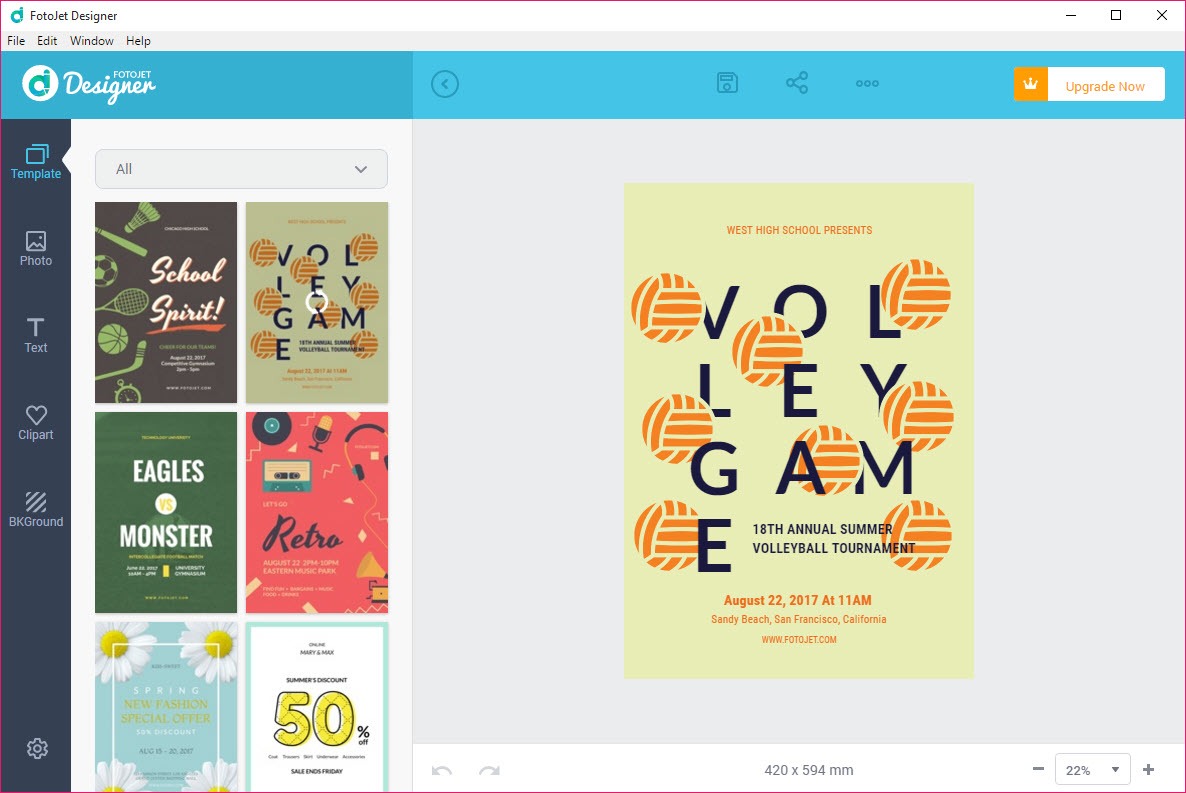
FotoJet Designer makes posters, flyers, cards, social media graphics and photo collages from templates. Pick a template from a library of more than nine hundred, sorted by purpose and already sized for the place it will end up, from a social media cover to a printed invitation. Swap in your own photos, change the text, recolour the shapes, and save the result as an image. Nothing about it assumes design training, which is the whole idea.
Templates do most of the work. A layout that already balances a headline, a photo and a block of detail means the job is mostly replacing the placeholders, and the result looks considered even when the person making it is not a designer.
FotoJet Designer pairs that library with text styles and a clipart collection, plus backgrounds, and the collage tools, which many people come to it for, sit alongside the graphic templates in the same window.
Templates sized for where they will go
The templates are grouped by use, from posters and flyers to invitations and social media posts, and each one is already the right size for its destination. A cover for a social profile, a story graphic and a square post each have their own dimensions, so the design fits without cropping or guesswork. Choosing a template first and editing it is much faster than starting from a blank canvas, and swapping one template for another keeps your photos in place.
The catch is that a large share of the library, along with the advanced editing tools and custom canvas sizes, sits behind the paid tier. The unregistered build gives a taste of the templates and the basic tools, enough to judge whether the approach suits you, and watermarks or locks the premium items.
Saving and reloading a project for later editing is one of the gated features, which matters for anything you plan to revisit.
Text styles and clipart
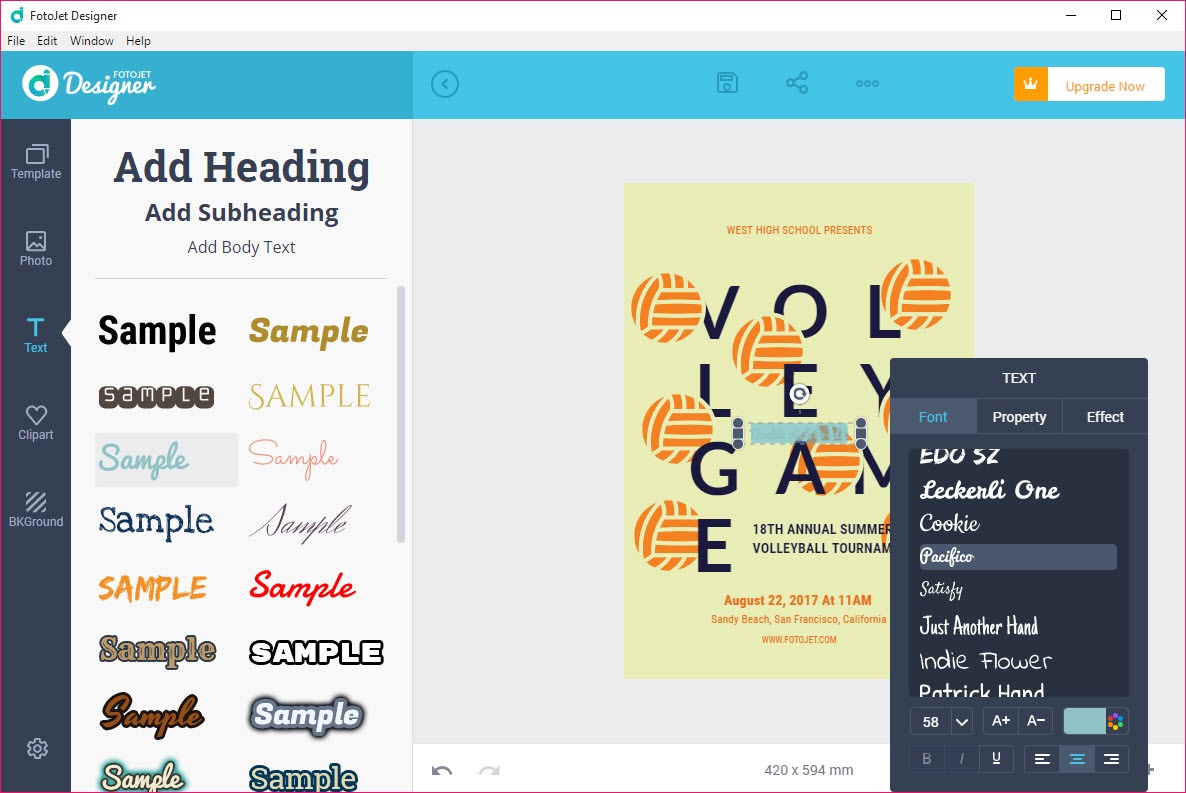
Text is where many designs succeed or fail, and the program offers more than eighty fonts and around thirty preset text styles that combine a typeface with colour and spacing, plus effects, in one click. Those presets are the quickest route to a headline that looks finished. Individual control over text is more limited than in a full editor, and users note that fine-grained typographic adjustment is the area where the tool feels restrictive.
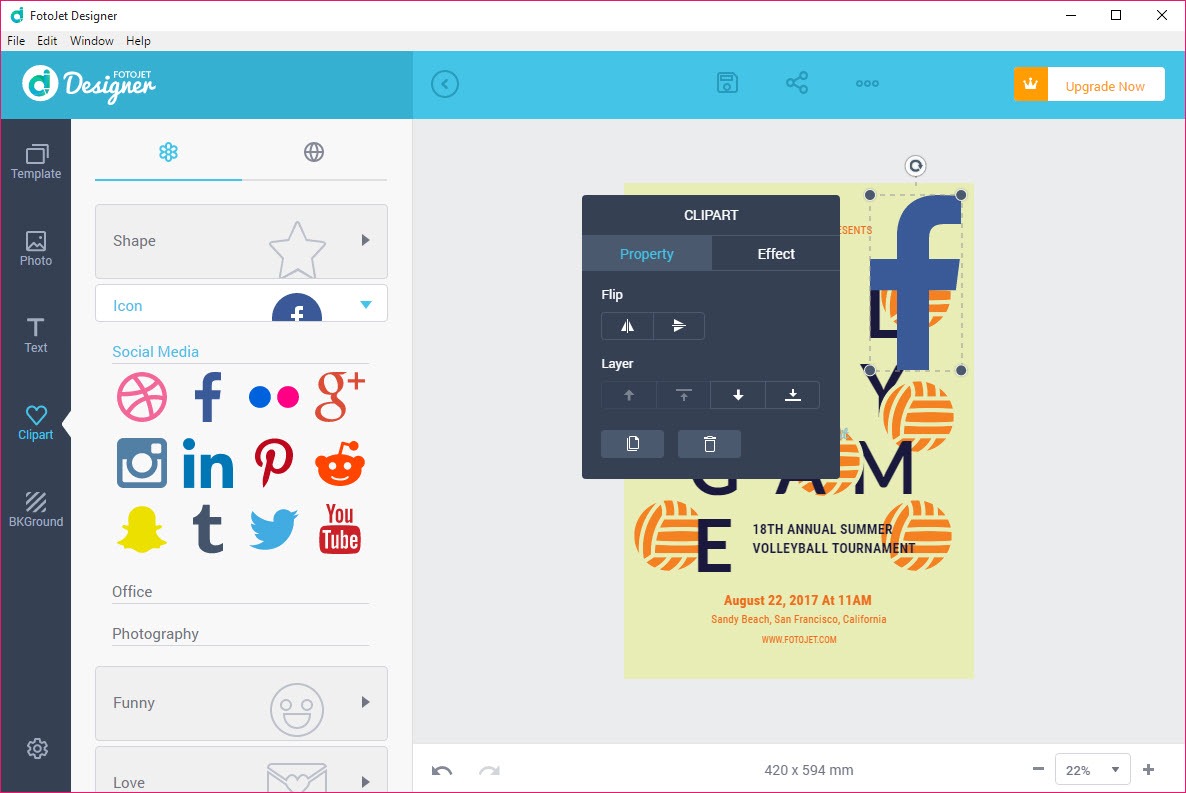
Clipart comes from a bundled set of several hundred images and from a searchable library of tens of thousands of open clipart images, which covers icons and decorations as well as simple illustrations, while backgrounds and shapes fill out the toolkit.
For anything that needs real illustration or vector work, a vector graphics editor goes far beyond what a template tool can do.
Photo collages
The FotoJet Designer collage maker is the part people most often name. Hundreds of layouts, from simple grids to themed arrangements for occasions from birthdays to holidays, take a handful of photos and arrange them into one image. Photos drop into the cells, can be panned and zoomed within each frame, and stay put when you switch to a different layout, so trying several arrangements takes only a click.
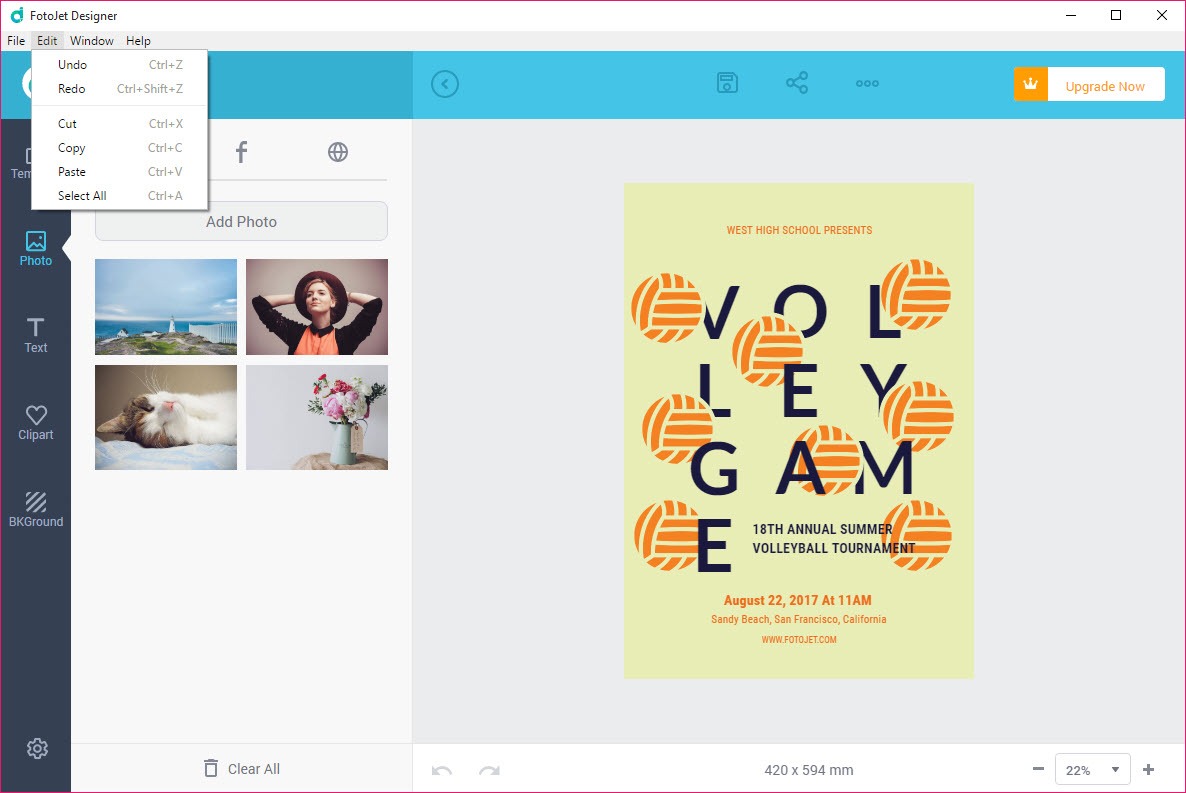
Border width and background colour adjust per collage, and text and clipart can be layered on top. For quick photo edits before a photo goes into a design, a simple photo editor with filters handles the touch-ups this tool does not.
Exporting, and what it will not do
Finished designs save as JPG or PNG and can be shared straight to social platforms. That covers screens and most home printing, but there is no PDF with print bleed, no CMYK colour and no vector export, so anything headed to a commercial printer should be prepared in a page layout program instead.
It is a tool for good-looking graphics quickly, not for professional print production.
Conclusion
FotoJet Designer suits anyone who needs attractive graphics fast without learning design, from a small business making social posts and flyers to a family putting together a birthday collage. The templates do the heavy lifting, the text presets make headlines look right, and the collage maker turns a pile of photos into something ready to share in minutes.
It is not a design workstation, and much of what makes it shine sits in the paid tier. Try the unregistered build to see whether the template approach fits your needs, and reach for a page layout or vector tool whenever the job has to go to a printer.
Pros & Cons
- More than nine hundred templates already sized for their destinations
- Preset text styles that make headlines look finished in one click
- Searchable clipart library of tens of thousands of open images
- Collage maker that keeps photos in place when switching layouts
- Simple enough to use without design experience
- Much of the template library and the advanced tools need the paid tier
- Saving and reloading projects is a gated feature
- Limited fine control over text
- Exports only JPG or PNG, with nothing for professional print
Frequently asked questions
Posters, flyers, cards, invitations, banners, social media graphics and photo collages, each from a template already sized for its use.
JPG and PNG, with direct sharing to social platforms. There is no PDF or vector export.
Yes, but saving and reloading projects is part of the paid tier rather than the unregistered build.
Not really. Without print-ready PDF, bleed or CMYK colour, commercial print work belongs in a page layout program.


