

TinyTake
About TinyTake
TinyTake captures the screen as an image or a video and puts the result straight into a cloud gallery for sharing. Press a hotkey, drag around the part of the screen you want, a window or the whole display, and a still lands in an editor where you can mark it up before saving or uploading.
Switch to video and it records the same region, with a webcam option for adding your face to a tutorial or a feedback clip. Each capture can go to the computer, to its own cloud storage, or out through a shareable link.
The cloud gallery is the piece that sets it apart from a plain capture tool. Every account comes with storage for captures, a web gallery to browse and share them from, and a record of what has been downloaded.
TinyTake is aimed squarely at quick work communication, the screenshot pointing at a bug or the short clip showing a colleague where a setting lives, rather than at polished video production, and its limits make the most sense in that light.
Capturing images and marking them up
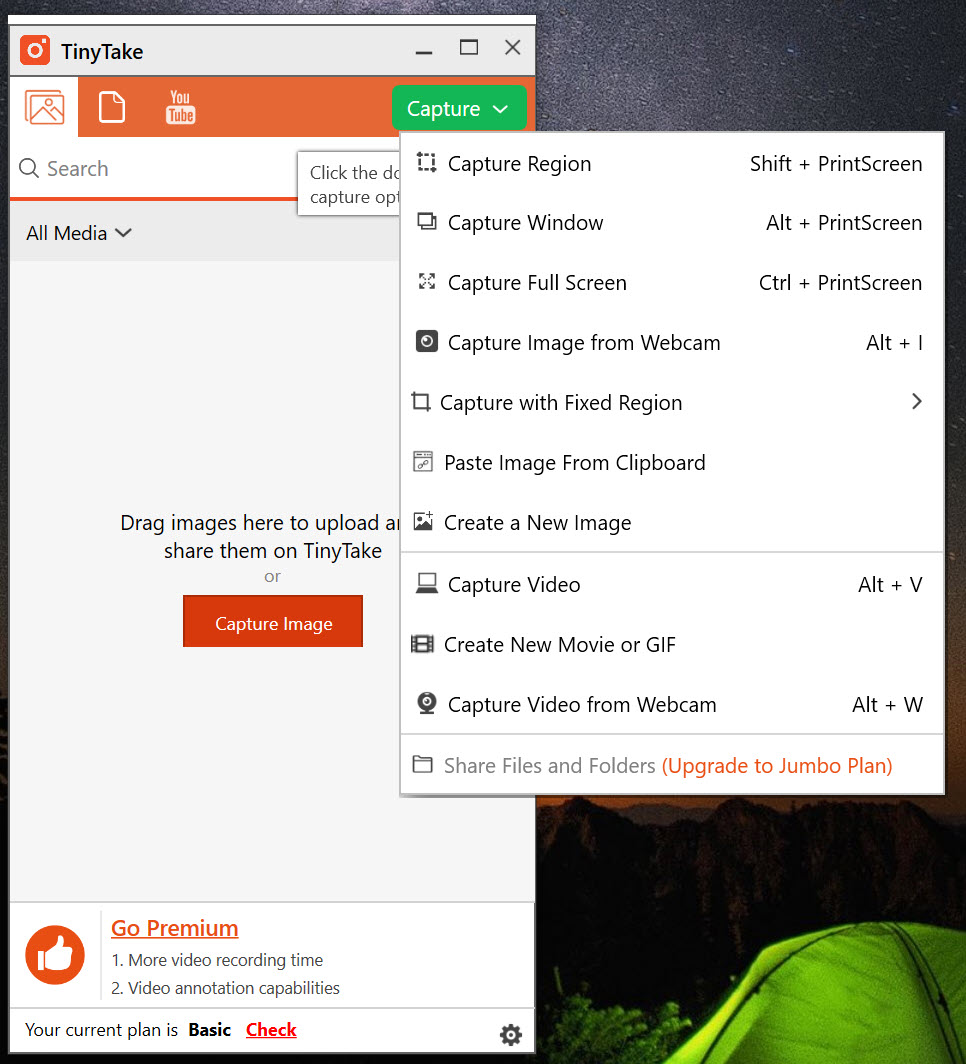
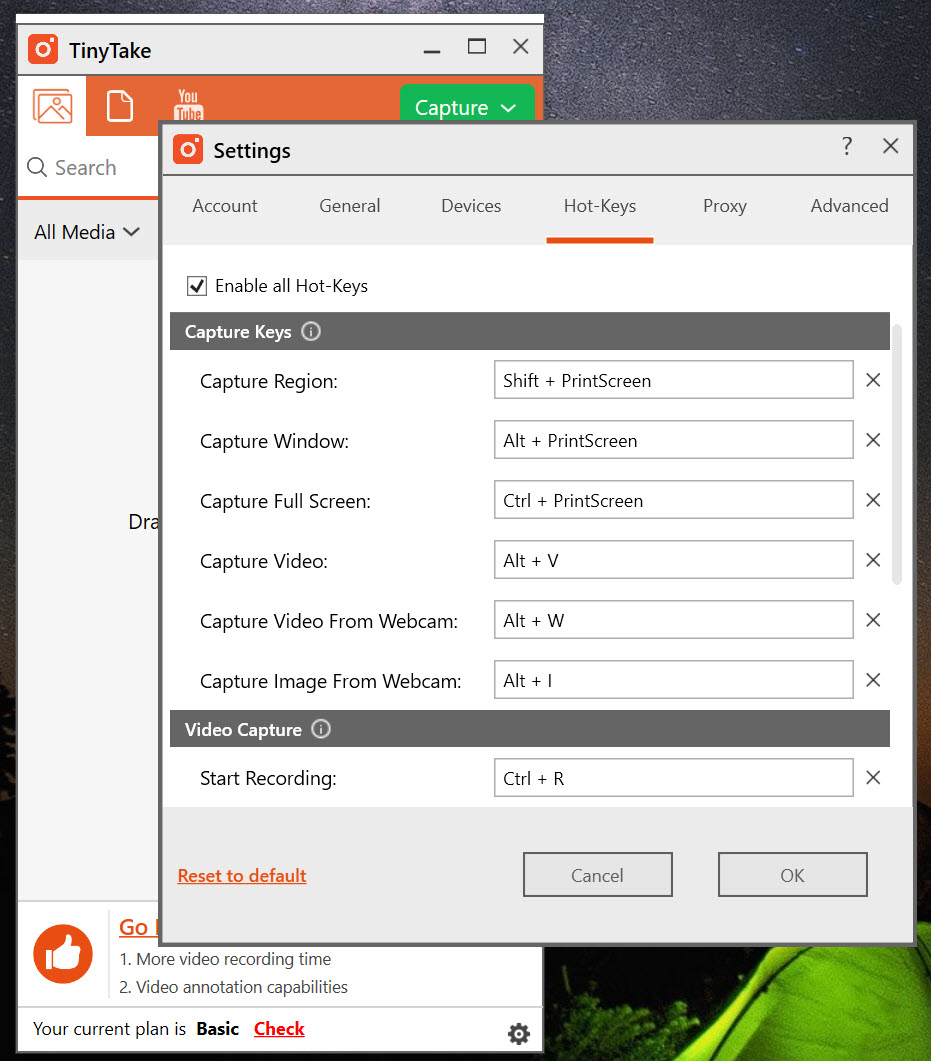
The capture modes cover the usual ground. A selected region, the active window, the full screen, or a frame from the webcam, each reachable from a hotkey you can set so that capturing never needs the mouse to find the tray icon. A captured image opens in a markup window with text and arrows, boxes and highlights, plus numbered markers that suit step-by-step instructions where the reader follows one through five.
The tools cover what a work screenshot needs and stop there, with no layers, no blur for hiding sensitive details in some builds and no fine control over arrow styles. For heavier annotation, including a blur tool and scrolling capture of long pages, a screenshot tool with a full annotation editor goes further.
Recording video, and the time limit
TinyTake video recording captures a region or the whole screen with audio from the microphone, and the webcam can record alongside or on its own. The finished clip can be trimmed at the start and end before saving, and annotations can be added on the recording, which is handy for drawing attention to a button as you click it.
The defining limit is length. The unregistered build stops a video at five minutes, and the paid tiers raise that ceiling in steps, so longer tutorials or recorded meetings need an upgrade. Five minutes is plenty for a bug report or a quick walkthrough and far too short for a lecture.
For long recordings with no cap, a recorder that captures a whole monitor or another dedicated tool is the better fit.
The cloud gallery and sharing
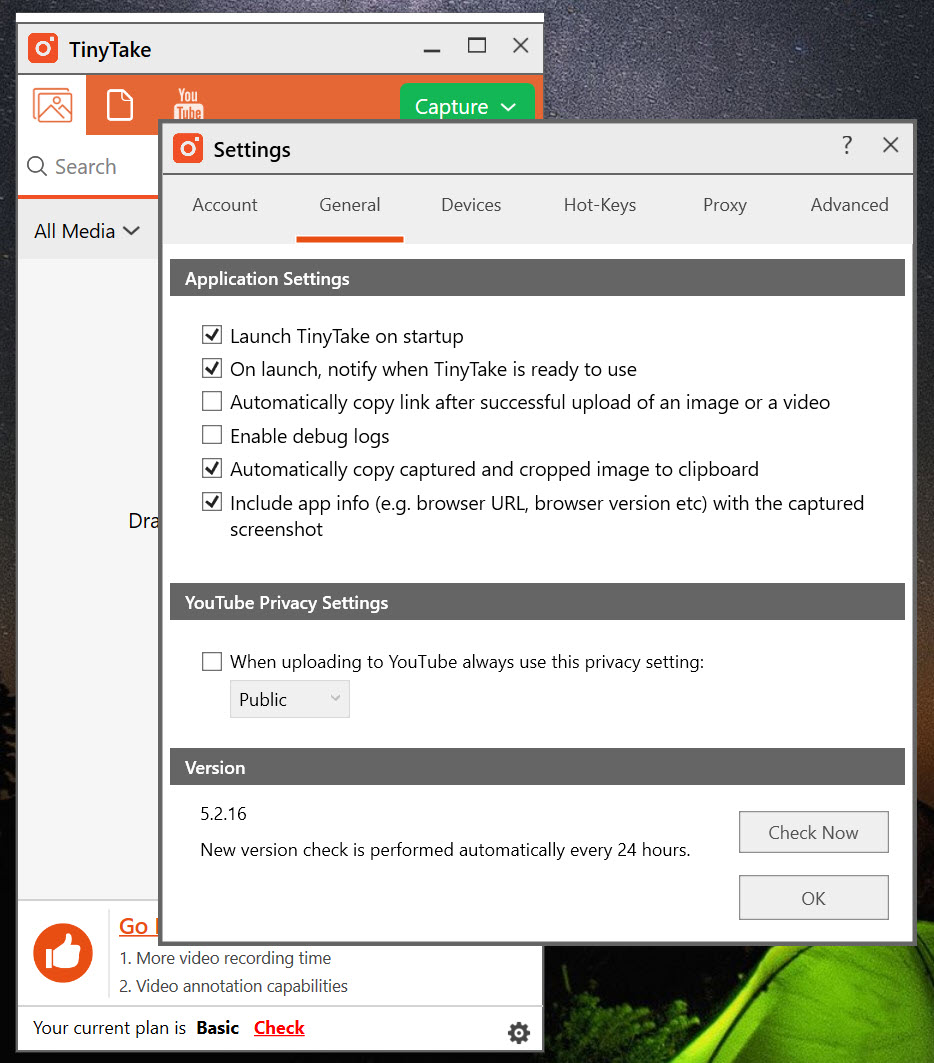
TinyTake captures upload to the built-in cloud storage, where a web gallery holds them and generates a link for each. Send the link and the recipient opens the image or video in a browser, with no attachment to email and no file to download first. The unregistered account includes a couple of gigabytes of space, which fills quickly with video, and paid tiers add far more.
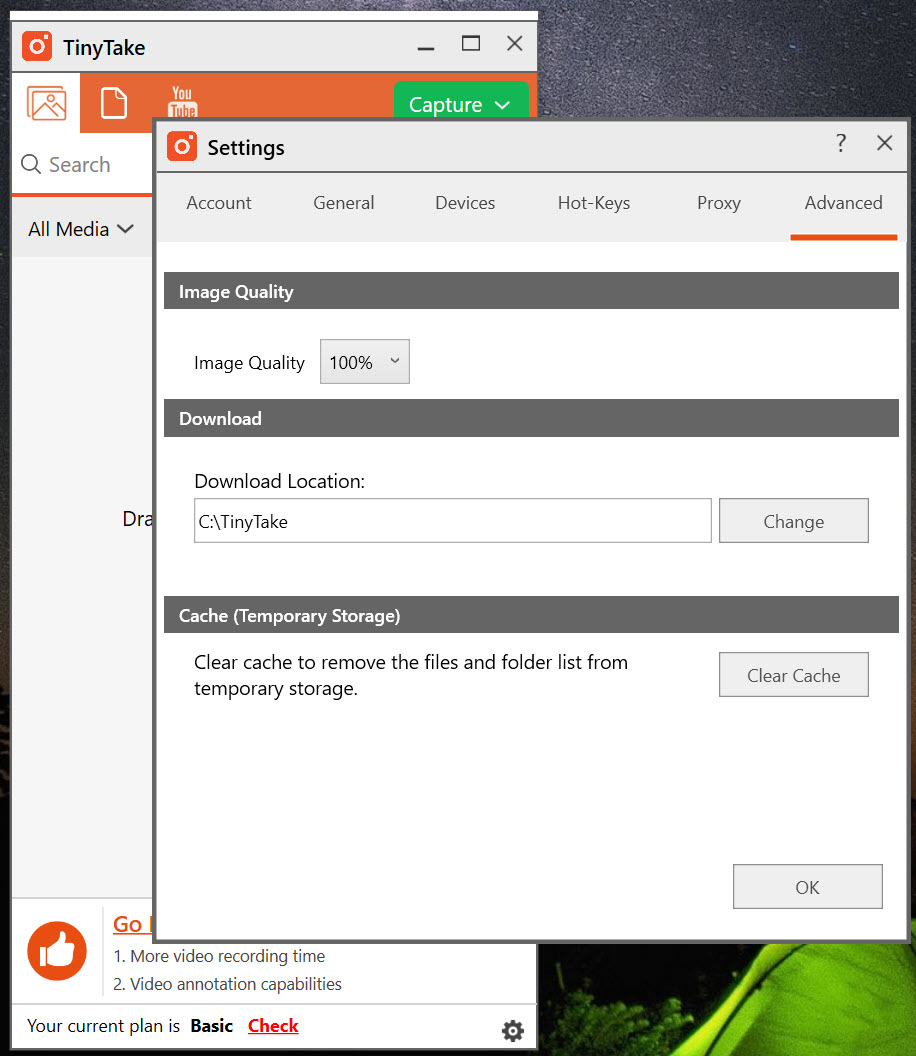
Local files can be uploaded to the same storage, so the gallery doubles as a simple sharing locker. The gallery keeps a history of downloads, useful for checking whether someone has actually opened what you sent.
Uploading straight to a video platform is offered too, though sources differ on whether that sits in the unregistered build or the paid tiers, so check your plan before relying on it.
How it compares
The closest rival is a capture tool that hands you a sharing link the moment you stop, which streams the upload as you record. Against open-source capture suites, this one is simpler and friendlier to start with and narrower in what it does. Its strengths are the quick hotkeys, the tidy markup and the gallery that makes sharing one click.
Its weaknesses are the recording cap, the storage ceiling and the dependence on an account for the cloud features.
Conclusion
TinyTake suits people who capture the screen to explain something to someone else, a support agent showing a fix, a manager pointing at a figure, a teacher answering one student’s question. The hotkeys, the markup window and the cloud gallery with its instant links make that kind of quick visual message fast to produce and easy to send.
It is the wrong tool for long recordings or for anyone wanting powerful editing. The five-minute cap and the storage ceiling define what it is for, so keep it for short captures that need sharing, and reach for a dedicated recorder or editor when the job grows beyond that.
Pros & Cons
- Captures a region, the active program or the full screen, plus the webcam, from hotkeys
- Markup tools for text and arrows, plus numbered steps
- Built-in cloud gallery with a shareable link for every capture
- Webcam can record alongside the screen
- Trim and annotate recordings before saving
- Videos stop at five minutes in the unregistered build
- Cloud storage fills quickly with video
- Cloud features depend on an account
- Markup tools are basic, with no layers and limited blurring
Frequently asked questions
Five minutes per video in the unregistered build. The paid tiers raise that limit in steps for longer recordings.
Yes. The webcam can be recorded on its own or alongside a screen recording for tutorials and feedback clips.
Upload it to the built-in cloud gallery and send the link it generates. The recipient opens it in a browser without downloading a file.
Yes. Captured images open in a markup window with text, arrows and numbered markers.


