

Songbird
 (No Ratings Yet)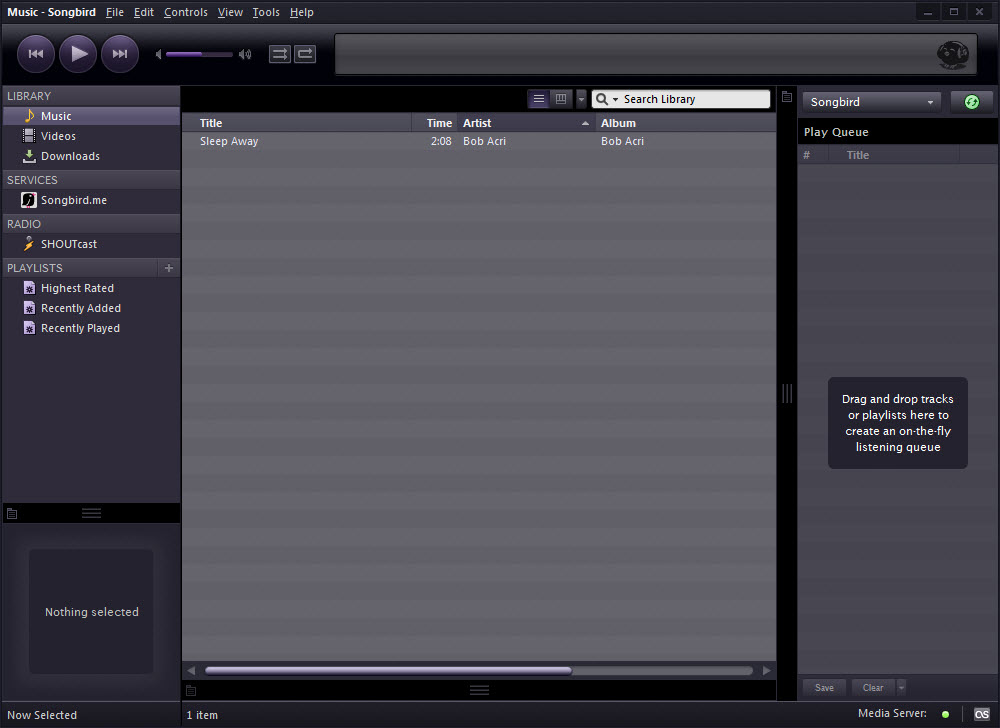
About Songbird
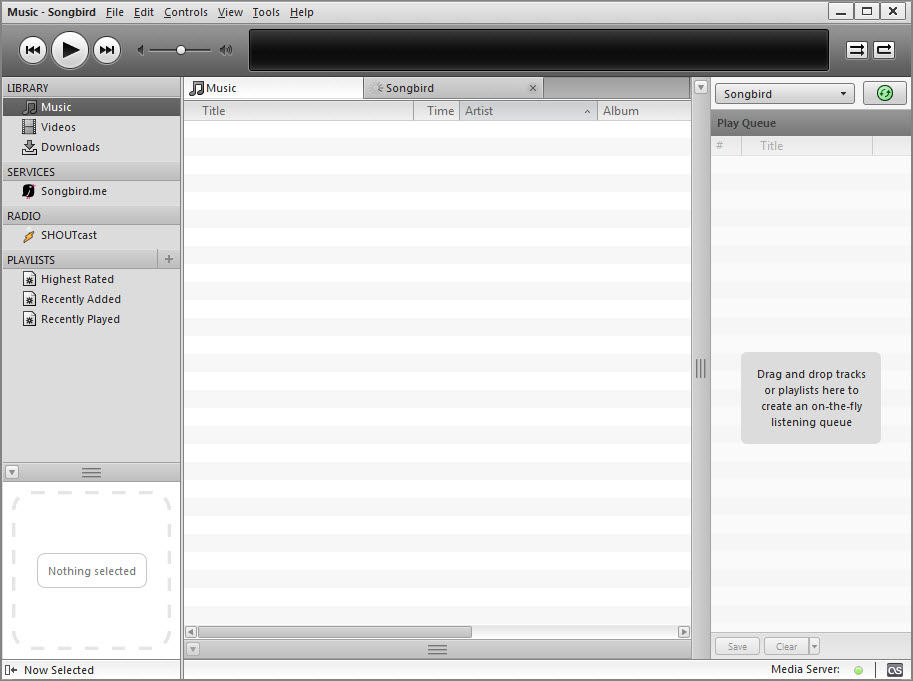
Most media players treat the internet as somewhere albums come from. Songbird treated it as part of the player, building the whole application on the same foundation as a well-known web browser and putting a real browsing pane next to the library.
That single decision produced everything distinctive about it. Pages could be browsed inside the player, audio found on them appeared as something playable, and the extension system from the underlying platform came along too, so the program could be reshaped by add-ons rather than only skinned.
The web pane, and what it was chasing
The ambition behind it was a reasonable one. A music library on a disk is a list of filenames, and everything interesting about the music, meaning the artist, the history, the photographs, the reviews and what else they recorded, lives somewhere else entirely.
A component pulled that material in while a track played. Biographies, images, related media and press coverage appeared alongside the song rather than requiring a separate search in a separate window, so the player became a place to read about music as well as listen to it.
It worked, and it never quite justified the architecture that made it possible. A browser engine is an enormous thing to carry just to display an artist photograph, and the memory use reflected that on machines of the time.
Library, playlists, devices
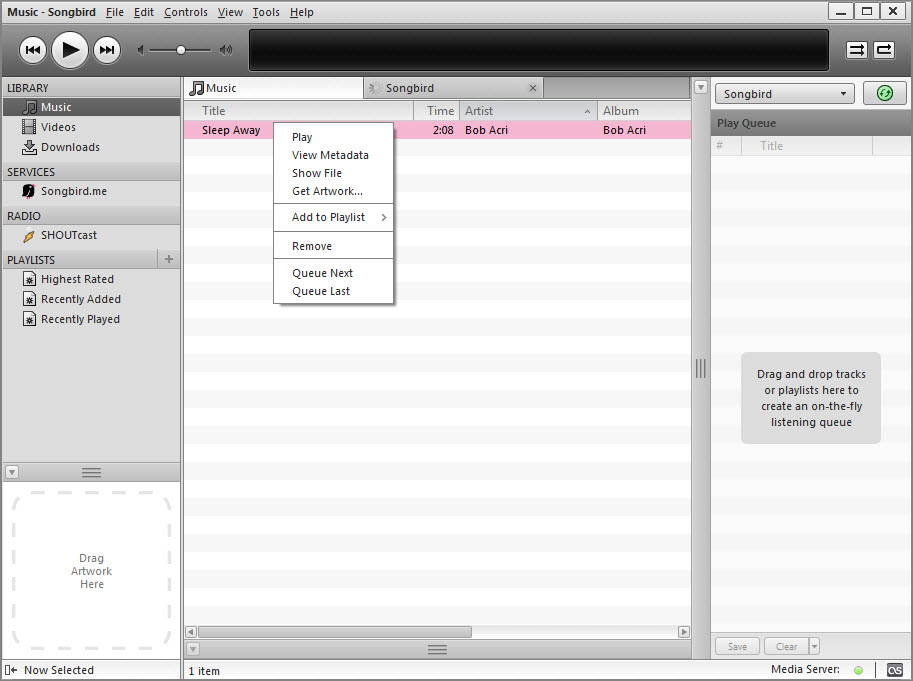
The ordinary half of Songbird was competent without being remarkable. Library management with automatic organisation, playlists including rule-based ones that update themselves, and synchronisation to portable players and phones, which was the feature people actually needed when the alternative was one dominant application that wanted to manage everything.
Nothing here was better than what the dedicated library managers offered, and that comparison is where the program lost. MusicBee handles very large collections with proper organisation, tagging, playback control, and it does so without an engine designed for rendering web pages underneath it.
For collections large enough to need real database behaviour, a manager built around a proper library database has always been the answer, and it remains one.
The extensions, which were the real appeal
Songbird inherited the add-on model from a browser platform, which was clever, because it meant the player did not have to anticipate what anybody wanted. Scrobbling, lyrics, alternative layouts, device support for particular hardware and dozens of smaller conveniences arrived as add-ons written by users.
For a while that produced the most customisable media player available, with the community filling gaps the small team never could.
The dependency in that arrangement is obvious in hindsight. An extension ecosystem needs somewhere to live and somebody to keep the pieces compatible, and when the project stopped, both of those disappeared.
Why it is a museum piece now
Songbird development ended, the desktop application was set aside for a service that then also closed, and what remains is a program nobody maintains.
The practical consequences are what you would expect. Nothing is being fixed, the add-on infrastructure is gone or community-hosted at best, and an application carrying a browser engine from that era is heavy next to anything modern. A community fork picked the code up and carries the idea forward for anyone who wants it.
For a maintained player with a library, internet radio and a similar spirit, Clementine is the closest thing to a descendant.
For a player treating audio quality and configurability as the point rather than the surrounding information, an audiophile-focused player with deep output control is the other direction entirely.
Conclusion
Songbird is remembered fondly and deserves to be, because it asked a question nobody else was asking. A music library is a set of files, the story around that music lives online, and putting both in one window was an idea worth trying even though the answer turned out to be that people did not want a browser inside their player.
Install it today only out of curiosity. The library management was never the best available, the extension ecosystem it depended on is gone, and it carries an old rendering engine around for features nothing now uses. Look at the community fork if the concept appeals, and use something maintained for actually listening to music.
Features & benefits
Pros & Cons
- Built on a browser platform, so extensions could reshape the program rather than skin it
- A real browsing pane inside the player, with audio on a page becoming playable
- Artist information, images and reviews appeared alongside the track being played
- Rule-based playlists that update themselves as the library changes
- Device synchronisation at a time when the alternative wanted to manage everything
- Development ended, so nothing is maintained or fixed
- The add-on infrastructure the appeal depended on is no longer there
- Carrying a browser engine made it heavy for a music player
- Library management was matched or beaten by dedicated managers
- The web integration never justified the architecture required to provide it
Frequently asked questions
No. The desktop application was abandoned in favour of a service that has since closed as well. What exists is unmaintained, and a community fork carries the same code forward for anyone who wants to keep using the idea.
Its foundation. Built on the platform behind a major web browser, it could browse the web inside the player, treat audio found on a page as playable, and accept add-ons written the same way browser extensions are.
Unreliably. The infrastructure that hosted and maintained compatibility for them went with the project, so whatever survives depends on community hosting and on the add-on happening to still function.
It could, and that was one of its selling points. On current hardware the situation is different, since device support depended on add-ons and on protocols that have moved on considerably.


