

Fldigi


 (56 votes, average: 3.77 out of 5)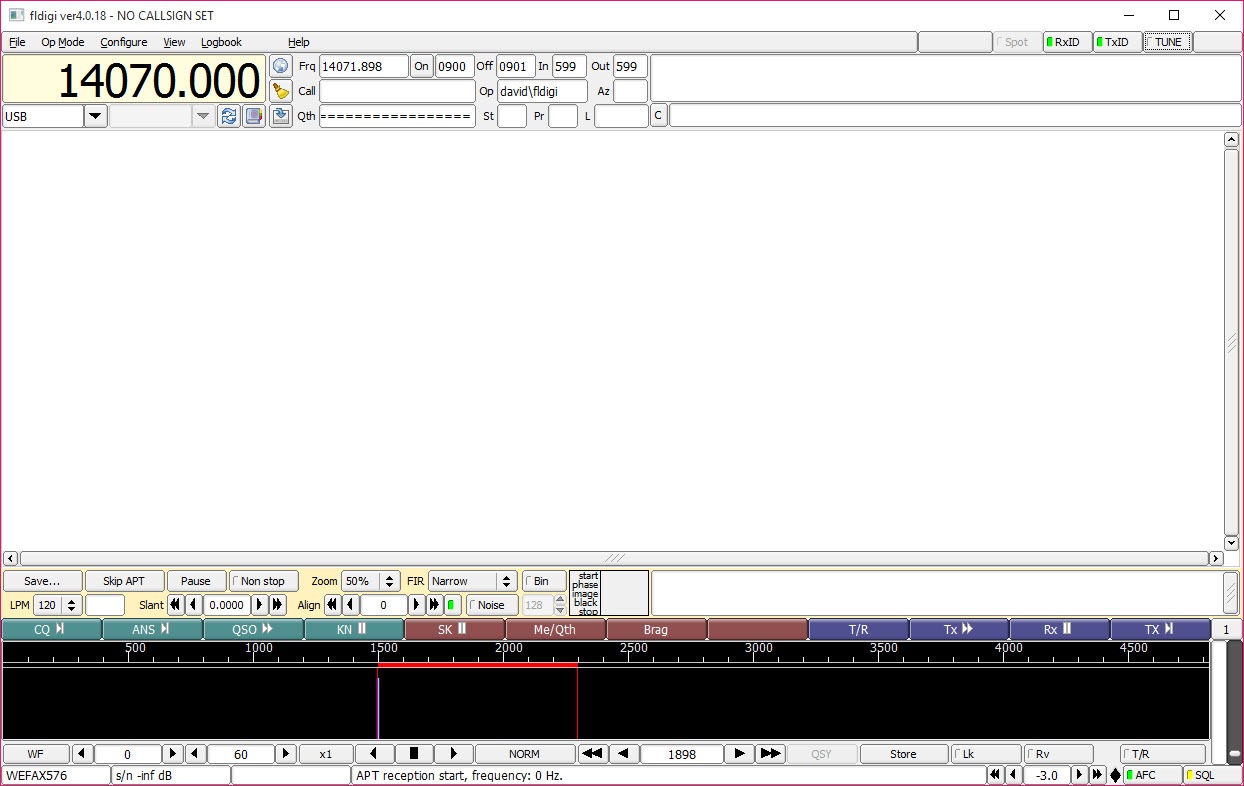
About Fldigi
Long before the internet, radio amateurs were sending text around the planet on whispers of power, and that world never went away, it just got better software. Fldigi turns an ordinary sound card into a multimode digital modem for amateur radio.
Pipe your transceiver’s audio into the computer, and typed conversations, Morse code, weather charts, and formatted emergency messages flow in and out of the airwaves, no dedicated hardware modem required.
The name stands for Fast Light Digital, and the program has become the reference tool of its category, the one that supports practically every keyboard mode the hobby has invented. For licensed operators it’s a transmit-and-receive station in software.
For shortwave listeners without a license, the receive side alone opens a hidden text layer of the radio spectrum that voice-only listening never reveals.
The waterfall is the dial
The centerpiece of the window is the waterfall, a scrolling color spectrum of everything your receiver hears. Digital signals appear as bright vertical traces against the noise, each one a conversation in progress, and clicking a trace tunes the decoder onto it instantly.
Where analog operating means sweeping a dial and listening, this is visual hunting, half a dozen conversations visible at once and any of them one click from readable text.
Identifying what you clicked is its own solved problem. With RSID enabled, stations transmit a short signature that tells Fldigi exactly which mode and settings they’re using, and the software switches itself to match automatically.
For a newcomer staring at unfamiliar warbles, that feature alone converts confusion into decoded text several times an evening.
Dozens of modes, from a whisper to a fax
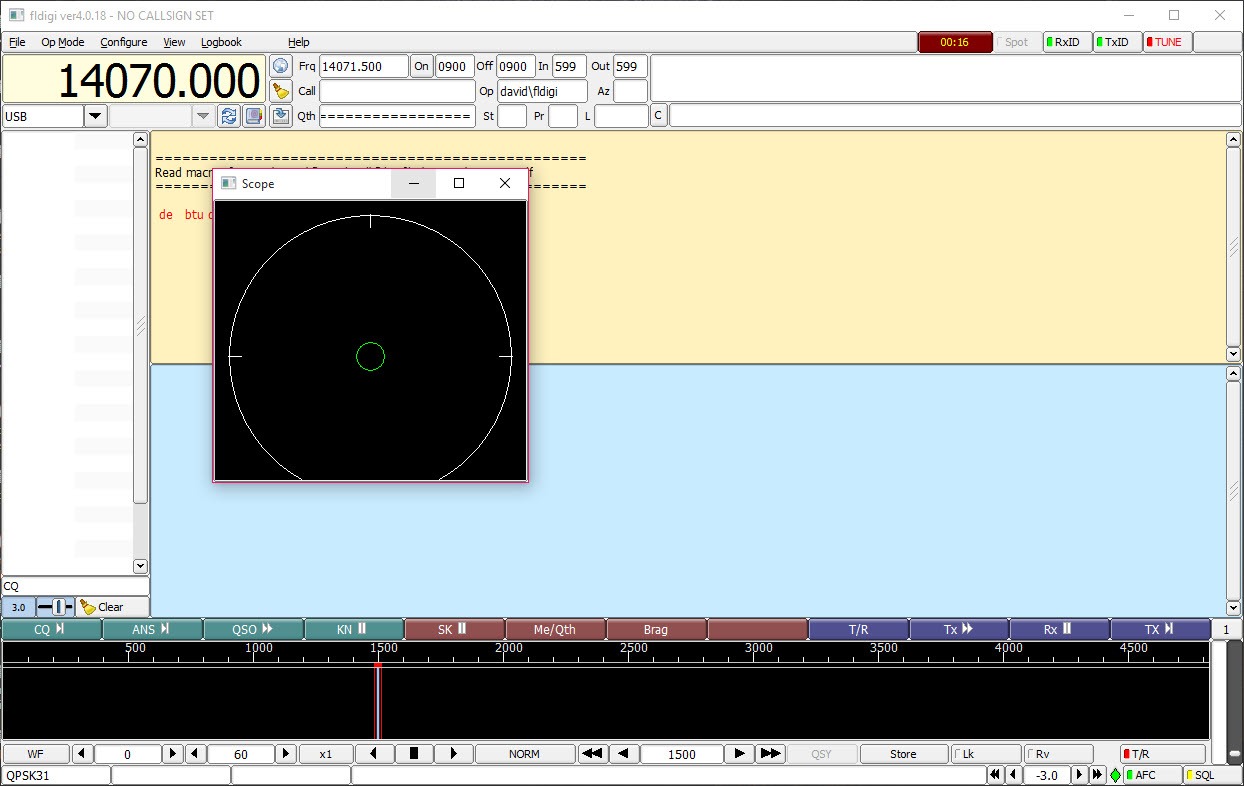
The mode list runs long and each entry earns its place somewhere. PSK31 remains the classic conversational mode, squeezing readable text through as little as thirty-odd hertz of bandwidth on tiny power, the digital equivalent of a calm voice cutting through a loud room. RTTY is the veteran of contests, Olivia trades speed for near-magical resilience when signals fade into the noise floor, MT63 carries traffic reliably for public-service nets, and Hellschreiber literally paints text as tiny images, a mode with roots older than most of its users.
CW gets full citizenship too. The software decodes Morse to text on screen and keys the transmitter from your keyboard, which lets code-curious operators participate while their ears catch up to their ambitions.
And on the pure reception side, weather fax and Navtex decoding pull marine forecasts and maritime safety broadcasts out of the shortwave bands, which is where unlicensed listeners get some of the best value in the whole package.
Macros, logging, and a rig on a leash
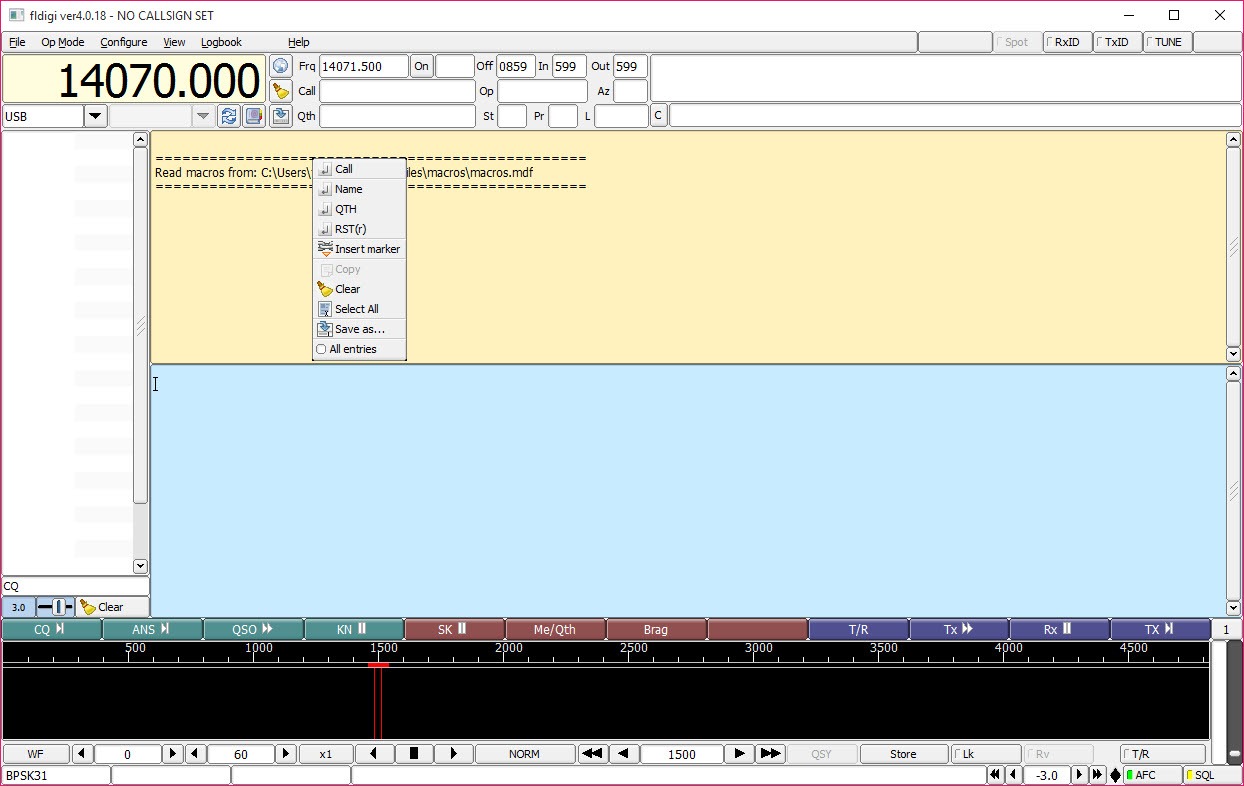
Operating rhythm matters in contests and nets, and the macro bar handles it. Programmable buttons fire your standard calls, exchanges, and sign-offs with substitutions filled in automatically, callsign, signal report, serial number, so a contest exchange becomes two clicks instead of forty keystrokes. The built-in logger records contacts as you make them and exports the standard ADIF format every logbook program understands.
Rig control rounds out the station. Through CAT interfaces, or the companion flrig program, frequency and mode changes flow between computer and transceiver in both directions, keeping the log honest about where each contact actually happened. The broader family matters here, since this application anchors a suite.
Its sibling flmsg wraps messages into formatted forms, flamp handles file transmission, and together they form the NBEMS system that emergency communication groups have standardized on, precisely because it needs nothing but radios and sound cards to move structured traffic when infrastructure is down.
What it isn’t, and what it costs in patience
Scope honesty first. The weak-signal modes that dominate casual digital operating today, the ones where contacts are automated exchanges decoded from far below the noise, live in different software entirely. Fldigi is the home of conversational and message-carrying modes, keyboard-to-keyboard contact with an actual human on the other end, and knowing which experience you’re after decides which program you install. Many stations run both.
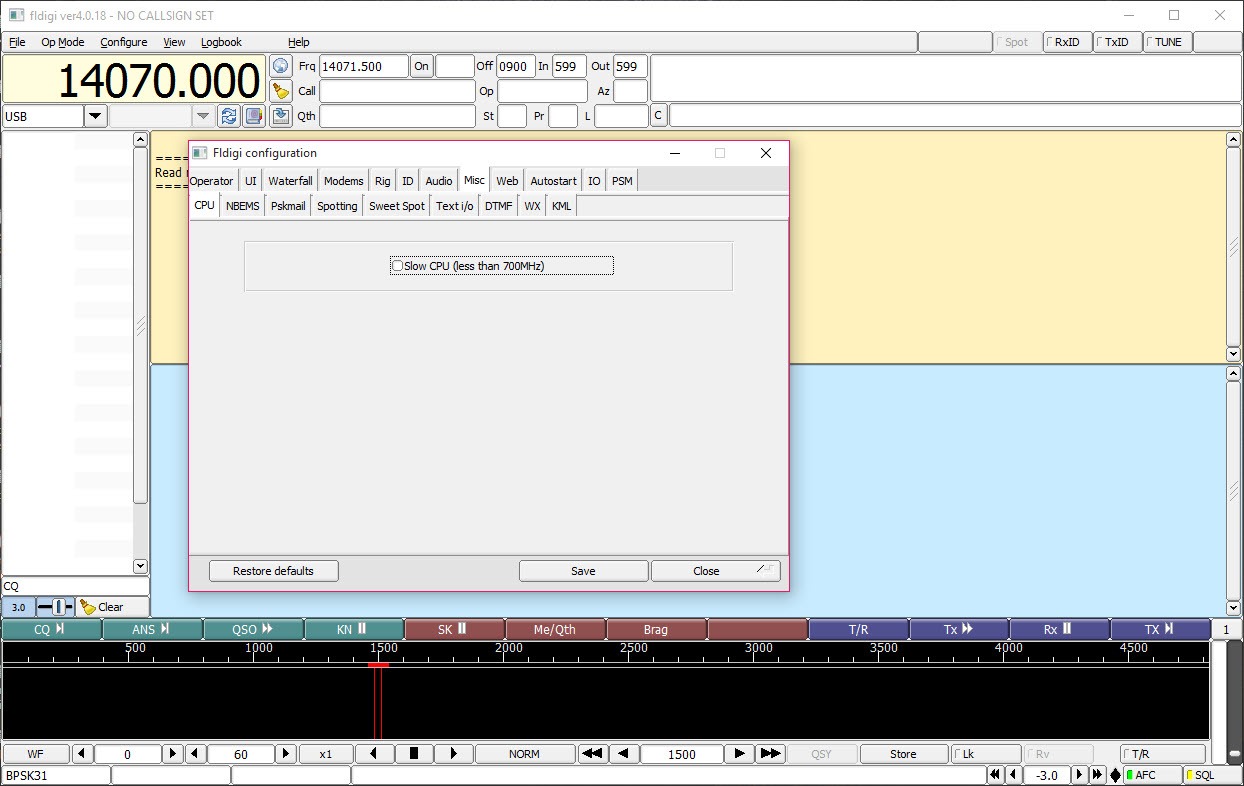
Then there’s the setup. Audio levels between the radio and the computer must be adjusted with care, since overdriven audio splatters your signal across the neighbors and too little gets lost in noise, and the configuration dialogs where this happens are numerous, dense, and indifferent to your feelings.
The interface overall is functional in the way lab equipment is functional. Every ham forum carries the same advice, budget an afternoon for the initial setup, and after that it just works.
Signal tinkerers who enjoy this layer of the hobby might also appreciate Universal Radio Hacker for dissecting unknown transmissions, a different discipline built on the same fascination.
A last practical note that belongs in every honest writeup of this category. Transmitting requires an amateur radio license in essentially every country, full stop. Receiving and decoding requires nothing but curiosity, which makes the program a fine first step for someone deciding whether the hobby is for them.
Conclusion
Fldigi belongs to three audiences at once. Licensed hams get the full conversational digital toolbox, emergency communicators get structured messages moving without networks, and unlicensed listeners discover that the shortwave bands are full of decodable text. Nothing else covers the mode list, the suite integration, and the sound-card simplicity in one package.
The entry fee is an honest afternoon of configuration and a tolerance for utilitarian design. Pay it, and the software settles into the background where good tools live, and the radio starts speaking in writing.
Pros & Cons
- Decodes and transmits dozens of digital modes through any sound card
- Waterfall display makes signals visible and tunable with one click
- RSID identifies unknown modes and reconfigures the decoder automatically
- Macros, integrated logging, and ADIF export cover contest and net operation
- Anchors the NBEMS emergency messaging suite with flmsg and flamp
- Receive-only use gives unlicensed listeners weather fax, Navtex, and text modes
- Initial audio and rig configuration takes real patience
- Interface design trails far behind its capabilities
- The dominant automated weak-signal modes live in other software
- Transmitting requires an amateur license, limiting half the feature set for newcomers
Frequently asked questions
Only to transmit. Receiving and decoding digital modes, weather fax, and Navtex is legal for anyone, which makes the software a popular entry point for shortwave listeners.
A receiver or transceiver and an audio path to the computer, typically a simple interface cable or the rig's built-in sound device. The sound card itself is the modem.
Enable RSID. Stations transmitting the identifier are recognized automatically, and the software switches mode and settings itself. Unidentified signals can be matched by their waterfall shape with practice.
Yes, it decodes CW to on-screen text and can key the transmitter from the keyboard, so operators can work code contacts while still learning to copy by ear.
It anchors the NBEMS suite, with flmsg formatting structured message forms and flamp handling file transfer, letting emergency groups pass verifiable traffic over plain radios and sound cards with no infrastructure.


