

Powir
About Powir
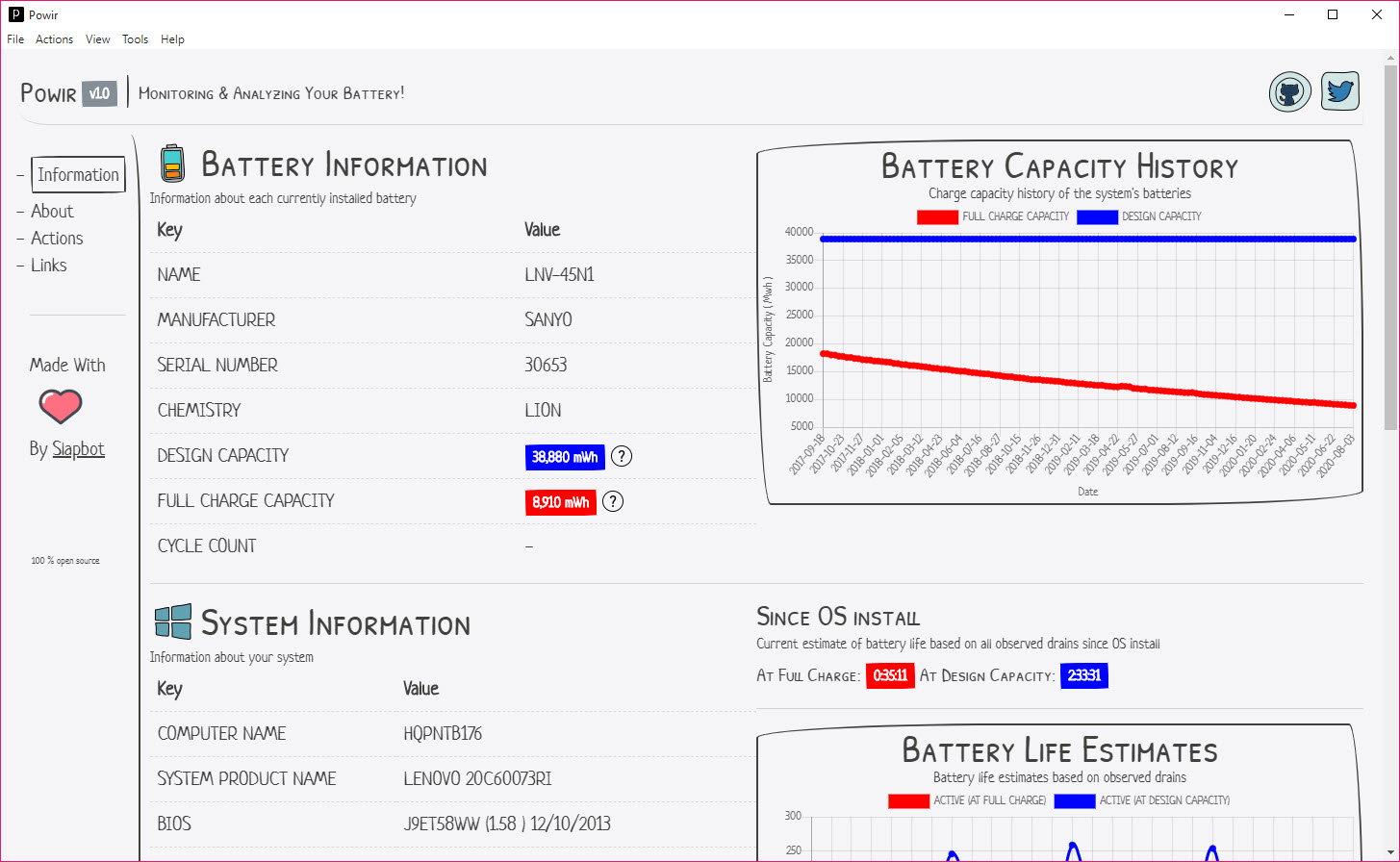
Powir is a battery analysis tool for laptops that turns the system’s own hidden battery report into something a person can actually read. The system can already generate a detailed report about your battery, with design capacity, current capacity and months of usage history.
It comes out as a dense web page that most people never see. This program runs that report for you, parses it, and presents the findings as clear numbers and charts.
It is portable and open source, so there is nothing to install. Launch it and wait a few seconds while the report is generated and processed. The main panel then shows how much capacity your battery has lost since the laptop was new and how that trend has developed.
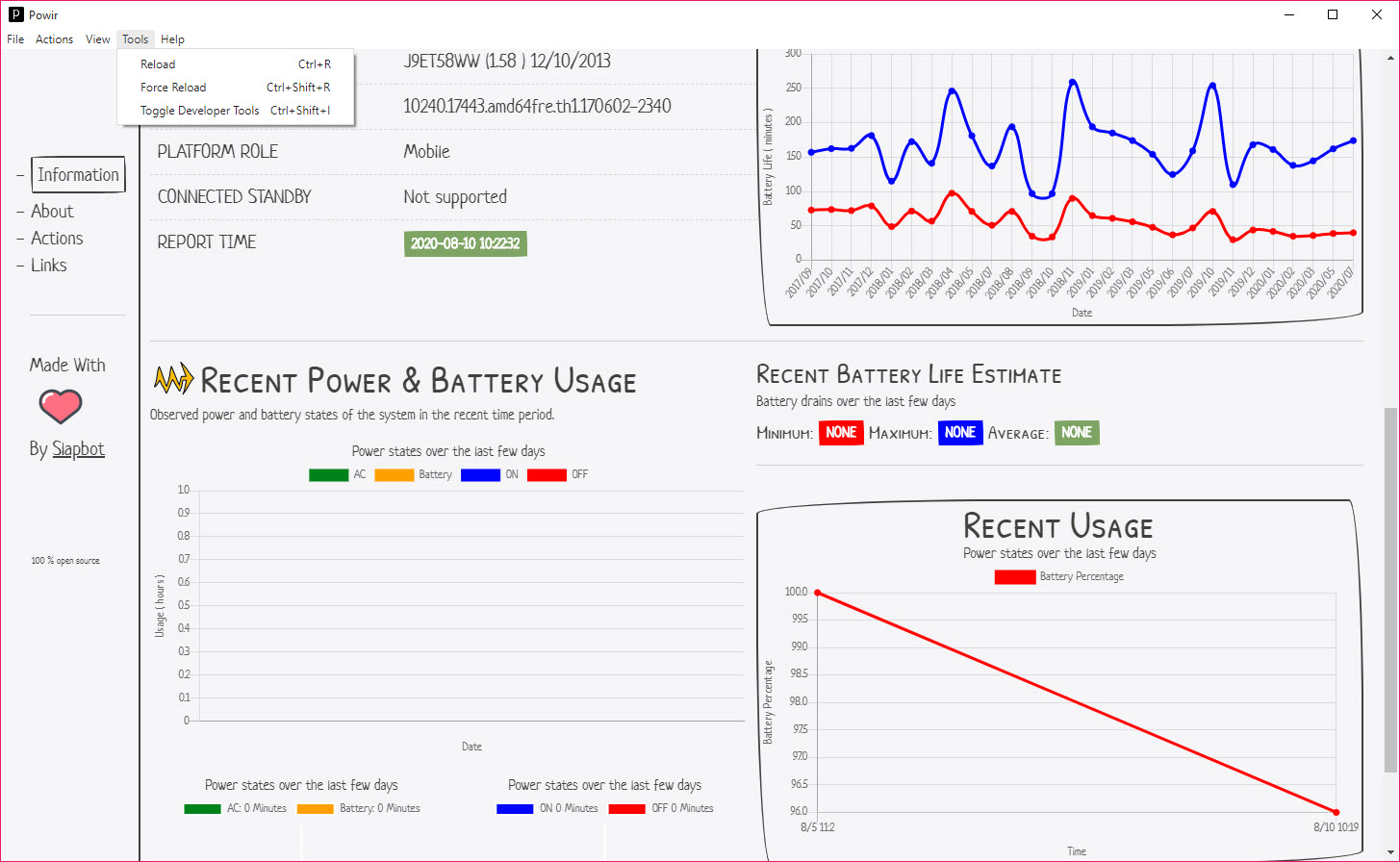
A second view covers how the machine has been used on mains and on battery in recent days.
What the battery report hides in plain sight
Every laptop keeps a log of its battery. Design capacity is what the cells could hold when they left the factory. Full charge capacity is what they hold now. The gap between the two is the wear, and the system records how that gap has widened over time, along with every charge and discharge session.
Powir reads exactly this data. It does not estimate anything by itself or run its own measurements, which is a strength, because the numbers come from the battery controller rather than from a guess. The weakness follows from the same fact.
If the battery reports nonsense, the tool can only clean up the obvious errors, not invent better data.
Capacity trend since the system was installed
The main chart is the one most people open the program for. It plots full charge capacity against design capacity over the whole history the system has recorded. A battery that has slid from 100 percent to 78 percent of its original capacity shows up as a clear downward line rather than a single scary number.
That trend is what tells you whether a battery is ageing normally or dying early. A gentle decline over two years is expected, while a sudden drop over a few weeks points to a faulty cell or a laptop that spent a summer cooking in a car. Heat is the usual culprit, and a hardware monitor that shows live temperatures helps confirm whether the machine runs hot.
The program also estimates how long the laptop runs on a full charge today compared with when it was new, which is the figure that matters for daily use.
Recent usage on mains and on battery
A second view breaks down the last few days into periods on AC power and on battery, with the capacity drawn in each one. It answers practical questions. How long did yesterday’s unplugged session really last? Does the laptop drain while it is supposedly asleep in a bag? Is battery life worse on days spent in video calls?
Raw battery reports often contain odd entries, such as sessions with impossible durations or capacity readings that jump around. Powir filters those out before computing its statistics, so the averages are not skewed by a single corrupt line.
For live readings while the laptop is running, such as current wattage and temperature, a battery monitor that reads sensors in real time complements this history-based view.
Export and the limits of analysis
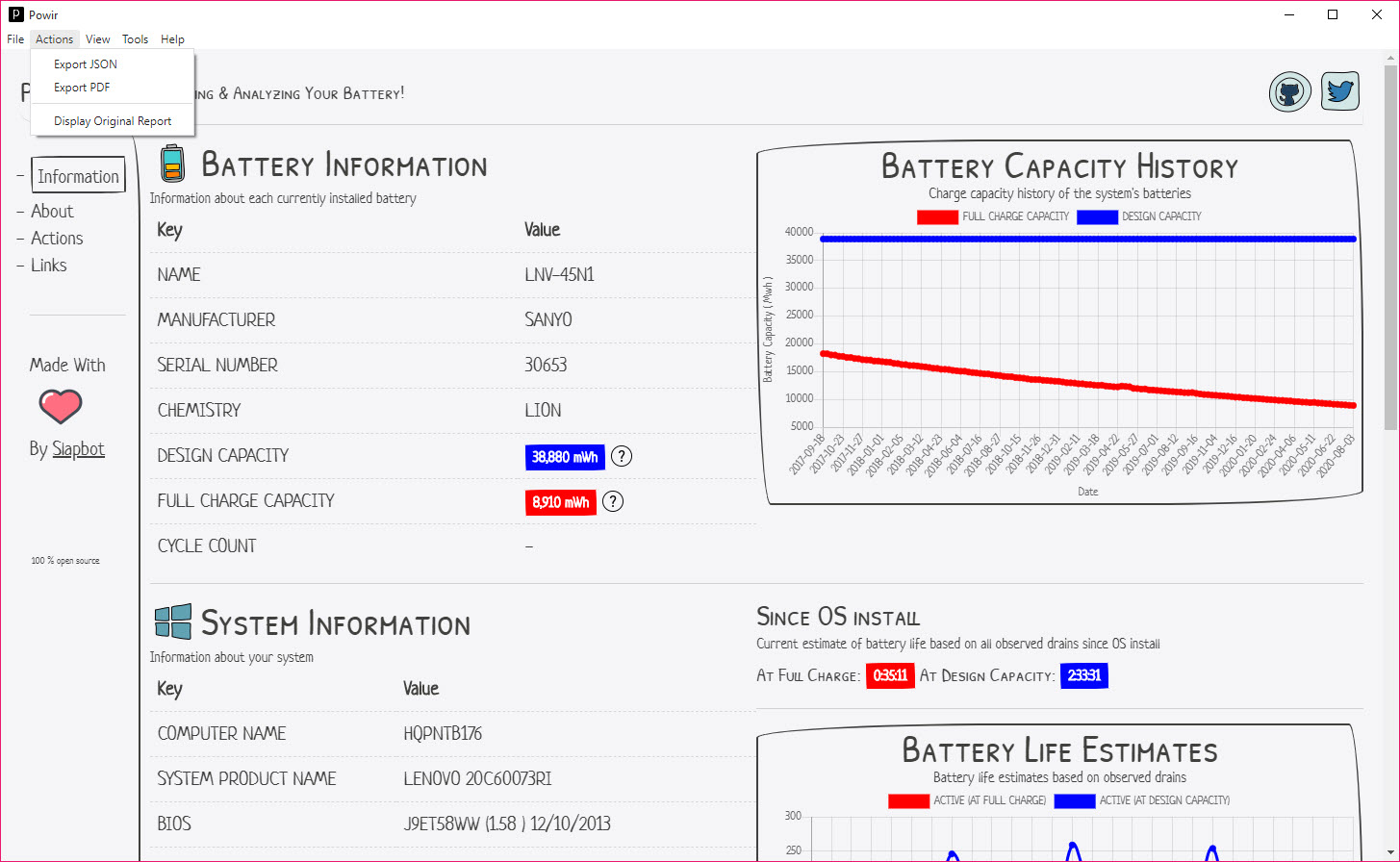
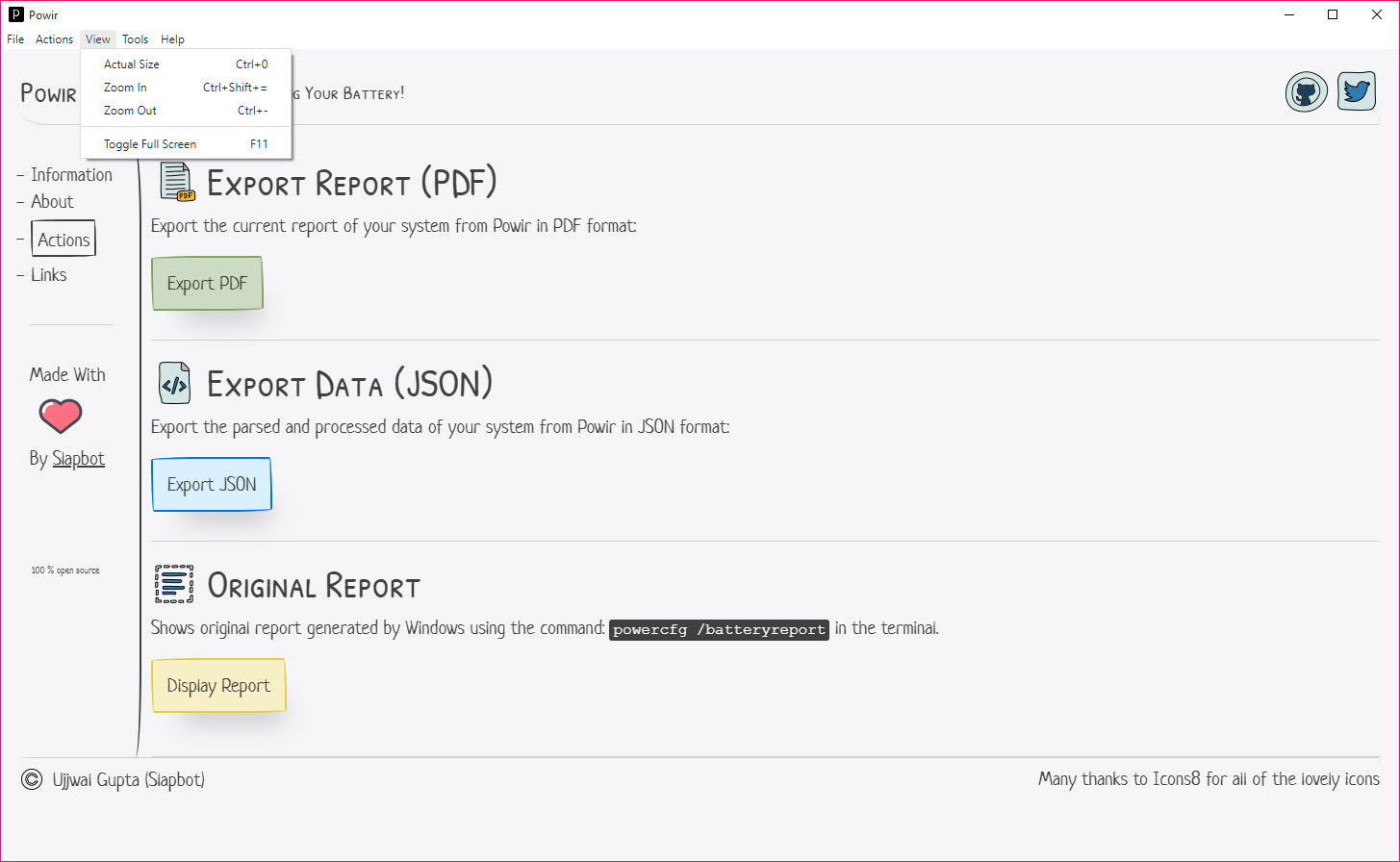
Everything the program gathers can be exported. A PDF carries the processed charts and figures for a support ticket or a warranty claim. A JSON file holds the parsed data for your own spreadsheets, and the original HTML report is available for anyone who wants the unfiltered source.
Several exports over time can be lined up in a spreadsheet program to watch the decline across laptops in an office.
Be clear about what it cannot do. It changes no settings, limits no charging and extends no battery life by itself. It is a diagnosis tool, and the only cure for worn cells is a new battery.
What it offers is the evidence to decide whether that purchase is needed yet, and whether a laptop sold as “barely used” has a battery history that agrees.
Conclusion
Powir suits laptop owners who want to know how their battery is really doing, buyers inspecting a used machine, and anyone preparing evidence for a warranty claim. It makes the system’s hidden report understandable and keeps the numbers honest by filtering out broken entries.
It diagnoses rather than treats, and it can only report what the battery itself knows. Within that role, it is a clear and trustworthy way to read a battery’s past.
Pros & Cons
- Parses the system's battery report into readable charts and figures
- Shows capacity loss since the system was installed as a trend, not one number
- Breaks recent days into mains and battery sessions
- Filters corrupt report entries before calculating statistics
- Exports to PDF, JSON and the original HTML report
- Portable and open source
- Only as accurate as the data the battery controller reports
- Offers no settings, charging control or power management
- No live sensor readings such as wattage or temperature
Frequently asked questions
No. It analyses and displays the battery's history and condition. It changes no settings, so the information helps you decide whether a battery needs replacing, nothing more.
From the system's own battery report, which records design capacity, current capacity and every charge session. The program generates that report, parses it and cleans out faulty entries.
Yes, and it is one of the best uses. The capacity trend and the number of recorded sessions quickly show whether the battery history matches the seller's claims.


