

Whoer VPN
About Whoer VPN
Whoer VPN comes from the same place as the anonymity checker most people have used at least once, the page that tells you your IP, your DNS, whether WebRTC is leaking and how trustworthy your connection looks to a website.
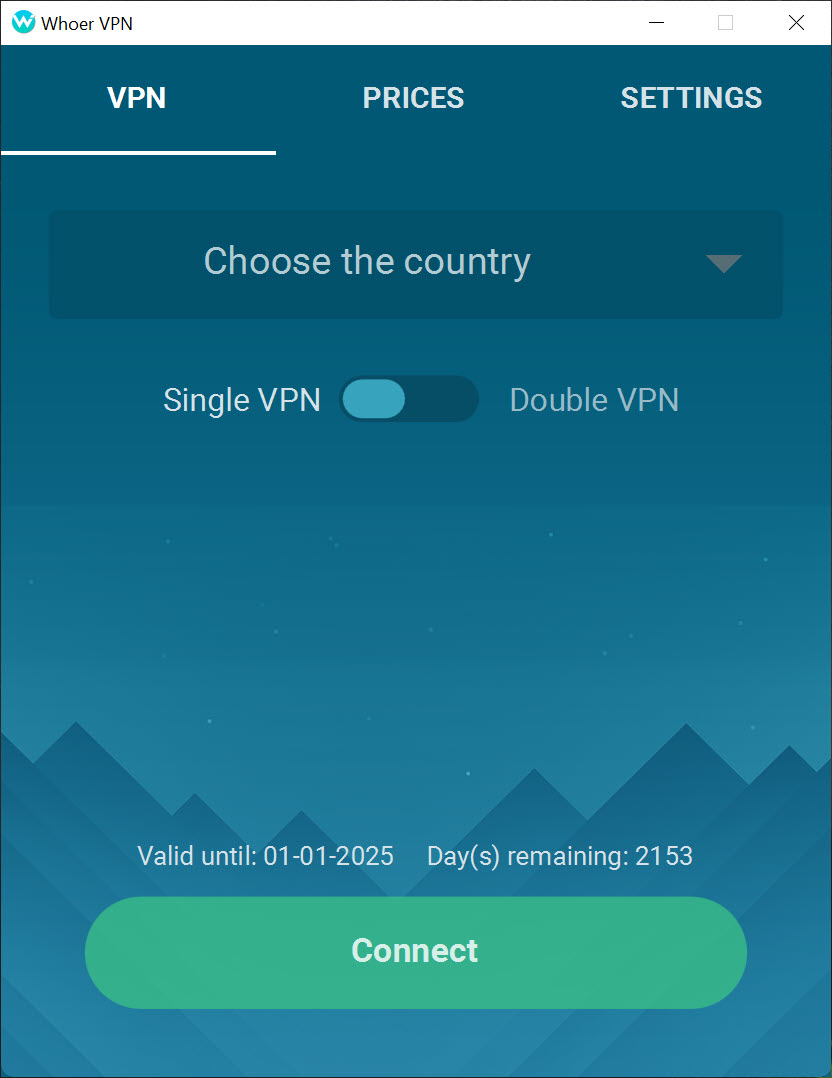
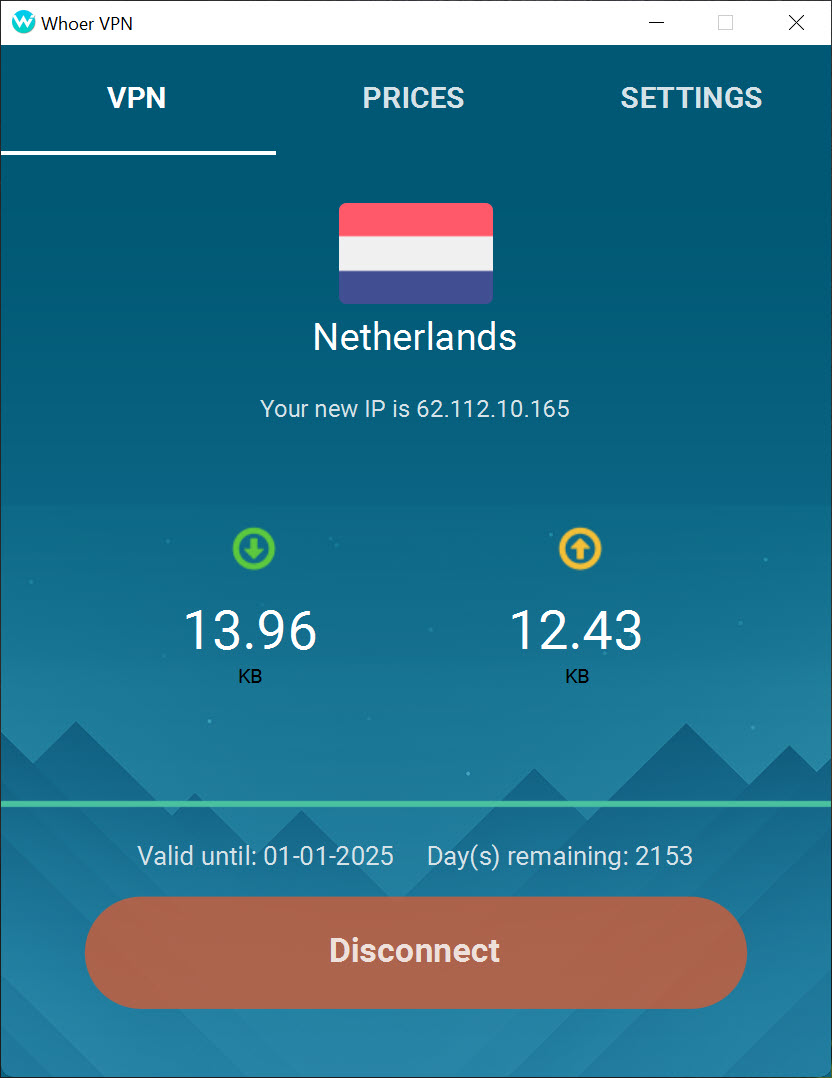
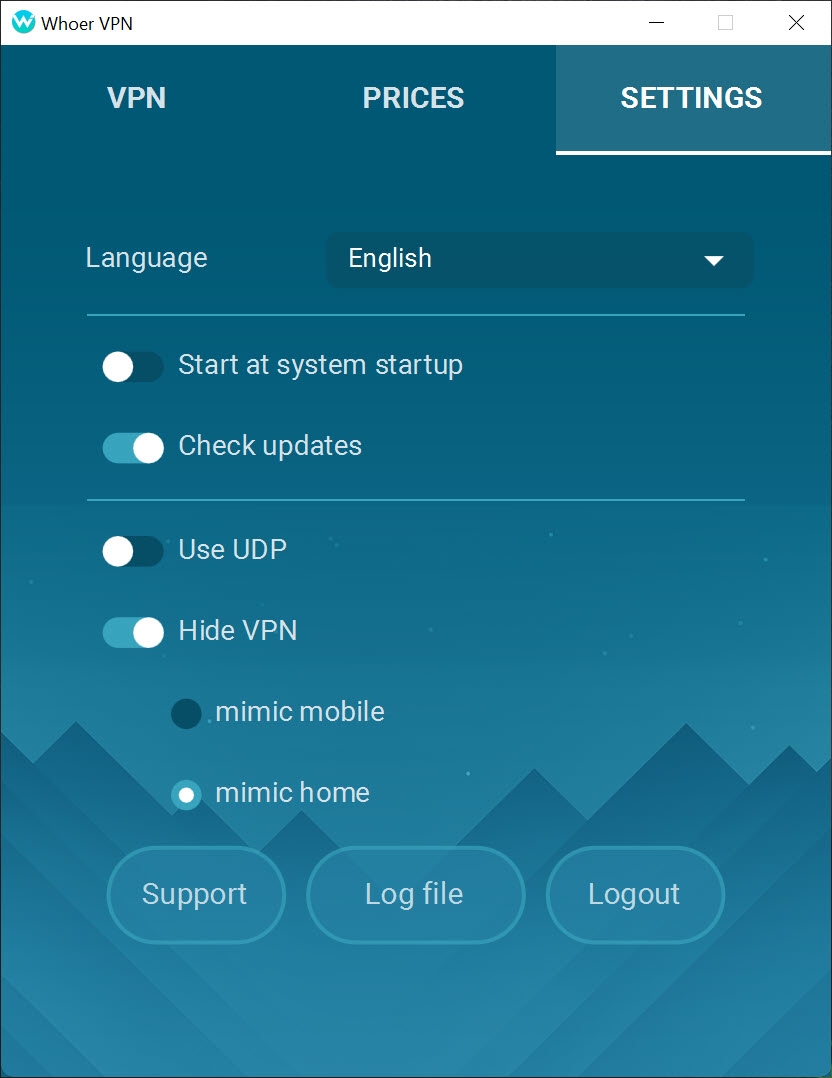
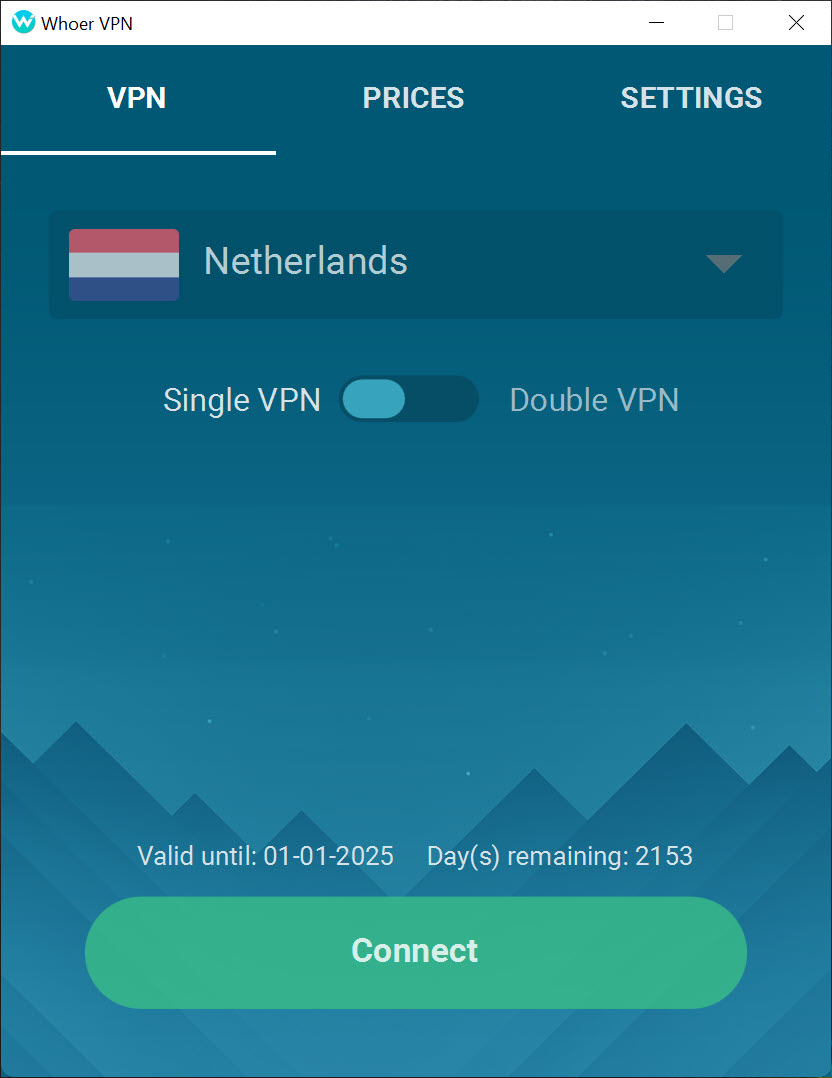
The client carries that heritage into a small window with a country list, a connect button and a handful of switches. Traffic runs over AES-256 encryption with a kill switch, its own DNS servers and leak protection for IP and DNS, and the account holds no connection or activity logs.
Two features set it apart from the usual budget tunnel. Double VPN sends your traffic through two servers in sequence, so the exit node never sees the address you came from. And the protocol list includes SSTP and SoftEther alongside OpenVPN and L2TP, which is unusual and matters in one specific situation, getting a connection out of a country that blocks the obvious protocols.
Servers, and why the map matters here
Whoer VPN runs roughly 60 servers across about 20 countries, which is small.
Europe and North America are covered properly. Africa and South America are not covered at all. Nearby servers connect in seconds and run fast enough for video. Distant ones can take over a minute to negotiate and deliver speeds that make streaming a chore.
So check the country list against where you actually need to appear before anything else. If the country you want is on it and reasonably close, this works. If you need Brazil or South Africa, look at a service with a network several times the size instead, because no amount of tuning fixes a server that does not exist.
Protocols, and the blocked-country case
Most current services push WireGuard, and Whoer VPN does not offer it. What it offers is the older set, OpenVPN over TCP or UDP, L2TP/IPsec, PPTP, SSTP and SoftEther. That reads as dated, and for ordinary use it is, since WireGuard connects faster and runs quicker on the same hardware.
The exception is restrictive networks. SSTP rides inside standard HTTPS and is hard to tell apart from ordinary web traffic, and SoftEther can do the same. On a corporate network or in a country where the usual protocols are blocked on sight, that is the difference between connecting and not.
But among the tunnels you can simply install and run, OpenVPN with a manual configuration or this client are the two that give you SSTP without a subscription to something larger.
Double VPN, the kill switch and what is missing
Double VPN is the feature the checker heritage explains. Routing through two servers halves your speed, and on a network this size the second hop is often far away. Use it when it matters and leave it off the rest of the time. The kill switch cuts the connection if the tunnel drops, which is the one switch everyone should turn on and forget.
What Whoer VPN lacks needs listing plainly. No split tunnelling, so you cannot send a banking app around the tunnel while the browser goes through it. No protocol switcher in some builds, meaning the choice is made at connection rather than on the fly.
No independent audit of the no-logs claim, so the policy rests on a promise rather than an outside report.
Torrenting and streaming, honestly
Peer-to-peer traffic is allowed on a handful of servers only, and reviewers who have timed it describe a 700MB file taking forty minutes with pauses. Treat the P2P support as present rather than usable. Streaming is better and several regional catalogues do open, on the nearby servers at least.
The client also pairs sensibly with a DNS switcher when you want a different resolver outside the tunnel. If unblocking a specific catalogue is the whole reason you want a tunnel, test it in the trial period rather than assuming.
Conclusion
Whoer VPN suits someone in Europe or North America who wants encryption on a public network, occasional access to a nearby country’s content, and the reassurance of a kill switch and a Double VPN hop when something sensitive is happening. For that person the small network is invisible, because the servers they need are the fast ones.
It is the wrong choice for heavy downloading, for anyone needing a country outside its map, or for someone who wants an audited privacy claim rather than a stated one. The protocol list is its real differentiator, and if SSTP is the reason you are here, that alone can justify it.
Pros & Cons
- Double VPN routes traffic through two servers for a second layer of separation
- SSTP and SoftEther help on networks where common protocols are blocked
- Kill switch, own DNS servers and IP and DNS leak protection included
- Nearby servers connect in seconds and hold speed well
- Around 60 servers with no coverage in Africa or South America
- No WireGuard, and no split tunnelling
- No-logs policy has never been independently audited
- P2P allowed on only a few servers and slow on those
Frequently asked questions
No. The protocol list covers OpenVPN, L2TP/IPsec, PPTP, SSTP and SoftEther. SSTP is the one to choose on a network that blocks the others.
It routes your traffic through two servers in sequence, so the exit server never sees your real address. Speed drops noticeably, so switch it on only when you need it.
Only on a few designated servers, and throughput on them is poor. Anyone downloading regularly should pick a service that allows P2P across the network.
The network is small, so distant locations carry more load and a longer route. Pick the closest country that satisfies your reason for connecting.


