

Split Byte
About Split Byte
Split Byte cuts a large file into smaller pieces and puts them back together again. Pick the file, choose how many parts you want or how big each part should be, and press Split. The pieces land in a folder of your choice, numbered in order. On the other end, point the program at the first piece and it joins them into the original. A third tab compares two files by their MD5 checksum, which is how you confirm that the rebuilt file matches the one you started with, byte for byte.
It solves an old problem. A file is too big for an email attachment, an old-format storage stick or an upload form with a size limit. Split Byte turns one oversized file into several that fit, then rebuilds it at the other end. Along the way it can compress the parts into ZIP files, protect them with a password, email them, or switch the computer off when a long job ends.
The sections below go through each of those and say where a simpler tool will do.
Splitting by size or by number of parts
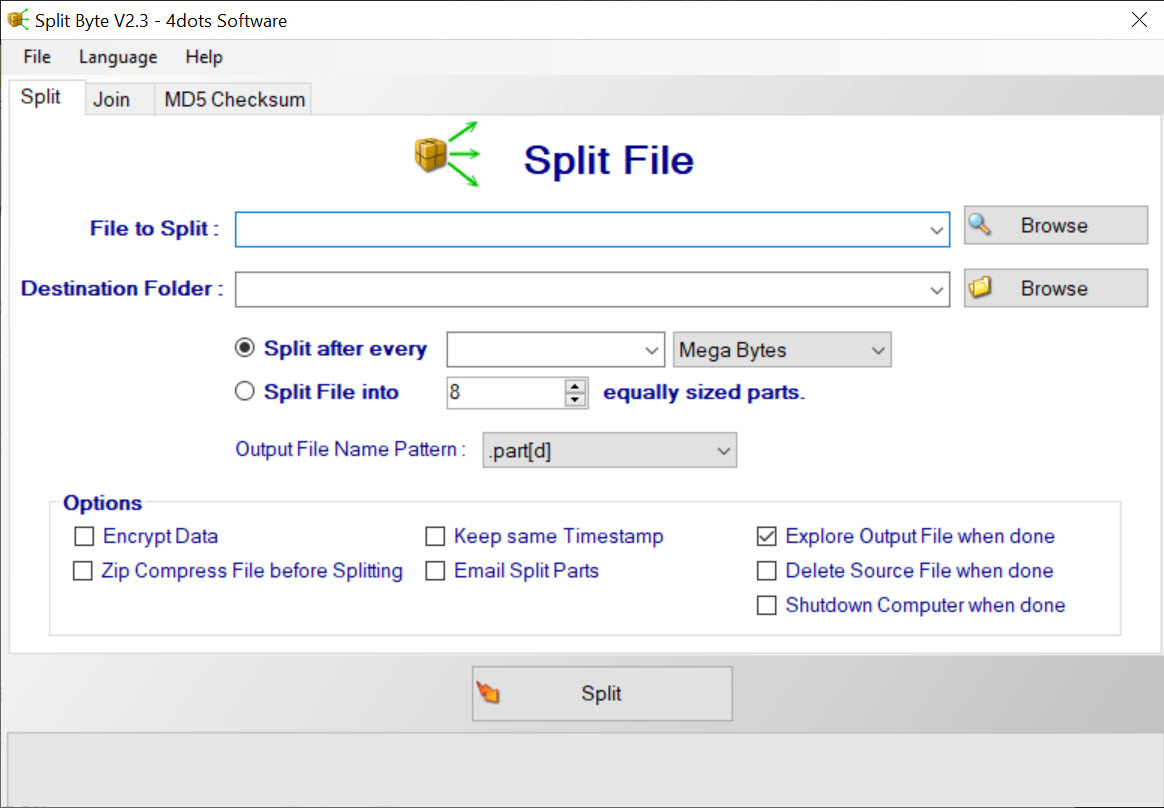
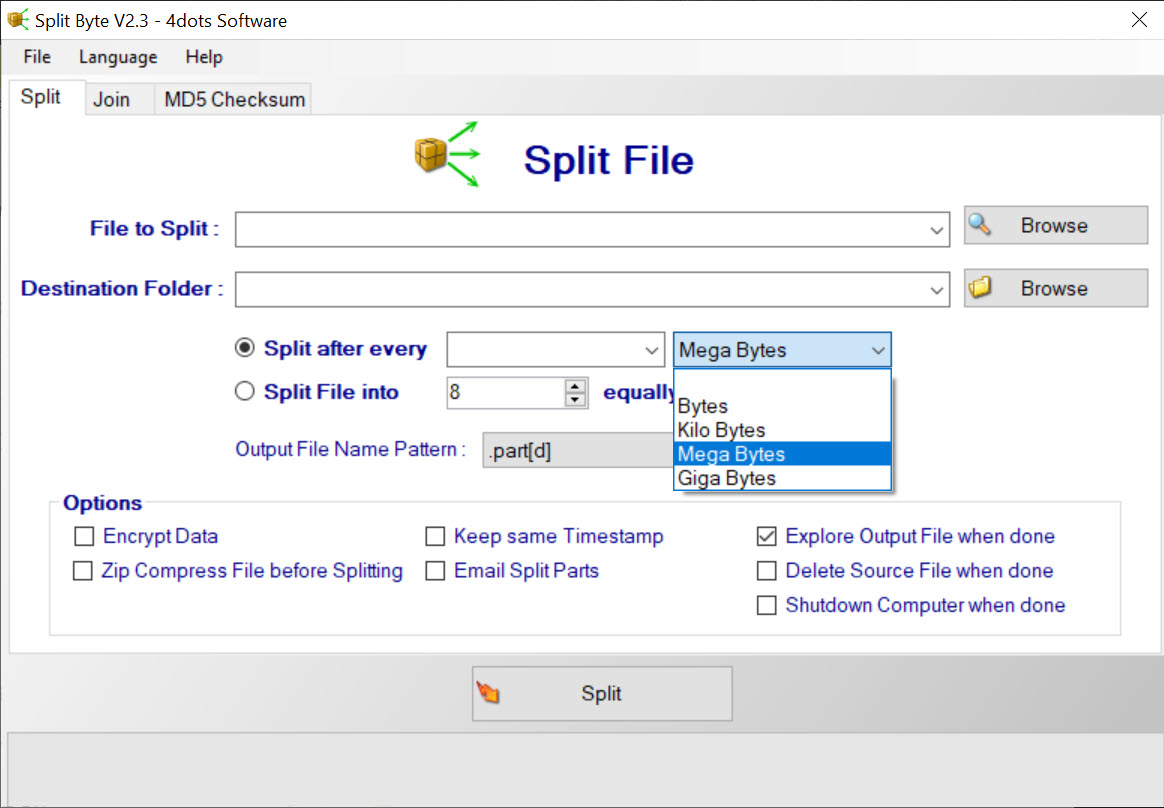
The Split Byte Split tab offers two ways of cutting. You can ask for a set number of equal parts, which suits a file you want in, say, five pieces. Or you can set the size of each part in bytes, kilobytes, megabytes or gigabytes, which suits a target with a fixed limit, an email attachment, a stick or a disc. Presets for disc sizes save working out the numbers.
Files go in by browsing, by typing a path, by dragging them onto the window, or by right-clicking them in the file manager, where the program adds its own menu entries. The parts are written with sequential names, and the original file stays untouched.
Compressing, protecting and sending the parts
Before writing the parts, Split Byte can compress each one into a ZIP file, which helps with documents and other files that shrink well and does little for video or photos that are already compressed. It can also encrypt the parts and protect them with a password, so a file sent in pieces is not readable by anyone who intercepts one of them.
When the split is done, the program can email the parts for you. For a big job left to run, an option shuts the computer down once the split or the join has finished. For splitting straight into numbered compressed volumes that any archiver can reopen, 7-Zip does the same job from its own add-to-archive dialog.
Joining the parts again
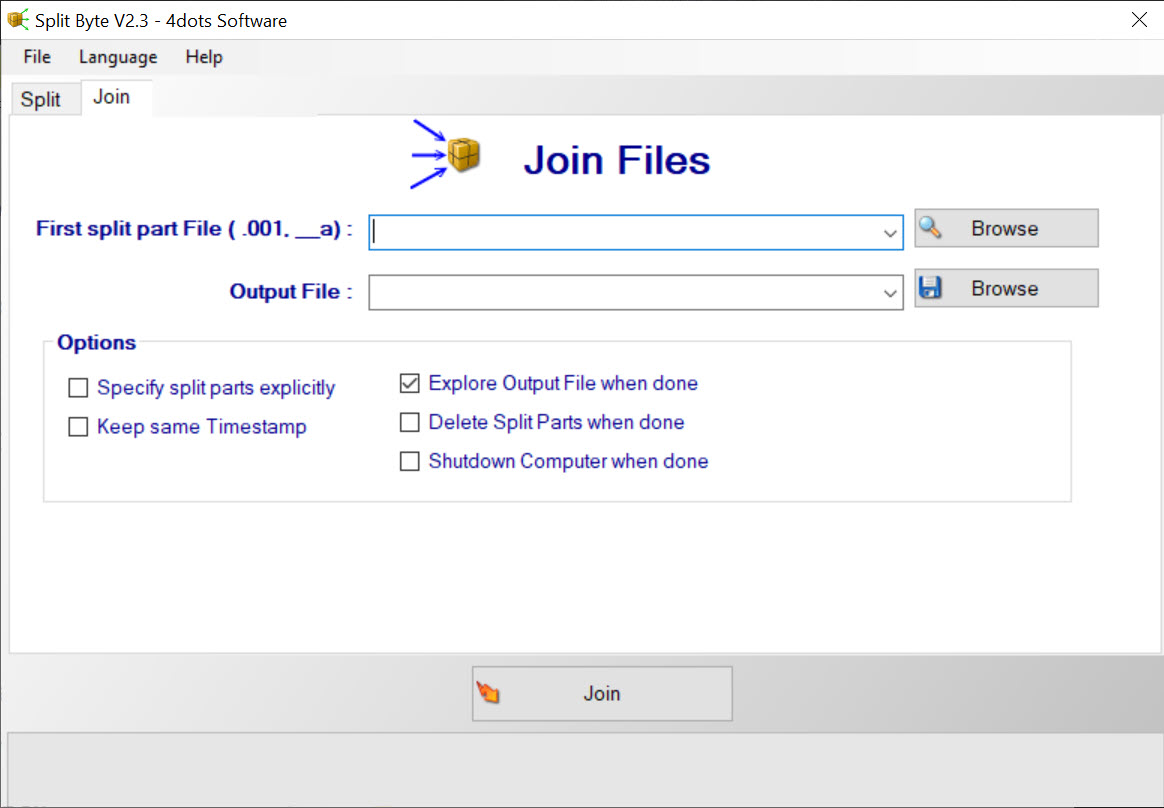
Joining in Split Byte is simpler than splitting. Open the Join tab, choose the first part, choose where the rebuilt file should go, and press Join. The program finds the remaining parts in the same folder and puts them back in order. If the parts were compressed or protected, you give the password and it handles the rest.
Every part must be present and keep its name. A missing piece stops the join, and a damaged one produces a broken file, which is why the third tab exists.
Checking the result with MD5
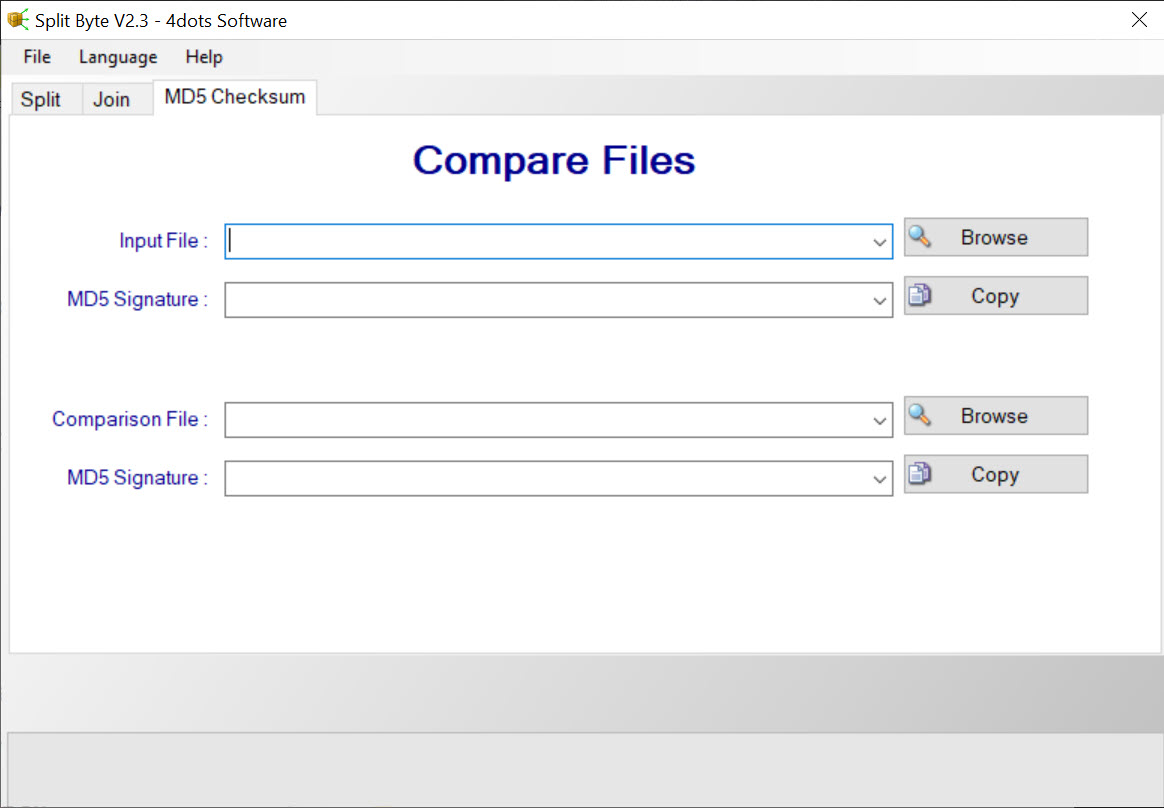
The Split Byte Compare tab calculates the MD5 checksum of a file, a short fingerprint that changes if a single byte differs, and compares two files by it. Run it on the original and on the rebuilt copy, and if the fingerprints match, the join worked. The program can also run the check automatically after joining and tell you the result.
That one step turns a hopeful copy into a verified one. For a quick standalone fingerprint of any file, a portable checksum tool does just that part.
Where it stops
It is a splitter and joiner, and nothing more. The parts it writes are in its own sequence, so the receiver needs the program or a compatible joiner. The ZIP option avoids that, since anyone can open ZIP files. And for a file that fits an upload limit after compression alone, splitting is unnecessary.
The program can also be run from the command line for scripted jobs, and the interface comes in more than thirty languages. For a smaller tool that needs no installation, BOB’s File Splitter handles the basic split and join.
Conclusion
Split Byte suits anyone who needs to move a file that is too big for its destination, from an email with an attachment limit to a stick with a file size cap. The equal-parts and fixed-size modes, the password option and the MD5 check make it a complete round trip in one window.
It does nothing a good archiver cannot also do, and the receiver needs a way to rejoin the parts. Split, send, join, then compare the checksums, and you know the file arrived whole.
Pros & Cons
- Splits by a number of equal parts or by a set part size, with presets for discs
- Joins parts back by selecting only the first one
- Optional ZIP compression and password protection of the parts
- MD5 checksum comparison to verify the rebuilt file
- Drag and drop, file manager menu entries and a command-line mode
- The receiver needs the program or a compatible joiner unless the ZIP option is used
- Compression does little for video and photos
- A single missing or renamed part stops the join
Frequently asked questions
Open the Join tab, choose the first part and an output folder, and press Join. The other parts must be in the same folder with their original names.
Yes. The Compare tab calculates and compares MD5 checksums, so a match between the original and the rebuilt file confirms the join worked.
Yes. The parts can be encrypted and protected with a password, and optionally compressed into ZIP files first.


