

Alternate Archiver
About Alternate Archiver
Every computer has that folder. Downloads, usually, though Desktop and Documents put up strong competition, thousands of files with names like scan_final_2 and IMG_4482 sitting in one flat heap. Alternate Archiver attacks exactly this mess. It takes a pile of files and, in one pass, sorts them into a tidy folder structure, renames them by a pattern you define, and fixes their date stamps, with a preview showing the outcome before anything moves.
One clarification belongs right at the top. Despite the name, Alternate Archiver does not compress anything into ZIP or similar formats. If that is what you came for, 7-Zip is the tool you want.
Here, “archiving” means what it means in an email client, moving items out of the active pile into an organized storage structure, and once you accept that vocabulary, the program makes complete sense.
Sorting a file pile into a folder matrix
The archive function moves or copies your files into a destination folder and, this is the useful part, builds subfolders automatically based on criteria you pick. Sort by file type and every PDF, JPG, and MP3 lands in its own branch. Sort by date and years or months become the folder tree, which turns years of unorganized photos into a browsable timeline in minutes. Name and source-folder criteria exist too, and criteria can be combined.
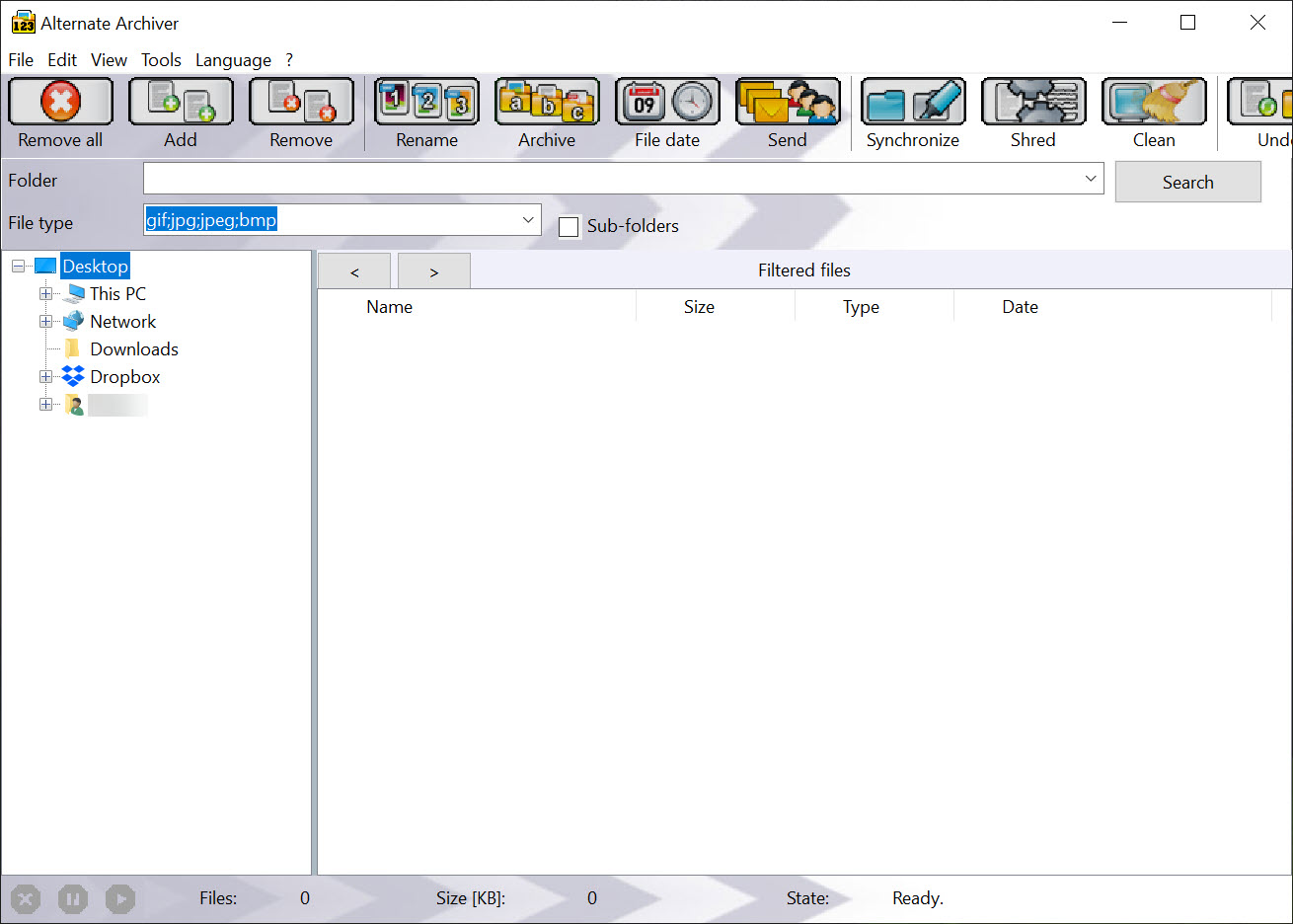
Getting files in takes a drag and drop, or a right click, since the application hooks into the file manager’s Send to menu during setup. Folders added to the list stay collapsed until you press List files, a small quirk that puzzles first-time users, and a file-type dropdown filters the list so you can, say, pull only the images out of a mixed folder.
Because the operation defaults to a plain copy or move, it doubles as a light backup routine for people who want structure on an external drive without dedicated backup software.
Batch renaming with patterns and a live preview
The renaming side of Alternate Archiver competes directly with dedicated tools. You build the new name from elements, sequential numbers with padding characters, file dates, the old name, the parent folder’s name, and an Order field decides how those pieces line up, number as prefix or suffix, date first or last.
Separate tabs handle the surrounding jobs, changing extensions in bulk, stripping or replacing characters, correcting a repeated typo across hundreds of names, and forcing upper or lower case.
A preview pane at the bottom shows every new name before you commit, which removes most of the fear from renaming 500 files at once. There is also a manual mode with old names on the left and editable new names on the right, and here we hit an honest rough edge. The preview in manual mode does not always refresh after an edit, and the check button may even claim nothing will change, yet the rename itself executes correctly.
Confusing the first time, harmless afterward. Power users who rename by regular expressions will still prefer Bulk Rename Utility, which trades this program’s simplicity for far deeper rule building.
Date stamps, shredding, and the toolbox in the back
Changing file dates in batch is a quietly valuable feature. Cameras with wrong clocks, files that lost their timestamps in a transfer, scans that all claim to be from today, the date tool rewrites hour, minute, day, month, and year across the whole selection. Combined with date-based sorting, it means you can first repair the timeline and then file everything by it.
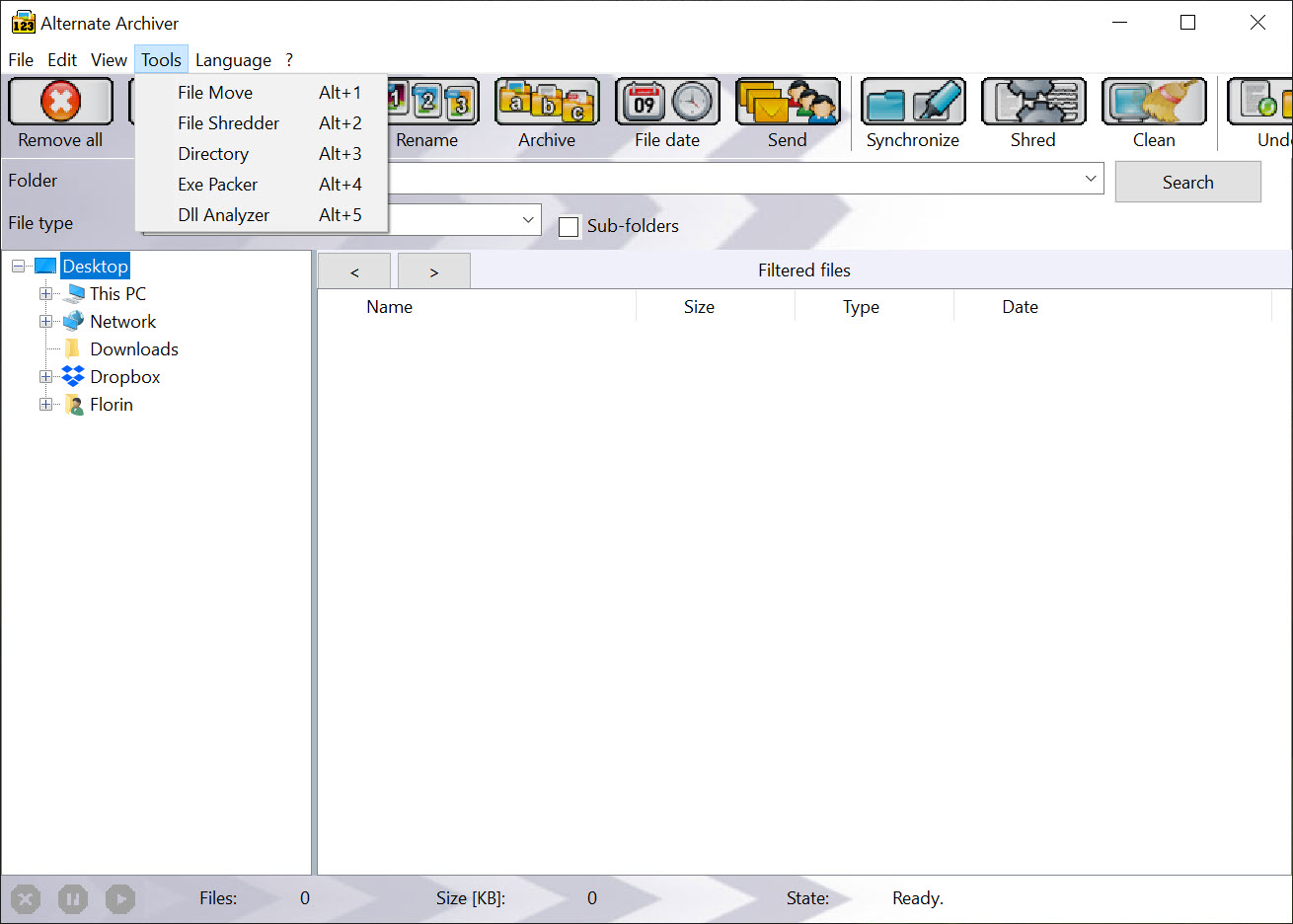
The back of the toolbox holds a file shredder for overwriting sensitive documents beyond recovery, a splitter that cuts large files into parts and merges them back, folder synchronization for keeping two directories aligned, and even an ID3 tag editor for MP3 collections. An email function attaches files and lets you assign which recipient gets which attachment, one send instead of five separate messages.
Some inclusions, like the DLL analyzer and the executable packer, feel like they wandered in from a different program entirely. Nobody needs them here, and nobody is hurt by them either.
The interface is where age shows. Icons and dialogs look like they predate flat design by a comfortable margin, and the whole thing runs on the .NET Framework already present on current systems.
Once your files are sorted, finding them is a separate problem, and an instant search tool like Everything pairs naturally with the structure this software creates. The same goes for dupeGuru, since sorting a messy archive tends to reveal just how many duplicates it contains.
Conclusion
Alternate Archiver suits people drowning in flat folders, the photo hoarder with fifteen years of camera dumps, the home office that scans everything and sorts nothing, anyone whose Downloads folder became a landfill. For them, the sort-rename-redate combination in one window beats juggling three separate utilities.
It is not the deepest tool in any single category it touches, and the looks will not win awards. But it earns its slot by making the boring part of digital housekeeping, the initial sorting of a huge mess, into an afternoon job instead of a lost weekend.
Pros & Cons
- Sorts thousands of files into automatic subfolders by type, date, or name
- Pattern-based batch renaming with a live preview of every result
- Batch correction of file dates repairs broken photo and scan timelines
- Shredder, splitter, folder sync, and ID3 editing included in one package
- Send to menu integration and drag and drop keep the workflow quick
- The name suggests compression, which the program does not do
- Manual rename mode has a preview refresh bug that misleads at first
- Interface design looks dated next to modern utilities
- Renaming rules stop short of regular expressions and complex logic
Frequently asked questions
No. The archiving here means organizing files into a structured folder tree, not compressing them. For actual compression you need a separate archiver.
Yes, that is its core scenario. Add the folder, choose sorting by type or date, and the program distributes everything into matching subfolders in a single operation, as a copy or a move.
There is no practical limit for everyday use. Hundreds of files rename in one pass, with the preview pane showing each resulting name before you confirm.
Yes, in batch. You can rewrite the hour, minute, day, month, and year on an entire selection, which fixes photos and scans carrying wrong timestamps.


