

TagSpaces
About TagSpaces
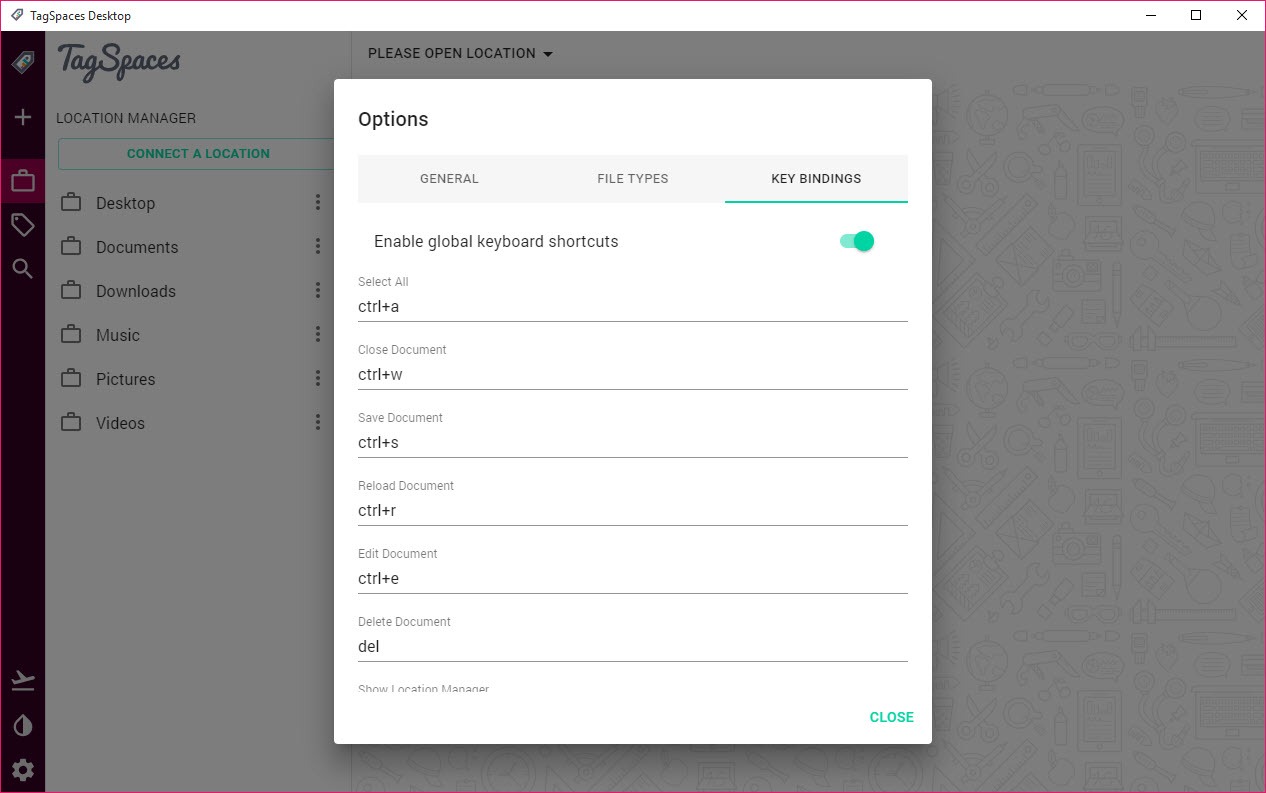
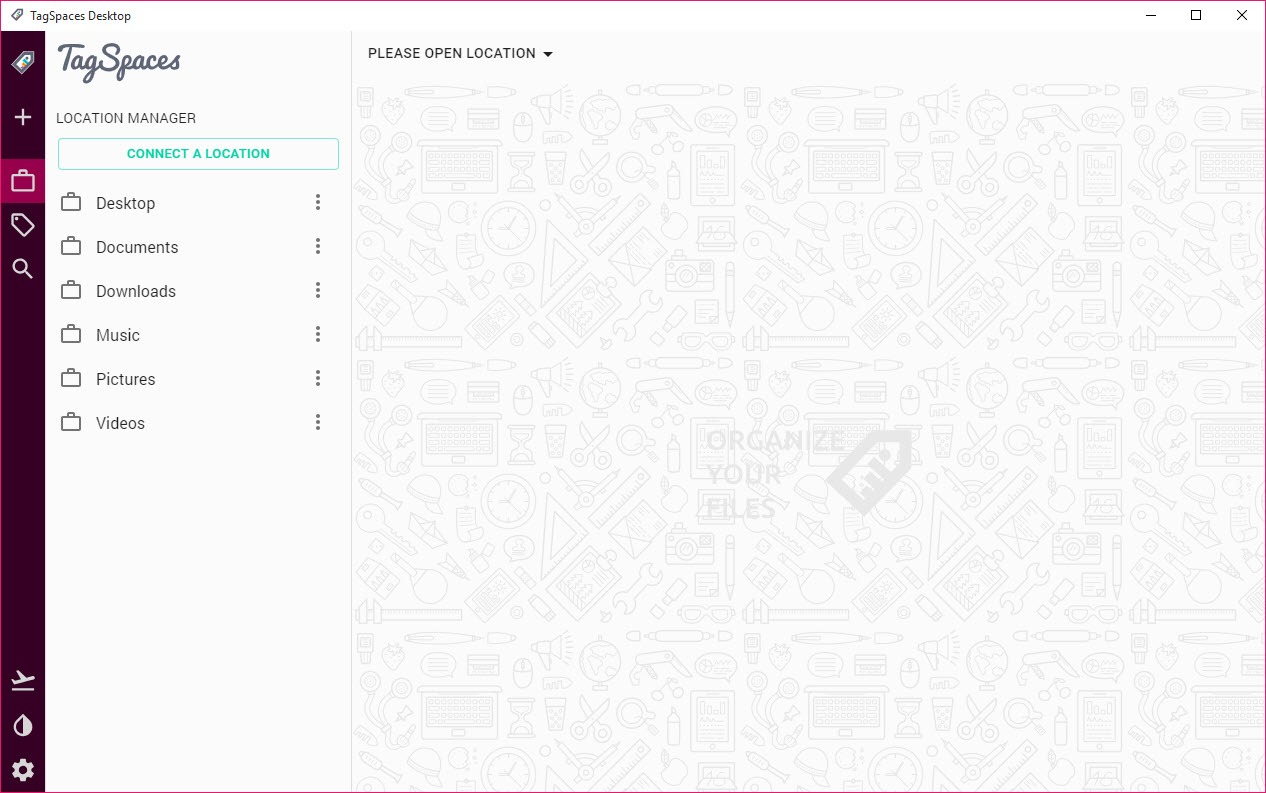
TagSpaces organises files with tags and keeps nothing in a database. Open a folder, add colour-coded tags to the documents and photos inside it, and to the notes, and the tags are written either into the file names themselves, inside square brackets, or into small JSON sidecar files in a hidden folder beside them. Search by tag, by name, by content or by a combination with AND, OR and NOT, and switch between a grid or a list, a photo gallery, a kanban board, a map and a calendar to browse the same folder different ways. Everything runs offline, with no account and no server, and the tags travel with the files.
That choice to store nothing privately is the whole idea, and it has consequences in both directions. A file tagged here and copied anywhere still carries its tags in its name, readable by anything that shows a file list, and if the program vanished the organisation would survive. The downside is that renaming files changes them, which some workflows cannot tolerate, and that the sidecar alternative has to be moved along with the files by hand.
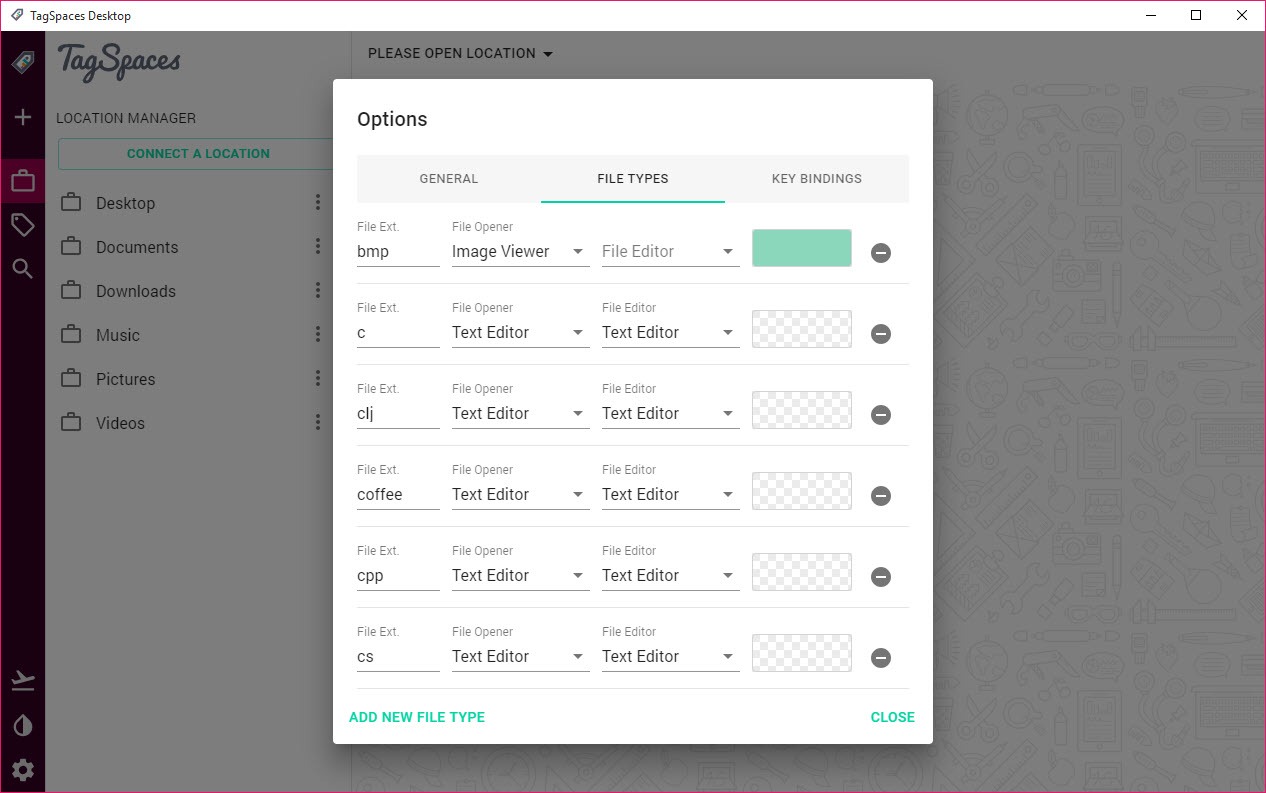
TagSpaces also writes notes in Markdown, HTML and plain text, previews more than twenty file types, clips web pages to local files through a browser extension and, in its paid tier, adds full-text search inside PDFs and office documents, file revisions and the specialised views.
Tags in file names or in sidecar files
The default TagSpaces method appends tags to the file name in brackets, so a report becomes report [invoice 2024-tax client-a].pdf and reads the same in any file manager, cloud drive or search tool. Tags are visible and searchable everywhere, and portable with the file, and they survive any move or copy. The limits are the ones file names have, a length ceiling and forbidden characters, and the changed name breaks links from other documents.
The alternative stores tags in a sidecar JSON file inside a hidden folder, leaving the original name untouched and allowing an unlimited number of tags. That suits files other software depends on, and it is the only method for folders, whose tags always go in sidecars.
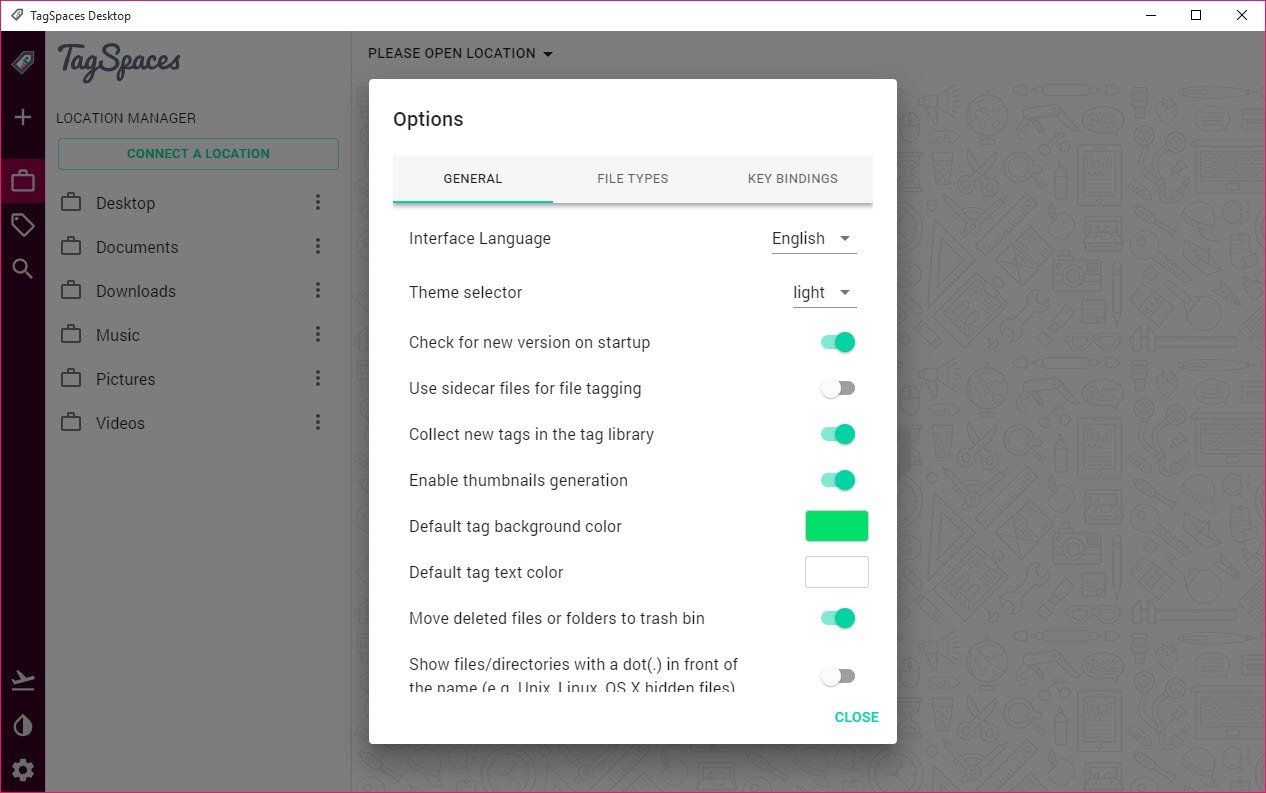
The trade is maintenance, since a file renamed or moved outside the program leaves its sidecar behind unless the sidecar moves too. Both methods can coexist per location, and a tag library with colour groups keeps the vocabulary consistent.
Searching across a location
TagSpaces search runs over the locations you have added, matching tags and names as well as descriptions, and filtering by file type, size or date, with fuzzy matching for near-misses. Tag searches combine with the three logical operators, so files tagged with two things but not a third are a single query, and queries can be saved and re-run. Full-text search inside plain text files is included, and the paid tier extends it into PDFs and office documents, which is the feature that turns a document archive into something searchable by what it says rather than by what it is called.
An index makes repeated searches quick, and a global search across every location is available in beta. The program is not built for locations beyond a hundred thousand files, and a large photo archive is better split into several locations than loaded as one. For finding a file anywhere on the disk by name alone, nothing matches a filename search tool, and the two tools serve different questions.
Perspectives, from grid to map to calendar
A TagSpaces perspective is a way of looking at the same folder. The grid and list views show files with their tags and thumbnails, and their descriptions, and they are the everyday ones. The gallery lays out photos large for browsing. Kanban turns tags into columns, so a folder of tasks moves across a board as the tags change.
The map places geo-tagged files on a world map, and the calendar places files by date tag, both of which read the tags the program itself adds. Most of the specialised perspectives belong to the paid TagSpaces tier, and the grid and list cover ordinary use without it.
Descriptions attach to any file or folder as Markdown text, shown alongside the file in the properties panel, so a PDF can carry a summary and a folder can carry its own notes.
Together with tags, that makes a plain folder tree into something closer to a knowledge base without moving the files anywhere, and the descriptions are searchable alongside the tags.
Notes and the web clipper
New files can be created in TagSpaces in Markdown, HTML or plain text and edited inside the program, with a preview for Markdown and a visual editor for HTML that handles to-do lists. Notes are ordinary files in ordinary folders, which means they open in any other editor and are never trapped. Templates, audio notes and file revisions sit in the paid tier. A browser extension clips a page or a screenshot to a local HTML file, so research lands in a tagged folder rather than in a bookmarks list.
Viewers cover images and PDFs, media files, text and code and the office formats, and a media player handles the common audio and video types inside the window. For a dedicated writing environment with richer Markdown handling, Typora is the better editor, and the files it produces are exactly what this program tags and finds.
Where it asks care
Name-based tagging in TagSpaces is the thing to decide before tagging a thousand files, because switching methods later means renaming them all. Sidecars demand discipline whenever files move outside the program. The interface is a web application in a window, heavier than a native file manager and slower on large folders.
And it is an organiser rather than a replacement for a full file manager, so bulk operations and two-pane copying still belong to Total Commander or its kind, with this program layered on top for the tagging and the notes.
Conclusion
TagSpaces suits people who want to organise documents and photos, and their notes, by what they are about rather than where they sit, and who refuse to put that organisation into a database they cannot read. Researchers tagging papers, photographers sorting shoots and anyone building a personal archive from ordinary folders get tags that outlive the program and search that finds files by meaning.
It is not a file manager, and the choice between renaming files and maintaining sidecars has to be made early and lived with. Pick the method, tag a small folder first, and let the perspectives and the descriptions show what a plain folder tree can become when the files carry their own labels.
Pros & Cons
- Tags stored in file names or sidecar files, with no database and nothing locked in
- Search by tag, name or content, filtered by type, size or date, with AND, OR and NOT
- Grid and list views, plus gallery and kanban perspectives, a map and a calendar, on the same folder
- Markdown descriptions on any file or folder
- Notes in Markdown, HTML and plain text, plus a web clipper to local files
- Runs entirely offline, with a local AI option for summaries and tags
- Name-based tags rename files and break external links
- Sidecar files must be moved by hand when files move outside the program
- Specialised perspectives and revisions, and full-text search in PDFs, need the paid tier
- Not built for locations beyond a hundred thousand files
- Heavier and slower than a native file manager on large folders
Frequently asked questions
Either in the file name inside square brackets, or in a JSON sidecar file in a hidden folder beside the file. There is no database, and the method is chosen per location.
Yes, in the paid tier, which adds full-text search inside PDFs and office documents. Plain text content search is included for everyone.
No. It runs entirely offline on local files, and the optional AI features use a model running on your own machine.
Name-based tags travel with the file. Sidecar tags stay behind unless the sidecar file is moved too, so move those with the program or copy the hidden folder along.


