

Ultracopier
About Ultracopier
Ultracopier is the file copy utility that replaces the operating system’s default copy dialog with something substantially more capable. The application sits between you and the file system, intercepting copy and move operations that would normally go through the standard Explorer dialog and handling them through its own engine instead. The result is the kind of features that the default copy mechanism has lacked for years: pause and resume mid-transfer, speed limiting to keep a copy from saturating your disk while you work on other things, transfer queueing for multiple operations, detailed error handling that doesn’t abandon a 50 GB transfer because one file produced a permission issue, and various other capabilities that users have wanted from the built-in tools but never received.
Across more than a decade of development, the application has accumulated capabilities that made it a standard tool for users dealing with large file transfers, frequent copy operations, or specific scenarios where the default copy dialog produces friction. The free version covers core functionality including pause/resume, queue management, speed limits, error handling, and basic customization.
Ultracopier Ultimate (the paid version) adds advanced features for users with substantial file management needs, but the free version handles the practical scenarios that most users encounter without paying anything. Plugin support extends the application beyond its built-in capabilities, with the architecture supporting external extensions for specialized scenarios.
For users who consider the built-in copy dialog inadequate for their actual file management work, this software covers ground that the operating system itself simply doesn’t address.
How the engine actually works
The application replaces the copy and move operations at the system level rather than running as a separate utility you launch independently. When you copy files through Explorer (using Ctrl+C/Ctrl+V or drag-and-drop), the system routes the operation through this software rather than the default copy mechanism. The interception happens transparently, with the user experience being that copy operations open the application’s interface instead of the standard progress dialog.
For users who want to bypass this software for specific operations, holding modifier keys during the copy operation routes the work back through the default mechanism. The flexibility means you can use this software for most operations while still having access to the standard behavior when something specific requires it. Most users configure the integration once and forget about it, with subsequent copy operations going through the enhanced interface automatically.
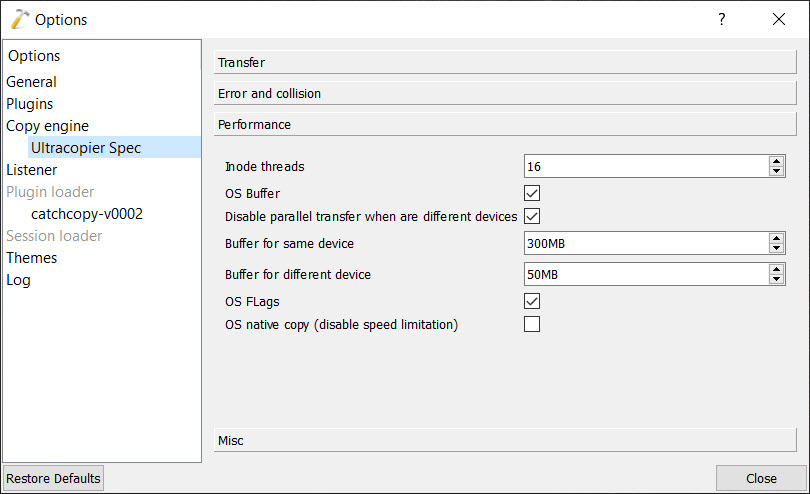
The engine itself uses asynchronous I/O patterns that produce better performance than the default copy mechanism in many scenarios. The standard Explorer copy is conservative about how aggressively it pushes data, which produces predictable behavior but doesn’t saturate fast storage devices the way more aggressive approaches would. This software’s engine pushes harder, producing measurably faster transfers on systems with fast SSDs or fast network shares. The performance difference isn’t dramatic in absolute terms, but for users moving substantial amounts of data regularly, the cumulative time savings add up.
For users wanting maximum copy speed specifically rather than the broader feature set, alternatives like FastCopy focus more aggressively on raw throughput at the cost of some interface polish and feature breadth. The choice between tools often comes down to whether the additional features here justify any throughput differences for your specific workloads.
Pause, resume, and the queue management
The pause functionality is the feature most users come for first. Start a 50 GB copy, realize you need to use the disk for something else, and instead of canceling the copy entirely (and starting over later), pause it. The transfer holds its current state, releasing the disk for other work. Resume when you’re ready, and the copy continues from where it stopped rather than restarting from the beginning.
The pause/resume capability matters substantially for substantial transfers. Cancelling a copy that’s 80% complete and starting over wastes an enormous amount of time. The default Explorer dialog forces this kind of waste because it has no concept of pause. This software’s pause means you can suspend transfers when needed without paying the time penalty of starting over.
The queue management handles multiple simultaneous copy operations through a unified interface. Start a copy, start another copy while the first is running, start a third. All three appear in the queue interface with their progress, status, and controls. The application processes them according to your configured priority and concurrency settings rather than running all of them simultaneously and saturating the disk with parallel operations that all run slower than they would individually.
For users wanting different transfers to have different priorities, the queue supports manual prioritization. Move important transfers to the front of the queue. Defer less urgent ones. Pause specific transfers while letting others continue. The control matches what professional file management workflows actually need rather than the all-or-nothing behavior the default mechanism provides.
Speed limiting and resource control
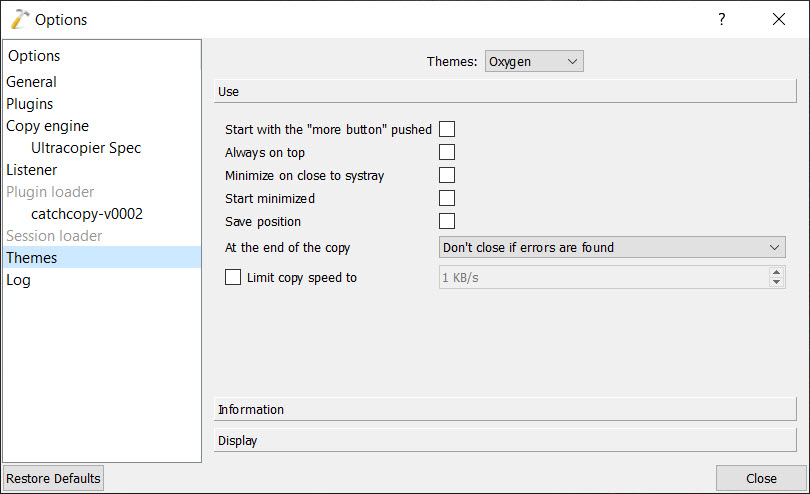
The speed limit feature lets you cap how much disk bandwidth a copy operation consumes. Configure a 50 MB/s limit on a transfer, and the copy never exceeds that speed regardless of what the disk could theoretically deliver. The remaining bandwidth stays available for other work, which means you can run a large background copy while still working on other tasks that need disk access.
For users on systems where copy operations would otherwise saturate the disk and make the system feel sluggish, this throttling produces dramatic usability improvements. A laptop with a single drive trying to copy 100 GB while you work on something else benefits from copying at moderate speed in the background rather than at maximum speed that stalls everything else. The speed limit makes background copies actually background rather than foreground operations that just happen to be running while you try to do other things.
The dynamic adjustment of speed limits during transfer matters for scenarios where requirements change. Start a copy with a tight limit while you’re actively using the system, then loosen the limit when you step away and want the copy to finish faster. The interface supports adjustment without requiring you to cancel and restart with new settings.
For users wanting integrated resource control across multiple copy operations, the queue system combines with speed limits to handle complex scenarios. Multiple queued transfers each have their own speed limits, with the total system bandwidth divided among active transfers in patterns you configure rather than letting transfers compete for resources unpredictably.
Error handling that doesn’t abandon transfers
The error handling is where the default copy dialog falls down most painfully for substantial transfers. When the default mechanism encounters a problem (file access denied, source file missing, destination disk full, network share disconnected, various other issues), it typically presents a dialog asking whether to abort, retry, or skip. For users not actively watching the transfer, the dialog blocks indefinitely until someone clicks a button.
This software handles errors with substantially more flexibility. Configure default behaviors for common error categories. Files that can’t be read get skipped automatically rather than blocking the queue. Permission errors get retried a configurable number of times before being added to a separate error list. Disk full errors pause the transfer rather than abandoning it, letting you free space and resume from where the transfer stopped.
The error log maintained throughout transfers shows which files succeeded, which had issues, and what specific issues each file encountered. After the bulk transfer completes, the error log lets you review what didn’t make it through and decide whether to retry those specific files, skip them entirely, or take other action. The granular visibility matches what’s actually useful for substantial transfer scenarios rather than the pop-up-driven approach of simpler tools.
For network transfers specifically, the error resilience matters substantially because network connections are inherently less reliable than local disk operations. Transient network failures that would abort default copy operations get retried automatically, with the user seeing the eventual successful completion rather than a partial transfer that has to be restarted from scratch.
Themes and visual customization
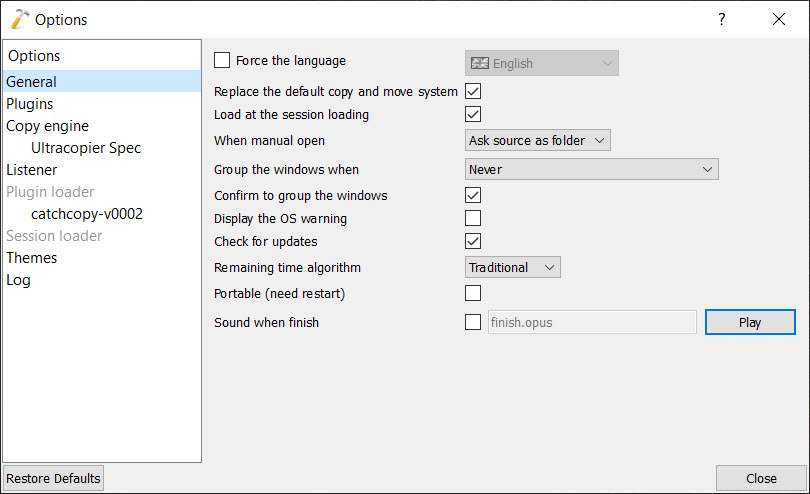
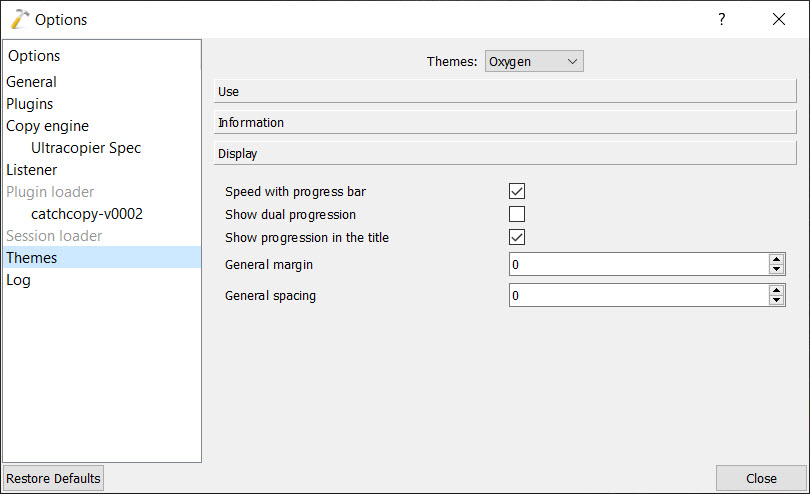
The application supports themes that change its visual appearance. Default themes provide functional starting points covering different visual styles. Custom themes from the community extend the options further, with users able to choose appearances ranging from minimalist functional designs through more elaborate visual styles.
The theme system includes substantial flexibility beyond just color schemes. Layout variants let you choose between compact displays for users prioritizing screen space and more detailed displays for users wanting maximum information visibility. Animation effects can be enabled or disabled based on preference. Various other visual elements adjust through the theme system.
For users who care about how their utilities look as part of their broader desktop aesthetic, this customization depth produces something that fits their preferences rather than forcing the default appearance. The trade-off is that aggressive customization sometimes produces the kind of visual fragmentation that competing utilities with consistent visual design avoid, with the choice being yours rather than the application’s.
Plugin architecture and extensibility
The plugin system supports extensions that add functionality beyond what the base application provides. Plugins handle specialized scenarios including specific file system integrations, custom error handling rules, integration with external systems, and various other capabilities that the core application doesn’t include directly.
For users with workflows that the standard features don’t quite address, the plugin architecture provides a path to extending the application without forking the codebase. Community plugins cover various scenarios, with users frequently developing plugins for specific needs they have and sharing them with the community.
The plugin development uses the same C++/Qt foundation that the application itself is built on, which means developers comfortable with that stack can extend the application productively. For users without development skills, the existing plugin ecosystem provides options without requiring custom development.
Portable mode and the deployment options
Beyond the standard installation, the application offers a portable version that runs without installation. Copy the portable executable to a USB drive or network folder, and the application runs from that location without modifying the host system or requiring administrator permissions. For users who work across multiple computers and want consistent file copy capabilities regardless of which machine they’re using, the portable version handles this scenario through one application that travels with them.
The portable version produces the same functionality as the installed version, with the difference being just where the application files live and how the integration with the operating system works. The installed version registers as the default copy handler at the system level, while the portable version typically requires manual launching for specific operations.
For users wanting installation flexibility, both deployment options use the same configuration files and behavior. Switch between installed and portable modes based on what fits each specific computer, with settings transferring through the configuration files if you want to maintain consistency.
Comparison with alternatives
The category of file copy utilities has multiple options at different positioning. FastCopy focuses more aggressively on raw throughput, with a more spartan interface and emphasis on copy speed over feature breadth. For users prioritizing maximum speed for large transfers, FastCopy often produces better results. TeraCopy offers similar feature scope to this application with a different interface design and slightly different feature emphases.
For users wanting integrated file management beyond just copying, Total Commander and similar advanced file managers include copy capabilities as part of broader file management functionality. The trade-off is more substantial software footprint and more complex interfaces, with the integration producing benefits for users who want unified file management rather than dedicated copy utilities.
Command-line alternatives like Robocopy handle scripted and automated copy scenarios that graphical utilities don’t address well. For users running automated backup scripts, scheduled copy operations, or specific scenarios where command-line interfaces produce better results than graphical ones, these tools fit specific niches.
For users wanting copy capabilities integrated with the broader file management features, Total Copier and similar utilities cover ground that this application doesn’t always address. The choice between tools often depends on whether your specific scenarios benefit from the broader feature set or focused functionality.
Considerations and limitations
The active development pace has slowed across recent years, with releases being less frequent than during the application’s peak development period. The application remains functional and continues to receive updates, but users wanting actively-evolving software with regular feature additions may find the current pace too slow for their preferences.
The integration with the system level produces occasional friction with operating system updates that change how copy operations work internally. Most updates don’t affect the application, but specific operating system changes have produced compatibility issues in the past that required updates to address. For users who want absolute stability against operating system changes, the system-level integration represents some risk that fully separate copy utilities don’t share.
Some specific copy scenarios produce edge cases that don’t fully resolve through the default behaviors. Very large files (multi-gigabyte single files) sometimes interact differently with the engine than typical multi-file scenarios. Specific file system combinations (NTFS to FAT32, network shares with unusual permissions) occasionally produce results that work but feel less polished than the typical case.
The interface design reflects priorities from earlier in the application’s development. The visual aesthetic and various small interface conventions look different from current desktop application design trends. For users coming from polished current applications, the experience feels notably dated despite handling its core function effectively.
The Ultimate (paid) tier upgrade path produces some confusion about what’s available in the free tier versus what requires paying. Most users find the free tier sufficient for typical use, but evaluating whether specific advanced features need the Ultimate version requires understanding the tier boundaries that aren’t always immediately obvious.
Conclusion
For users who consider the operating system’s default copy dialog inadequate for their actual file management work, Ultracopier delivers substantial capability through its pause/resume support, queue management, speed limiting, detailed error handling, and various other features that the default mechanism simply doesn’t provide. The combination of system-level integration that handles standard copy operations transparently, the open-source codebase that produces development transparency, and the active development across more than a decade produces a tool that handles the practical scenarios users actually encounter when copying substantial amounts of data.
The reasons to consider alternatives are mostly about specific priorities. Users prioritizing maximum copy throughput find FastCopy producing measurably faster transfers at the cost of reduced feature breadth. Users wanting integrated file management beyond just copying find Total Commander covering broader file management ground than dedicated copy utilities. Users wanting command-line and scripted copy operations find Robocopy handling automation scenarios that graphical utilities don’t address.
Users wanting alternative copy utilities with similar scope find Total Copier covering similar use cases through different interface design. But for users wanting comprehensive replacement of the default copy mechanism through a focused dedicated tool with the feature set that substantial transfers actually benefit from, this software remains one of the more capable options available, with the long track record and continued development providing confidence that the application stays relevant for current usage patterns.
Pros & Cons
- Replaces default copy dialog with substantially more capable alternative
- Pause and resume support eliminates the time penalty of canceled transfers
- Queue management handles multiple simultaneous copy operations through unified interface
- Speed limiting prevents copies from saturating disk and stalling other work
- Detailed error handling continues transfers through individual file issues
- Theme support enables visual customization beyond default appearance
- Plugin architecture supports extensions for specialized scenarios
- Portable version runs without installation for users on multiple computers
- Free version covers practical scenarios without requiring paid upgrade
- Open source codebase produces transparency about what the application actually does
- Active development pace has slowed compared to the application's peak years
- System-level integration produces occasional friction with operating system updates
- Specific edge cases (very large single files, unusual file systems) sometimes feel less polished
- Interface design reflects priorities from earlier development eras
- Ultimate tier boundaries aren't always immediately obvious from the interface
Frequently asked questions
This software is a file copy utility that replaces the operating system's default copy dialog with substantially more capable alternative functionality. Features include pause and resume support, queue management for multiple simultaneous transfers, speed limiting to prevent disk saturation, detailed error handling that continues transfers through individual file issues, theme support for visual customization, plugin architecture for extensions, and portable deployment options. The application has been developed since 2010 and is open source under the GPL.
The application integrates with the operating system at the level where copy operations are dispatched, intercepting copy and move operations that would normally go through the default Explorer dialog. When you copy files through standard mechanisms (Ctrl+C/Ctrl+V, drag-and-drop), the system routes the operation through this software rather than the default mechanism. The interception happens transparently, with the user experience being that copy operations open this application's interface instead of the standard progress dialog.
The standard installation registers the application as the default copy handler automatically, with subsequent copy operations going through this software's interface. For users who only want to use the application for specific operations rather than as the default handler, the installer offers options to skip the default-handler registration. The behavior can be changed later through the application's settings without requiring reinstallation.
Both target similar use cases as file copy utilities with substantial capability overlap. TeraCopy has a more polished current interface and slightly different feature emphases. Ultracopier has longer development history under the same developer and an active open-source codebase that produces transparency about implementation. The capability sets are similar enough that the choice often comes down to interface preference and specific feature priorities rather than fundamental capability differences.
FastCopy focuses more aggressively on raw throughput with a more spartan interface design and emphasis on copy speed over feature breadth. Ultracopier offers more feature depth including pause/resume, queue management, error handling, and various other capabilities that FastCopy handles less elaborately. For users prioritizing maximum copy speed, FastCopy often produces measurably faster transfers. For users wanting comprehensive copy functionality with the broader feature set, this software covers more ground.
Yes, pause and resume support is one of the application's primary features. Click the pause button during any active copy operation, and the transfer holds its current state. Resume when ready, and the copy continues from where it stopped rather than restarting from the beginning. The capability matters substantially for large transfers where canceling and starting over would waste substantial time.
Open the copy operation's controls and set the speed limit to your desired maximum. The application caps the transfer at that speed regardless of what the disk could theoretically deliver, leaving the remaining bandwidth available for other work. Speed limits can be adjusted dynamically during transfers, which means you can set tight limits while actively using the system and loosen them when you step away.
The application's error handling continues transfers through individual file issues rather than abandoning the entire operation. Configurable default behaviors handle common error categories (permission denied, source missing, destination full, etc.) automatically. Files that can't be processed get added to an error log for review after the bulk transfer completes. The granular handling matches substantial transfer scenarios where individual file problems shouldn't waste the work already completed.
Yes, the queue management handles multiple simultaneous copy operations through a unified interface. Start additional copy operations while existing ones are running, and they appear in the queue with their progress and controls. The application processes them according to configured priority and concurrency settings rather than running all of them in parallel. Queue priorities can be adjusted manually to move important transfers to the front of the queue.
Yes, a portable version runs without installation. Copy the portable executable to a USB drive or network folder, and the application runs from that location without modifying the host system or requiring administrator permissions. The portable version produces the same functionality as the installed version, with the main difference being how the operating system integration works. For users who work across multiple computers, the portable version provides consistent capabilities through one application that travels with them.


