

Lantern
About Lantern
Ordinary tunnel services solve a privacy problem. Lantern solves a different one, which is reaching material that somebody has deliberately blocked, in places where the blocking is active and the well-known tunnel services are themselves blocked.
That distinction shapes everything about it. A service designed for privacy needs to encrypt your traffic. A service designed for circumvention needs to encrypt your traffic and also avoid being recognised as such, because a network operator who can identify it will simply block it too.
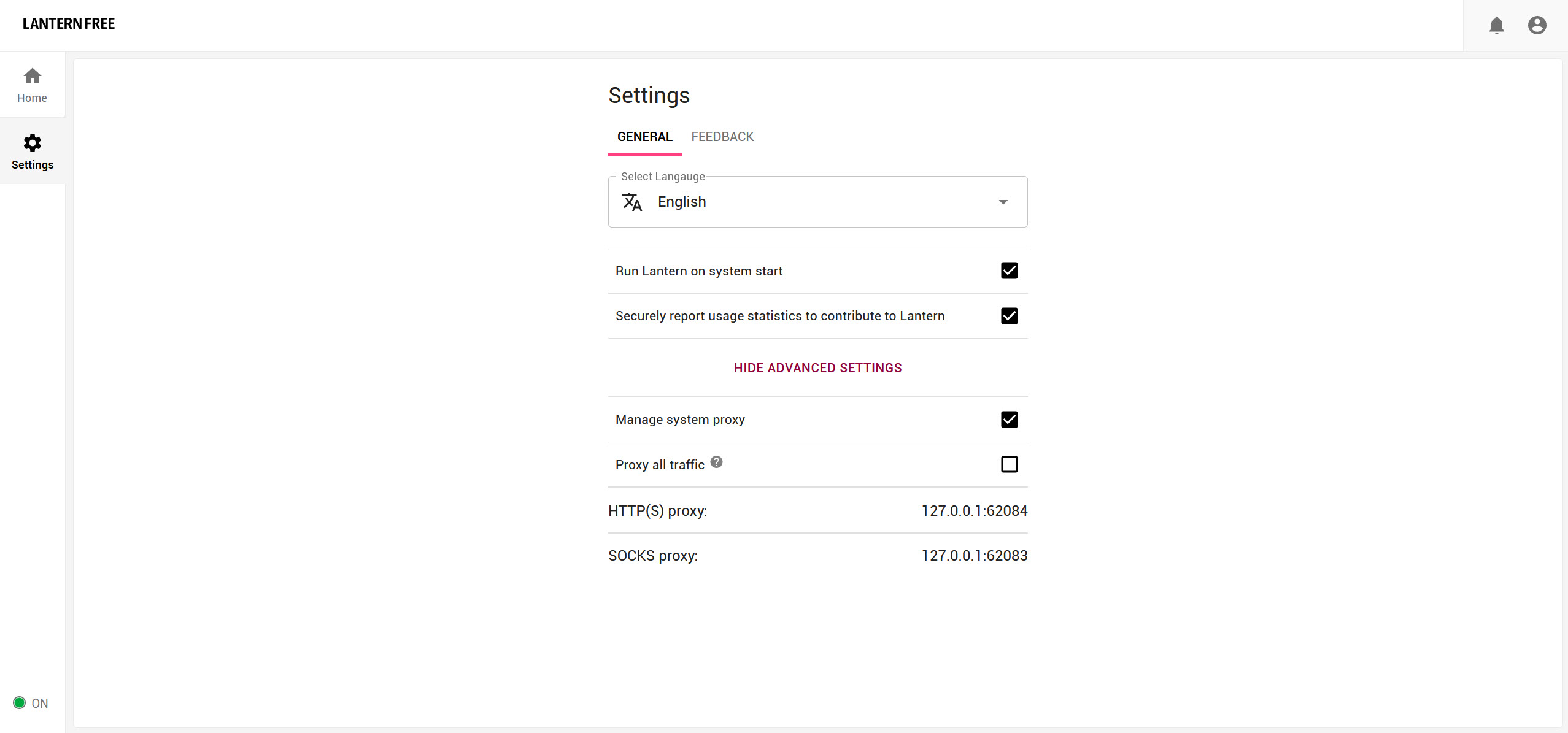
The interface reflects the narrower purpose. There is very little to configure, because somebody trying to reach a blocked page while a filter watches has no appetite for a settings panel.
For the same purpose approached differently, a proxy tool built around the same problem has been doing this work for a long time.
Why it is harder to block
Blocking a conventional tunnel service is straightforward when it uses a fixed set of servers with known addresses, and Lantern exists because of that, since those addresses go on a list and the problem is solved from the filter’s side.
Lantern works against that by using many entry points rather than a fixed set, changing them continuously, and shaping traffic so it does not announce what it is. Users on unfiltered connections can also contribute capacity, which multiplies the number of routes in without requiring a corresponding number of servers.
The result is a moving target rather than a fixed one. That is the whole game in this field, and it is an arms race rather than a solved problem, which is why performance and reliability vary over time in ways an ordinary service does not.
Shadowsocks approaches the same problem from the other end, giving somebody a protocol to run on a server they control rather than a service to join.
The distinction that matters most
This deserves stating plainly and early, because getting it wrong has consequences for people who cannot afford consequences.
Circumvention is not anonymity. Lantern is built to get your traffic past a filter, and it is not built to hide from a determined observer that you are using something to get past a filter. Those are different problems requiring different designs.
A network operator watching traffic may not know what you are reading and can often tell that something unusual is happening. In places where the filtering is aggressive, the fact of circumvention can itself attract attention, and no tool in this category removes that.
Anybody whose situation involves genuine personal risk should understand that difference before relying on any of this, and should look at tools built specifically for anonymity rather than for access. For ordinary privacy on an unfiltered connection, which is a much easier problem, Mullvad is designed around knowing as little about you as possible.
Speed, and what the unpaid tier gives you
Lantern performance varies considerably, more than with a conventional service, and the reasons are structural rather than incidental.
Traffic takes whatever route is currently working rather than the fastest one, entry points change, and some of the capacity comes from other users’ connections. A route that was quick yesterday may be slow today because it is now carrying more people or has been partially blocked.
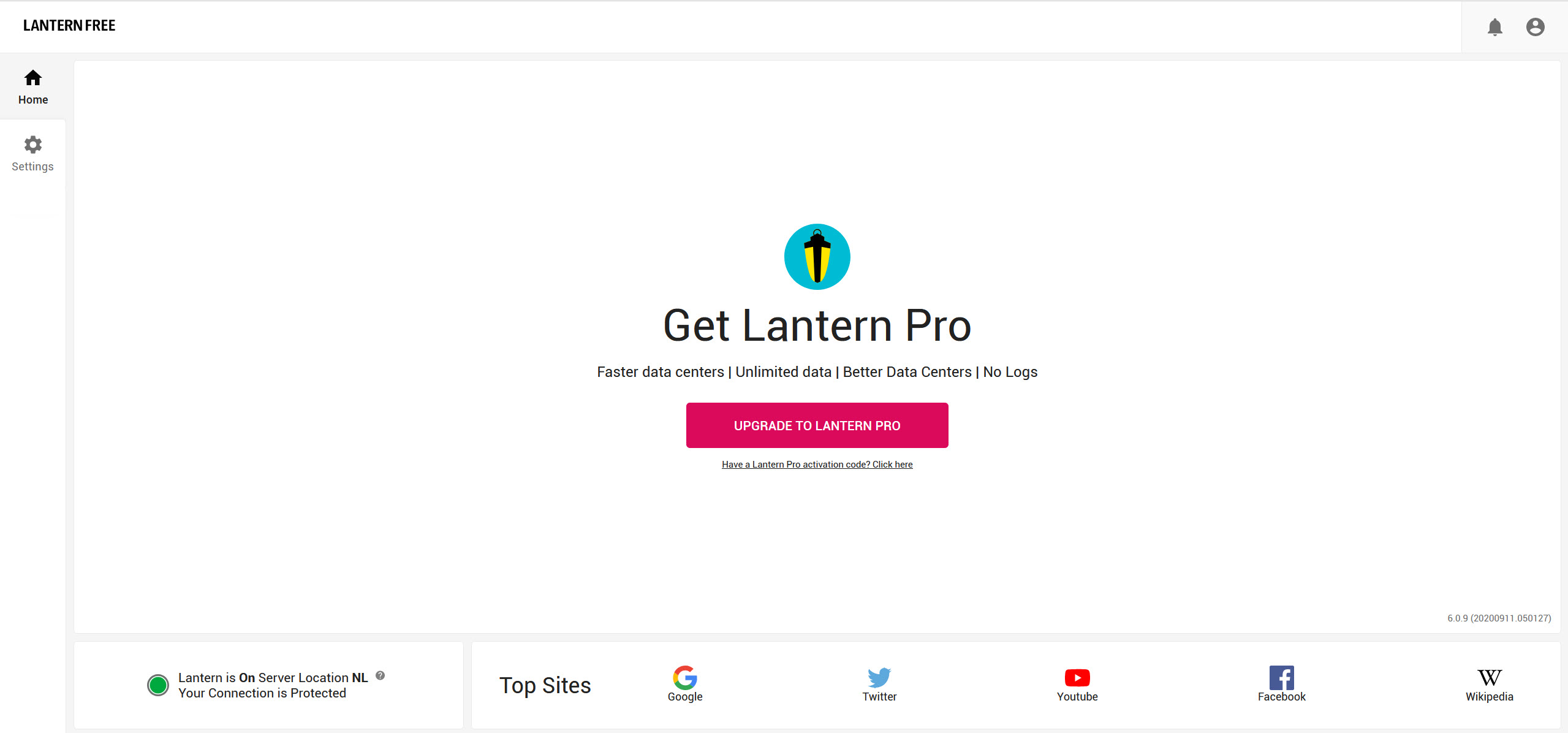
The unpaid tier carries a data allowance sufficient for reading and messaging rather than for video, with the paid tier removing it. For the audience this exists to serve, reading and messaging is frequently the entire requirement.
The wider field
Several tools share the Lantern space and they differ in approach rather than in ambition.
Psiphon is the closest comparison, similarly aimed at circumvention rather than privacy, similarly simple, and worth having alongside rather than instead. People in heavily filtered environments commonly keep two or three of these installed, because what works changes week to week and a tool that failed this morning may work this evening.
That redundancy is a sensible habit rather than indecision. None of these can promise availability, and the practical answer to that is having alternatives ready.
On legality
A brief factual note rather than advice. In several of the places where Lantern and its peers are most needed, using them is restricted or unlawful, and that restriction is part of the same policy that produced the filtering.
This article takes no position on any of that. What it can usefully say is that the legal position varies enormously, that it is knowable, and that anybody in a situation where it matters should establish it for themselves rather than assume.
Conclusion
Lantern does a specific job that ordinary tunnel services do not attempt, which is staying reachable when somebody is actively trying to block it. The changing entry points, the traffic shaping and the deliberate simplicity all follow from that purpose.
Understand the boundary before relying on it. Getting past a filter and being invisible to whoever built the filter are different things, and only the first is on offer here. For anybody whose circumstances make that distinction consequential, it is the single most important sentence in this review, and it applies to every tool in this category rather than to this one alone.
Pros & Cons
- Built for circumvention specifically, not privacy with circumvention as a side effect
- Uses many changing entry points rather than a fixed and blockable server list
- Traffic shaping avoids being recognised as circumvention software
- Very little to configure, which suits the situations it is used in
- Capacity contributed by users on unfiltered connections adds routes
- An unpaid tier sufficient for reading and messaging
- Does not provide anonymity, and conflating the two can be dangerous
- Performance varies considerably and unpredictably by route
- The unpaid data allowance rules out video
- Reliability changes over time as blocking methods change
- Using tools of this kind is restricted in some of the places they are needed most
Frequently asked questions
It is designed to avoid being identified and blocked, using many changing entry points and shaping its traffic so it does not announce itself. Conventional services use fixed servers whose addresses can simply be added to a filter's list.
No, and this is the most important thing to understand about it. It is built to get traffic past a filter rather than to hide that circumvention is happening. Anonymity is a harder problem needing tools designed for it.
Because there is no fixed list of addresses to block. Entry points change continuously, some capacity comes from other users, and the traffic is shaped to avoid recognition, which makes it a moving target rather than a fixed one.
The amount of data you may pass, which suits reading and messaging rather than video. For much of the audience this serves, that covers the actual requirement.
That depends entirely on where you are, and in some of the places where such tools are most needed their use is restricted. The position varies considerably and is worth establishing for yourself rather than assuming.


