

HDCleaner
About HDCleaner
Suites that promise to speed up a computer are a crowded and largely disreputable category, and HDCleaner belongs to it while being better than most of its neighbours. It is a launcher holding a few dozen separate modules, some of which do real, useful work and some of which perform a ritual that has not improved a machine in a very long time.
Sorting one group from the other is the point of this review, because the program itself presents them all with equal confidence, and the one-click maintenance option runs several of each together.
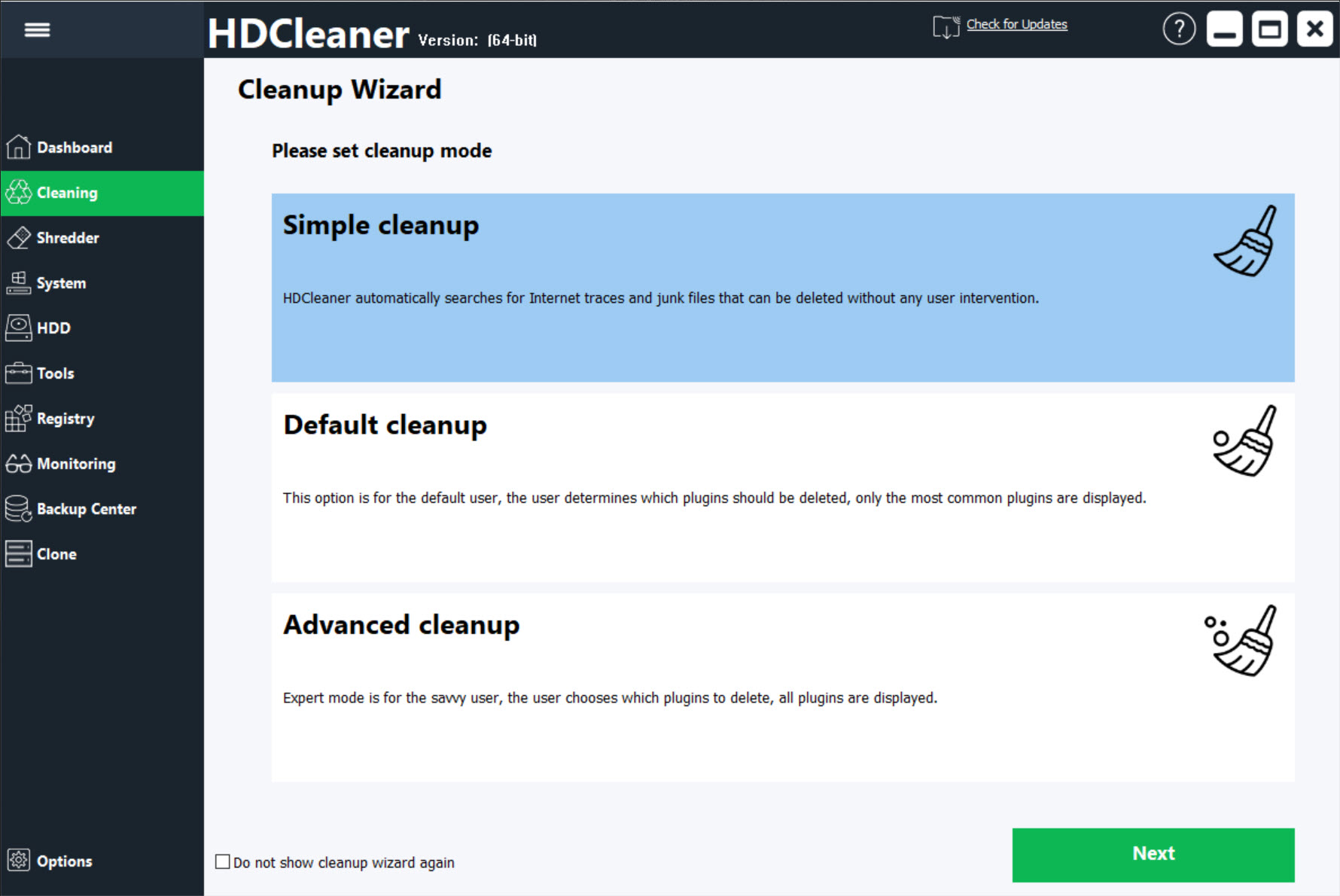
That option, along with an automatic maintenance mode and a scheduler, is what most people will click. It works, it removes real clutter, and it also performs operations whose benefit is imaginary. Nothing breaks. Time is simply spent.
The cleaning that reclaims real space
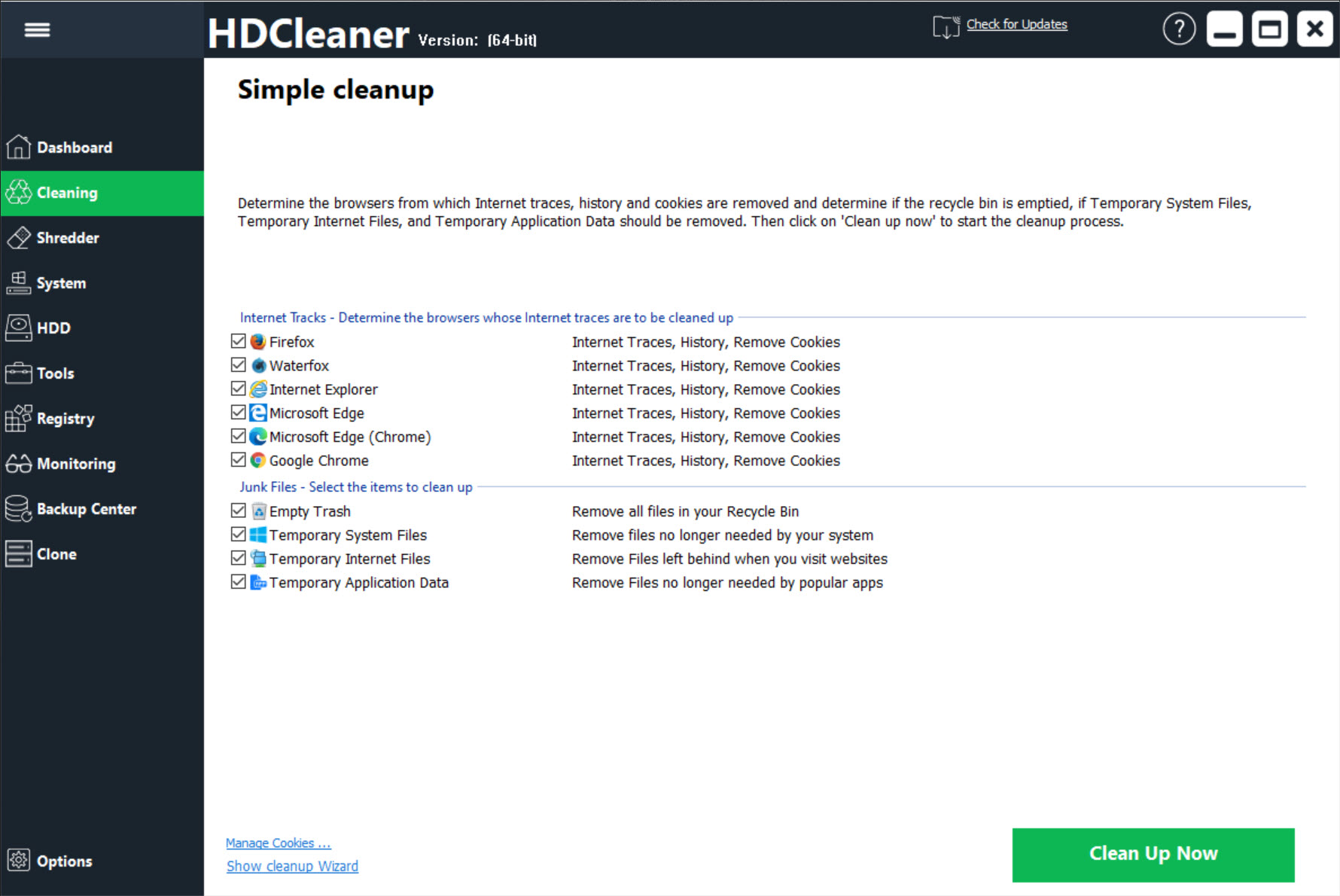
Junk file removal is the HDCleaner module that does what the box says. Temporary files, caches, the debris applications leave behind, all add up to something worth reclaiming on a machine that has been running for years.
What lifts it above the built-in cleanup is the plugin system. Definitions covering hundreds of individual applications tell it where each one hides its cache, so it reaches into programs the system’s own tool knows nothing about, and you can add your own entries for anything missing.
Browser cleaning covers the mainstream browsers with the option to keep selected cookies, which is the difference between a clean profile and being logged out of everything you use. For a focused cleaner with an open definition set and no other agenda, BleachBit does this one job and stops.
The registry modules, and the honest verdict
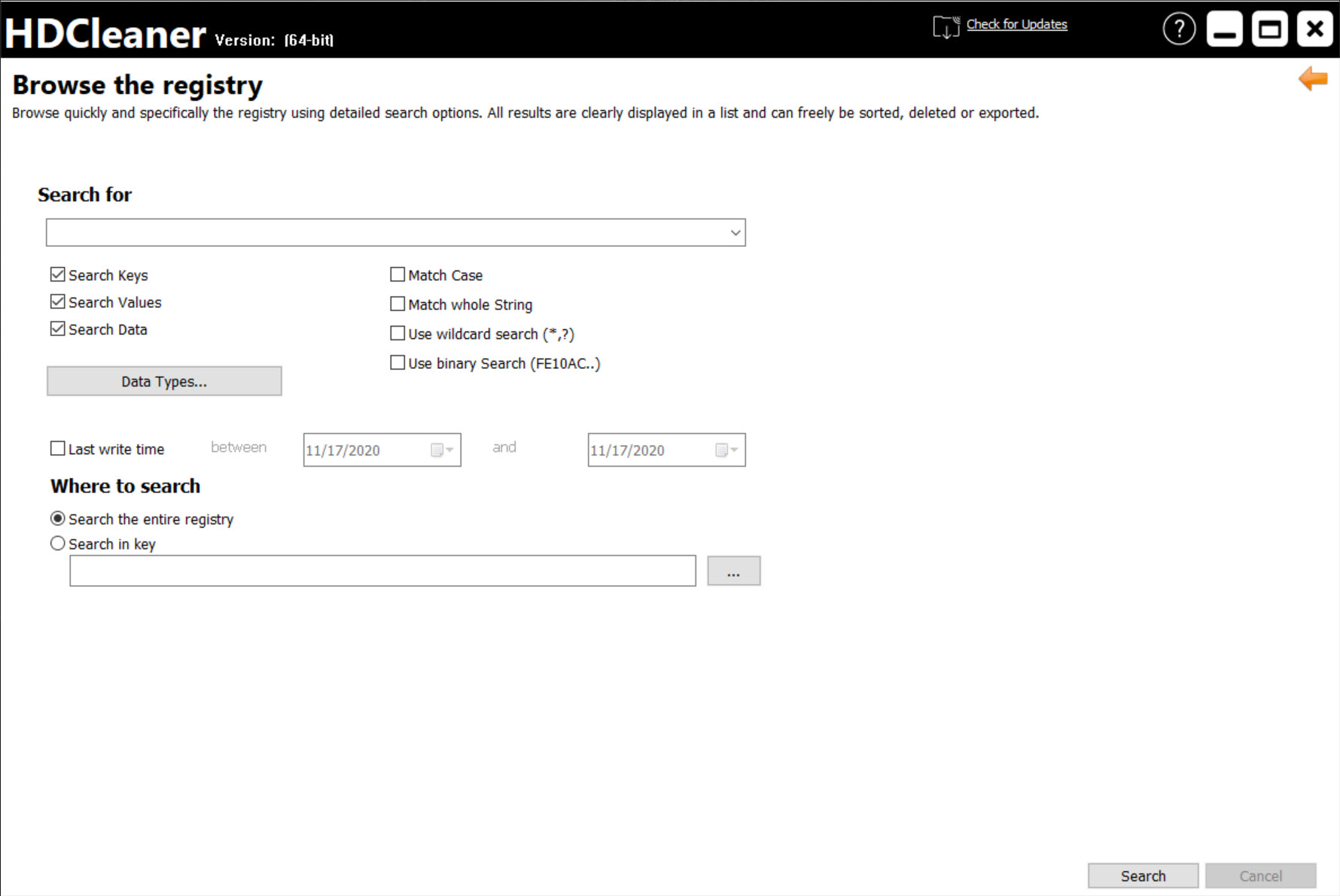
Four HDCleaner modules address the registry. A cleaner removing invalid entries, a defragmenter compacting the database, a search tool that finds keys and lets you export or delete them, and a backup and restore facility.
Here is the part that matters. Removing invalid registry entries does not make a machine faster. The registry is not a bottleneck on any current system, the orphaned entries being removed were never being read by anything, and no measurable improvement follows. None of this is a criticism of HDCleaner specifically, it is true of every product in the category, and the belief persists because the operation reports an impressive count of items removed.
Defragmenting the registry is the same story with extra steps. The database is memory-mapped and the fragmentation being repaired has no effect anybody can measure.
Credit where it is due, though. The program backs the registry up before touching it, and offers restore, which is exactly the right design for an operation with negligible upside and a real, if small, downside. The search module is separately useful for anyone who has to find a value.
The modules that earn their place
Several tools here are worth having, and notably they are the ones that do concrete things rather than abstract optimisation.
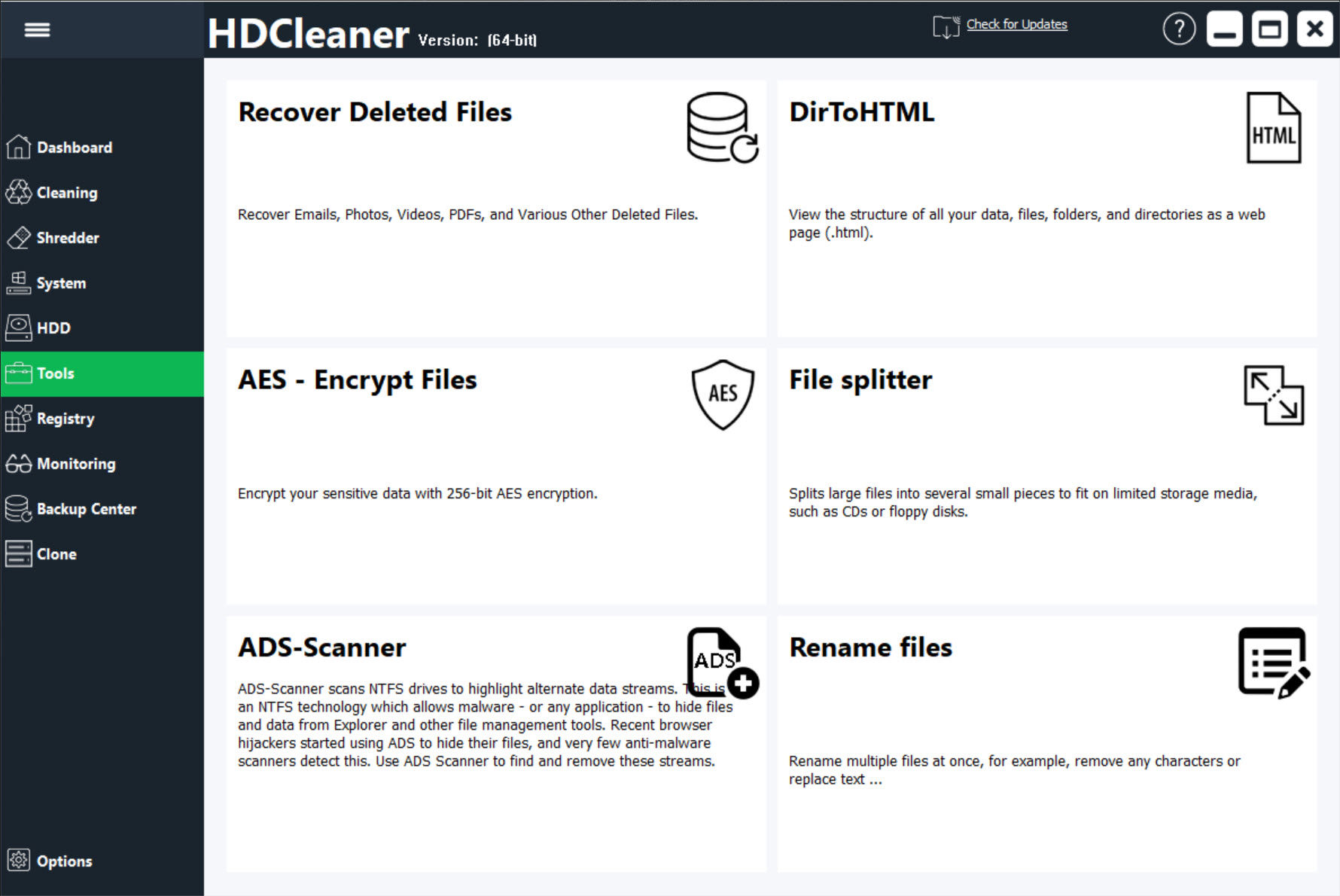
The duplicate finder reclaims real space, since a photo library copied twice wastes real space rather than theoretical space. It compares reasonably and a dedicated tool goes further, so dupeGuru matches by content including near-identical images where this matches more simply.
The disk analyser answers the question people actually have when a drive fills, and the shredder overwrites files properly for anything leaving your possession. File splitting and encryption round out the set, along with a recovery tool for accidental deletions.
For the analysis specifically, a dedicated analyser that reads the file table directly returns an answer in seconds where a conventional scan takes minutes, which changes how often you bother.
Startup, services and uninstalling
The HDCleaner startup manager does what it says, and disabling programs that load at boot remains one of the few interventions that measurably improves how a machine feels. Services and process management sit alongside it, which is a sharper instrument and deserves more caution.
The uninstaller removes leftovers that the standard removal leaves behind, and for the difficult cases Revo Uninstaller monitors an installation and traces what it created, which is the more thorough approach.
Two smaller managers deserve a mention. One handles browser add-ons across installed browsers, and one edits the right-click context menu, which is where accumulated software goes to clutter. For a complete picture of everything set to run automatically, a startup auditor covering every location at once shows entries this does not.
Defragmenting, tweaks and the numbers in the description
The defragmenter distinguishes between spinning disks and flash storage, which is more than some competitors manage and is important, since defragmenting flash storage achieves nothing while consuming write cycles it has a finite supply of.
Beyond that sit several hundred system tweaks, a privacy panel exposing various collection and convenience settings, and a status display reporting what security software is present.
One note on the marketing. The description quotes thousands of cleaning and repair functions, and that number counts individual plugin definitions rather than distinct capabilities. It is not dishonest and it is not what a reader assumes it means.
Conclusion
HDCleaner is a well-built collection containing several tools worth using and several that belong to an older understanding of how computers slow down. The junk cleaning reaches further than the built-in equivalent, the duplicate finder and disk analyser answer real questions, and the startup manager addresses one of the few things that actually affects how a machine feels.
Use the modules individually rather than pressing the one-click button, skip the registry cleaner and its defragmenter, and treat the impressive numbers as marketing rather than measurement.
Approached that way it is a convenient bundle of decent utilities. Approached as a way to make an old computer fast again, it will produce a satisfying report and no difference you can feel.
Pros & Cons
- Plugin definitions cover hundreds of applications, reaching caches the built-in tool ignores
- Browser cleaning keeps selected cookies rather than logging you out of everything
- Backs up the registry before modifying it, and offers a restore
- Duplicate finder, disk analyser and shredder all do concrete, measurable work
- Startup and services management is one of the few real performance interventions
- Distinguishes flash storage from spinning disks when defragmenting
- Dozens of tools in one launcher, with a scheduler and a portable build
- Registry cleaning produces no measurable performance improvement on a current machine
- Registry defragmenting is the same, with the tidiness of the operation as its only benefit
- One-click maintenance bundles the worthwhile modules with the pointless ones
- The quoted function count reflects plugin definitions rather than capabilities
- Services and process management is exposed with little guidance about consequences
- Individual modules are each outperformed by a focused tool built for that job
Frequently asked questions
No, and neither does any other. The registry is not a performance bottleneck, and invalid entries are not being read by anything, so removing them changes nothing measurable. The item count it reports is impressive and meaningless.
Several modules in sequence, including junk file removal, browser trace clearing and the registry operations. The useful and the pointless run together, so anyone who wants only the former should use the individual modules instead.
No, and to its credit it treats the two drive types differently. Defragmenting flash storage gains nothing and spends write cycles, so the correct behaviour on such a drive is to leave it alone.
The junk cleaning with its application plugins, the duplicate finder, the disk analyser, the shredder and the startup manager. Those do concrete work. The registry modules are the ones to skip.
For the registry, yes, with a restore facility alongside it. That is the right design, and it is the reason the registry modules are harmless rather than risky even though they achieve little.


