

CCleaner
About CCleaner
CCleaner is the PC cleaning utility that defined the category for a generation of Windows users. The application bundles a drive cleaner, registry cleaner, startup manager, browser data cleaner, software uninstaller, and a few smaller utilities into a single interface that has barely changed in core appearance over decades of use. For freeing up disk space, clearing browser caches across multiple browsers in one pass, and managing what runs at boot, the application still does what it always did, and it does so quickly.
The application is also no longer the obvious recommendation it once was. The cleaning niche has changed, the registry cleaning that gave the software half its name has fallen out of favor as a useful operation on modern Windows, and the application itself has grown features and behaviors that some longtime users find unwelcome.
CCleaner today is both a tool with real utility and a piece of software users are wise to install and configure deliberately rather than accepting defaults.
What the drive cleaner actually clears
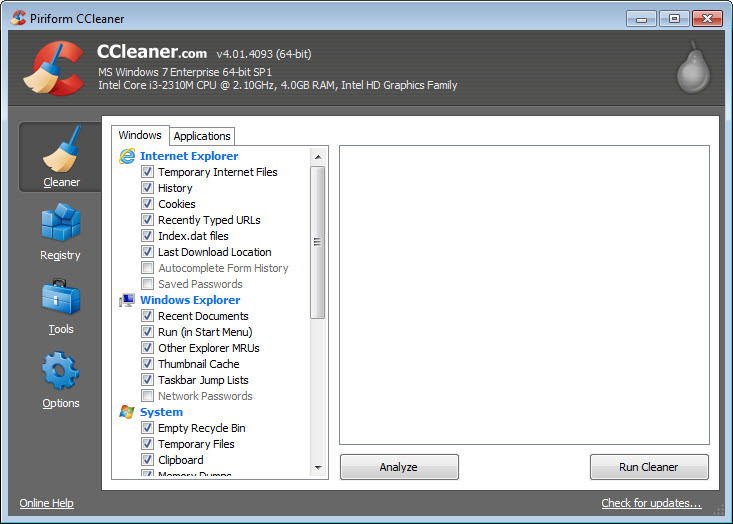
The drive cleaner is the headline function and the part most users open the application to use. It scans for known caches, logs, and temporary file locations across the operating system and major applications, presents a list of what it found with disk space totals, and removes the selected categories on demand. The browser cleaning covers Chrome, Firefox, Edge, Opera, and several others in a single sweep, removing cookies, browsing history, cached files, autocomplete data, and form contents based on per-browser toggles.
The Windows system cleaning includes temp files, recent documents lists, recycle bin contents, clipboard cache, DNS cache, log files in standard locations, error reports, prefetch data, and various Explorer history caches. The application cleaning covers a wide list of installed applications with known cache and history locations, from media players to office suites to development tools. The total covered surface is genuinely large.
Where the cleaner is most useful is the multi-browser one-shot. A user with Chrome, Firefox, and Edge installed can wipe all three in a single operation rather than visiting each browser’s settings panel separately.
For users who only need single-browser cleanup or want a more minimalist tool, alternatives like BleachBit cover similar ground with a different design philosophy, and ATF Cleaner handles a narrower temp-file-focused subset.
The registry cleaner and the modern reality
This is the feature that built CCleaner‘s reputation and the feature most worth discussing honestly. The registry cleaner scans the Windows registry for invalid entries, orphaned references, missing file paths, and various inconsistencies, then offers to remove them with an optional backup before each deletion.
The historical pitch was that cleaning the registry would speed up Windows. On older versions of Windows running on slow hard drives with limited memory, this had a kernel of truth in extreme cases. On modern Windows running on SSDs with abundant RAM, the performance benefit is essentially zero. Microsoft does not recommend registry cleaning, and the modern Windows registry is robust enough that orphaned entries do not meaningfully impact system speed.
What registry cleaning still does is occasionally fix specific problems caused by incomplete software uninstalls, especially when a removed program left orphaned context menu entries, broken file associations, or invalid startup references.
For these cases, the cleaner is useful in a targeted way. The general “clean my registry weekly” workflow is solving a problem that does not really exist on current systems. The application includes the feature because users expect it, and it does offer a backup before any registry change so the risk is low.
Startup manager and software uninstaller
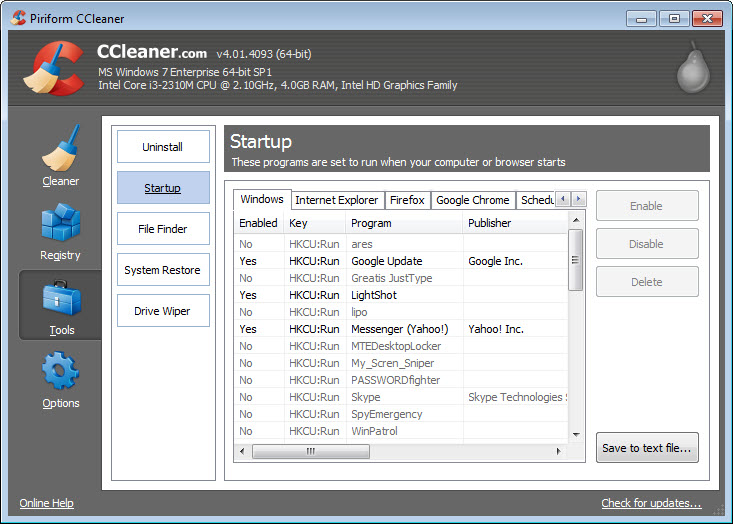
The startup manager is genuinely useful and gets less attention than it deserves. It shows everything configured to run at Windows boot, from traditional Run keys in the registry to scheduled tasks to the modern startup folder entries, all in one list with disable and delete options. Users investigating slow boot times can identify which applications are loading during startup and disable them without digging through the Task Manager’s separate startup panel.
The browser plugin manager extends the same idea to browsers. It shows all installed extensions across the major browsers, with the option to disable or remove them centrally. This is useful for cleaning up extensions accumulated through bundled installs or forgotten installations from years ago. For more comprehensive uninstaller functionality, alternatives like Bulk Crap Uninstaller and HiBit Uninstaller handle the deep removal scenarios CCleaner approaches more lightly.
The software uninstaller in CCleaner is a thin layer over the standard Windows uninstall mechanism. It lists installed applications, lets you trigger the uninstaller, and that is mostly it. There is no leftover scanning, no force-uninstall capability, and no batch removal. For these features users typically install a dedicated uninstaller alongside. Geek Uninstaller is the popular lightweight option for cleaner removal with leftover detection.
Drive wiper and secure deletion
The drive wiper is one of the more specialized features. It overwrites free space on a drive with random data, making previously deleted files unrecoverable through standard file recovery tools. Multiple pass options are available, from a single pass (sufficient for most threat models) to the seven-pass Department of Defense standard for paranoid scenarios.
This is genuinely useful before selling or donating a PC, where simply deleting personal files does not actually remove them from the drive’s physical sectors. The drive wiper makes those sectors unrecoverable through normal means. On SSDs the behavior is different because of wear-leveling and the way SSD controllers handle deletions, and the application notes this caveat in the wiper interface.
The same drive wiper can target specific drives, free space only, or the entire drive (with appropriate warnings about data loss). For thorough disk space analysis to identify what to clean before wiping, a visualization tool like TreeSize shows where the actual space is being consumed in a way the CCleaner drive cleaner does not.
The two work well together for users doing a serious cleanup pass.
The 2017 incident and what changed
This needs addressing because it remains the single biggest historical question users have about the application. A version of CCleaner distributed through normal channels was compromised at the source, with malicious code inserted into the legitimate installer. The compromise affected a large user base before detection, and the incident significantly damaged trust in the application.
The response involved rebuilding the build infrastructure, additional code signing, and security audits to prevent recurrence. The compromise itself was patched within weeks of detection, and no similar incident has occurred since. Current builds are clean and the supply chain controls have been hardened.
What the incident left behind is a permanent change in how careful users approach the application. Many longtime users moved to alternatives during that period and never came back. Others updated their threat models to include verifying installer hashes against published values, running scans before execution, and being cautious about which features they actually use.
The application has earned back trust over the years through clean operation, but the incident is part of its history and worth knowing about when making install decisions.
Bloat creep and the Health Check feature
A more recent friction is the application’s tendency to add features and behaviors that not all users want. The Health Check mode introduced as a default workflow tries to combine cleaning, optimization, and update checks into a single one-click operation. For new users this is genuinely friendlier than navigating individual panels. For power users who specifically want to control what gets cleaned, the simplified mode obscures the granular toggles that older versions exposed prominently.
There is also occasional pressure toward the paid Pro version, with periodic prompts about features unavailable in the free build. The browser bundling that appeared in some installer versions, where additional software was offered or pre-checked during install, has been a recurring point of contention. Users installing the application today should pay attention to the install screens and decline any bundled offers that appear.
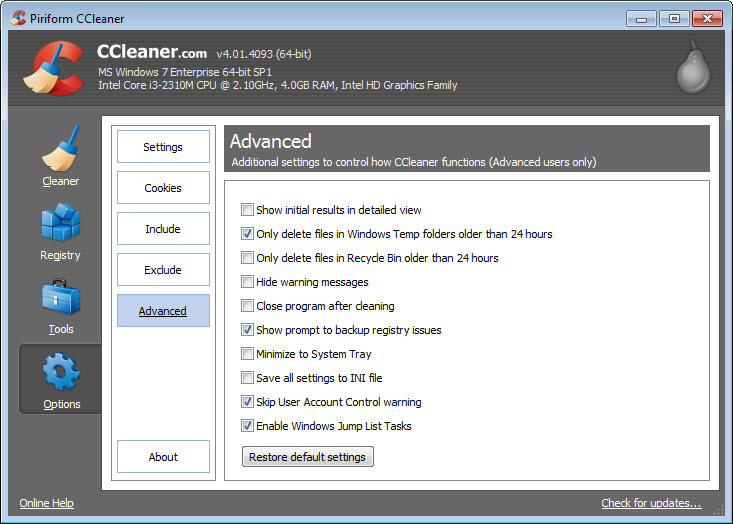
The push notification feature also deserves mention. Some versions enabled a notification system that prompted cleaning operations or update reminders periodically. This can be disabled in settings but the default state has changed over different releases. New installations benefit from a careful first-run configuration pass to set notifications, scheduled cleaning, and Health Check behavior to your actual preferences.
Real limitations
The application has become heavier than the lightweight cleaner it was originally pitched as. Installation drops more files into more places than it once did, the system tray component runs in the background by default, and the update mechanism is more aggressive about itself. For users wanting a minimal cleaner without these behaviors, alternatives like BleachBit or the smaller Cleanmgr+ provide cleaning without the surrounding overhead.
The free version’s limitations have grown over time. Real-time monitoring is paid. Scheduled cleaning is paid. Automatic updates are paid. The Pro version unlocks these but at a recurring cost that may not match the value users get from periodic manual cleaning runs.
The registry cleaner, while still functional, is a feature whose continued prominence in the interface gives an outdated impression of what helps modern PC performance. Modern Windows benefits more from disk space management, startup program control, and browser data cleanup than from registry maintenance, and the interface design has not fully caught up with that reality.
Conclusion
CCleaner is the right choice for users who want a familiar one-stop cleaning interface for browser data, temp files, startup programs, and basic system maintenance. The drive cleaner remains genuinely useful for clearing caches across multiple applications in a single pass, and the startup manager covers ground that takes longer to navigate through the built-in Windows panels. For users with multiple browsers and a habit of periodic cleanup runs, the application still does this work efficiently.
The application is not the right choice for users who specifically value minimal background presence, who want the leanest possible cleaning utility, or who are particularly sensitive to the bundled offer and notification patterns that have crept in over time.
For those audiences, leaner alternatives in the same space deliver the core cleaning function without the surrounding overhead. CCleaner sits where it sits in the cleaner market because of long brand recognition and continued functional adequacy, and users coming to it today should configure deliberately rather than accept defaults.
Pros & Cons
- Drive cleaner handles caches, temp files, and browser data across multiple applications in one pass
- Startup manager exposes everything that runs at Windows boot in a single navigable list
- Browser plugin manager lets you control extensions across all installed browsers centrally
- Drive wiper provides secure deletion of free space for pre-sale or pre-donation cleanups
- Interface remains familiar to longtime users and is genuinely fast on the operations it performs
- Cleaning operations include explicit category toggles so you can exclude what you want kept
- 2017 supply chain incident left a permanent mark on trust, even though current builds are clean
- Bundled offers in installer require careful attention during install to decline unwanted additions
- Registry cleaning is largely obsolete as a performance benefit on modern Windows systems
- Health Check mode obscures granular controls that older versions made prominent
- Free version has lost features over time, pushing users toward the paid Pro tier
- Background components and notifications run by default and require explicit disabling
Frequently asked questions
The drive cleaner targets caches, temp files, browser history, logs, and similar transient data across Windows and many installed applications. The registry cleaner targets invalid registry entries. The drive wiper securely deletes free space to prevent recovery of previously deleted files.
Current builds are clean and the build infrastructure was hardened significantly after the breach. Users wanting extra confidence can verify installer hashes against published values before running them. The incident itself was patched within weeks and no similar event has occurred since.
Generally no. Modern Windows is not meaningfully slowed by orphaned registry entries, and registry cleaners do not produce measurable performance gains on current systems with SSDs and adequate RAM. The cleaner is still useful for fixing specific problems caused by incomplete uninstalls but is not a performance tool.
Standard cleaning targets the safer common categories like browser cache and temp files. Complete cleaning adds more aggressive options including system logs and various caches that some users prefer to keep. The Complete mode requires more careful selection of what to clean.
Yes, with sensible caution. Verify the installer source, watch for bundled offers during install, and configure background components and notifications to your preference after first run. The free version covers the core cleaning functions most users need.
Open the Settings panel and disable the system tray icon, scheduled cleaning, and Health Check monitoring. These options keep the application available for manual use without leaving components running between sessions.
Only if you select categories that include them. The cleaner shows what each category does and lets you preview specific files before deletion in some modes. Default categories are conservative, but custom selections can include personal data, so review what is checked before clicking Run Cleaner.


