

DriverMax
About DriverMax
Driver updaters occupy an awkward position. The job they promise is real, since an outdated graphics or wireless driver really does cause problems, and the category has a reputation for breaking working machines. DriverMax sits in the middle of that, and what separates a useful session from a damaging one is understanding where its drivers come from.
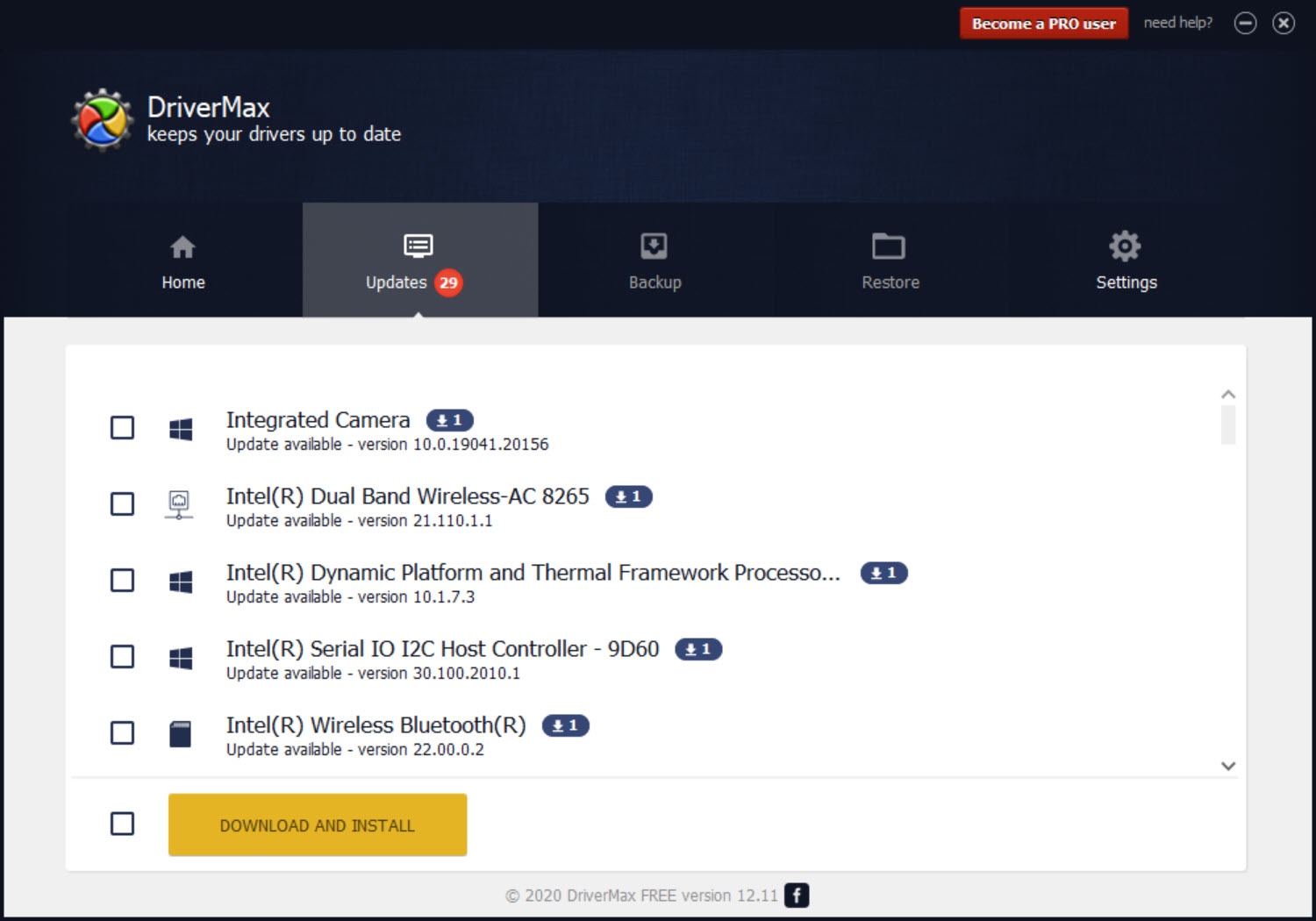
The DriverMax scan is straightforward. It reads what is installed, identifies each device by its hardware identifier, and compares what you have against what its database holds.
That comparison is the whole product and the whole risk, so it deserves examining before anything else.
Where the drivers come from
The DriverMax database is assembled from drivers collected across many machines rather than obtained from whoever built yours. Matching happens by hardware identifier, meaning the chip inside the device rather than the machine it sits in.
For a desktop assembled from components, that is usually correct. The graphics card is a graphics card, and the reference driver for its chip is the right driver.
For a laptop it frequently is not. Machine makers take the reference driver, modify it for their hardware, and add behaviour specific to that model, covering display switching, brightness control, power management and function keys. A generic replacement matched by chip identifier can remove all of that, and the symptoms appear later as things that quietly stopped working.
Where a component comes from a manufacturer supplying their own tool, that tool is the better source, and Intel Driver & Support Assistant matches drivers to hardware from the people who made it.
The backup is the feature worth having
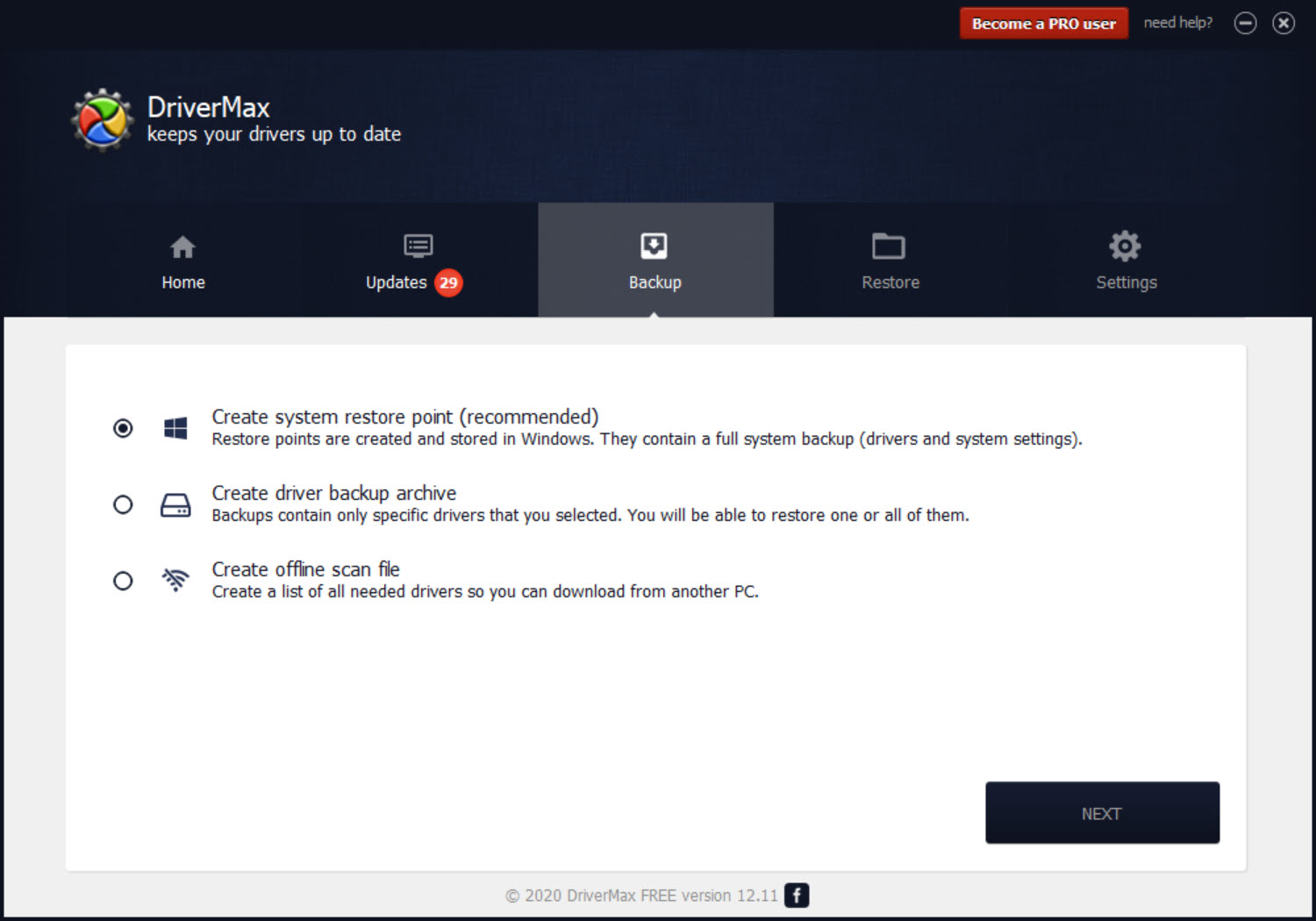
Before touching anything, DriverMax exports the installed drivers to an archive, which is the single most valuable thing here and the reason it can be used with some confidence.
That archive serves two purposes. It makes any update reversible, because the previous driver is sitting in a folder rather than existing only as a memory of what used to work. And it makes a reinstallation straightforward, since a fresh system with no network driver can be given one from the archive rather than from a machine you cannot reach.
Anybody who has rebuilt a laptop and discovered the wireless adapter unrecognised understands why that archive matters more than any update it might offer. For backing up drivers as a job in itself rather than as a step before updating, a dedicated tool for saving and restoring installed drivers does exactly that and nothing else.
Rolling back one driver
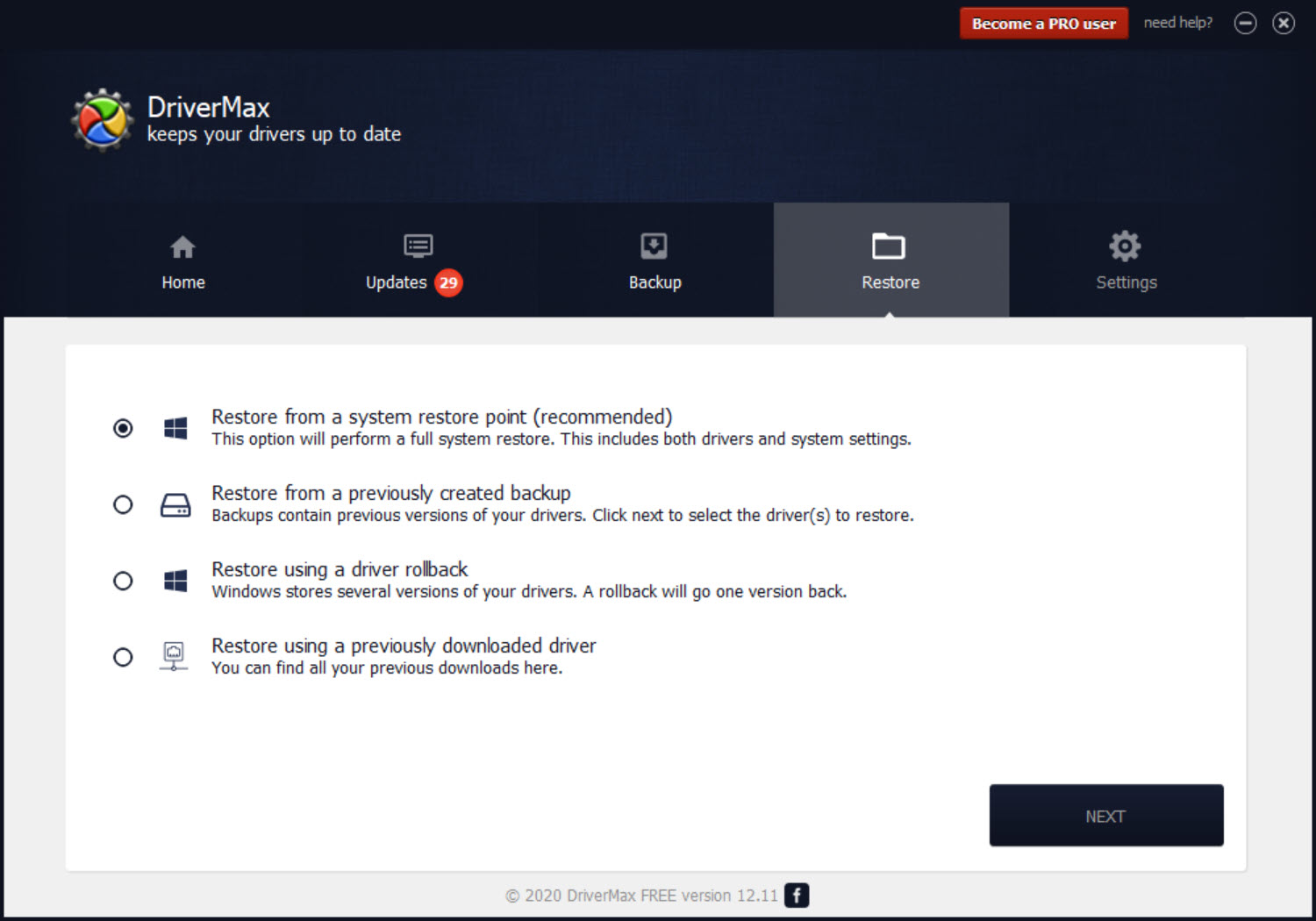
When a DriverMax update goes wrong, the useful response is reversing that one driver rather than restoring the machine to an earlier state.
DriverMax keeps what it replaced and can put it back individually, which turns a bad update from an afternoon into two minutes. That capability is what makes trying an update reasonable rather than reckless.
The discipline that goes with it is updating one thing at a time. Applying eleven driver updates at once and finding the machine misbehaving afterwards leaves you guessing which one caused it, and the rollback only helps if you know what to roll back.
Which updates are actually worth installing
Not everything DriverMax finds rewards updating, and the category encourages people to update everything because a long list of available updates looks like a long list of problems.
Graphics drivers really do improve, fixing rendering faults and adding support for newer software. Wireless drivers matter too, since connection stability and roaming behaviour do change, and a wireless problem resisting every setting is often a driver of a certain vintage.
Chipset, audio, storage drivers rarely change anything you would notice. They are updated for correctness rather than performance, so installing them is mostly harmless and mostly pointless unless something specific is wrong.
Establishing what is actually in the machine before deciding takes seconds, and a plain inventory of the installed hardware tells you what each device actually is rather than what a driver database calls it.
Scheduling, and why to leave it off
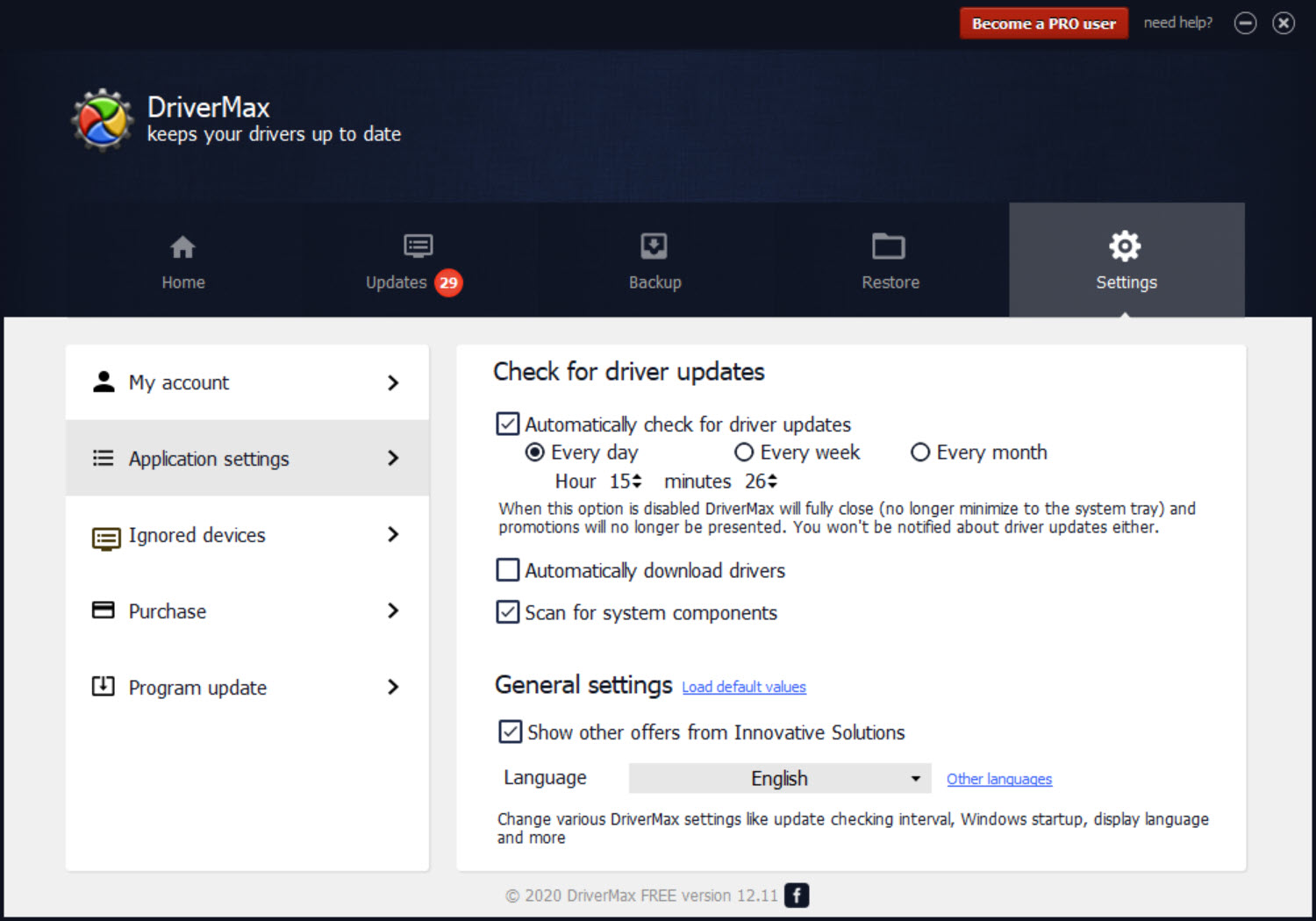
Automatic scanning and unattended updating are available, and this is where the design and I disagree.
A driver updater acting without supervision is the specific arrangement most likely to break a working machine. It applies a generic driver over a customised one at three in the morning, and the connection between the change and the symptom is lost by the time anybody notices.
Scanning on a schedule is fine, since knowing what is available changes nothing on its own. Installing on a schedule is not, because every driver update is a change to a component the machine depends on and deserves a decision. Driver Booster takes a similar approach with a similar set of trade-offs, and the same caution applies to it.
Before a reinstall, it earns its place
The strongest use for DriverMax has nothing to do with updating anything.
Exporting the complete driver set before wiping a machine means the fresh installation can be given exactly the drivers that were working, from a folder, without needing a network connection to fetch them. That solves the specific dead end where a rebuilt machine has no network driver and therefore no way to obtain one.
For the same situation on a machine whose drivers you never captured, Snappy Driver Installer carries offline driver packs covering hardware from every manufacturer, which is the other half of the same toolkit.
Conclusion
DriverMax is more defensible than its category deserves, mostly because of the backup. Exporting every installed driver before changing anything, and rolling back a single driver when one misbehaves, turns driver updating from a gamble into a reversible experiment.
Use it deliberately rather than automatically. Leave the scheduled installation off, update graphics and wireless when something is actually wrong, prefer the machine maker’s driver on a laptop, and treat the exported archive as the real product. Approached that way it is properly useful. Approached by pressing update on everything it finds, it belongs to the category that earned the reputation.
Pros & Cons
- Exports installed drivers to an archive, making updates reversible and reinstalls simple
- Individual drivers roll back without restoring the whole machine
- Identifies devices by hardware identifier, so unknown hardware still gets matched
- Scheduled scanning shows what is available without committing to anything
- The driver archive solves the rebuilt machine with no network connection
- Covers hardware from every manufacturer rather than one
- Drivers come from a database rather than from whoever built your machine
- Generic drivers can remove behaviour a laptop maker added deliberately
- Unattended updating is the arrangement most likely to break something quietly
- Encourages updating everything, when most drivers change nothing you notice
- The unpaid version limits how many updates you may install in a day
Frequently asked questions
From a database assembled across many machines, matched to your hardware by device identifier. That differs from a driver supplied by whoever built your computer, which is tested against that specific model.
No. Graphics and wireless drivers reward updating, while chipset, audio, storage drivers rarely change anything noticeable. Updating everything increases the chance of breaking something without a corresponding benefit.
Yes, and this is its best feature. Installed drivers export to an archive, individual drivers can be rolled back afterwards, and that archive is also what rescues a reinstalled machine with no network driver.
Carefully. Laptop makers customise drivers for their hardware, adding display switching, brightness and power behaviour, and a generic replacement can remove those. Prefer the machine maker's driver on a laptop and use this for identification.
The number of driver updates you may install in a day, along with download speed. Scanning, identification and the backup functions are not what the limit applies to.


