

Canon Quick Menu
About Canon Quick Menu
Canon Quick Menu is the small launcher that comes with a Canon PIXMA printer and sits on the desktop so the printer’s own programs are one click away. Its Shortcut Menu is a strip of icons for the things you reach for most, the scan utility, the photo printing program, the online manual and the printer’s product pages.
You add or remove icons to suit yourself. A Main Menu behind it lists every function the printer shipped with. An optional Image Display panel plays a slide show of the photos on the computer, and of the collages and calendars that the photo program suggests from them. A picture you like is a click from being printed.
It replaced an older launcher of the same purpose, and it is the hub rather than the engine. Canon Quick Menu prints nothing and scans nothing itself. It starts the programs that do, and it can download and install the two photo programs it works with when they are missing.
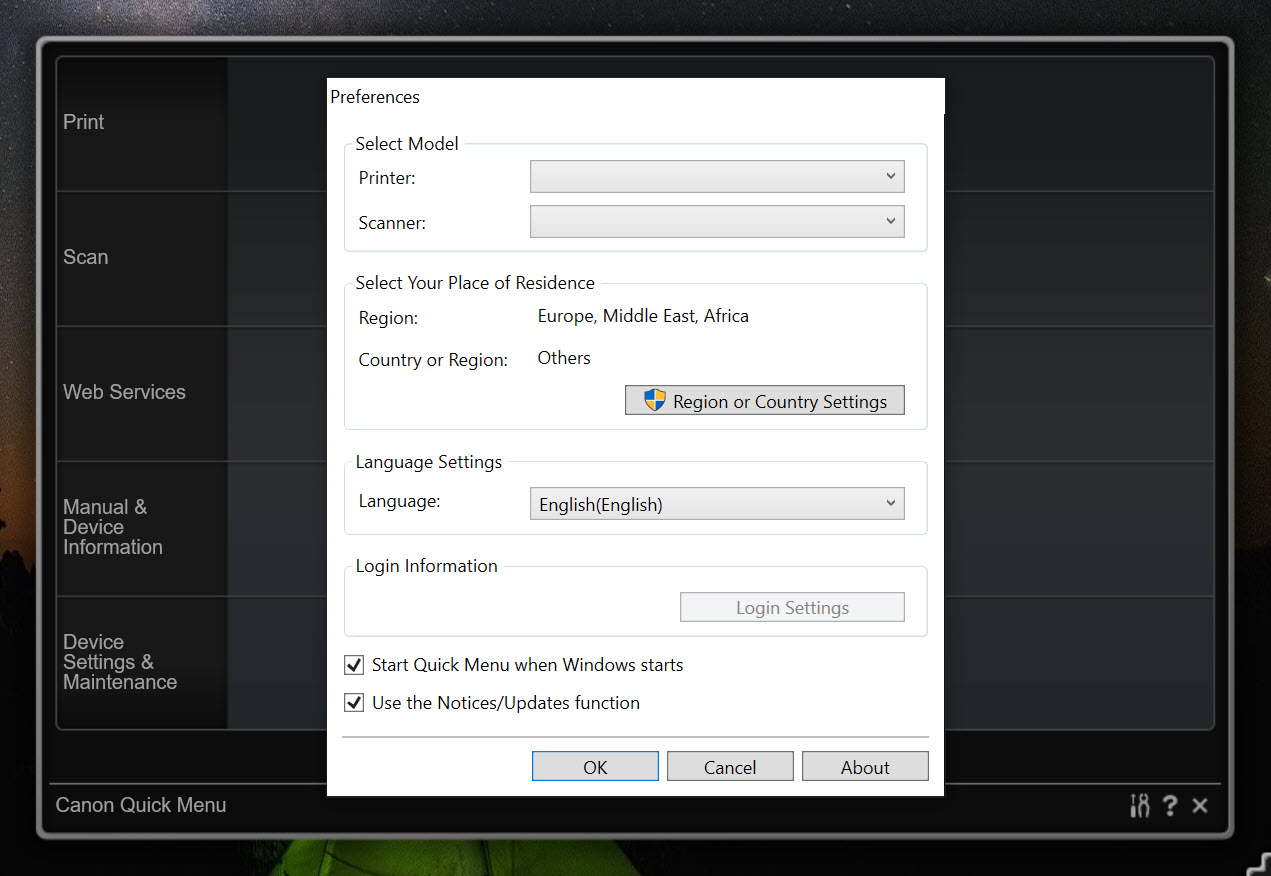
It starts with the computer by default and waits in the tray, which is also the thing people most often want to switch off. The sections below cover the two menus, the Image Display, the installing and updating it does, and what it is for and not for.
The Shortcut Menu and the Main Menu
The Canon Quick Menu Shortcut Menu is the part on screen, a small window of large icons that launches a program or opens a manual with a single click. The icons that appear depend on the printer model and on what is installed, and any of them can be added or taken away. A household that only scans keeps the scan utility and the manual and nothing else. The window sits where you leave it and can be shrunk to the tray.
Open Main Menu opens the full list, every program supplied with the printer, the on-screen manual, the online manual, and links to the product’s support pages and to the printer’s photo and creative services. It is the menu for the thing you use once a year, finding the alignment utility or the manual’s page on a flashing light.
For the scanning the launcher points at, NAPS2 drives the same scanner with batch and PDF tools the bundled utility lacks.
Image Display
Image Display is the second Canon Quick Menu screen, and it only appears when the photo program is installed. It plays slide shows of the photos saved on the computer, and alongside them the items that program creates on its own, collages and calendars and cards built from your pictures by its recommendation function. When one catches your eye, a click opens it in the photo program to edit or print.
It is a shop window for the photo program rather than a viewer in its own right, and plenty of people switch it off after the first week. For browsing and sorting photos without a slide show deciding for you, FastStone Image Viewer does that job properly.
Installing and updating the bundled programs
Canon Quick Menu knows which of the printer’s programs are missing. Click the icon for the photo program when it is not installed and the launcher downloads and installs it, which needs a connection. The same route adds the older photo printing program for anyone who prefers it.
That is the one task the launcher performs beyond launching, and it is how a machine set up from the bare driver gets the rest of the bundle without hunting through support pages.
Install quirks
Installing Canon Quick Menu over the older launcher removes that one first. The release notes admit that an install written over an existing copy sometimes leaves the launcher unable to start, which a clean uninstall and reinstall fixes. It needs the system’s .NET runtime, which the installer checks.
What it is for, and not for
The launcher is for anyone with a PIXMA who wants the scan utility, the photo program and the manual a click from the desktop. It suits those who would rather not remember where the printer’s programs were installed. On a shared family machine, the Shortcut Menu is the thing the less technical members use to scan a document. For the printer’s drivers themselves, which the launcher does not include, the model’s own driver package such as the PIXMA MG3620 driver is the separate download.
It is not for anyone without a Canon printer, since every icon points at the printer’s software. It adds a start-up item and a tray icon, and turning off the automatic start is the first setting most people change. And it is a launcher only, so a problem printing or scanning is a problem with the driver or the utility, not with this.
Conclusion
Canon Quick Menu suits owners of a Canon PIXMA who want the scan utility, the photo program and the manual a click away, and who like the launcher to fetch the missing programs for them. The Shortcut Menu is the part that earns its place on a family machine.
It is a launcher and nothing more, it starts with the computer unless told not to, and its slide show exists to sell the photo program. Trim the icons to the ones you use, turn off the automatic start if the tray bothers you, and let it be the door to the printer’s software.
Pros & Cons
- One-click launcher for the printer's scan utility, photo program and manuals
- Shortcut Menu customised by adding or removing icons
- Main Menu with every supplied program and the online manuals
- Downloads and installs the missing photo programs itself
- Image Display slide show with printable suggestions from the photo program
- Starts with the computer and sits in the tray by default
- Image Display is a shop window for the photo program
- An install over an existing copy can leave it unable to start
- Useless without a Canon printer
Frequently asked questions
It launches the programs and manuals supplied with a Canon PIXMA printer from one small window, and installs the missing photo programs. It does not print or scan itself.
Yes. The automatic start is a setting in its preferences, and the launcher can be opened from its shortcut when needed.
It needs the photo program installed. Click the Start Image Display icon and the launcher downloads and installs the program if it is missing.
No. The driver is a separate package for each model. The launcher starts the programs that come with the printer and installs the missing photo programs.


