

BlueStacks
About BlueStacks
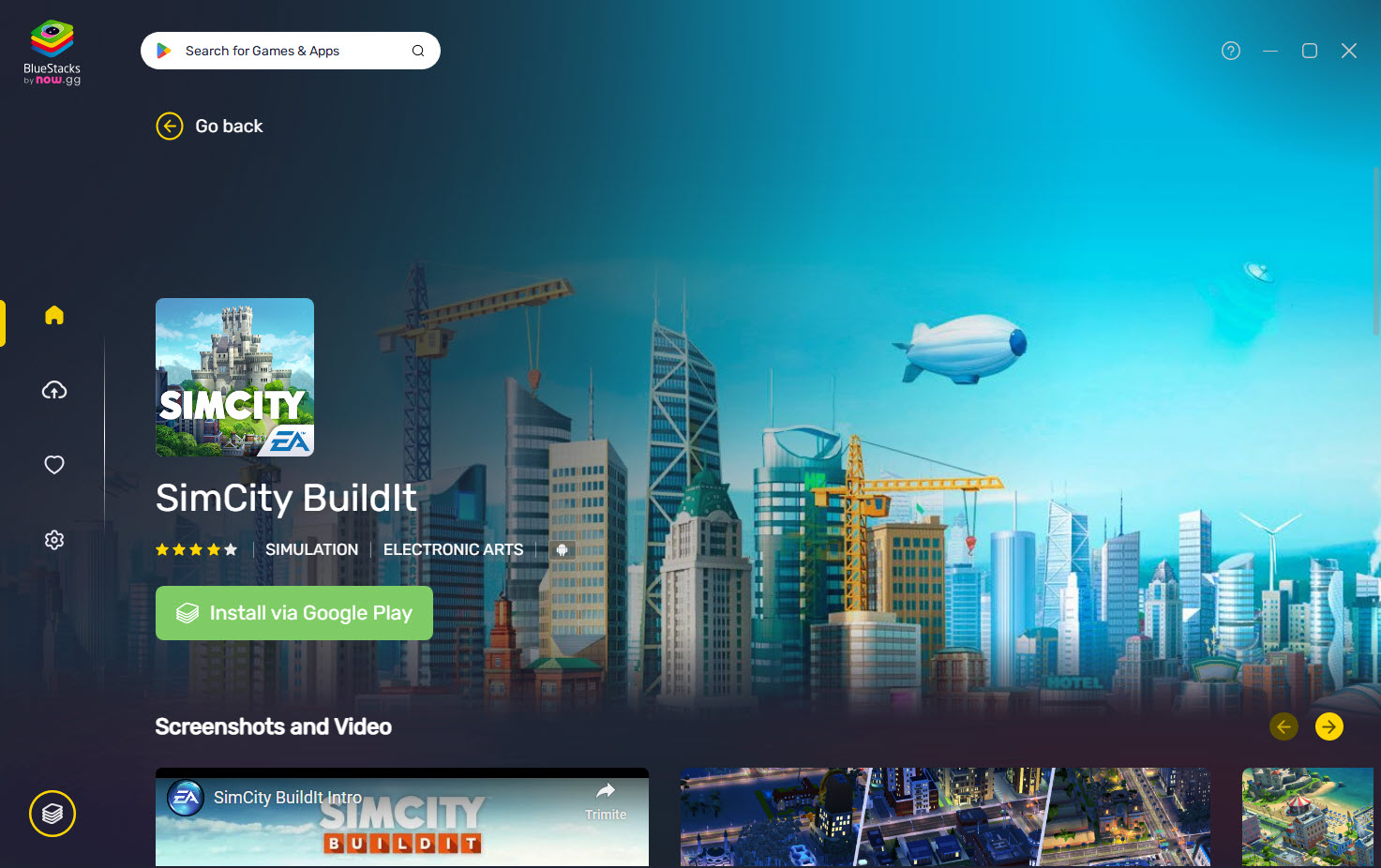
BlueStacks is the Android emulator most people have actually heard of, and for once the fame is earned by the product rather than the marketing. It runs Android games and apps in a window on your PC, with the store built in, so the catalog on your phone becomes a catalog on a big monitor with a keyboard, mouse, and all the memory your machine can spare.
The pitch has been refined over years of iteration into something very specific. Mobile games, played seriously, on hardware that embarrasses a phone, with controls a phone can’t offer.
The gaming focus shapes everything. BlueStacks ships with control schemes already built for popular titles, so a shooter launches with aim on the mouse and movement on WASD without you configuring anything. Frame rates can climb far past what most phones sustain, provided the game cooperates and your hardware carries it.
And the features around the core, macros, multiple instances, resource-saving modes for background farming, exist because millions of people use this thing to play one game for hundreds of hours, and the tooling grew around how they actually play.
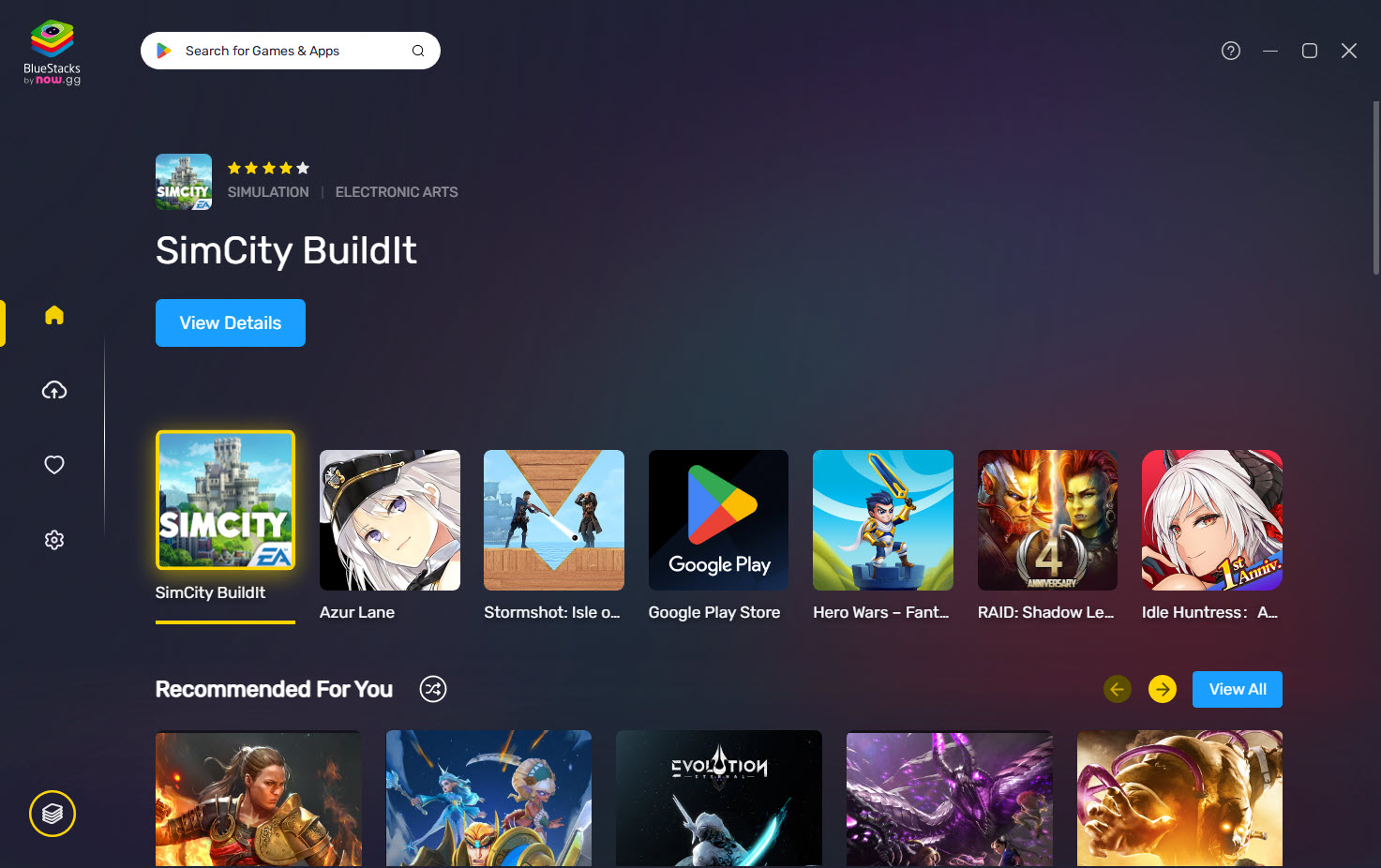
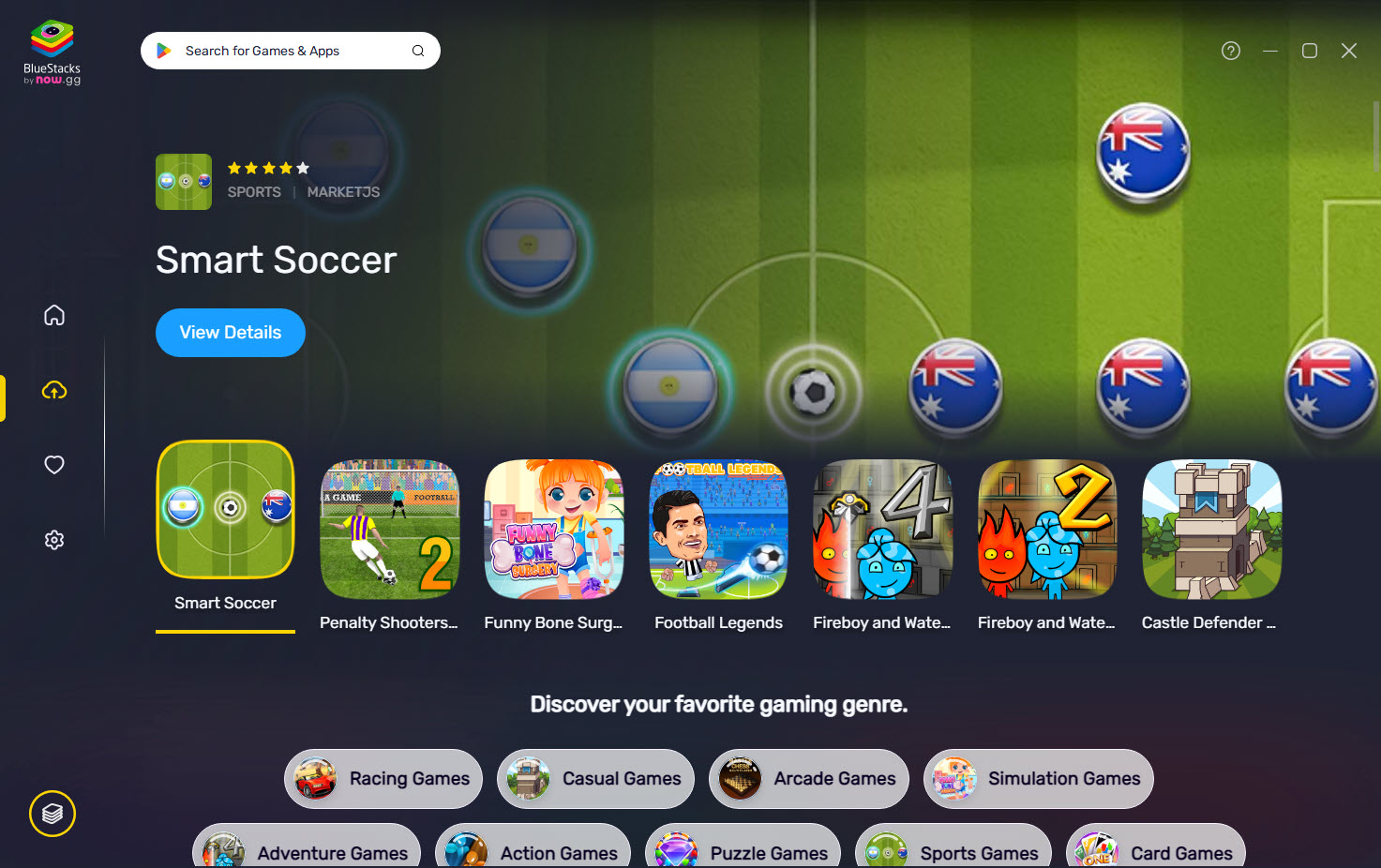
It’s also, and this deserves saying up front, the heaviest and most commercial experience in its category. The launcher promotes games, sponsored content appears where you didn’t ask for it, and the whole thing wants a machine with muscle.
What you get in exchange is the most polished, most compatible, most feature-complete emulator in the field. Whether that trade appeals depends entirely on what you’re here to do.
Keymapping that mostly configures itself
Controls are where emulators win or lose gamers, and this is the area BlueStacks has polished hardest. For a long list of popular games, the control scheme is simply there when the game opens, tuned by someone who played it, with the shooting, aiming, skills, and menus already sitting on sensible keys.
For everything else, the mapping editor lets you drop virtual taps, swipes, aim regions, and movement pads anywhere on screen and bind them however you like, with gamepad support for those who’d rather play mobile games the console way.
The quality gap against smaller rivals shows in the details, repeat-tap keys for idle games, tilt simulation, per-game schemes that switch automatically. None of it is exclusive anymore, since LDPlayer and MEmu compete hard on the same ground, but the out-of-box experience here still tends to need the least fixing before a game feels right.
Instances, macros, and playing at industrial scale
The multi-instance manager is where casual play ends and the serious mobile-gaming lifestyle begins. BlueStacks runs several emulator instances side by side, each its own Android environment with its own accounts, and a sync feature can mirror your actions across all of them at once, the same taps landing in every window. The audience for this is anyone rerolling for launch characters, running farm accounts, or managing multiple game accounts in parallel, and for them it’s the defining feature of the category.
Macros complete the toolkit. Record a sequence, the daily login, the resource collection route, the reroll loop, and replay it on demand or on schedule. Combined with an eco mode that cuts frame rate and processor use in background instances, the emulator becomes something closer to an automation platform for mobile games than a simple player. The honest caveat rides along.
Every additional instance eats memory and processor for breakfast, so ambitions of running six windows meet reality quickly on mid-range hardware, and leaner rivals like NoxPlayer stretch modest machines a little further per instance.
Performance, and what it actually requires
On capable hardware, the performance story is genuinely strong. Games run at resolutions and frame rates phones can’t hold, load times shrink, and long sessions never hit thermal throttling or battery anxiety. The settings expose real control, memory and processor allocation, resolution and DPI, graphics renderer choices for stubborn titles, and a frame rate slider that goes far beyond mobile norms for the games that support it.
The requirements are the flip side. This is not the emulator for a tired laptop. It wants virtualization enabled in your machine’s firmware, meaningful amounts of memory, and a processor with headroom, and on hardware below that bar the experience degrades faster than the lighter competition does. There’s also the compatibility wrinkle every emulator shares.
Some games and apps detect emulation and refuse to run, others are officially blessed with emulator versions, and a specific title like a popular battle royale sometimes lives better in its own publisher’s environment, which is exactly the niche GameLoop occupies.
The commercial layer you’ll be living with
Now the part the fan reviews skip. BlueStacks is free, and it pays for itself with promotion. The launcher surfaces sponsored games, recommendations appear in the interface, and the overall experience carries a layer of commercial noise that leaner emulators don’t have. None of it interferes with a game once you’re playing, but between games you’re aware of it, and people allergic to being advertised at should know it’s part of the deal.
It’s a defensible trade, and an honest one as these things go. The promotion funds an emulator with the widest game compatibility, the most mature tooling, and the most consistent updates in the category, and the entire feature set comes without payment.
Whether you’d rather have the polish with the noise, or the quiet of something like the speed-focused LeapDroid with its frozen feature set, is a matter of temperament rather than a right answer.
Conclusion
BlueStacks is the default answer for playing Android games on a PC because it earns the position, with instant controls, the deepest multi-instance tooling, and compatibility the rest of the field measures itself against. Serious mobile gamers with capable hardware, multi-account players, and anyone tired of gaming on a six-inch screen with a dying battery are exactly who it serves.
The costs are stated on the label. It’s hungry, it’s commercial, and it’s more emulator than a casual single-game player strictly needs. If those trade-offs chafe, the leaner alternatives will feel liberating.
If they don’t, this remains the most complete way to make a PC pretend, very convincingly, to be the world’s most powerful phone.
Pros & Cons
- Prebuilt keyboard and mouse schemes make popular games playable instantly
- Multi-instance manager with action sync suits multi-account and reroll play
- Macros and eco mode turn repetitive grinding into scheduled automation
- High frame rate support and deep performance settings on capable hardware
- The widest game compatibility and most polished experience in the category
- Sponsored games and promotional content permeate the launcher
- Heavy resource appetite punishes modest hardware, especially multi-instance
- Some apps and games detect emulation and refuse to run
- Requires virtualization enabled in firmware for acceptable performance
Frequently asked questions
For popular games, no, a tuned keyboard and mouse scheme loads automatically when the game opens. For everything else, the mapping editor lets you place taps, swipes, and movement controls anywhere and bind them to any key or a gamepad.
Yes, through the multi-instance manager. Each instance is a separate Android environment with its own accounts, and the sync feature can mirror your actions across all instances simultaneously, which is the backbone of rerolling and multi-account play.
The usual suspects are virtualization being disabled in your machine's firmware, too little memory allocated, or hardware below what the emulator wants. Enabling virtualization and lowering resolution and frame rate settings recovers a lot, but on genuinely modest machines a lighter emulator fits better.
Most games do, and compatibility here is the best in the category, but some apps detect emulation and decline to run, banking apps being the classic case. A few games also route emulator players into separate matchmaking pools by policy.
Within its own tools, yes. The macro recorder replays captured sequences like daily logins and collection routes, and eco mode keeps background instances running that automation at minimal resource cost. What individual games permit is governed by their own rules, which deserve a read before you automate anything competitive.


It is not opening on my PC. There is a notification saying “This can’t run on your PC, check it in Windows Store”.
Hi,
Please try installing it as administrator (right click on the installation kit, “Run as administrator …”). If it is not working repair your Windows Registry with a tool like CCleaner
Is there a way to uninstall some of the included games ?
The Bluestacks Installer is big with 446 MB.
But that is nothing compared to the Bluestacks Android Engine where the VDI files are over 3 GB in size !
I use it actually only to run ColorNote on my Windows laptop.
Start BlueStacks, go to BlueStacks Settings and press Delete to uninstall the applications you do not need,