

YoloMouse


 (96 votes, average: 3.76 out of 5)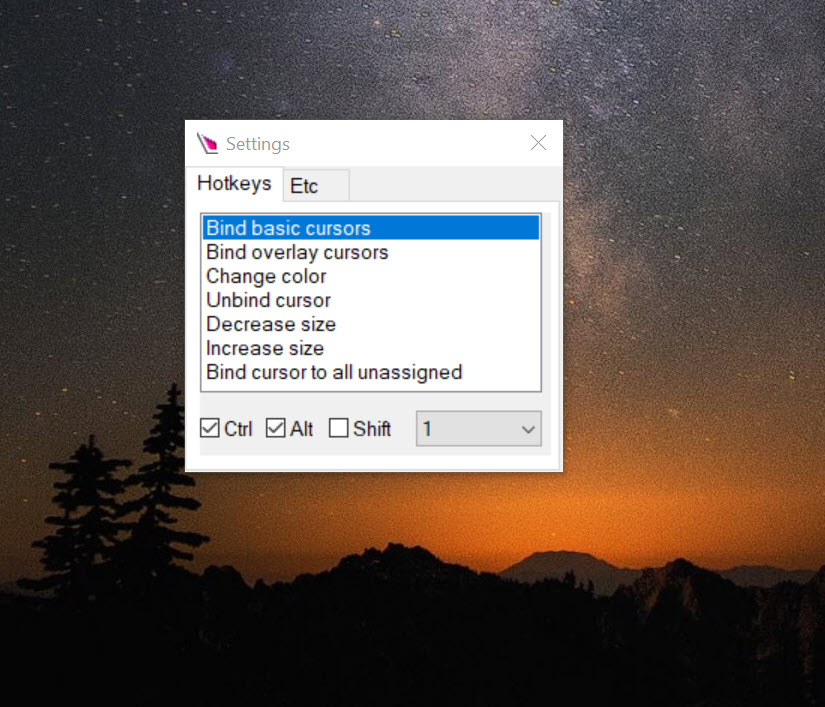
About YoloMouse
PC gaming has a problem that nobody really planned for. Monitors got bigger and denser. Games got busier with effects, particles, loot beams, and damage numbers. Cursors stayed the same tiny eight-pixel arrow they were when displays measured 640×480.
The result is that in most modern ARPGs and MOBAs you spend a meaningful portion of every fight hunting for where your own mouse is. YoloMouse is the small utility that fixes that by replacing the in-game cursor with something you can actually see.
The application sits in the system tray, watches for the game window you’re focused on, and overlays a custom cursor over the default one. You cycle through cursor designs with a hotkey, resize on the fly with another, and the change applies live without restarting the game.
The whole footprint is a few megabytes and a handful of running threads, but the practical difference during a chaotic boss fight is meaningful enough that the application has become standard kit for players of certain genres.
How the overlay actually works
The application uses display-level cursor replacement rather than modifying game files. When the game draws its frame, the application detects the cursor position and renders the chosen cursor sprite on top, overriding whatever the game would normally show. The technique works across DirectX 9, 10, 11, 12, OpenGL, and Vulkan render targets, which covers basically every current game engine.
The actual injection mechanism is what some antivirus products flag, since hooking into a running game process looks similar to what game cheats do at the OS level. The application doesn’t read game memory or modify game state, it just draws a sprite.
But the visibility of the injection is enough to trigger heuristic alerts in some security products. For users running Avast, AVG, Norton, or other detection-heavy antivirus suites, adding the application’s executable to the exclusion list is usually necessary before it works reliably.
The replacement happens at a low enough level that it survives most anti-cheat systems. Riot Vanguard, Easy Anti-Cheat, BattlEye, and most other current anti-cheat platforms either don’t flag the application or have explicit allowlist entries for it. There are exceptions, and competitive shooters with the strictest anti-cheat policies are the area where compatibility issues most often appear.
Cursor library and per-game profiles
The bundled cursor pack covers the most common needs. Bright arrows in multiple colors, larger crosshairs, glowing dots that stand out against bright VFX, animated cursors that pulse for visibility. For specific games with known visibility problems (Diablo III/IV, Path of Exile, Guild Wars 2, Last Epoch, Lost Ark, League of Legends), the application ships with optimized profiles that load the right cursor automatically when the matching window comes into focus.
Each game profile remembers the cursor choice, size, color tint, and which hotkey configuration is active. Alt-tabbing between games shifts between profiles automatically, so the cursor for your ARPG doesn’t follow you when you switch to a strategy game where you’d want something different. New profiles can be created for any game by alt-tabbing to it once with the application running.
Custom cursor packs work as well. Drop PNG files into the application’s cursor folder following the naming convention and they show up in the cycle list. Communities for specific games maintain shared cursor packs that pile up dozens of options if you want them.
The flexibility is one of the practical reasons the application has stuck around in genres where visibility matters.
Hotkeys and runtime control
Cursor switching, resizing, and color shifting all happen through hotkeys you press while the game is running. Default bindings use Ctrl-modified keys to avoid conflicts with game controls, but the bindings are reconfigurable for the inevitable case where a specific game uses those same combinations for its own functions.
Cycling through cursors lets you settle on what works mid-session rather than having to commit before launching. If your current choice gets lost against a particularly busy boss area, you tap the hotkey, the cursor changes, you keep playing. Resize works the same way, expanding or shrinking the cursor without leaving the game.
For users who pair this with Borderless Gaming to play in windowed-fullscreen mode, the hotkeys work cleanly across the window boundary.
The active cursor is always visible on top, including over fullscreen UI elements, particle effects, and overlapping render passes. That’s the entire point of the application, but it does mean that the cursor is visible even in cutscenes or dialogue screens where you might prefer the default cursor.
Pause-and-restore hotkeys cover the cases where you want to temporarily disable the overlay.
What the application doesn’t do
It’s not a general system-wide cursor replacement. Windows has its own cursor scheme system for that, and the application doesn’t compete with it for desktop use. The cursor replacement only kicks in when a recognized game window is active. Outside games, your normal OS cursor is unchanged.
It also doesn’t address keyboard or controller input in any way. For gamepad mapping or keyboard remapping during gameplay, AntiMicro handles a parallel niche entirely, and the two applications can run alongside each other without interfering.
The application is single-purpose by design. Cursor visibility is what it does, and it doesn’t try to expand into a broader “gaming utility” package that bloats over time. For users who want broader Windows UI customization that includes cursor changes among many other tweaks, WindowBlinds covers desktop personalization at a much wider scope but doesn’t address in-game cursor problems specifically.
Edition differences and what you actually get free
The application has two tiers. The free edition includes the core overlay functionality, a basic cursor library, and support for the most popular games. The paid Pro edition expands the cursor library substantially, supports a wider range of games (including some that need specific compatibility work), and includes the cursor editor for designing your own.
For users who only play one or two games and find a cursor they like in the free pack, the basic edition is genuinely sufficient. Pro becomes worthwhile when you’re switching between many games, when you want to design custom cursors with specific colors or animations, or when you play games that need the additional compatibility shims that come with the paid version.
Where the application falls short
Compatibility isn’t universal. Some games use unusual rendering paths or render their cursors through methods that don’t intercept cleanly. For those games, the application either fails silently (no cursor change visible) or produces a doubled cursor where both the original and replacement show. The community-maintained compatibility list is the practical reference for whether your specific game will work.
Anti-virus false positives are the most common installation friction. Even though the application is benign, the injection technique looks suspicious to heuristic detection. Each major AV vendor has its own quirks around how it flags or blocks the application, and resolving the flag is on the user. Most security tools accept an exception once you add one, but the first-run experience for new users can be confusing.
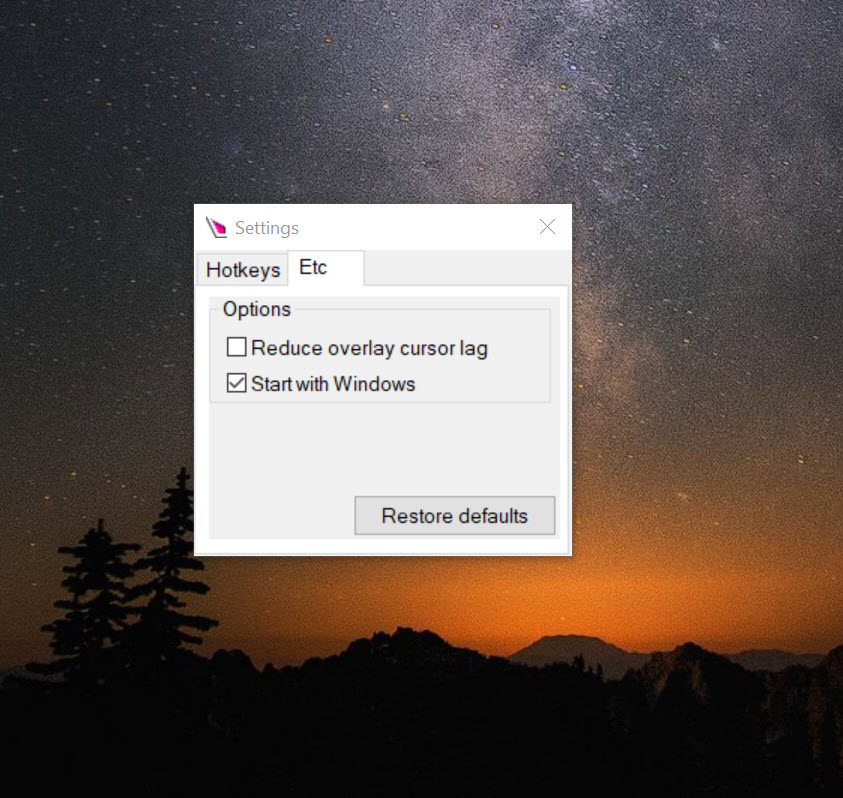
The interface is barebones. A tray icon, a configuration window with menu options, and the hotkey system. There’s no modern GUI design here, just functional controls. For an application that’s effectively invisible during use this is fine, but the configuration window itself is utilitarian to the point of plain.
The application also stops short of being useful in fullscreen-exclusive games on some configurations. Borderless windowed mode is the supported display configuration, and forcing borderless through a tool like Borderless Gaming is sometimes a prerequisite for the cursor overlay to render correctly.
Conclusion
YoloMouse is the small, focused tool for a specific problem that affects a specific subset of PC gamers. If you play ARPGs, MOBAs, or any other genre where the screen gets visually busy enough that finding your cursor becomes a real challenge, the application produces a quality-of-life improvement that you notice immediately and stop being able to play without.
The audience is players of Diablo-family games, Path of Exile, Last Epoch, Guild Wars 2, League of Legends, Lost Ark, and similar titles where cursor visibility is a known friction point. Players of FPS games, strategy games, or anything else where a giant visible cursor would actively interfere don’t need it.
For the games where it matters, it’s the obvious choice in a category with very few competitors, and the free edition covers the use case for most players without ever requiring the upgrade.
Pros & Cons
- Replaces tiny default cursors in games where visibility against busy effects is a real problem
- Hotkey-based cycling, resizing, and toggling without leaving the active game
- Per-game profiles automatically apply the right cursor for the focused application
- Cross-API compatibility covers DirectX 9 through 12, OpenGL, and Vulkan
- Custom PNG cursor packs supported, with active community libraries for specific games
- Small footprint and low system impact during normal use
- Anti-virus false positives are common and require manual exception handling
- Some games with unusual rendering paths produce no effect or doubled cursors
- Fullscreen-exclusive mode is unreliable, with borderless windowed as the supported configuration
- Free tier covers basic needs, with broader game and cursor library behind a paid edition
- Interface is functional but lacks polish, particularly the configuration window
- Most competitive shooters with strict anti-cheat are outside the supported scope
Frequently asked questions
It overlays a custom, more visible cursor on top of the default cursor in supported games. The replacement is rendered live without modifying game files, and you can switch between cursor designs and sizes through hotkeys during gameplay.
With most games using standard DirectX, OpenGL, or Vulkan rendering. Some games using unusual rendering paths or strict anti-cheat protection may not work. The application maintains compatibility profiles for popular titles like Diablo, Path of Exile, Guild Wars 2, Last Epoch, and League of Legends.
The application doesn't read or modify game memory, it only draws a sprite on top of the render output. Most current anti-cheat systems either explicitly allow it or don't flag it. Competitive shooters with the strictest anti-cheat policies are the area where compatibility issues most often appear, so checking the specific game's policy is worthwhile before relying on it.
The injection technique used to overlay the cursor looks similar to what some cheats do at the OS level, triggering heuristic detection in many antivirus products. The application itself is benign, and adding it to your antivirus's exception list resolves the warning.
Yes. Drop PNG files into the application's cursor folder following the documented naming convention and they appear in the cycle. Community-maintained cursor packs for specific games are also available and install the same way.
Default hotkeys use Ctrl-modified keys to cycle through cursors and adjust size. The exact bindings are configurable from the application's settings if the defaults conflict with your game controls.
The supported configuration is borderless windowed. Fullscreen-exclusive mode can produce inconsistent results depending on the game. Forcing borderless mode through a tool like Borderless Gaming is the common workaround.
The runtime overhead is minimal. The application maintains a small process footprint and adds negligible work to the game's render pipeline. Performance impact during normal gameplay is generally not noticeable.


