

AntiMicro
About AntiMicro
AntiMicro turns a game controller into a keyboard and mouse. It reads every button, trigger, and stick on your gamepad and turns each one into a keystroke or a mouse action, so any program on your computer responds to the pad as though you were typing or clicking. The result is that a game with no controller support at all can suddenly be played from the couch, with a pad, exactly the way you’d want.
That’s the whole purpose, and it solves a specific, familiar frustration. Plenty of games, especially older ones, were built around the keyboard and mouse and never added pad support. Pick one up today with a modern controller in hand and you’re stuck reaching for the keyboard.
AntiMicro sits in the middle and bridges the gap, sending fake keystrokes and mouse movements to the game whenever you press something on the controller. The game doesn’t know or care that a gamepad is involved.
Because the mapping happens at the system level rather than inside any one game, the reach is total. It works in games, in emulators, and on the regular desktop, so the same controller that plays a keyboard-only classic can also scroll a web page or launch a program from across the room.
How the mapping works in practice
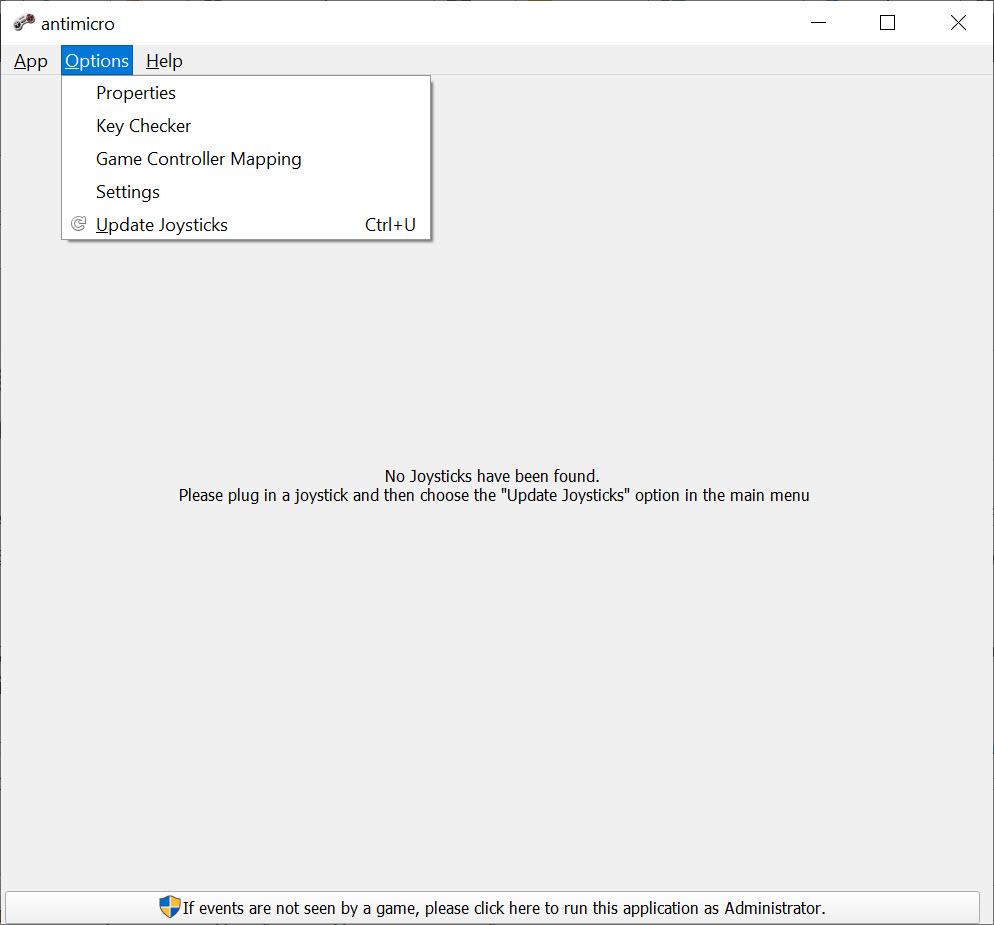
Setup is refreshingly direct. Plug in a controller and AntiMicro detects it automatically, laying out every button, trigger, and stick in a clear tabbed interface. To assign something, you click the control you want to configure, then press the key or choose the mouse action it should produce. Map the D-pad to the arrow keys, the face buttons to your action keys, a trigger to left-click, and you’ve rebuilt a game’s whole control scheme around the pad.
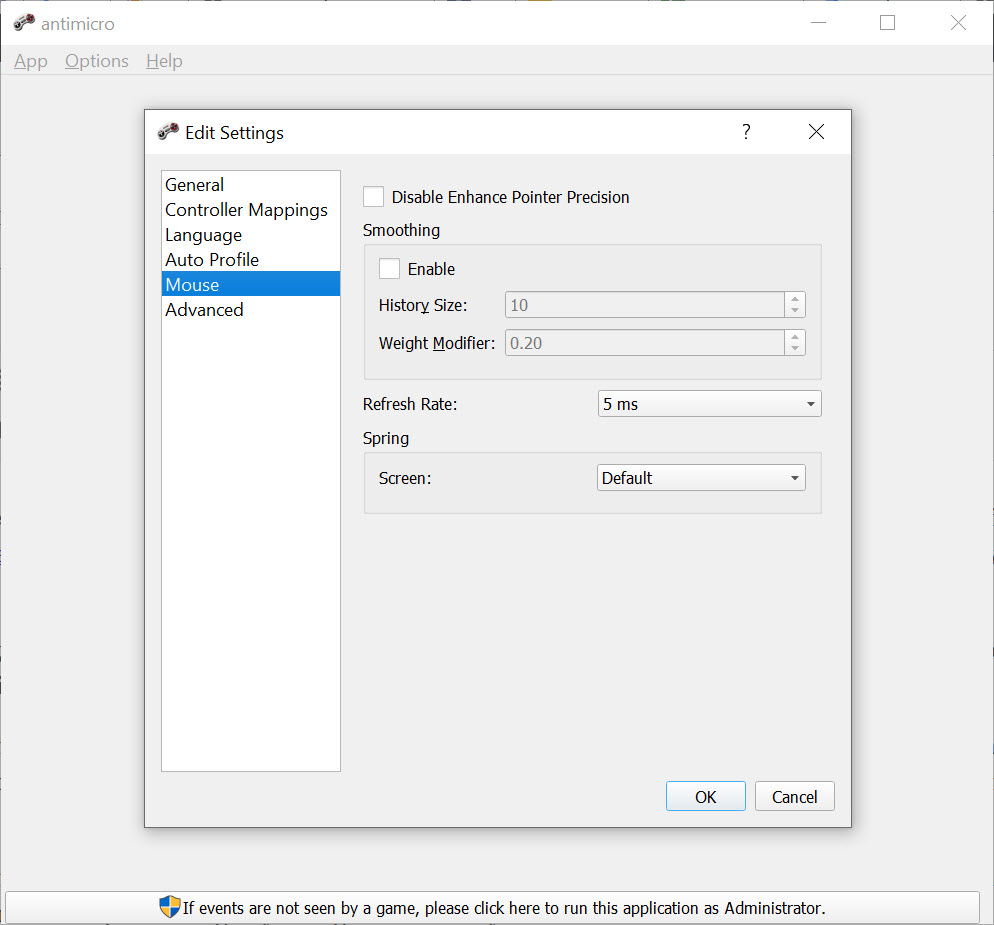
The analog sticks get special treatment. You can map a stick to mouse movement, which is what makes aiming in an older shooter feel natural, and you can control how fast the mouse moves in response. Push the stick a little for slow, precise movement, push it further for speed.
That analog sensitivity is the difference between a stick that feels like a mouse and one that feels like a clumsy on-off switch.
Switchable sets and per-game profiles
This is where the tool goes beyond a simple one-to-one remapper. You can save several different mapping sets on a single controller, eight of them, and switch between them on the fly. So one physical button can mean one thing in your normal set and something completely different in another, effectively multiplying the number of commands a limited number of buttons can issue. For a deep game with more actions than the pad has buttons, that’s the feature that makes a controller-only setup viable.
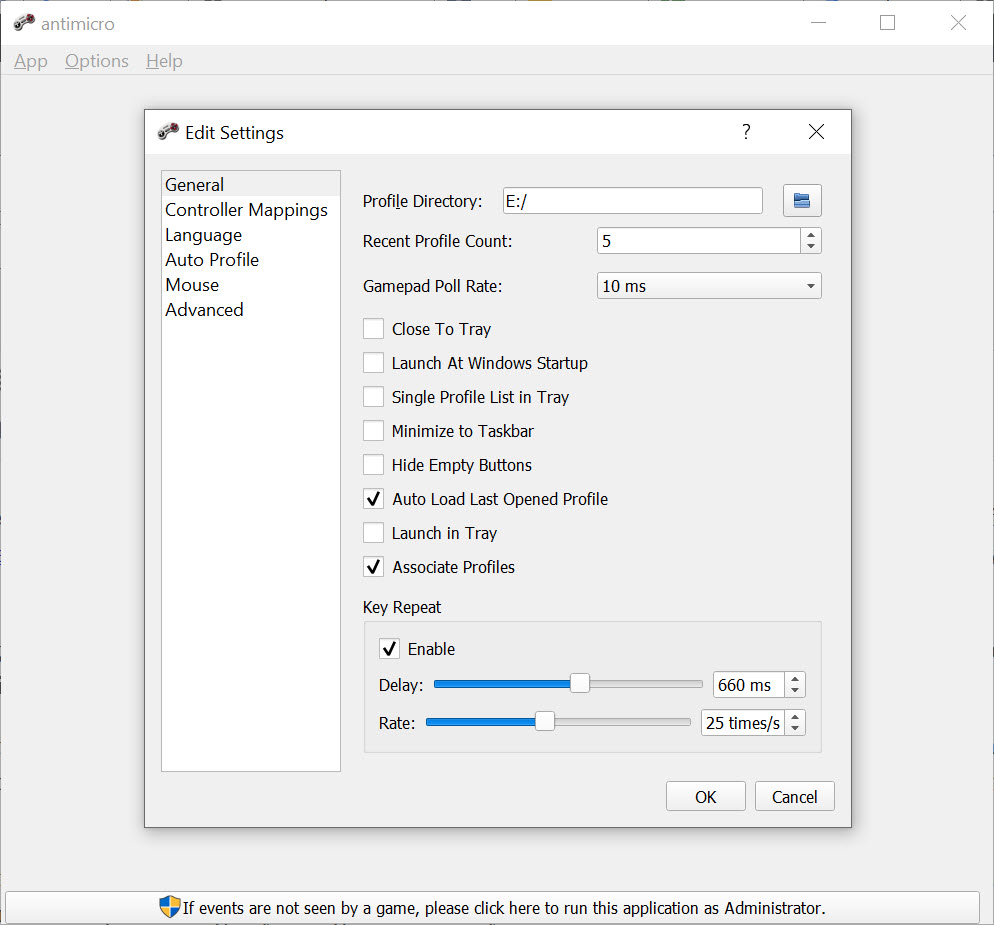
On top of that, you save a separate profile for each game and let the application switch profiles automatically. It detects which application window is active and loads the matching profile without you lifting a finger. Launch one game and your shooter layout loads. Switch to another and its profile takes over.
A close competitor like JoyToKey covers similar mapping ground, but the auto-switching here keeps you out of the settings once everything’s configured.
The advanced slot system
The real depth lives in what the tool calls slots, which let a single button trigger more than one action in sequence. You can chain several keystrokes to one press, insert a timed pause between them, and build composite actions that a plain remapper can’t manage. A simple example is simulating a double-click by sending two clicks with a precise gap between them.
There’s fine control over timing as well. Each key press has a default hold time of around a tenth of a second, and you can override that per button or per profile when a game needs a longer or shorter press to register. You can even make a button behave differently depending on how long you hold it, so a quick tap does one thing while holding it down triggers an “aim” or “run” mode that activates only on release.
There’s also a clever mouse-speed modifier you can bind to a trigger, temporarily slowing your aim for careful sniping when you hold it, then snapping back to normal speed when you let go. Autofire handles the repetitive button-mashing that some games demand.
Who it suits and where it stops
For retro gaming, this is close to essential. Pair it with an emulator and you can give a keyboard-driven classic a proper console feel, and pre-made profiles mean you don’t always have to map everything from scratch. It’s also a real boon for couch and living-room setups, turning a pad into a full remote for a media machine, and for anyone who finds a controller more comfortable or more accessible than a keyboard and mouse. A tool like reWASD pushes into even deeper remapping territory if you outgrow the basics.
There’s one important boundary to understand. AntiMicro maps a controller to keyboard and mouse output, and that’s all. It does not make your gamepad impersonate a different controller. If a modern game expects a specific controller signal and refuses to see anything else, this won’t fool it, because it’s sending keystrokes, not pretending to be another pad.
For that job you need a controller emulator like DS4Windows instead. Knowing which problem you actually have saves a lot of confusion.
Conclusion
AntiMicro is a powerful, flexible answer to a problem every PC gamer eventually hits. There’s a game you want to play with a controller, and it simply won’t allow it. By translating your pad into keyboard and mouse input across the whole system, and backing that with switchable sets, auto-loading profiles, and a deep slot system, it gives you control that goes well past basic remapping. For retro gaming, emulators, couch setups, and accessibility, it’s hard to beat.
Just be clear about what it is. It turns a controller into a keyboard and mouse, which is perfect for keyboard-driven games but useless for ones that demand a specific controller signal, where an emulator is the right tool instead. Match it to the right problem, invest a little time learning its sets and slots, and you get a remapper that can make almost any keyboard-and-mouse game playable from the comfort of a gamepad.
Pros & Cons
- Maps controller buttons, triggers, and sticks to keyboard and mouse actions
- Works at the system level, so it covers games, emulators, and the desktop alike
- Analog stick to mouse mapping with adjustable speed for natural aiming
- Eight switchable mapping sets multiply what a limited button count can do
- Per-game profiles load automatically based on the active application window
- Slot system chains multiple actions, timed pauses, and conditional presses to one button
- Autofire, hold-versus-tap actions, and a mouse-speed modifier for sniping
- Pre-made profiles let you skip manual setup for common games
- Maps to keyboard and mouse output only, so it can't impersonate another controller
- Games that demand a specific controller signal won't be fooled by keystrokes
- The depth of slots and sets has a learning curve before it clicks
- Heavy per-game tuning takes time to get a layout feeling right
- A simple one-button remap is more setup here than a basic dedicated tool
Frequently asked questions
It maps the buttons, sticks, and triggers on a game controller to keyboard keys and mouse actions. This lets you play games or control any program with a gamepad, even ones that have no built-in controller support, by sending keystrokes and mouse movements when you press the pad.
It works at the system level, translating each controller input into a keystroke or mouse action before it reaches the game. The game receives ordinary keyboard and mouse signals, so it plays normally without ever knowing a gamepad is being used.
Yes. You can create a separate profile for each game and have the application switch between them automatically by detecting the active window. It also supports eight switchable mapping sets on one controller for changing button behavior on the fly.
Slots let a single button trigger more than one action in sequence, such as several keystrokes with timed pauses between them. They enable composite actions like a double-click, conditional presses based on how long you hold a button, and precise control over key press timing.
No. It maps controller inputs to keyboard and mouse output, not to other controller signals. If a game requires a specific controller type, you would need a dedicated controller emulator instead, since this sends keystrokes rather than imitating another pad.
Yes. You can map an analog stick to mouse movement with adjustable speed, so pushing the stick gently moves the cursor slowly and pushing it further moves it faster. This makes aiming in shooters feel far more natural than a simple on-off mapping.


