

Unified Remote
About Unified Remote
Unified Remote turns a phone into the remote control for a computer. The server half installs on the computer and sits in the tray. The app half runs on the phone or tablet, finds the server on the same network on its own, and offers a shelf of remotes, each a screen of controls built for one job.
One is a trackpad with multi-touch gestures and a keyboard. Another plays and pauses a media player and skips its tracks. Another shows the computer’s screen on the phone. Others shut the machine down, browse its files or control a presentation, and more than a hundred exist for particular programs.
The arrangement suits a computer that is not at a desk. A machine plugged into the television, a laptop playing music across the room or a presentation computer at the front of a hall all end up controlled with the phone already in your hand.
Unified Remote connects over Wi-Fi or over Bluetooth, protects the server with a password and encrypts the link, and it wakes a sleeping computer with a Wake On LAN packet so the remote works before the machine is even on.
The app comes with eighteen remotes included and holds the rest, along with custom remotes and screen viewing, for a one-time upgrade.
The server, and how the phone finds it
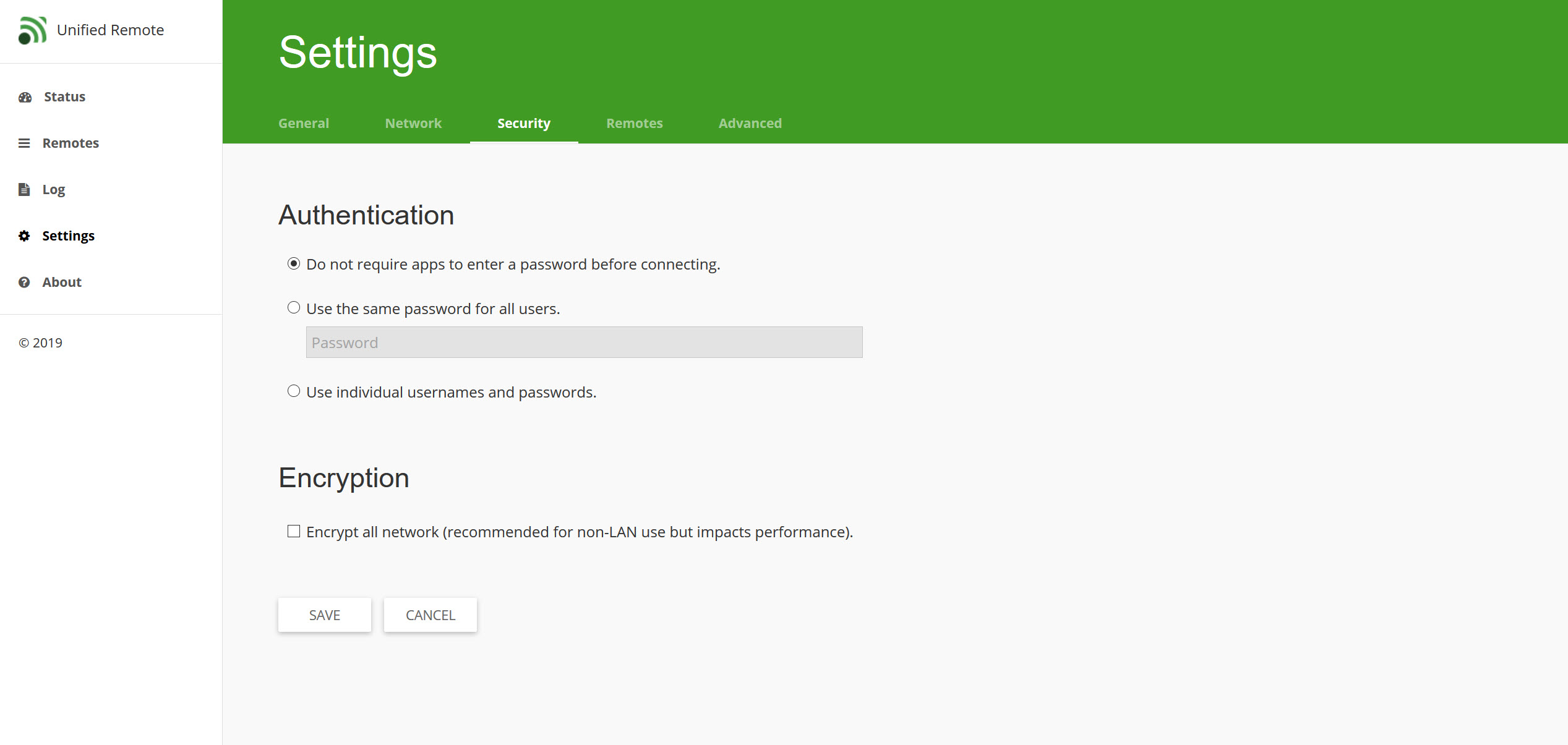
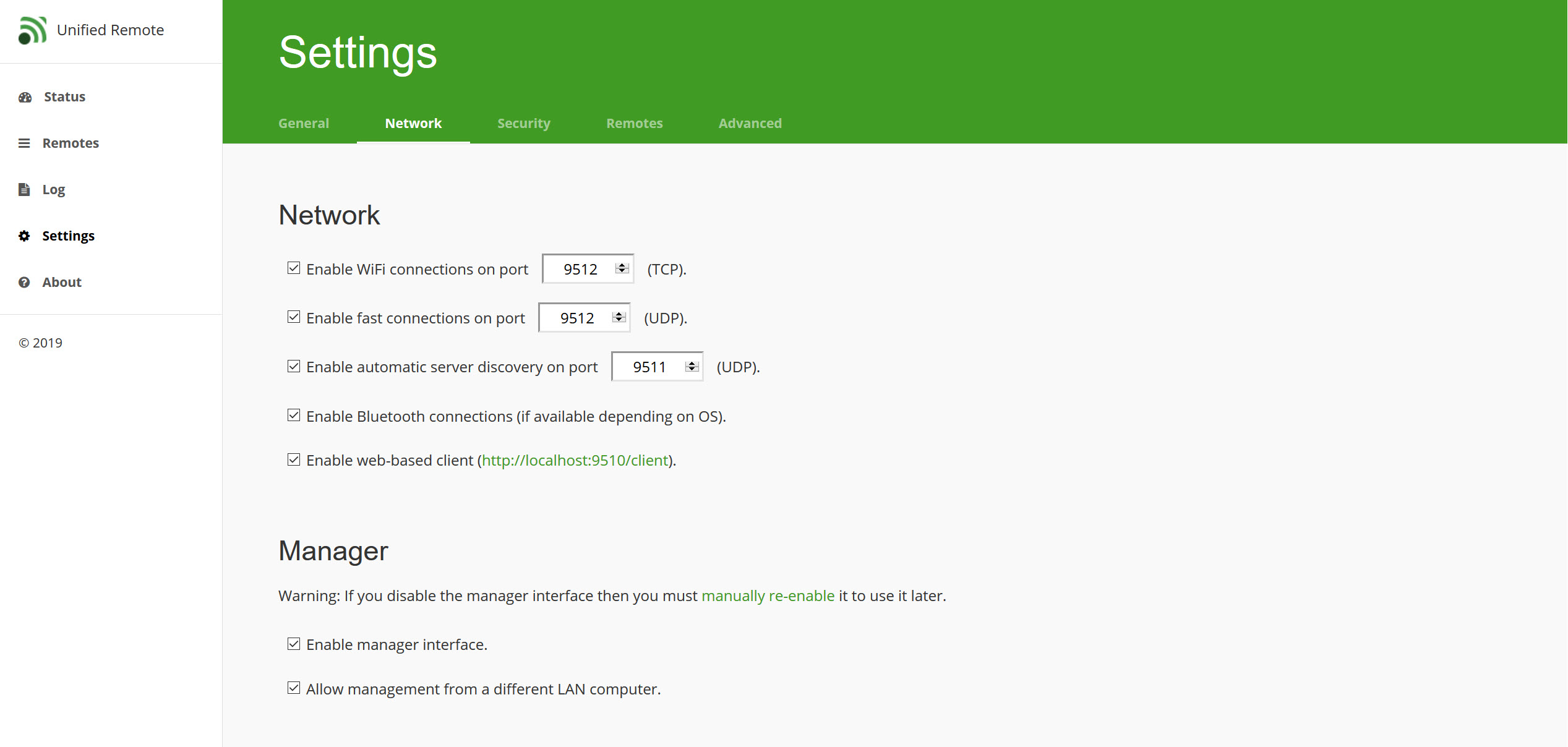
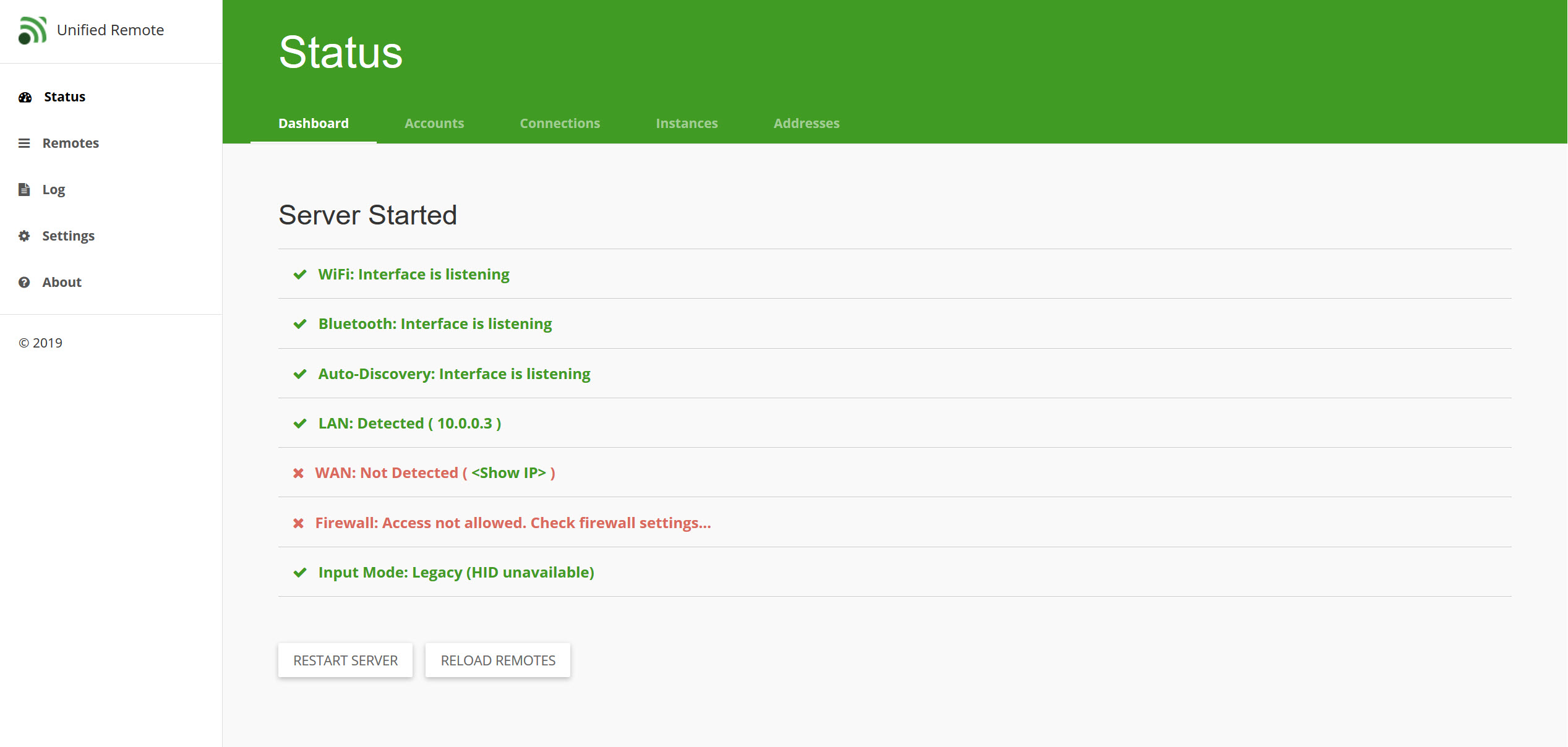
Install the Unified Remote server, and it runs quietly from the tray with a small status window for connections and settings. The app scans the local network and lists servers it finds, so pairing is a tap rather than an address typed in, and a password set on the server is asked once and remembered. Bluetooth is the fallback for a network with client isolation or no Wi-Fi at all, and it works for the input remotes if not for the screen.
The server exposes settings for which remotes are enabled, who may connect and whether the phone can wake it. Wake On LAN is configured with the computer’s hardware address in the app, and with the network adapter allowed to wake the machine, a tap on the power remote brings a sleeping desktop back before you reach the chair. Several servers can be saved and switched between, which suits a household with two machines.
Input remotes and the screen viewer
The basic Unified Remote input remote is a trackpad that fills the phone’s screen, with single-finger pointing, two-finger scrolling, taps for clicks and a drag gesture, and the latency over a decent network is low enough to feel direct.
The keyboard remote types through the phone’s own keyboard and adds a bar for the modifier and function keys, so a shortcut that needs the control key or a press of alt and tab is reachable. An extended keyboard with more special keys sits in the full tier.
The screen remote mirrors the computer’s display on the phone and lets you tap on it, which turns the phone into a tiny touchscreen for the computer. It is a low-resolution view meant for finding a button rather than for reading, and it is a full-tier feature. For looking at a remote desktop properly from another computer, a remote desktop tool is the right instrument, and this one is for the glance across the room.
Media, media centres and the hundred app remotes
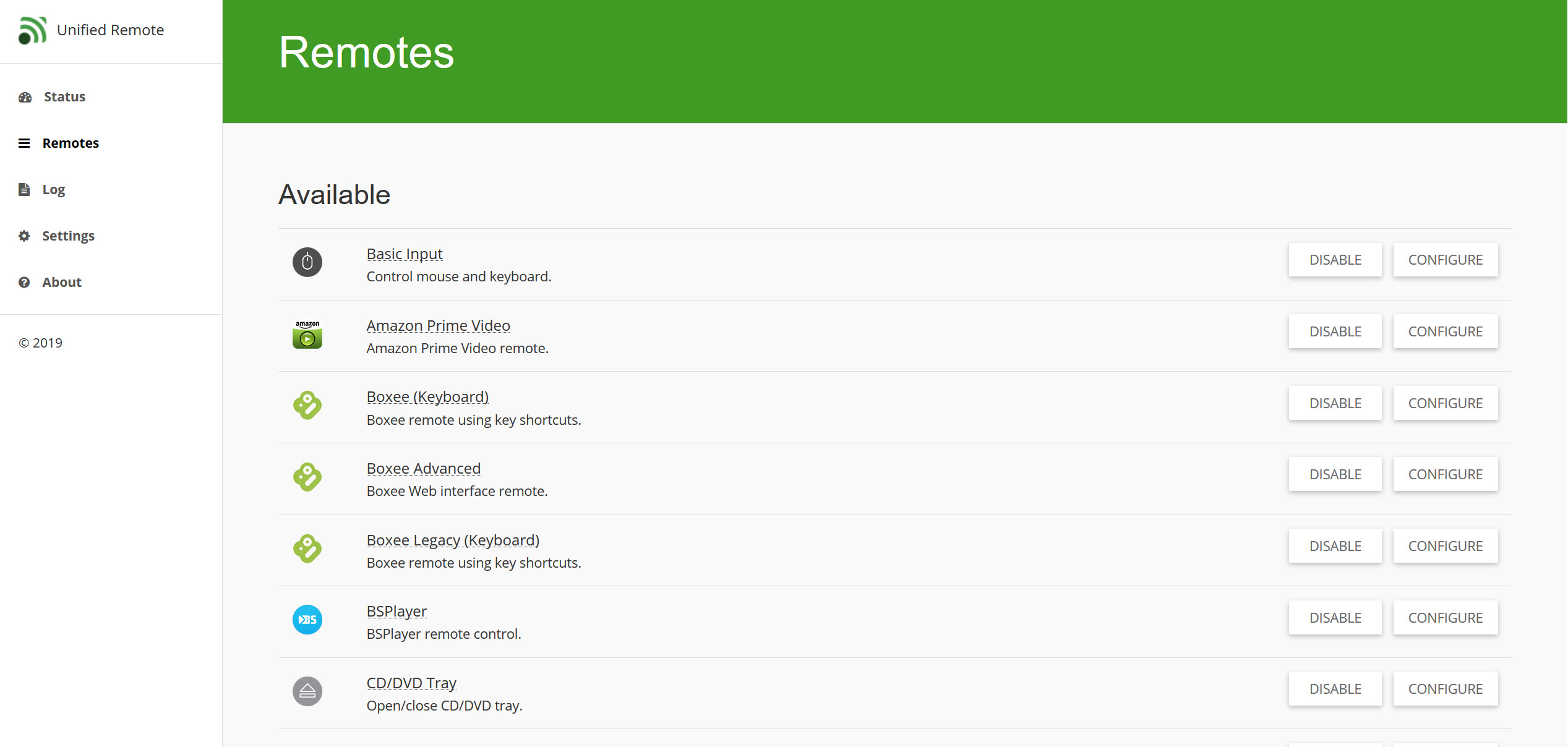
The media remotes are where the Unified Remote collection earns its size. Dedicated remotes exist for the major music services and players, for VLC Media Player and several other video players, for the media centres, for streaming services in a browser and for presentation software with slide controls and a timer. Each shows the controls that program actually has, so the media centre remote carries a navigation pad and the presentation remote carries next and previous slide with a laptop-free view of the notes.
Eighteen of the remotes are in the entry tier, including the mouse and keyboard, the media controls and the power remote that most people want. The rest need the upgrade. The phone app’s full tier adds floating remotes that sit over other apps, home screen widgets, voice commands, infrared and NFC triggers and a smartwatch mode, and a Tasker plugin ties remote actions into automations.
Custom remotes and the file manager
Unified Remote custom remotes let you build a screen of buttons that sends whatever keystrokes or commands you define, so a program with no dedicated remote gets one, or a remote gets exactly the buttons you use and nothing else. The definition is a small layout file and a set of actions, and the community shares them. Building one is a technical job rather than a drag-and-drop one, and the full tier is required.
The file manager remote browses the computer’s folders from the phone, opens a file in its default program and starts a video or a song without touching the computer, which is how a film gets started on the television machine from the sofa, with Kodi or any other player picking it up from there.
Browsing is quick on a local drive and slower on network shares, and the remote shows names rather than previews. A terminal remote sends command lines for anyone who wants that from a phone, and the server can also drive small boards such as a Raspberry Pi, which stretches the idea beyond the desktop.
Where it falls short
The phone and the computer running Unified Remote must share a network or a Bluetooth pairing, and a guest network with isolation breaks discovery until the server’s address is entered by hand. Screen mirroring is low in quality and meant for aiming rather than watching. Most of the hundred remotes, custom remotes and the screen viewer sit behind the upgrade, so the entry tier is a taste rather than the product.
The server shows upgrade reminders. And latency, while good, is not zero, so fast games and anything needing precise timing stay on a real mouse.
For controlling a game with a pad rather than a phone, a controller-to-keyboard mapper is the better route, and the two tools solve different problems.
Conclusion
Unified Remote suits anyone whose computer lives away from a desk, from the machine plugged into the television to the laptop that plays music in another room, and anyone who gives presentations and would rather hold a phone than a clicker. The discovery, the Wake On LAN and the depth of the media and presentation remotes make it the most complete tool of its kind, and the phone you already carry becomes the remote. Households with one shared media machine get the most from it, since every phone in the house can hold the app and the server takes them all.
It is a taste in its entry tier and a full product only after the upgrade, and its screen mirroring is for aiming, not watching. Install the server, pair once, set up Wake On LAN, and the eighteen included remotes will tell you within a day whether the rest are needed.
Pros & Cons
- More than a hundred program-specific remotes plus input and power control
- Automatic server discovery over Wi-Fi, with Bluetooth as a fallback
- Wake On LAN brings a sleeping computer back from the phone
- Password protection and encryption on the server link
- Custom remotes for programs without a dedicated one
- Screen mirroring with tap-to-click for finding controls across the room
- Most remotes, custom remotes and screen viewing need the one-time upgrade
- Screen mirroring is low resolution
- Network isolation breaks automatic discovery
- Server shows upgrade reminders in the entry tier
Frequently asked questions
Yes, over Bluetooth for the input and media remotes, after pairing the phone with the computer. Screen mirroring is better over Wi-Fi.
Yes, with Wake On LAN. Enter the computer's hardware address in the app and allow the network adapter to wake the machine, then tap the power remote.
Eighteen remotes, including the mouse and keyboard, media controls and power. The remaining remotes, custom remotes and the screen viewer need the upgrade.
Yes, in the full tier. A custom remote is a layout file with buttons mapped to keystrokes or commands, and the community shares many.


