

SlideDog
About SlideDog
SlideDog is a presentation player rather than a presentation editor. You do not build slides in it. You line up files that already exist, a slide deck, a PDF, a video, a web page, a Prezi, an image folder, in a playlist, and the program plays them in order on the projector as if they were one presentation, with no desktop and no alt-tabbing in front of the audience. The deck opens in the tool that made it, the PDF in a reader, the video in a player, and the audience sees only the content, full screen, one item after another.
That solves a specific and familiar problem. A talk that needs a deck, then a product demo in a browser, then a clip, then back to the deck is a juggling act on most machines and a single playlist here.
The rest of the feature set, presenter view, a remote that runs in a browser on any device, live sharing to the audience’s own screens and polls, is built around that one idea, and the catch is that the playback depends on the programs installed on the machine, which is where things can go wrong.
A playlist instead of a deck
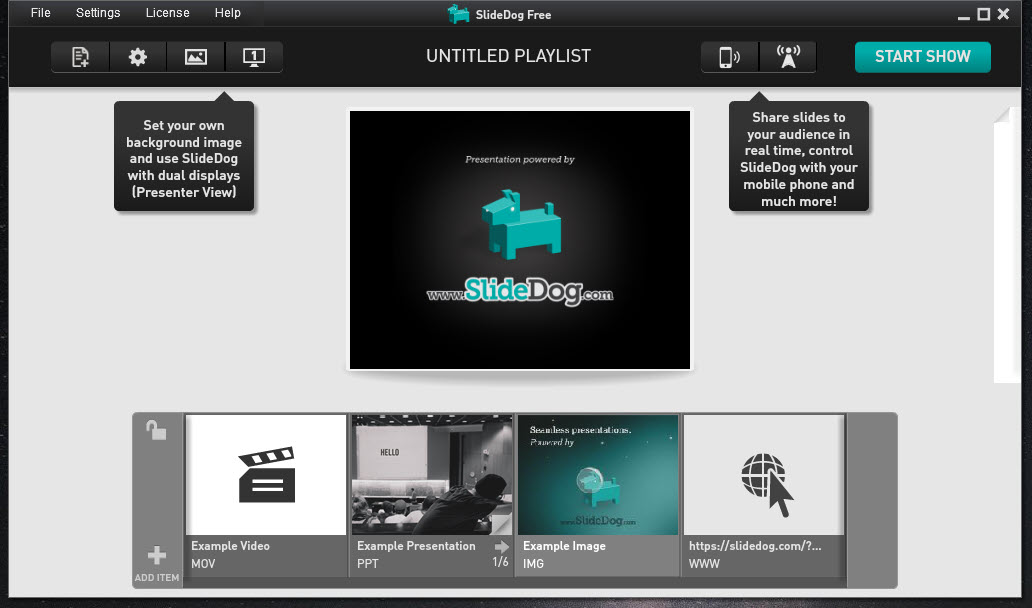
Drag files into the window and SlideDog builds a thumbnail list in order. Decks, PDFs, videos, images and documents all queue the same way, and online items such as a web address or a video link slot in between. The playlist saves for reuse and opens on another machine, provided the same programs exist there to render each item.
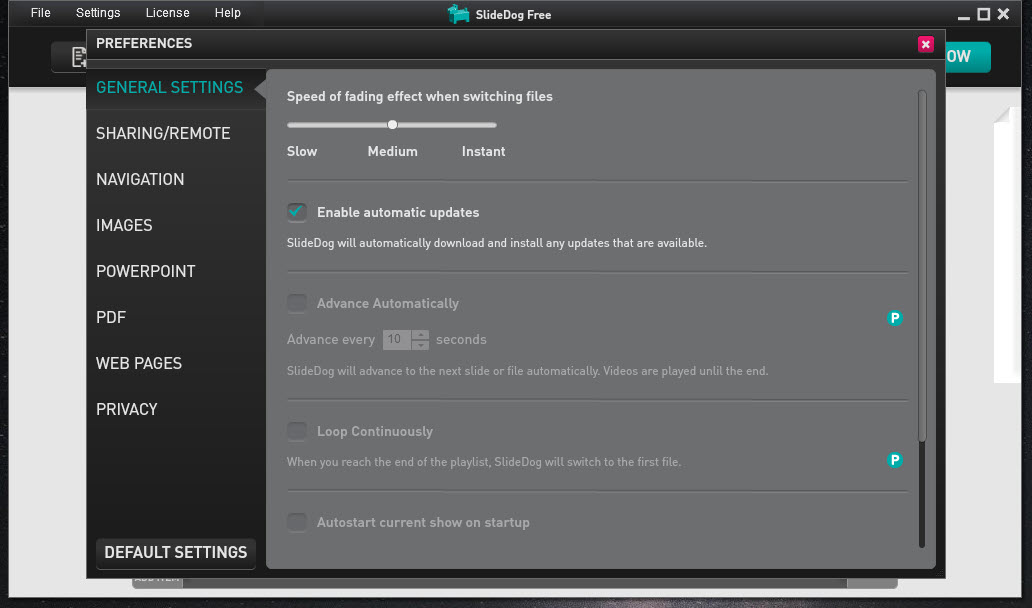
The order is a suggestion, not a cage. During the show, any item can be jumped to from the presenter screen, and a deck resumes on its own last slide if you return to it, which matters for a talk that circles back.
Presenter view and the second screen
Press play and SlideDog turns the laptop screen into a presenter view with a timer, a large preview of what the audience sees, the playlist with thumbnails and the notes for the current item, while the second display shows only the content. It is the presenter mode of a slide editor extended to every file type, so a PDF gets one it never had.
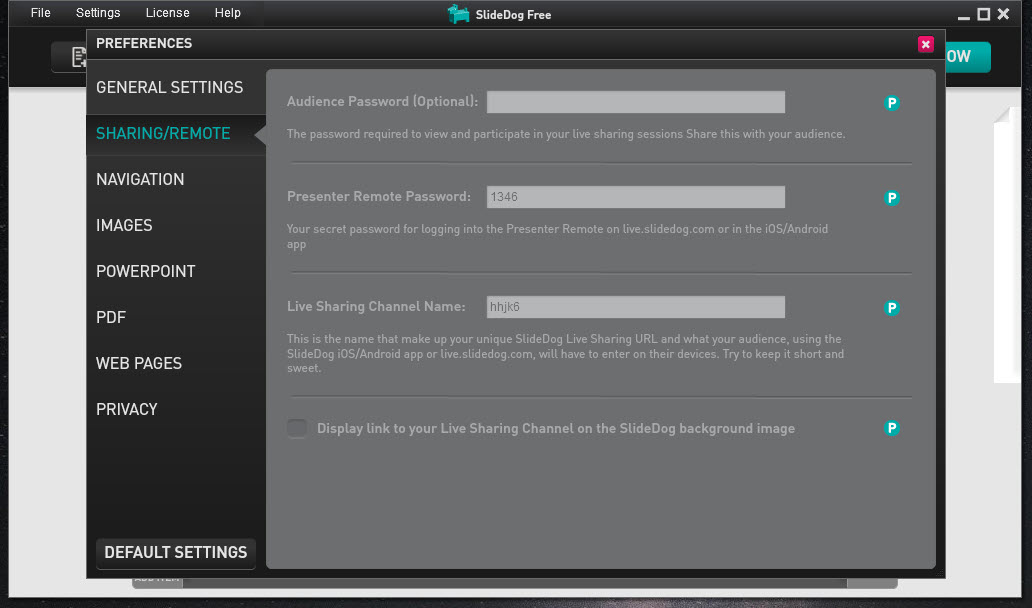
The remote runs in a web browser on any device on the same network, and it advances slides, switches items, pauses a video and shows the notes, so the laptop stays by the projector while you walk. Live sharing sends the current slide to audience members’ own browsers through a link, which helps in a large room or a hybrid meeting, and it is also where the polls and feedback forms appear.
Those interaction features and the sharing sit in the paid tier, so the base version is the player and the presenter view, which is still the useful part.
It is only as reliable as the programs underneath
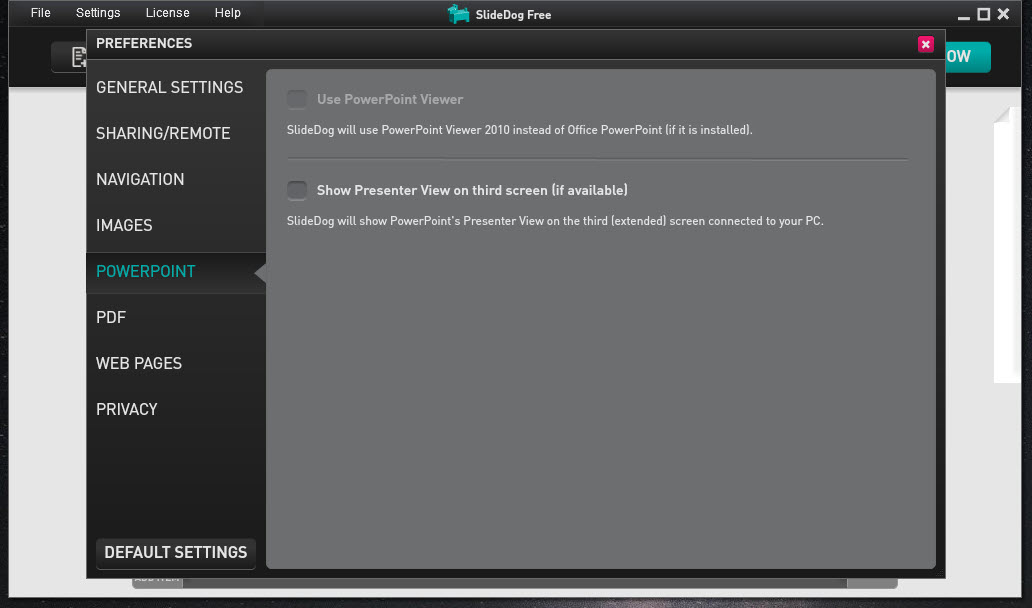
SlideDog renders nothing itself for most formats. A deck plays through the slide program installed on the machine, a PDF through a reader, a video through a player, and each is wrapped in a full-screen window. When those programs behave, the result is clean. When a reader pops a tip or an update prompt, it pops in front of the audience, and a switch from one wrapped program to another takes a few seconds while one closes and the next opens, which looks like a hang if unexpected.
Setup checks for the required programs and points to them when missing, and the current builds handle decks and PDFs far more smoothly than the early ones did. Still, the advice is to rehearse the exact playlist on the exact machine, with every helper program updated and its notifications silenced.
Where it fits
For a classroom, a sales pitch that alternates slides and demos, or a kiosk looping mixed content, the SlideDog playlist model beats anything a single slide editor offers. Offline it works for everything local, with only the web items, the remote and the sharing needing a connection. For building the slides themselves, LibreOffice or any editor still does that work, and this picks up where they stop.
Conclusion
SlideDog is for the presenter who never shows just one deck. If your talk moves between slides, a PDF, a video and a live web page, the playlist and presenter view remove the alt-tab fumbling that makes those talks look amateur, and the browser remote lets you leave the laptop alone.
Anyone who presents one deck has no use for it, and anyone presenting on an unfamiliar machine should know the playback is only as good as the programs installed there. Rehearse once on the real hardware and it earns its place.
Pros & Cons
- Plays decks, PDFs, videos, web pages and Prezis in one full-screen sequence
- Presenter view with timer, preview, playlist and notes for every file type
- Browser-based remote on any device on the same network
- Playlists save and reopen, with jump-to-any-item during the show
- Works offline for local content
- Depends on separately installed programs to render most formats
- Switching between wrapped programs takes a few seconds and helper prompts can leak on screen
- Live sharing and audience interaction are in the paid tier
- Nothing to offer for a single deck on its own
Frequently asked questions
Yes. It launches the installed program full screen and controls it, so a machine without one cannot play that item. The same applies to PDFs and videos with their readers and players.
Yes, through a browser. The remote page runs on any device on the same network and advances slides, switches items and shows notes.
Because one wrapped program is closing while the next opens. Rehearse the playlist on the presenting machine so the pauses are expected rather than alarming.


