

iSyncr

About iSyncr
iSyncr copies an iTunes library to a phone that was never meant to receive one. Pick playlists in the desktop program, connect the phone by cable or let it find the computer over Wi-Fi, and the songs, the playlists, the album art, the ratings and the play counts travel across.
Then the interesting part happens on the way back. Plays, ratings and the last-played date recorded on the phone are written into iTunes, so a library curated for years stays accurate whichever device did the listening.
That two-way traffic is what separates this from dragging folders onto a phone, which moves files and loses everything the library knows about them. It is also what makes the setup longer than a file copy, since the desktop half, the phone half and iTunes all have to agree with each other before the first sync runs.
iSyncr is for the person whose iTunes library is the master record and who wants the phone to be a faithful copy, not a second collection.
Playlists over Wi-Fi, everything over a cable
The iSyncr desktop program lists every playlist in the library, including the smart ones, with a checkbox each. Over a cable it can also sync whole artists, albums, genres, podcasts and videos, and it can be told to copy only songs with a tick next to them in iTunes, which is the quietest way to keep a phone small. Over Wi-Fi it syncs playlists only, which is less a limitation than a hint about how the two methods are meant to be used, cable for the big load, wireless for the weekly top-up.
A built-in playlist of unplayed podcasts moves episodes you have not heard and leaves the rest, and podcast bookmarks travel with them, so an episode paused halfway on the desk resumes on the bus.
The first sync of a large library takes a while over either route, and a Wi-Fi sync that fails midway has to be started again, which is the main reason to keep the cable in the drawer.
What comes back
Syncing from the phone into iTunes is off until you turn it on, and it is the setting to enable before anything else. With it on, every play on the phone counts, ratings given on the phone appear in iTunes, and the last-played date updates, which keeps smart playlists built on those fields truthful. Skips come back too.
Playlist edits made on the phone return only through the companion player made for it, and ratings sync both ways through that player or through a widget, so the experience is best when the whole chain is from the same stable.
What does not come back is music the phone acquired elsewhere, unless that option is switched on separately, and most people should leave it off. A library that imports every file the phone has ever touched stops being a library.
Where the limits are
DRM-protected tracks do not play on the phone and iSyncr cannot change that. Anything bought from the music store after the switch to unprotected files is fine, and older protected purchases need to be replaced or re-downloaded first. Audiobooks from the usual audiobook store are not supported at all. Video syncs, and play counts for video return only through the companion player.
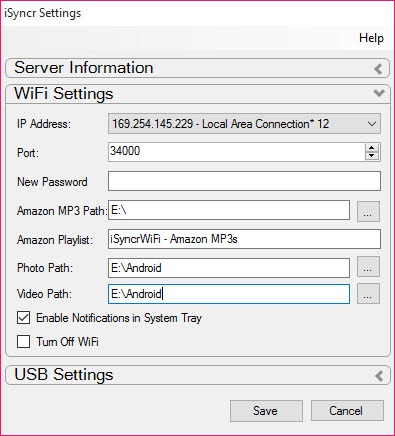
Setup is the other limit. The program depends on iTunes being installed and open to the library on the computer, the phone needs its half installed and paired, and the first Wi-Fi connection can take a few attempts on a network with client isolation.
The documentation allows twenty to thirty minutes for the whole thing, which is honest, and about twenty-five more than most people expect.
Where it fits
For someone leaving a library in iTunes while the phone is a different platform, this is the tool, and the two-way counts and ratings are something MediaMonkey matches only if you move the whole library into it.
For a collection kept as plain folders rather than in iTunes at all, a library manager that syncs to a phone directly makes the whole question go away.
Conclusion
iSyncr suits the listener whose iTunes library carries years of ratings and play counts and who refuses to lose them just because the phone changed. For that person the two-way sync is the feature nothing simpler offers, and the setup time is a one-off.
Anyone who keeps music as folders, or who would be content with a file copy, should skip the pairing ritual and use a music manager that talks to the phone directly. This one earns its place only when iTunes is the master.
Pros & Cons
- Syncs playlists, art, ratings and play counts from iTunes to the phone
- Plays, ratings and last-played dates return to iTunes
- Cable sync covers whole artists and albums, plus podcasts and videos
- Unplayed podcast playlist with bookmarks that carry across
- Wi-Fi sync for playlists once the pairing is done
- Setup takes twenty to thirty minutes and depends on iTunes being present
- Wi-Fi sync is playlists only and restarts from scratch if interrupted
- Playlist edits and video play counts return only through the companion player
- Protected purchases and audiobooks are not supported
Frequently asked questions
Yes, along with ratings, skips and the last-played date, once the option to sync from the phone is turned on. It is off by default.
Only playlists. Use the cable for whole artists and albums, podcasts and video, and Wi-Fi for keeping playlists current afterwards.
They are protected purchases. The phone cannot play those, so replace them with unprotected versions in iTunes and sync again.


It does not sync all the songs, only 100. Bummer.
The premium version syncs unlimited songs and playlists.