

LDPlayer

 (338 votes, average: 4.07 out of 5)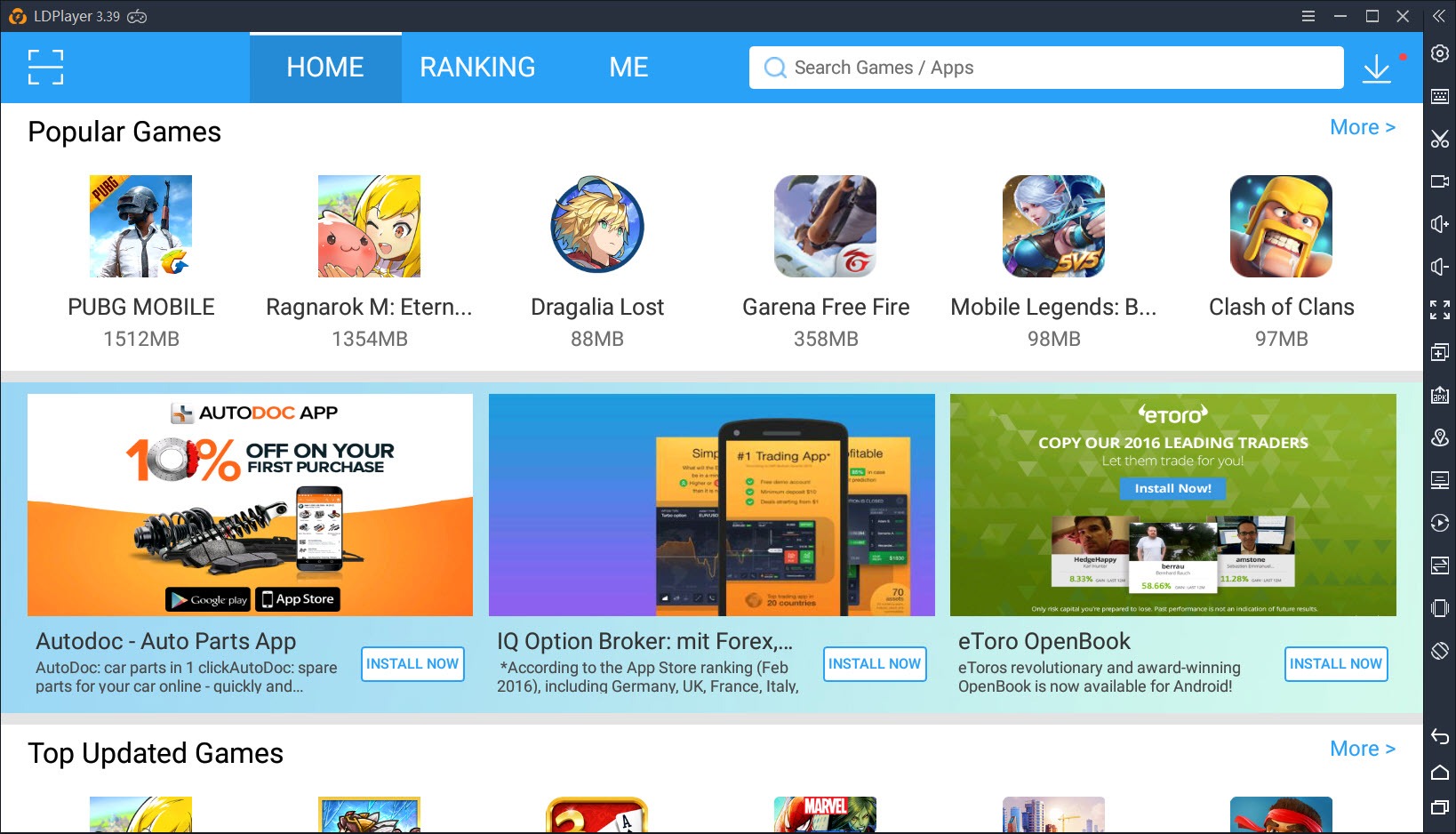
About LDPlayer
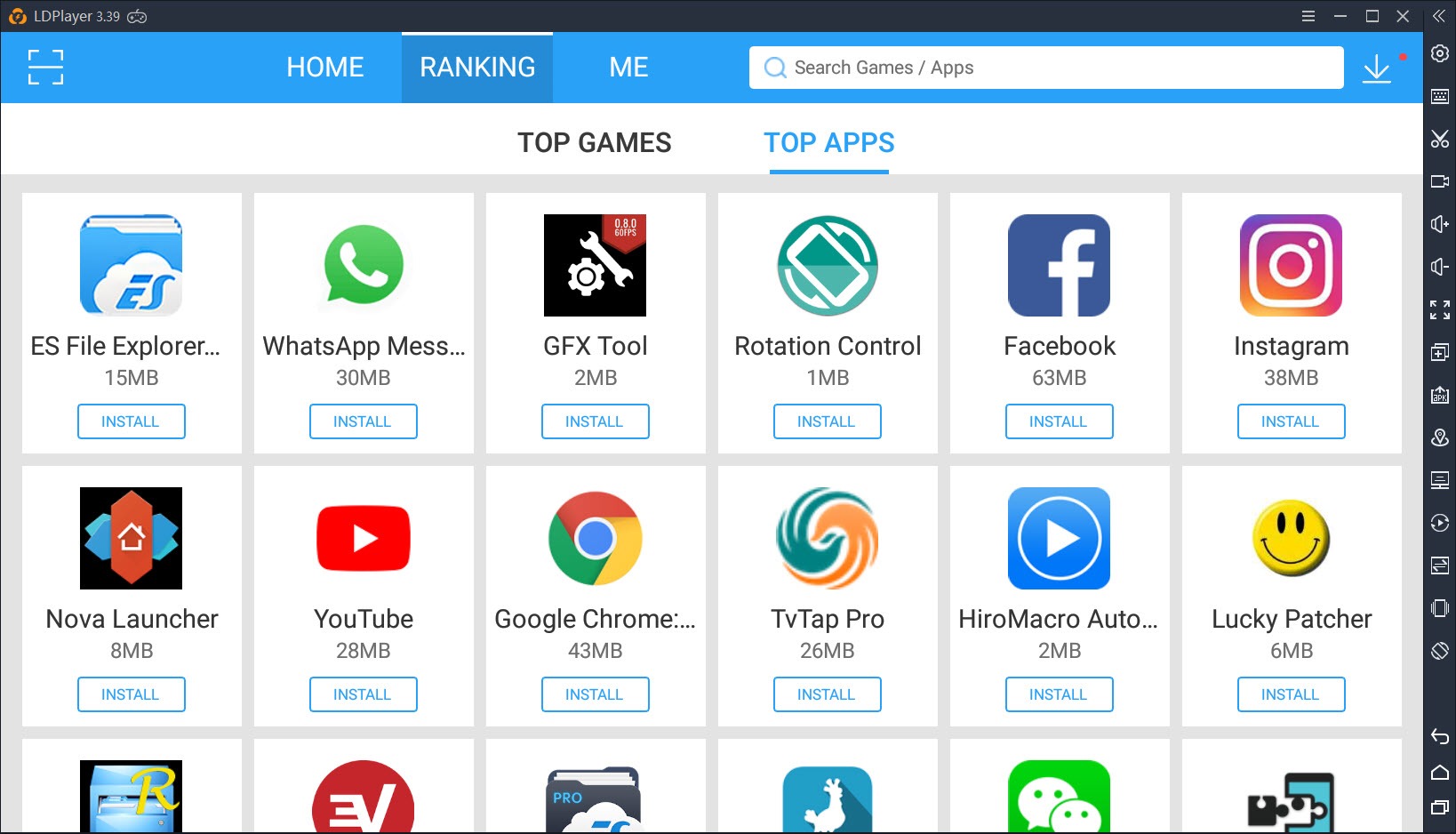
LDPlayer is an Android emulator that turns your computer into a virtual Android phone, primarily so you can play mobile games on a larger screen with mouse and keyboard control. The application creates a fully functional Android environment running on your PC, with the Google Play Store, app sideloading, and essentially every other Android capability that matters for typical use cases.
Where it differs from running an actual phone is that gaming-specific features (keyboard mapping, multi-instance support, higher frame rates than mobile hardware allows) make it substantially better for games designed for touch input.
LDPlayer is built on a customized Android 9 system, with optional support for older Android versions through separate emulator instances. The application supports keyboard and mouse mapping with custom controls, multi-instance management for running several Android sessions simultaneously, a Synchronizer for controlling multiple instances from one window, gamepad support, virtual location simulation, macros for automating repetitive tasks, and various other features that have accumulated across years of development.
Minimum system requirements include 4GB of RAM (8GB recommended for smooth multi-instance operation) and an Intel i5 7500 or AMD equivalent processor. A discrete GPU isn’t strictly required, but performance with graphics-intensive games improves substantially with one.
Keyboard mapping that makes mobile games actually playable
The defining gaming feature is the keyboard mapping system. Mobile games designed for touch controls feel awkward when played with a mouse alone, but LDPlayer lets you map specific keyboard keys to specific on-screen positions. WASD becomes movement controls. Mouse aim becomes camera control with sensitivity you tune yourself. Skills, abilities, items, and other game functions get mapped to keyboard keys you choose. The result is a gameplay experience much closer to PC gaming than to mobile gaming.
The mapping editor is visual, with you placing key icons directly on the game’s UI elements. Click a button on the game screen, assign a keyboard key, and that button responds whenever you press the key.
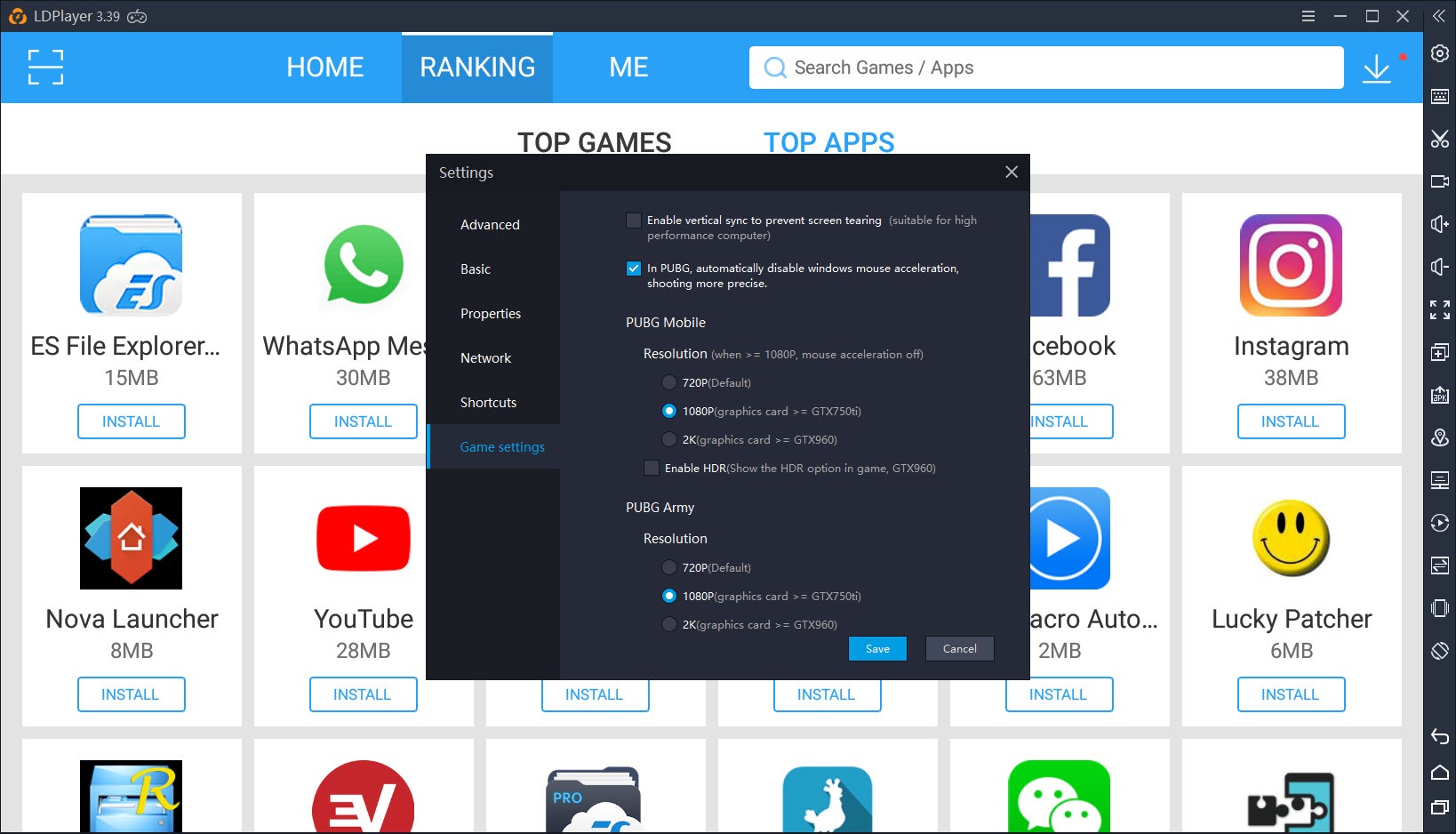
The application includes pre-configured mapping profiles for many popular mobile games, so users don’t have to build everything from scratch. Free Fire, PUBG Mobile, Call of Duty Mobile, Mobile Legends, and various other games have community-tuned profiles available.
For shooter games specifically, the right-click-to-aim and movement systems require setup but produce something close to PC FPS controls once configured properly. The sensitivity, dead zones, and other parameters can be tuned to match your preferences, with experienced users producing setups that feel genuinely competitive against actual mobile players touching their screens.
Multi-instance support and the Synchronizer
The multi-instance system lets you run multiple separate Android environments simultaneously, each with its own apps, settings, and game progress. For users who play games that benefit from multiple accounts (gacha games, MMORPGs with per-account progress, anything where running several sessions accelerates farming), this changes what’s possible substantially. Instead of switching between accounts on a single device, you run them all at once.
The Synchronizer takes this further by letting one instance control all the others. Press a key in your primary instance, the same input fires in every synchronized instance simultaneously. For automation-heavy games where you’d otherwise be doing the same thing across multiple accounts, this is genuinely transformative. What would take an hour of repetitive single-account work happens in the time it takes to do it once.
Hardware requirements scale with the number of simultaneous instances. Two instances run comfortably on most modern systems. Four or more push into territory where 16GB+ of RAM and a capable processor matter substantially.
Eight or more instances simultaneously produce performance challenges even on capable hardware, with each instance consuming substantial memory and CPU resources regardless of the optimization work the application does behind the scenes.
Macros for automating repetitive actions
The macro system records sequences of inputs and replays them on demand. Set up a sequence (open inventory, equip item, use ability, click confirm), record it once, then replay the whole sequence with a single keypress. For games with daily login routines, repetitive farming sequences, or other actions that involve doing the same thing many times, macros eliminate the tedium without changing what’s actually happening in the game.
The recording works at the input level, so macros capture mouse clicks, keyboard presses, and timing exactly as performed. Edit the recorded sequences afterward to adjust timing, add loops, or chain multiple macros together. For users who play games with daily check-in or quest completion routines, a well-built macro can complete the entire daily routine in a few seconds rather than the several minutes it takes manually.
The line between macros and outright botting matters here. Macros that automate inputs you would otherwise perform manually are generally accepted across most games. Macros that simulate active play while you’re away (effectively botting) often violate game terms of service and can result in account bans. Where exactly this line falls depends on the specific game’s policies, with users responsible for understanding what’s allowed in the games they play.
Performance and FPS that often beats real phones
The application targets higher frame rates than most mobile hardware can sustain. Games that cap at 30 or 60 FPS on phones often run at 90 or 120 FPS through the emulator, with the smoother gameplay producing visible benefits in fast-paced titles. The actual achievable frame rate depends on your PC hardware and the specific game, with capable systems pushing well above what any phone can produce.
The graphics rendering supports both DirectX (more compatible with older hardware and certain games) and OpenGL (better performance with newer hardware in most scenarios). The application detects your hardware and chooses appropriate defaults, with manual override available if you encounter compatibility issues with specific games. GPU acceleration handles the heavy graphics lifting, with games genuinely benefiting from discrete graphics cards even when the emulation overhead reduces the theoretical maximum compared to running native PC games.
Resource consumption is significant during active gaming. RAM usage typically runs 1.5 to 3 GB per active instance depending on the game, with CPU and GPU utilization scaling based on graphical complexity. For users playing demanding games, leaving some performance headroom matters, since running an emulator at peak load while expecting the rest of your system to feel responsive doesn’t quite work.
Virtual location and other gaming utilities
Beyond core emulation, the application includes utilities aimed at specific gaming scenarios. Virtual location lets you simulate being anywhere in the world for location-based games like Pokemon GO, Niantic-style location games, or any game that uses GPS for game mechanics. The functionality matters substantially for users who can’t physically travel but want to experience location-based content from different regions.
Gamepad support handles physical controllers including Xbox controllers, PlayStation controllers, and various third-party gamepads. The application maps controller inputs to on-screen touch controls, providing another interface option beyond keyboard and mouse. For games that work better with controllers (racing games, fighting games, certain action games), this provides a more natural input method than keyboard mapping.
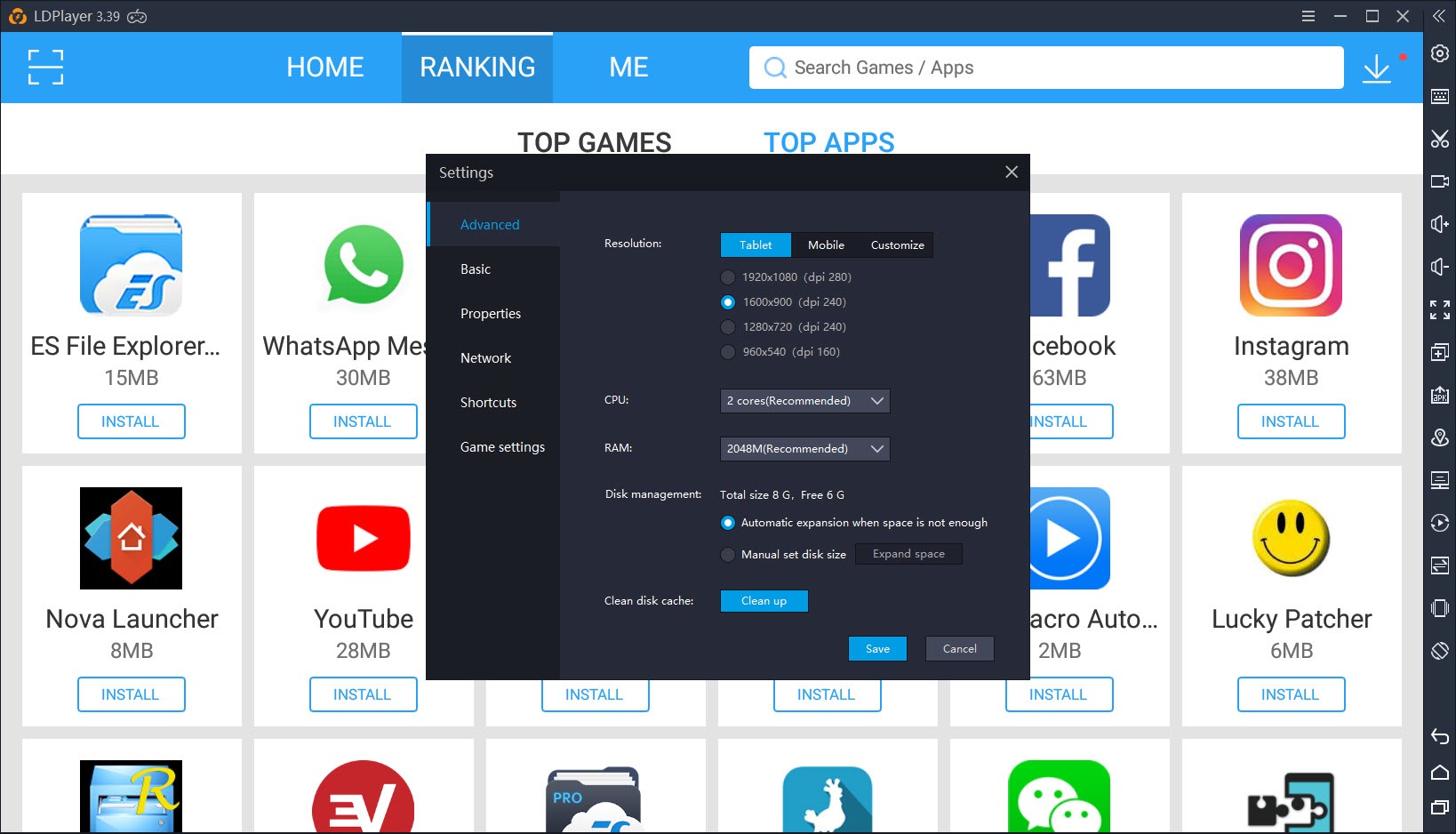
Resolution and DPI controls let you configure the emulator’s virtual screen to match your preferences. Higher resolutions produce sharper images at the cost of performance; lower resolutions favor performance over visual quality. The DPI setting affects how Android UI elements scale, with options for tablet-style large UIs or phone-style compact UIs depending on what you prefer for specific games.
Security warnings and what to know
Search results for LDPlayer include prominent Reddit discussions about malware concerns, which deserve honest acknowledgment. The application has been flagged by some users and security researchers across the years for behaviors including persistent background processes, uncertain data collection practices, and bundled components that some antivirus tools detect as potentially unwanted programs. The developer Xuanzhi has addressed many of these concerns through updates, but the broader skepticism has persisted in some communities.
For users prioritizing maximum system security, running the emulator in a virtual machine or on a dedicated gaming PC separate from sensitive work systems is a reasonable precaution. The application requires substantial system access to function (it’s emulating a complete Android environment, after all), and that access creates attack surface that more limited applications don’t have.
For users whose threat model accepts standard PC software risks, the application functions as advertised with no concrete evidence of malicious behavior in current versions. The Reddit-style concerns reflect general skepticism about Chinese-developed software more than they reflect specific documented incidents with this particular product. Each user has to weigh these considerations against the gaming benefits the application provides.
Compatibility with major mobile games
The application supports essentially every Android game available through Google Play, with the major exceptions being games that specifically detect and block emulators. Some competitive multiplayer games (PUBG Mobile in certain regions, Genshin Impact at various points) have implemented emulator detection that affects this software alongside other Android emulators. The detection situation changes over time, with games sometimes adding restrictions and sometimes removing them based on their developers’ priorities.
For games that allow emulator play, the application typically delivers a better experience than playing on a phone for input precision, screen real estate, and frame rate. For games that detect and block emulators, no workaround on this software’s side fixes the problem, since the issue is the game’s policy rather than a technical limitation.
Some games have separate emulator-specific servers or queues, where emulator players compete against other emulator players rather than touch-screen players. This approach addresses fairness concerns about input advantages while still allowing emulator usage. PUBG Mobile is the most prominent example, with explicit emulator support through dedicated matchmaking that keeps competitive integrity intact.
Considerations and limitations
The hardware requirements are substantial for the full multi-instance and high-FPS experience. Users on minimum-spec systems can run the application but won’t get the smooth performance that motivated installing an emulator in the first place. For optimal results, 16GB+ RAM, a modern multi-core processor, and a discrete GPU all contribute meaningfully to the experience.
Some games detect and block emulators, with this software included in the detection. The list of affected games changes over time, so users planning to use the application for specific titles should verify current compatibility before assuming everything will work. Banning policies vary, with some games actively banning detected emulator accounts and others simply preventing login.
The Android version is older than what current phones run, which means a small number of newer apps may not function properly. Most apps work fine on Android 9, but apps that specifically require Android 10+ features or APIs may produce errors or refuse to install.
The development team updates the underlying Android version periodically, but the gap between emulated Android and current Android remains a real consideration for cutting-edge apps.
The bundled bloatware concern affects some installations, with the application historically including additional offers during the install process. Reading the installer screens carefully and declining bundled offers avoids unwanted additional software, but users who click through installers blindly may end up with more installed than just the emulator itself.
Conclusion
For users who want to play Android games on a PC with the input precision, screen size, and performance benefits that come from desktop hardware, LDPlayer delivers what most mobile gaming on PC requires. The keyboard mapping makes touch-designed games playable with conventional PC controls, the multi-instance support enables gameplay scenarios impossible on physical phones, and the higher frame rates produce visibly smoother gameplay than mobile hardware can match.
The reasons to consider alternatives are mostly practical. BlueStacks may run specific games better depending on hardware. Native PC games eliminate the emulation overhead entirely if PC versions of your games exist. Cloud gaming services handle the hardware requirements through their own infrastructure.
But for the specific use case of running Android games on a PC with full keyboard mapping and multi-instance capabilities, this software remains one of the strongest options available, with active development continuing to refine the experience across years of mobile gaming evolution.
Pros & Cons
- Comprehensive Android emulation supporting essentially any Android game
- Visual keyboard mapping system makes mobile games playable with PC controls
- Multi-instance support for running several Android sessions simultaneously
- Synchronizer controls multiple instances from one window for parallel automation
- Higher frame rates than most mobile hardware can produce on supported games
- Pre-configured mapping profiles for many popular mobile games
- Macro recording automates repetitive in-game actions
- Virtual location simulation for location-based games
- Substantial hardware requirements for smooth multi-instance and high-FPS gaming
- Some competitive games detect and block emulators including this one
- Android 9 base is older than current phone OS versions
- Historical concerns about bundled components and security perception
- Bundled offers during installation require attention to decline
- Resource consumption affects overall system performance during active gaming
Frequently asked questions
This software is an Android emulator that creates a virtual Android phone on your PC, primarily designed for playing mobile games with keyboard, mouse, or gamepad controls. It supports keyboard mapping for translating PC inputs to on-screen touch controls, multi-instance management for running several Android environments simultaneously, macros for automating repetitive actions, virtual location simulation, gamepad support, and various other gaming-focused features.
Minimum specs are 4GB of RAM and an Intel i5 7500 or AMD equivalent processor, with VT virtualization enabled in BIOS. Recommended specs for smooth gameplay and multi-instance use are 8GB+ RAM (16GB for heavy multi-instance work), a modern multi-core processor, and a discrete GPU for graphically demanding games. Storage requirements depend on which games you install but typically run 20GB+ for the emulator plus games.
Bandwidth consumption depends entirely on which apps and games you run rather than on the emulator itself. The emulator doesn't consume bandwidth on its own, but the games and apps inside it use bandwidth like they would on a phone. For multi-instance usage, the bandwidth scales linearly with the number of active instances making network requests, since each instance is a separate Android environment making its own connections.
Yes, the application supports both DirectX and OpenGL rendering modes. DirectX provides better compatibility with older hardware and certain games. OpenGL typically performs better with newer hardware. The application detects your hardware and chooses an appropriate default, with manual override available for users who encounter compatibility issues with specific games.
Both applications target similar use cases (Android emulation focused on mobile gaming), with overlapping but somewhat different feature sets. BlueStacks has a longer track record and broader brand recognition. LDPlayer is generally considered lighter on resources and faster for many specific games, with the multi-instance management being arguably more refined. The choice between them often comes down to which one runs your specific games better, which varies by game and hardware combination. Many users try both and pick whichever performs better for their priorities.
GPU usage is enabled by default for graphics rendering, but specific configuration may improve performance. In the application settings, verify that the rendering mode is set to use your discrete GPU rather than integrated graphics, especially on laptops with hybrid graphics. The Windows Graphics Settings panel also lets you assign the emulator to your high-performance GPU explicitly, which produces better results than letting Windows choose automatically on laptops with both integrated and discrete graphics.


It is a good emulator, but the only thing that bothers me is its sensitivity in the free fire.