

GraphicsGale
About GraphicsGale
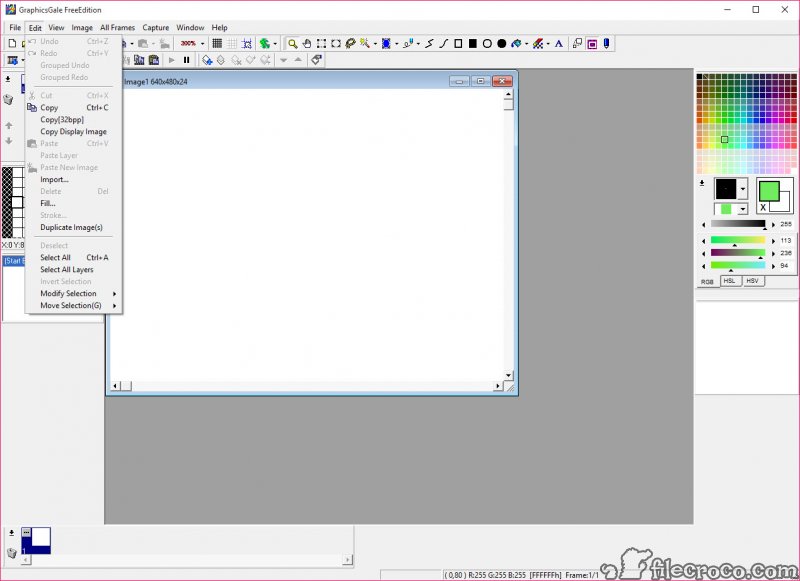
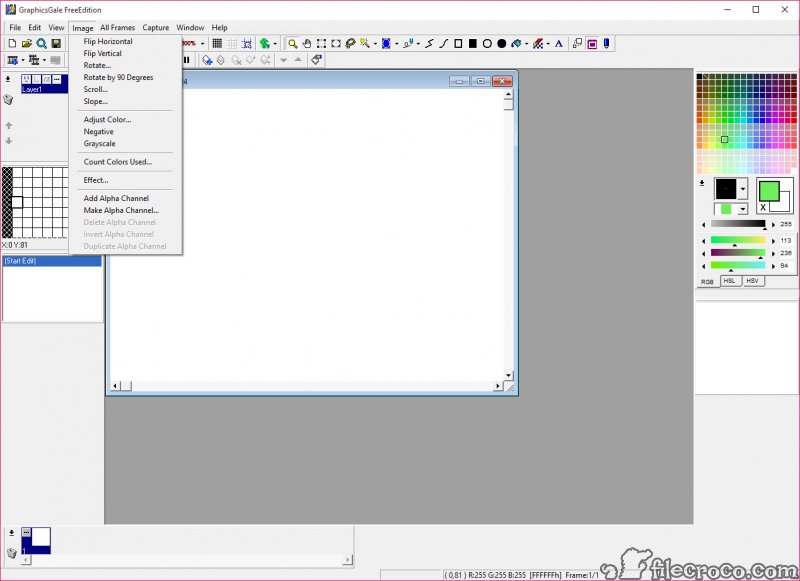
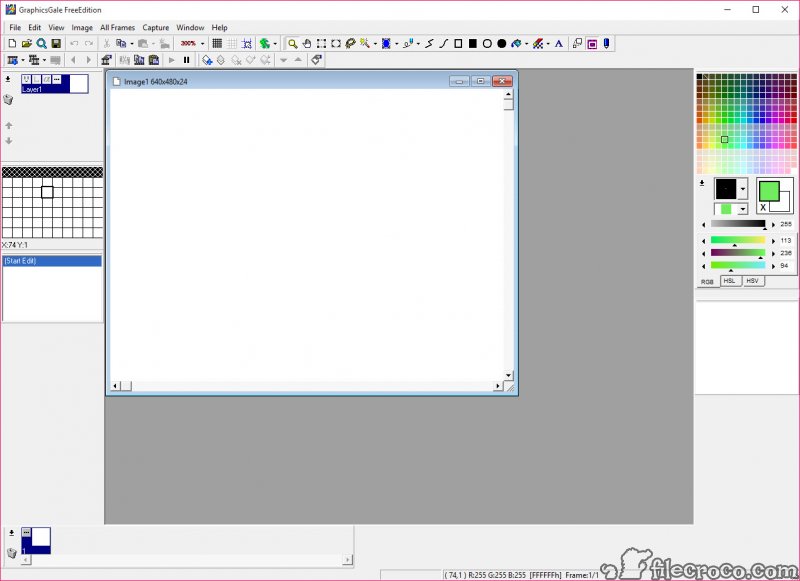
GraphicsGale is a pixel art editor built around animation. You draw sprites one pixel at a time on a zoomed grid, split the work into layers, and build the movement frame by frame. A separate preview window plays the animation at the same moment you are editing it, so a tweak to a walking character’s foot shows up in the running loop immediately.
It belongs to the older generation of sprite tools, and the interface looks it. Under that retro surface, though, sits a set of features that still covers everything a game sprite needs, from indexed palettes and onion skinning to sprite sheet export.
Hobbyist game makers and retro art fans keep it around for exactly that reason.
Drawing pixel by pixel
The drawing tools are the classics of the genre. A pen and a line tool lay down individual pixels or hard-edged strokes, rectangles, ovals and a split curve tool handle shapes, and flood fill and text complete the set. Everything snaps to the pixel grid, with no blurry anti-aliasing creeping in unless you ask for it.
Layers keep a sprite manageable. Outline and shading can sit on separate layers, and a character’s weapon can live on its own layer so it is easy to swap later. Filters such as blur or mosaic exist too, previewed before you apply them, though most pixel artists use them sparingly.
There is also a counter that reports how many unique colours a layer or the whole image uses, handy when a target platform imposes strict colour limits.
Animation with a live preview and onion skin
Animation is where GraphicsGale earns its reputation. Each frame has its own set of layers and its own delay, and the frame list lets you reorder, duplicate or delete frames as the motion takes shape. The preview window loops the animation continuously, at the speed you set, while you keep drawing in the main canvas.
That live preview removes the stop, play, stop rhythm that slows animation in many editors. Onion skinning adds the other half of the workflow. Faint copies of the previous and next frames appear behind the current one, so arcs and spacing can be judged directly while drawing.
Together, they make walk cycles, attack animations and idle loops much quicker to polish. For a more actively developed editor with a timeline and tags, Aseprite is the closest modern equivalent.
Palette control for indexed colour
Pixel art usually lives in a fixed palette, and the palette tools in GraphicsGale are thorough. You can work with up to 256 indexed colours and store palettes for reuse. Edit any entry and the change ripples through the image immediately, since pixels refer to palette slots rather than fixed colours.
That indexed approach makes recolouring trivial. Swap one palette entry and every pixel using it changes, which is how one enemy sprite becomes three colour variants in a minute. Tools for trying replacement colours and selectively erasing specific colours make experimenting quick, and transparent colours behave predictably in exported files.
Export for games, the web and icons
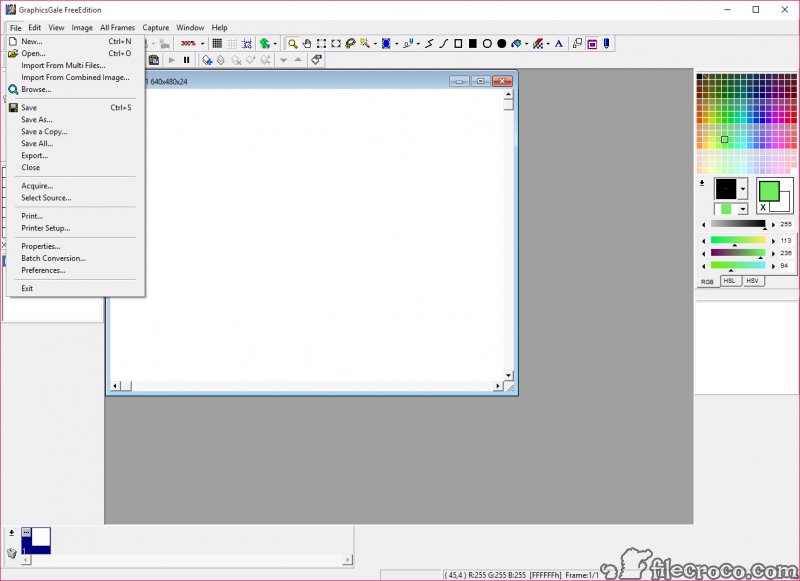
Finished animations can leave the program in several shapes. All frames can be packed into a single sprite sheet for a game engine, written out as individual image files, or saved as an animated GIF or an AVI video. Static images go to PNG, BMP, JPG, TGA and other common formats.
Icon and cursor files are a less common strength. The editor reads and writes ICO, CUR and the animated ANI format directly, so it doubles as a capable tool for drawing custom icons and animated mouse pointers by hand. If you need to convert existing artwork into multi-size icon files rather than draw them, a dedicated icon converter is quicker.
Two extras round out the import side. A TWAIN connection pulls sketches in from a scanner or camera to trace over, and a screen capture command with its own hotkey grabs the screen or a single window into a new image.
Video works in the other direction too. GraphicsGale opens an AVI clip as a sequence of frames, ready to be traced, cleaned up or reduced to a pixel art palette. That makes rotoscoping a short movement, a jump or a punch filmed on a phone, a practical way to get natural motion into a sprite.
Still worth using today?
Development of GraphicsGale stopped a long time ago, and the program shows its age in its menus, its small icons and its lack of modern conveniences such as tagged animation ranges or tilemap editing. It also handles only raster pixel work, with no vector or painting tools.
What it is still good for is clear. Sprite animation with a live preview and onion skin, indexed palette work with instant recolouring, and hand-drawn icons and animated cursors all work as well as they ever did. It runs comfortably on modest hardware, and its sprite sheet and GIF export plug into any game engine or website.
Beginners curious about pixel animation can also start with Piskel, which keeps the interface even simpler.
Conclusion
GraphicsGale suits hobbyist game makers and pixel artists who want sprite animation with a live preview, firm palette control and flexible export. Its icon and animated cursor support adds a niche few rivals cover.
Its age shows in the interface and in the features it never gained, and newcomers to the field may prefer a younger tool. For drawing and animating classic sprites, though, it remains a dependable workhorse.
Pros & Cons
- Real-time animation preview while you draw
- Onion skinning shows the previous and next frames
- Indexed palettes of up to 256 colours with instant recolouring
- Exports sprite sheets, per-frame images, GIF and AVI
- Reads and writes ICO, CUR and animated ANI files
- Dated interface with small icons and old-style menus
- No longer developed, so modern features will not arrive
- Lacks tilemap editing and tagged animation ranges
Frequently asked questions
Yes. All animation frames can be packed into a single sprite sheet image, or saved as separate files, an animated GIF or an AVI.
Yes. Faint versions of the previous and next frames appear behind the current frame, which helps with spacing and motion arcs.
Yes. It opens and saves ANI files along with CUR and ICO, so animated cursors and icons can be drawn and exported directly.
Up to 256 indexed colours. Changing a palette entry updates every pixel that uses it, which makes colour variants quick to create.


