

AIO Boot
About AIO Boot
A technician’s USB stick used to hold one thing, and reformatting it for the next job was the routine. AIO Boot puts many things on one stick, meaning operating system installers, rescue discs, partition tools and diagnostic environments, all selectable from a menu when the machine starts.
The AIO Boot approach differs from the tools people now reach for first, and the difference is the reason to read further. Where the popular alternative has you copy image files onto a stick and boot them directly, this integrates each package into a structured menu with its own configuration, which is more work and considerably more control.
The maker describes the project as assembled from many sources with flaws still in it, which is an unusually honest framing and turns out to be accurate in both directions.
Two boot modes, and a choice of loaders for each
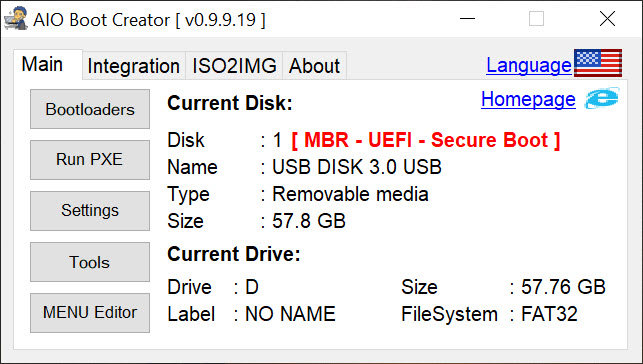
Machines start in one of two ways, the older firmware mode or the newer one, and AIO Boot handles both, and a stick that boots in only one of them fails on half the machines you meet.
Beyond that you choose which loader does the work. The default is the standard modern loader, with an older alternative kept for machines that cannot handle it, plus two others aimed at specific situations.
That choice matters more than it sounds. The reason a stick works on one machine and shows a blinking cursor on another is frequently the loader rather than the image, and being able to switch loaders without rebuilding the stick is what turns that from a dead end into a five minute test.
One of the alternatives does something properly unusual, which is booting the newer firmware mode on a machine whose own firmware only offers the older one. That rescues a class of hardware that would otherwise be excluded from modern installers entirely.
The partition arrangement is the setup decision
Here is where the format question hits everybody, and AIO Boot handles it with a two-partition layout.
Booting in the newer firmware mode requires a particular file system, and that file system cannot hold any single file larger than four gigabytes. Modern installer images routinely exceed that.
The answer is two partitions on one stick. A small one in the format the firmware requires, holding the loader, and a larger one in a format without the size limit, holding the images. The tool creates that layout for you, which is the step people get wrong doing it by hand.
Some packages have further preferences, meaning a few systems will not boot from the larger partition’s format at all and persistence for certain live systems works only on the smaller one. Those are documented, and they are the detail that eats an afternoon when discovered by accident.
For creating the smaller partition’s format on a large drive when the built-in tool refuses, a formatter that produces large FAT32 volumes does exactly that job on its own.
Packages, not just images
The AIO Boot distinction from copy-and-boot tools is that packages are integrated rather than dropped in.
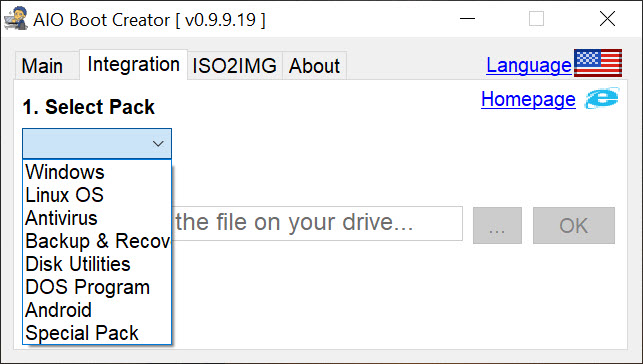
Installers for several operating system families, rescue environments from antivirus makers, backup and imaging tools, partition editors and a DOS environment each have their own integration routine, producing a menu entry with the right boot parameters already set.
That is why some things work here that fail when booted as a bare image. An installer that expects to be started a particular way gets started that way, rather than being handed to a generic loader and hoping.
It also means the menu can be edited, renamed, reordered and password protected. Somebody handing a stick to a colleague can lock the menu so nothing gets changed or booted without the password, which a folder of image files cannot do.
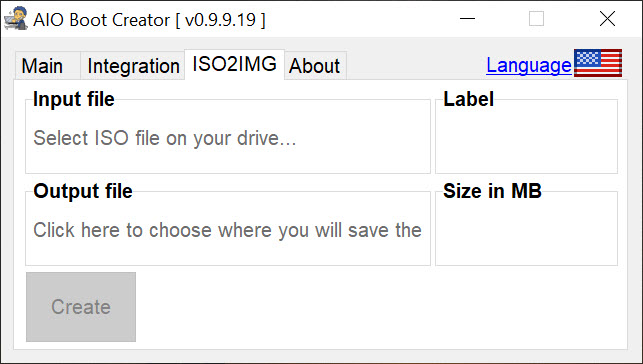
Beyond the packages it knows, files in the common image and disk formats boot directly, including virtual disk files and the compressed image format installers use.
Booting over the network
AIO Boot bundles a small network boot server, which serves the same menu to machines that start from the network rather than from a stick.
That covers the scenario of many machines needing the same environment, where walking a stick between them is slower than pointing them all at one server. It works in both firmware modes and it needs no dedicated infrastructure beyond the machine running it.
For the specific job of patching machines that cannot reach the internet, a tool that builds offline update media produces what this can then serve or carry.
Secure Boot and the enrolment step
Machines with the newer firmware frequently have a signature requirement enabled, and AIO Boot has an answer for it, which refuses to start anything not carrying an approved signature.
Support for that arrangement exists, through a signed intermediary loader that hands off to the real one after you enrol a key. That enrolment is a one-time step per machine and it involves a screen most people have never seen, which is where it goes wrong.
The practical alternative is disabling the requirement in the firmware for the duration of the work, which is what most technicians do, and re-enabling it afterwards. Knowing that both routes exist saves the confusion of a stick that boots on one machine and is refused on the next.
The tools bundled alongside
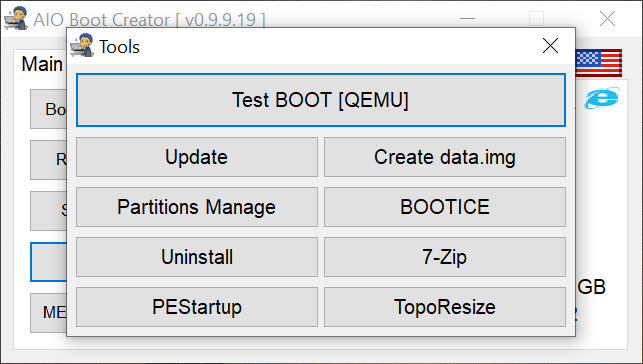
Several utilities ride along with AIO Boot, and two of them address problems the main tool creates for itself.
A partition and boot sector editor handles the low-level repairs that a stick occasionally needs after an integration goes wrong. A defragmentation tool for the stick matters more than it sounds, since some loaders require the image files they boot to be stored contiguously, and a file that has been split across the drive fails to start with no explanation.
The menu system includes a file manager of its own, so partitions on the machine can be browsed from the boot menu before anything has loaded, which is how you confirm a drive is readable on a machine that will not start.
Recovery of the system’s own bootloader in either firmware mode is built in too, which is the emergency case where a machine stopped starting after a partition change and nothing else is available.
Once a stick is finished and working, ImageUSB duplicates it byte for byte to several drives at once, which is how a technician ends up with five identical ones.
Where it sits now
Being clear about the field, because it has changed around AIO Boot.
The copy-and-boot approach has become the default recommendation, and the community’s own comparisons describe this as the more configurable alternative rather than the simpler one. That is a fair summary. The learning curve is real, the documentation is thin, and the interface is plain.
What it offers in return is control that copy-and-boot tools do not. Loader choice per mode, integrated packages with correct parameters, menu editing and protection, network serving and the two-partition layout handled for you.
Development has been quiet for a considerable time, which matters most for the newest installers, since integration routines written for one generation of an operating system do not automatically understand the next.
For a single installer image written to a stick with the partition scheme and boot mode chosen correctly, Rufus remains the direct tool.
Conclusion
AIO Boot is the configurable end of the multiboot category, and it earns that position honestly. Loader choice per firmware mode, integrated packages, an editable and lockable menu, and a network server are all things the simpler tools leave out, and the two-partition layout it builds is the answer to a problem that defeats people doing it by hand.
Choose it knowing what that costs. The setup is real work, the documentation will not carry you through it, and development has been quiet while installers kept changing. For a technician who wants one stick that does everything and is prepared to learn how it does it, this remains a serious tool. For somebody who wants to copy a file and boot, the simpler alternatives are simpler for a reason.
Pros & Cons
- Both firmware modes on one stick, with a choice of loader for each
- Two-partition layout created for you, avoiding the four gigabyte problem
- Packages integrated with correct boot parameters rather than dropped in
- Menu editable, renamable and password protected
- Bundled network boot server for many machines at once
- Boots the newer firmware mode on hardware that only offers the older one
- Honest about its own limitations in a way most software is not
- More setup than copy-and-boot alternatives, with a real learning curve
- Documentation is thin and the interface is plain
- Some packages refuse the larger partition's format or lose persistence on it
- Signature requirement support needs a key enrolment step most people have not seen
- Development has been quiet, so the newest installers may not integrate cleanly
Frequently asked questions
Packages are integrated with their own boot parameters and menu entries rather than handed to a generic loader, and the menu can be edited and password protected. That is more work and it makes some things boot that fail as bare images.
Usually the loader or the firmware mode rather than the image. Switching the loader for that mode, which this allows without rebuilding, is the quick test, and checking the machine's boot mode setting is the other.
Because the format the newer firmware needs cannot hold files over four gigabytes, and modern installers exceed that. A small boot partition in that format plus a large one without the limit solves it, and the tool creates the pair.
Through a signed intermediary and a one-time key enrolment on each machine. Most technicians disable the requirement for the duration of the work instead, which is simpler and reversible.
Yes, through the bundled network boot server, which serves the same menu to machines starting from the network. That suits many machines needing the same environment without carrying a stick between them.


