

SHAREit

 (160 votes, average: 4.07 out of 5)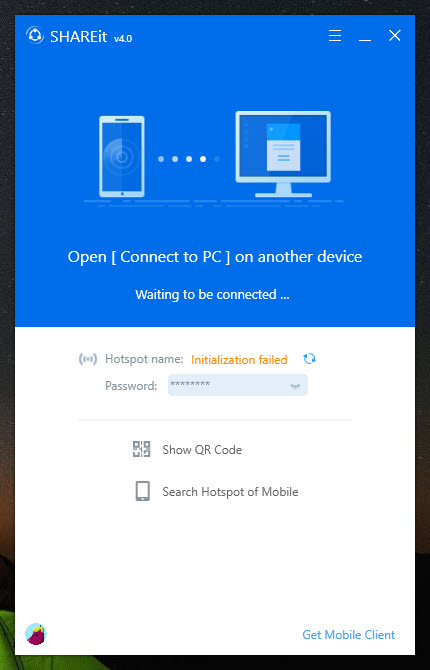
About SHAREit
Copying a few gigabytes between a laptop and a phone, or between two computers, usually means a USB cable, a cloud upload, or an email attachment that bounces back for being too big. SHAREit skips all three. It builds a direct wireless link between two devices and pushes files across it far faster than Bluetooth, without touching your internet connection or a cloud account along the way. No cable, no upload, no data plan burned on a 4GB video.
The mechanism is the part worth understanding. SHAREit spins up its own local hotspot using Wi-Fi Direct, so the two devices talk straight to each other rather than routing through a router or the web. That is why it keeps working in a basement with no signal, on a plane, or anywhere the network is too clogged to be useful.
Offline transfer is the whole point, and that single trait is why the tool keeps its users even though its reputation has taken some hits over the years.
How the direct connection works
When you start a transfer, the sending device advertises a connection and the receiver joins it, either by picking the sender from a radar-style screen or scanning a QR code the app throws up. Once paired, files move over the private Wi-Fi link. Because it is a real Wi-Fi connection and not Bluetooth, throughput is high enough to move a movie or a folder of photos in the time Bluetooth would still be negotiating.
The desktop app handles both sides of the pairing. You can send from the PC to another device, receive onto the PC, or set up a PC-to-PC transfer between two computers on the same private link. The QR-code path is the smoother one in practice, since hunting for a device on the radar screen sometimes needs a retry when several devices are nearby.
If you want a leaner take on the same Wi-Fi Direct idea, Zapya covers nearly identical ground with a similar offline-first approach, and it is the one to try if SHAREit feels heavier than you want.
Speed and what actually moves
The headline claim is the transfer rate. On a clean connection it holds up. Large single files, a video, a disk image, an archive, are where the advantage shows most, since the link runs without the overhead of an upload server. Folders of mixed small files move quickly too, though thousands of tiny items always carry more per-file overhead than one big blob.
Beyond ordinary files, SHAREit moves things a plain copy tool ignores. It transfers installed apps as their package files, contacts, and whole media libraries, which is what people lean on when migrating to a new device. For a one-time bulk move of music and photos onto a new machine, that range is handy. For ongoing two-way folder syncing rather than one-shot sends, a tool built for that job like Resilio Sync fits better, since the application here is built around the discrete transfer, not continuous mirroring.
The web transfer and history
There is a browser-based option too. SHAREit can serve a transfer through a local web page, so a device without the app installed can still receive files by opening a link on the same network. Handy when you cannot or do not want to install the app on the other end, though it runs slower than the native direct link and needs both devices on the same network.
The app keeps a history of what you have sent and received, which sounds minor until you need to find that file someone shared with you last week. Received items land in a dedicated folder you can point wherever you like, and the history view doubles as a quick way to resend something without re-selecting it.
The bloat problem
No review can skip this part. SHAREit has, over time, packed in a lot that has nothing to do with moving files: content feeds, recommended downloads, promotional panels, and on the mobile side a notorious load of ads. The desktop app is cleaner than its phone counterpart, but it still pushes extras and runs a busier interface than a transfer tool needs. If all you want is to fling a file from A to B, that clutter is the cost.
This is where the alternatives pull ahead. Send Anywhere does any-size direct transfers with a much quieter interface, Dukto is about as minimal as a cross-device file mover gets, and for wireless access to a phone from the desktop specifically, AirDroid handles that lane. SHAREit still wins on how much it can move and on speed with no network, but you pay for it in interface noise.
Conclusion
SHAREit fits the person who regularly moves big files between devices where the internet is slow, absent, or just not worth involving, and who cares more about what gets moved than about a tidy interface. The offline Wi-Fi Direct approach solves a real problem, shifting gigabytes with no cable and no upload, and carrying apps, contacts, and whole libraries in one pass is a genuine help when setting up a new machine.
The reason to hesitate is everything bolted on around that core. The promotional clutter and content feeds turn a simple utility into a busier experience than the job calls for, and leaner tools do the pure transfer with far less noise.
Tolerate the extra weight and it still holds a spot for its speed and range. Want a quiet, single-purpose mover instead, and one of the alternatives is the better call.
Pros & Cons
- Direct Wi-Fi Direct connection transfers files with no internet, cloud account, or cable
- Much faster than Bluetooth, especially for large single files
- Transfers apps, contacts, and whole media libraries, not just ordinary files
- QR-code pairing makes connecting two devices quick
- Browser-based web transfer lets app-free devices receive files over the local network
- Built-in history makes it easy to find or resend past transfers
- Cluttered interface stuffed with content feeds and promotional panels unrelated to transfers
- Pushes recommended downloads and extras you have to decline
- Radar-style device discovery can need retries when many devices are nearby
- Built for one-shot transfers rather than ongoing folder syncing
- Web transfer mode is noticeably slower than the native direct link
Frequently asked questions
It creates a direct wireless connection between two devices using Wi-Fi Direct, then moves files across that private link. Because the connection is device-to-device, transfers happen without an internet connection, a cloud account, or a cable.
Open the application on both computers, set one to send and one to receive, and pair them either by selecting the device from the discovery screen or scanning the QR code. Once connected, you pick the files and they move over the direct link.
Yes. The tool sends installed applications as their package files, along with contacts and media libraries, which is why it is often used when moving everything onto a new device at once.
No. The direct Wi-Fi connection is the whole point, and it works offline. Both devices join a private link the app creates, so transfers go through even with no network or data available.
It serves a transfer through a local web page so a device without the app can receive files by opening a link on the same network. Useful when you cannot install the app on the other end, though it runs slower than the native connection.
Incoming files land in a dedicated received folder that you can relocate in the settings, and the app's history view lists everything sent and received so you can track down a transfer later.


