

recALL
About recALL
recALL recovers the licence keys and saved passwords already sitting on your own computer, for the day you reinstall and find you never wrote any of them down. Point it at the machine and it reads the product keys of hundreds of installed programs and the operating system itself. It also reads back the passwords that your own browsers, mail clients and FTP programs saved for you.
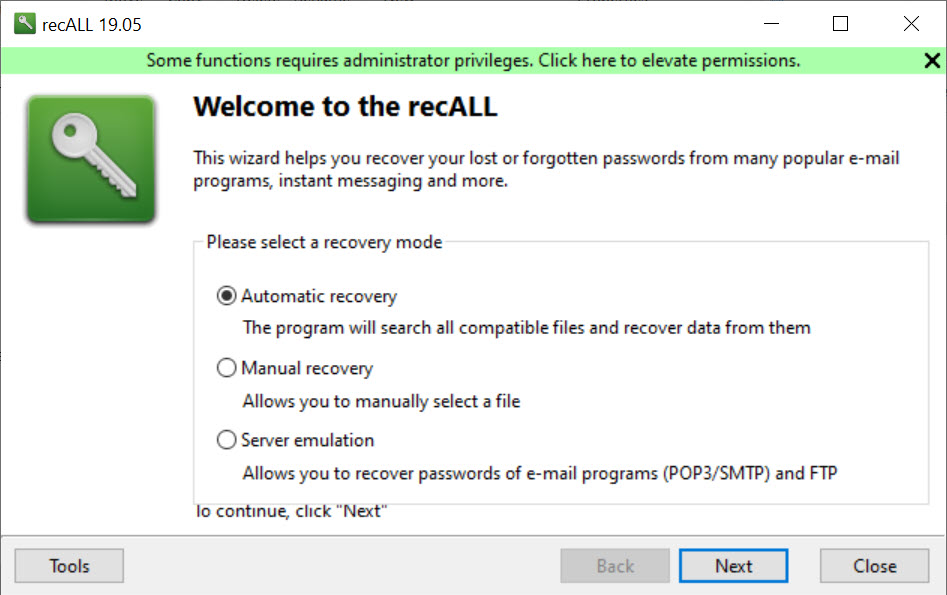
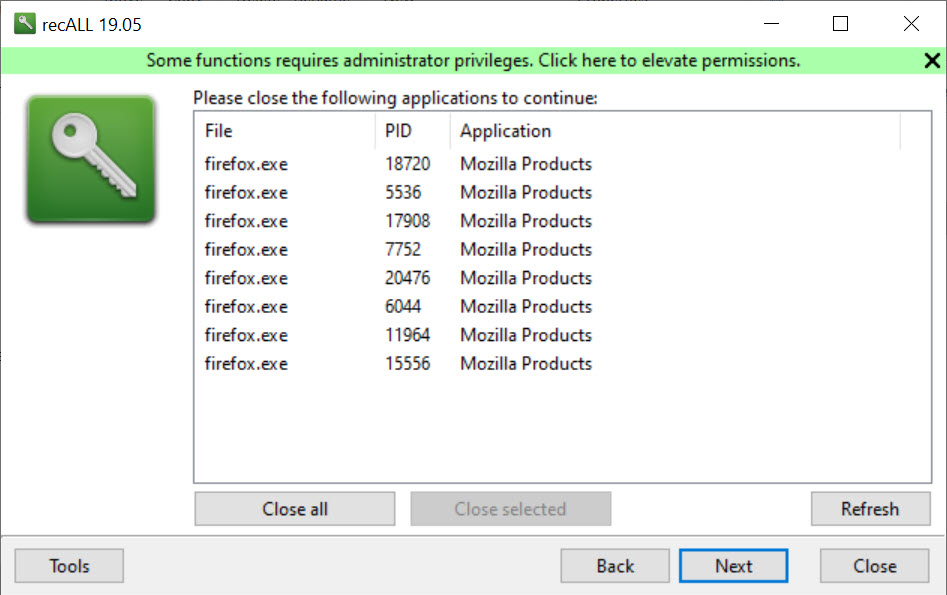
A wizard walks through it in three steps. Choose a recovery mode, let it scan, and export the result to a file, so the keys and logins you would otherwise lose in a wipe end up in a list you keep somewhere safe.
It is built for your own machine and your own forgotten details, and that is the frame to keep around it. recALL reads keys for a very large catalogue of applications, nearly two thousand eight hundred by its own count, and passwords from a few hundred programs. It can read them from a damaged installation through its support for the registry files directly, which is what makes it useful when the system no longer boots.
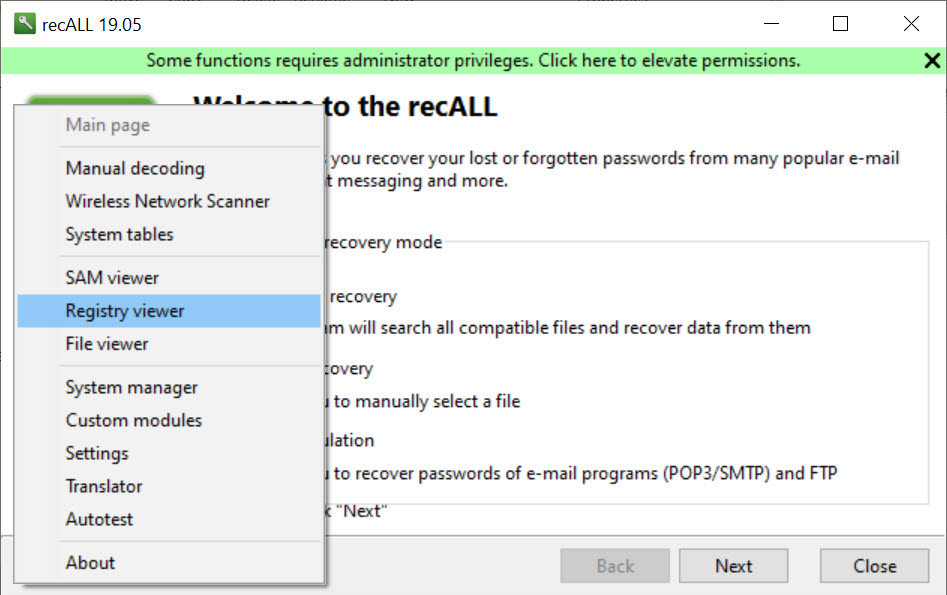
It is a portable program that installs nothing, and it has not been updated in a long time. The sections below cover the recovery modes, the licence keys, the saved passwords, the export and the cautions that come with a tool of this kind.
The three recovery modes
The recALL wizard opens on a choice of three. Automatic recovery scans the whole machine, the registry and the common locations, and lists every key and password it can find, which is the mode for someone who just wants everything before a reinstall. Manual recovery points the program at a specific file or folder, which is how keys are read from a second drive, a mounted backup or the registry files copied from a machine that will not start.
The third mode is for a narrower case and is covered plainly below. Automatic is the one most people use, and on a full machine it takes a few minutes, since it is reading a great deal rather than hanging. The scan can be left to run and the results read when it finishes.
Licence keys
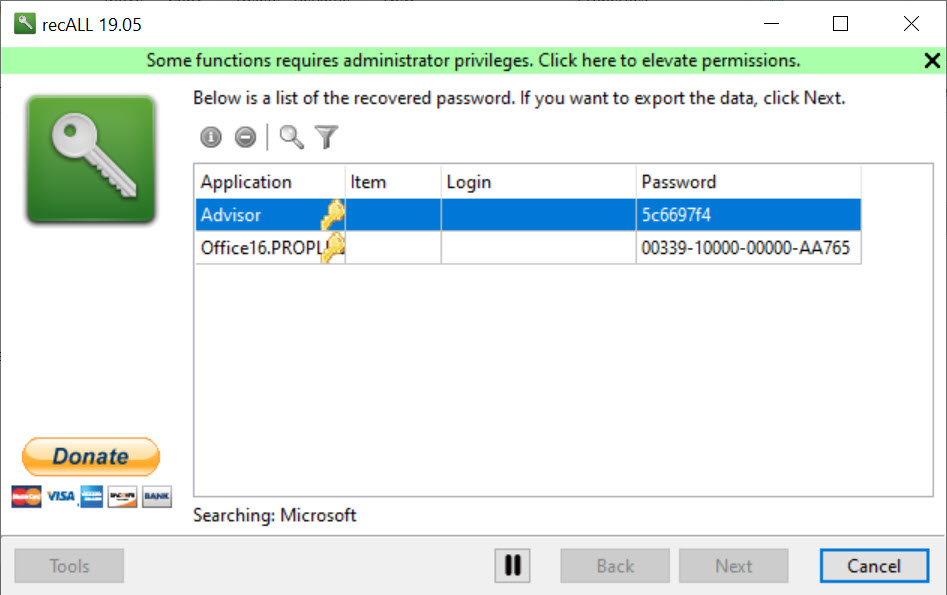
This is the strongest half of recALL and the least fraught. It reads the product key of the operating system and of a catalogue of installed applications that runs into the thousands, from office suites to utilities and games. Each is pulled from where the program stored it.
A machine about to be wiped gives up the keys you paid for and filed nowhere, so they can be entered again on the fresh system. For a full written inventory of a machine including its keys, Belarc Advisor produces the report.
The damaged-system support is what sets it apart from the simpler key finders. By reading the registry files directly rather than through a running system, it recovers keys from a drive whose operating system no longer starts.
That is the situation where the keys are needed most and hardest to reach. For a focused reader of the operating system’s own key, a reader for the operating system’s own key does that one job.
Saved passwords
The other half of recALL reads back the passwords that programs on the machine saved for you. A browser that remembered a login, a mail client that stored an account password, an FTP program that kept a server’s credentials, all hold those details so you do not have to type them. The program reads them from the same stores. For your own machine, that is the way to recover a login you set long ago and forgot, before you move to a new computer.
Two honest limits apply. It can only read what was actually saved, so a password you never let a program remember is not there, and a browser protected by a master password keeps its secrets closed. Reviewers who tested it found the key recovery stronger than the password side, which came back thinner than they expected.
For storing the passwords you recover so this never happens again, KeePass keeps them in an encrypted vault.
The export
Everything recALL finds is exported to a file, in text, HTML, CSV or a ZIP, so the keys and logins become a document you can print or store. That export is the point of the exercise before a reinstall, since a list of keys on paper or in a safe place is what lets the fresh machine be set up without buying anything again.
Treat that file with care. It is a plain list of your keys and passwords, so it belongs somewhere protected rather than on the desktop. Delete it from a machine that others use once it has served its purpose.
The program writes its own settings to its folder and leaves nothing in the system.
The cautions that come with it
recALL, like any tool that reads passwords and keys, is treated with suspicion by antivirus software, which flags this kind of program on sight, and the reviews note it. That is expected for the category, not a sign of infection in itself, though it also means the tool should come from a source you trust. The server emulation mode, the third recovery option, is an advanced feature for recovering a password from a program the tool does not otherwise support, and it is fiddly enough that most people never need it.
The deeper caution is the obvious one. A program that recovers saved passwords and keys is for your own computer and your own details, run with your own authority on a machine you own. Used that way it is a genuine help before a reinstall.
The lack of updates, the thin documentation and the antivirus warnings are the practical drawbacks. The tool still does its main job, reading your keys off your machine, as well as it ever did.
Conclusion
recALL suits anyone about to reinstall their own system who wants the licence keys and saved logins off the machine first, and technicians recovering keys from a drive that no longer boots. The key recovery, the damaged-system support and the export are the parts that earn it a place in the reinstall kit.
Its password side is weaker than its key side, its antivirus warnings come with the territory, and it has gone quiet. Run it on your own machine before the wipe, export the keys to a safe place, and store the result in a password manager so the next reinstall is easier still.
Pros & Cons
- Recovers licence keys for the operating system and thousands of applications
- Reads keys from a damaged installation that no longer boots, through the registry files
- Reads back passwords your own browsers, mail and FTP clients saved
- Three recovery modes, with a full automatic scan for a pre-reinstall sweep
- Exports everything to text, HTML, CSV or ZIP
- Portable, installing nothing and leaving nothing behind
- Password recovery is thinner than the key recovery
- Cannot recover what was never saved, or anything behind a master password
- Antivirus software flags it, as it does the whole category
- Not updated in a long time, with little documentation
Frequently asked questions
The licence keys of the operating system and thousands of installed applications, and the passwords that your own browsers, mail clients and FTP programs saved. It exports them to a file.
Yes. It reads the registry files directly, so keys can be recovered from a drive whose operating system no longer boots.
Programs that read saved passwords and keys are flagged by antivirus software as a category, whether or not anything is wrong. Get the tool from a source you trust and expect the warning.
No. It reads back passwords that a program actually stored. A password you always typed by hand, or one behind a master password, is not recoverable.


