

Pianoteq
About Pianoteq
Virtual pianos are normally recordings. Somebody puts microphones around a concert grand, plays every note at a dozen different strengths, and the software plays back whichever recording matches what you did. Pianoteq does not contain a single recording of a piano.
Instead it models the instrument mathematically. Strings with length, tension, stiffness, hammers with hardness, a soundboard that resonates, a cabinet that colours what comes out. When you press a key the sound is calculated rather than retrieved.
That distinction sounds academic and produces differences you hear within about thirty seconds of playing.
What calculation gets you that recordings cannot
Sampled libraries capture a fixed number of strengths per note and blend between them, which Pianoteq never has to do. Play at a strength between two recordings and you hear an interpolation, which is the source of the slight steppiness players notice on quiet passages.
A modelled instrument has no steps. Dynamics are continuous because the calculation simply uses whatever value arrived, so the difference between a very quiet note and a slightly less quiet note is real rather than approximated.
Resonance is the other place it wins outright. In Pianoteq the strings really do interact, so holding the pedal and playing a chord produces sympathetic vibration in the strings that were not struck, because those strings exist in the model and are being excited. A sampled library can only approximate that with reverb and pre-recorded resonance layers.
Pedalling follows from the same principle. Half-pedalling works properly, the pedal has progressive behaviour rather than being on or off, and catching a note by pedalling after striking it behaves as it does on a real instrument.
The size difference is not a footnote
A serious sampled piano library occupies tens of gigabytes and takes time to load. Pianoteq occupies tens of megabytes. That is a difference of three orders of magnitude and it changes practical things. It loads instantly, it fits on any machine, it can live on a laptop taken to a rehearsal, and it never touches a disk while playing because there is nothing to stream.
For capturing what you play as audio rather than as note data, Audacity records the output and handles the editing afterwards.
Adjusting the instrument, not the recording
The Pianoteq parameter list is where this becomes something other than a piano plugin. String length, hammer hardness, hammer noise, soundboard behaviour, the width of unison between strings within a note, cabinet resonance, and the positions of virtual microphones around the instrument.
Those are not effects applied to a sound. They are properties of the thing producing it, so changing hammer hardness alters the timbre the way a technician voicing hammers would, and the change behaves consistently across the whole dynamic range rather than sounding like a filter.
Note-by-note editing goes further, allowing the tuning, level, hammer hardness of individual keys to be adjusted. That is how somebody produces a slightly worn instrument with one dull note, which is more convincing than perfection, and it is impossible with recordings unless somebody recorded that exact flaw.
Beyond pianos, into instruments nobody can record properly
The Pianoteq collection covers modelled versions of well-known concert grands and upright pianos, and then goes somewhere sampling struggles to follow.
Historical keyboards are the interesting case. Fortepianos, harpsichords, clavichords survive in small numbers, each one different, most of them fragile, few in tune, and almost none available for the weeks of recording a sampled library requires. Modelling sidesteps that entirely, because an instrument can be described rather than borrowed.
Electric pianos, vibraphone, celesta, tuned percussion round out the set, all built the same way. Anybody learning repertoire on these rather than performing it should look at Synthesia, which teaches the notes while this handles the sound.
What it asks of your setup
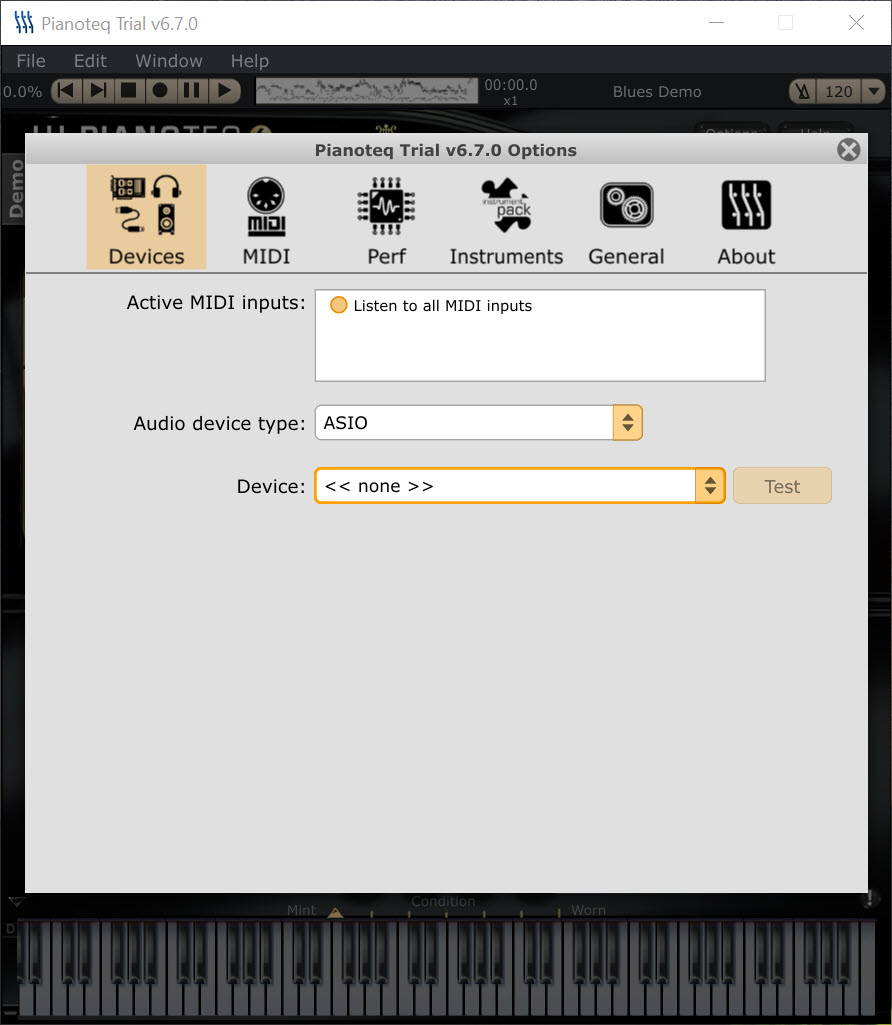
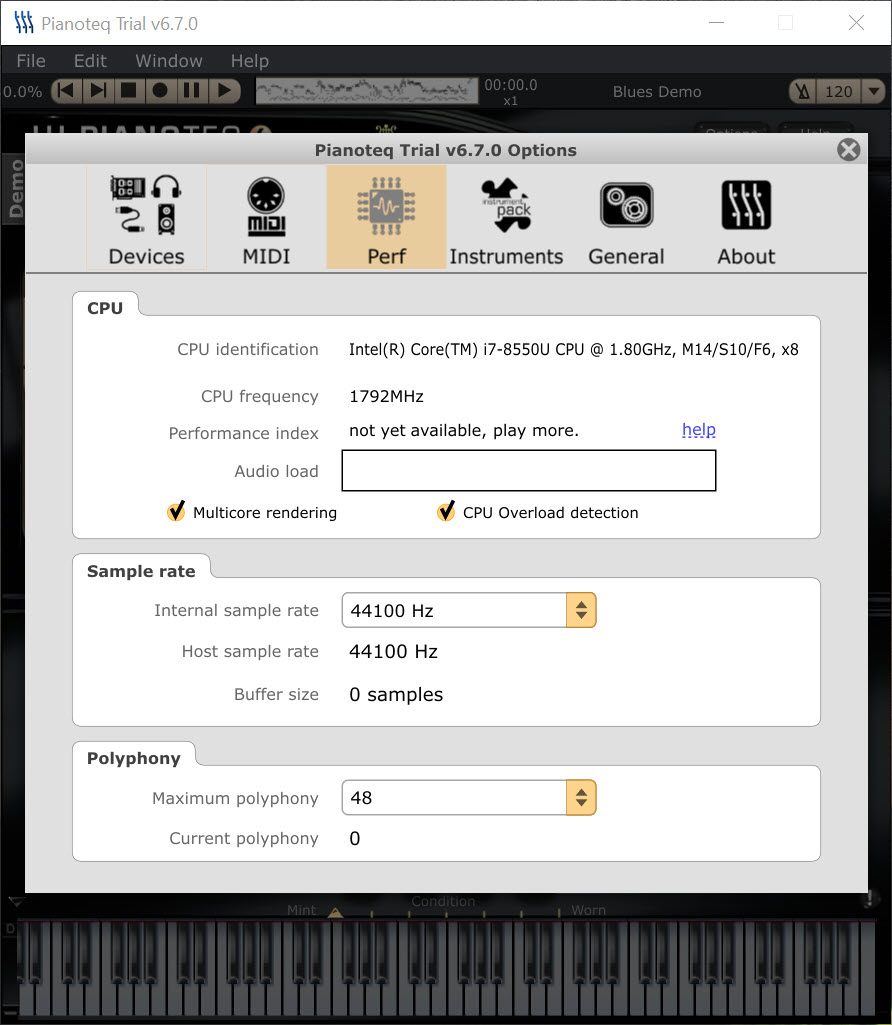
Two things matter for Pianoteq and neither is the computer. Processor demand is modest by the standards of this category, precisely because nothing is streaming from disk.
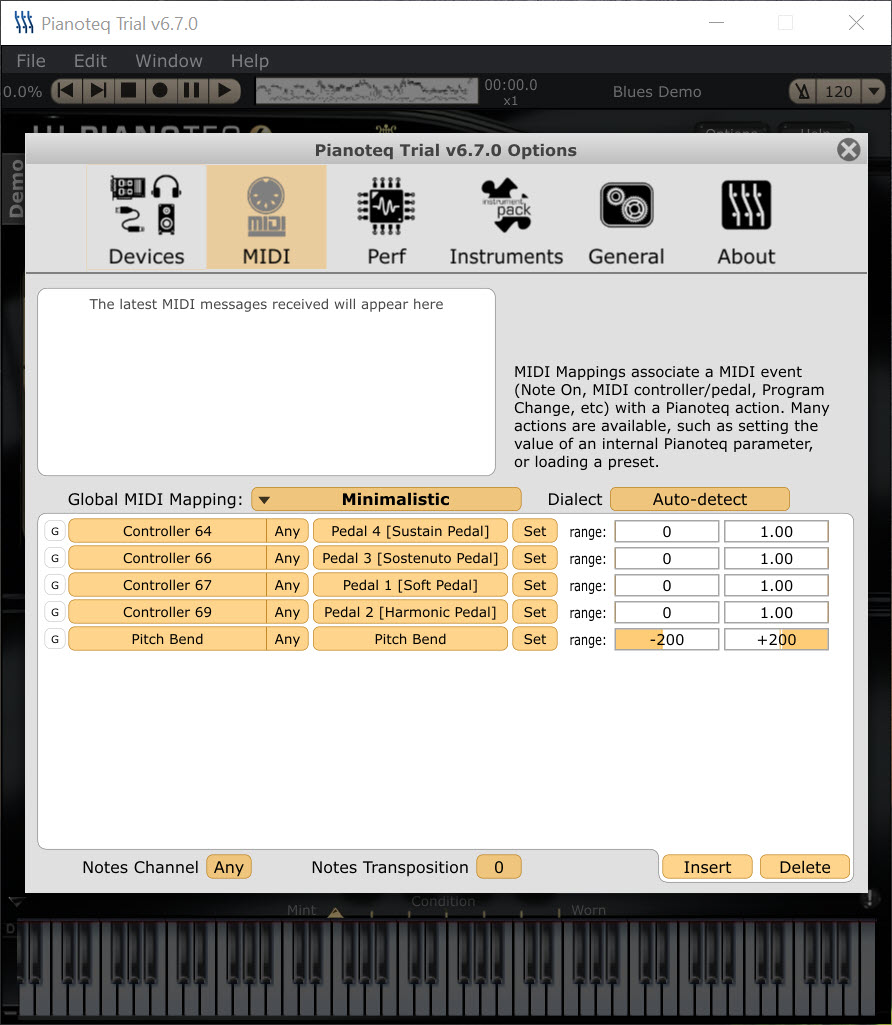
The controller is what limits the experience. All of the dynamic subtlety described above arrives through velocity information from your keyboard, so an entry-level controller with a coarse velocity curve will not convey it and the modelling has nothing to work with. A weighted keyboard sending fine velocity data is where the difference becomes obvious.
Latency is the other consideration, since a delay between pressing a key and hearing the note makes any instrument unplayable regardless of how good it sounds. A low-latency audio driver layer is what makes that acceptable on hardware without professional audio interfaces.
The honest argument
There is a real debate around Pianoteq and it deserves stating fairly rather than settling by preference.
Sampled libraries start from a recording of an actual instrument in an actual room, and many players find the initial attack of a note more immediately convincing as a result. Modelling produces its own attack from calculation, and the criticism levelled at it is that this can sound subtly synthetic on the hardest strikes.
Modelling wins on everything that happens after the attack. Dynamics, resonance, pedalling, decay, note interaction are all better because they are computed rather than approximated. Which matters more depends on whether you are playing the instrument or listening to it, and players tend to prefer modelling while some listeners prefer samples.
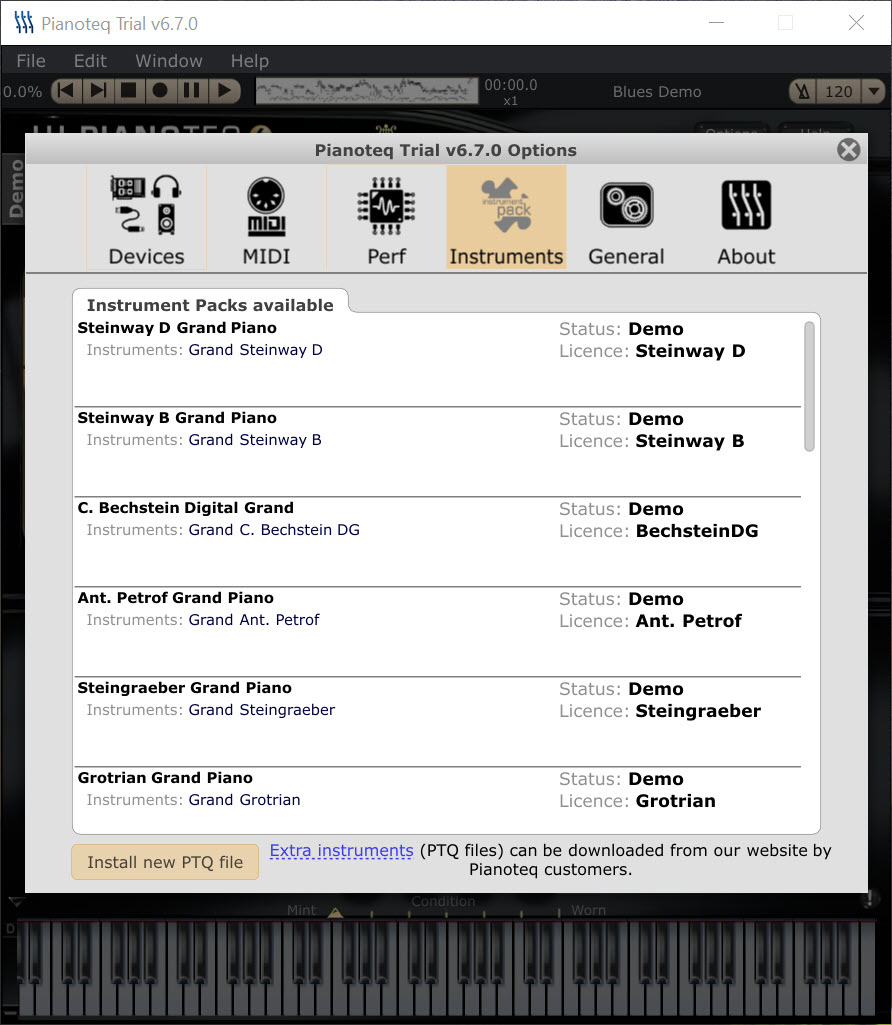
The tiers are the practical complication. Microphone count, note-by-note editing and the number of included instruments vary between them, so working out which level covers what you actually need is a necessary exercise rather than an upsell to ignore.
Conclusion
Pianoteq is the answer for anybody who plays rather than merely triggers a piano sound. Continuous dynamics, strings that actually resonate against each other, pedalling that behaves properly, and the ability to adjust the instrument itself rather than the recording of one add up to something no sampled library can reproduce, in a download smaller than a photograph album.
Two things decide whether you will hear any of it. The controller has to send fine velocity information, because everything above depends on that, and the tier you choose determines which instruments and which editing capabilities you actually get. Sort those out and the argument between modelling and sampling resolves itself the moment you play something quiet with the pedal down.
Pros & Cons
- Continuous dynamics with no velocity layers to interpolate between
- Strings really interact, so sympathetic resonance is physical rather than simulated
- Half-pedalling and progressive pedal behaviour work as they do on a real instrument
- Occupies tens of megabytes rather than tens of gigabytes
- Instrument properties are adjustable, not effects applied to a recording
- Note-by-note tuning, level, hammer hardness for realistic imperfection
- Historical keyboards that sampling cannot practically capture
- Modest processor demand with nothing streaming from disk
- The attack of a note can sound subtly synthetic against a good sampled library
- Requires a controller with fine velocity response to convey anything
- Tier structure is complicated, with instruments and features distributed across levels
- Instrument collections beyond the included set are separate additions
- Latency handling depends on your audio setup rather than on the software
Frequently asked questions
It contains no recordings. The sound is calculated from a model of strings, hammers, soundboard, cabinet, so dynamics are continuous rather than blended between captured layers and the strings interact with each other for real.
Because there is nothing to store. A sampled library holds thousands of recordings and occupies tens of gigabytes, while a model holds the description of an instrument and occupies tens of megabytes.
A controller sending fine velocity information, ideally weighted. Everything distinctive here depends on subtle differences in how hard a key was struck, and a coarse controller gives the model nothing to express.
Yes, including fortepianos, harpsichords, clavichords, and this is where modelling has the least competition. The surviving originals are rare, fragile, inconsistent, which makes recording a full sampled library of them impractical.
Better in some respects and arguably not in others. Resonance, dynamics and pedalling are clearly better, while the initial attack of a note is where sampled recordings still convince some listeners more. Players generally prefer the modelled behaviour.


