

Pale Moon
About Pale Moon
Every mainstream browser now looks and behaves roughly the same way, and every one of them removed the extension model that let people rebuild the interface to suit themselves. Pale Moon exists because a group of people refused to accept that, forking the engine before those decisions were made and maintaining it independently ever since.
The result is not a reskinned version of anything current. It runs its own layout engine, keeps the interface arrangement from before the mainstream redesigns, and supports extensions that can alter the browser itself rather than only the pages it displays.
That makes it either exactly what you have been looking for or a browser you will abandon within an hour, and the deciding factor is what you want from your extensions.
Its own engine, and what that buys
The engine was forked from the mature codebase of the browser everybody knows, at the point before that project rewrote its interior. Since then it has been developed separately, gaining support for newer web features gradually as the maintainers implemented them.
Independence cuts both ways. Interface capabilities the mainstream removed are still present, because nobody upstream can take them away, and every new web platform feature has to be implemented by a small team rather than arriving with a merge.
Font and gradient rendering are areas the project claims as better than other engines, and on text-heavy pages the claim holds up. Against current Firefox the two are no longer relatives so much as distant cousins.
The classic extension model is the point
This is the reason the browser has a devoted following. Extensions can reach into the browser’s own behaviour, moving interface elements, changing how tabs work, altering menus and rewriting what the application does rather than merely what a page shows.
That capability disappeared from the mainstream, and the extensions written against it stopped working everywhere else. Here they still run, and a community maintains forks of the ones people refused to give up.
Understand the trade clearly though. Current extensions from either mainstream ecosystem will not install, so the popular content blockers and password managers are unavailable in the form you know them. What you get instead are community-maintained equivalents from the browser’s own extension site, which cover the common needs and are not the same thing. Waterfox made the opposite choice, staying closer to the modern extension format while giving up the deeper interface access.
Full themes rather than colour accents
Theming in Pale Moon means what it used to mean. A complete theme restyles every element of the interface, not just a strip of colour behind the tabs, and lighter toolbar skins exist for people who only want a different look without a redesign.
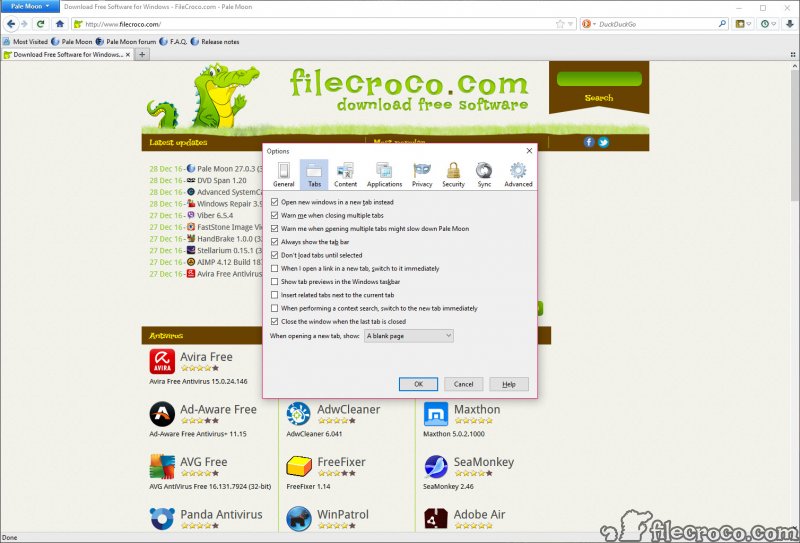
Configuration goes correspondingly deep. Toolbars are rearranged by dragging, the status bar survives, and tab behaviour is adjustable in ways mainstream browsers stopped exposing. Pale Moon assumes you know what you want.
If deep configuration is the appeal but you would rather have current web compatibility with it, Vivaldi is the modern browser built around that idea and reaches almost as far through its own settings.
No telemetry, stated as a position
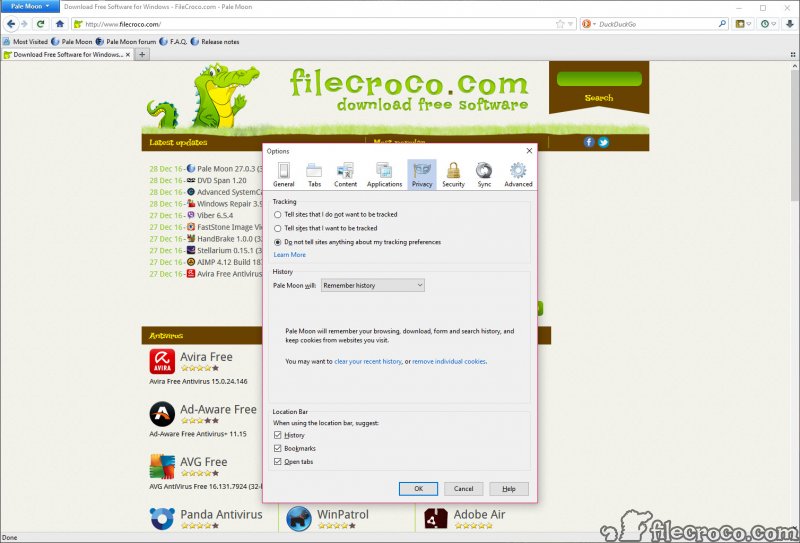
There is no advertising, no telemetry and no data gathering, and it is presented as a principle rather than an option you switch off. For anyone tired of finding new reporting toggles after each update, that consistency is the attraction.
The same principle produces a limitation people meet immediately. Without the proprietary content protection module that subscription video services require, those services will not play, and the browser is not going to add it. Anyone whose evening involves streaming needs something else open for that.
Performance, and what the architecture gives up
It is optimised for current processors and uses hardware acceleration where available, so describing it as a browser for old machines undersells it. That said, its modest resource use is why minimal system distributions adopt it as their default, and on constrained hardware it is noticeably lighter than the mainstream alternatives.
Here is the architectural trade, and it matters. Pale Moon runs as a single process rather than isolating each tab, which is where the low memory use comes from. It also means a page that crashes the renderer takes the whole browser with it, and the security boundary that mainstream browsers put between tabs is not there.
That boundary exists because it stops a compromised page reaching the rest of the session. Its absence is a considered decision rather than an oversight, and one you accept when you install this. The full internet suite from the same lineage shares the heritage and the approach.
The sites that will not work, and why
Sites built against the newest platform capabilities can break, and rarely gracefully. Some services refuse the browser outright based on how it identifies itself, regardless of whether it could render the page.
Security patching is the other consideration. The project applies fixes and takes it seriously, and the work means backporting into a codebase that diverged long ago, by a team measured in individuals rather than departments. The patches arrive, and not always as quickly as upstream.
Most long-term users keep two browsers. This one for everything, and a mainstream browser for the sites that insist on it. That sounds like a compromise and takes about five seconds a week.
Conclusion
Pale Moon is for people who want their browser to be theirs. If you remember extensions that rearranged the interface, or you want a complete theme rather than an accent colour, or you simply object to a browser that reports on you, this delivers all three and nothing mainstream will.
The trade is real and should be understood before installing. You give up the current extension ecosystem, per-tab process isolation, subscription video and reliable compatibility with sites built this year. Keep a mainstream browser for the handful of places that demand one, accept that the security architecture is a deliberate choice rather than an accident, and it becomes the browser you actually enjoy using. Approach it expecting a drop-in replacement and the first broken site will send you back.
Pros & Cons
- Supports extensions that modify the browser itself, not only the pages it displays
- Full themes restyle every interface element rather than applying a colour accent
- Interface configuration reaches into areas mainstream browsers stopped exposing
- No advertising, telemetry or data collection, stated as a project position
- Modest resource use, which is why minimal system distributions adopt it
- Font and gradient rendering are noticeably good on text-heavy pages
- An independent engine means upstream decisions cannot remove features
- Current extensions from either mainstream ecosystem will not install
- Runs as a single process, so there is no security boundary between tabs
- Subscription streaming services will not play, and that will not change
- Sites using the newest platform features can break without warning
- Some services reject the browser based on how it identifies itself
- Security fixes are backported by a very small team, so they can lag
Frequently asked questions
No. It supports the older extension model that the mainstream removed, which is precisely why it exists. Community-maintained equivalents of the popular add-ons are available from its own extension site, and they are not identical to the versions you know.
Not any more. It was forked from that codebase before the interior rewrite and has been developed independently since, with its own layout engine. The shared ancestry is real and the two are now separate projects.
Either the site relies on web platform features the engine has not implemented, or it rejects the browser based on how it identifies itself. The first is a genuine gap, the second is a site decision rather than a technical limit.
No. Those services require a proprietary content protection module the project declines to include, and that is a deliberate position rather than a missing feature awaiting implementation.
No. It runs as a single process, which is where its low memory use comes from and also means a crash takes everything with it. The per-tab security boundary that mainstream browsers rely on is absent.


I have been using Palemoon Portable on a flash drive for years, works fast and well. Never a crash or freeze. It has excellent extensions that work. I always run it sandboxed and have had zero problems in years. I gave up on Firefox and the rest long ago.