

Windows 10 Upgrade Assistant
About Windows 10 Upgrade Assistant
Windows 10 Upgrade Assistant moves a computer running an older release of Windows 10 to the final one, without a disc, a stick or a reinstall. Run it, and it checks that the machine meets the requirements, downloads the final feature release, installs it over the existing system while files and programs stay where they are, settings included, and restarts a couple of times to finish. The whole thing is one small executable and a progress bar, and it does for a single machine what the update service was supposed to do on its own and sometimes never did.
Its purpose has narrowed rather than disappeared. Windows 10 itself has reached the end of its ordinary support, so no new feature releases will ever come, and the final release is the only one that qualifies for the extended security updates a machine can still enrol in.
Windows 10 Upgrade Assistant is therefore the tool for a computer stuck on an earlier release, the one that shows the end-of-service notice and refuses to move, and its job is to get that machine onto the final release so the security updates can continue. It does not install the successor operating system, and the sections below say what to use for that.
What it checks and what it downloads
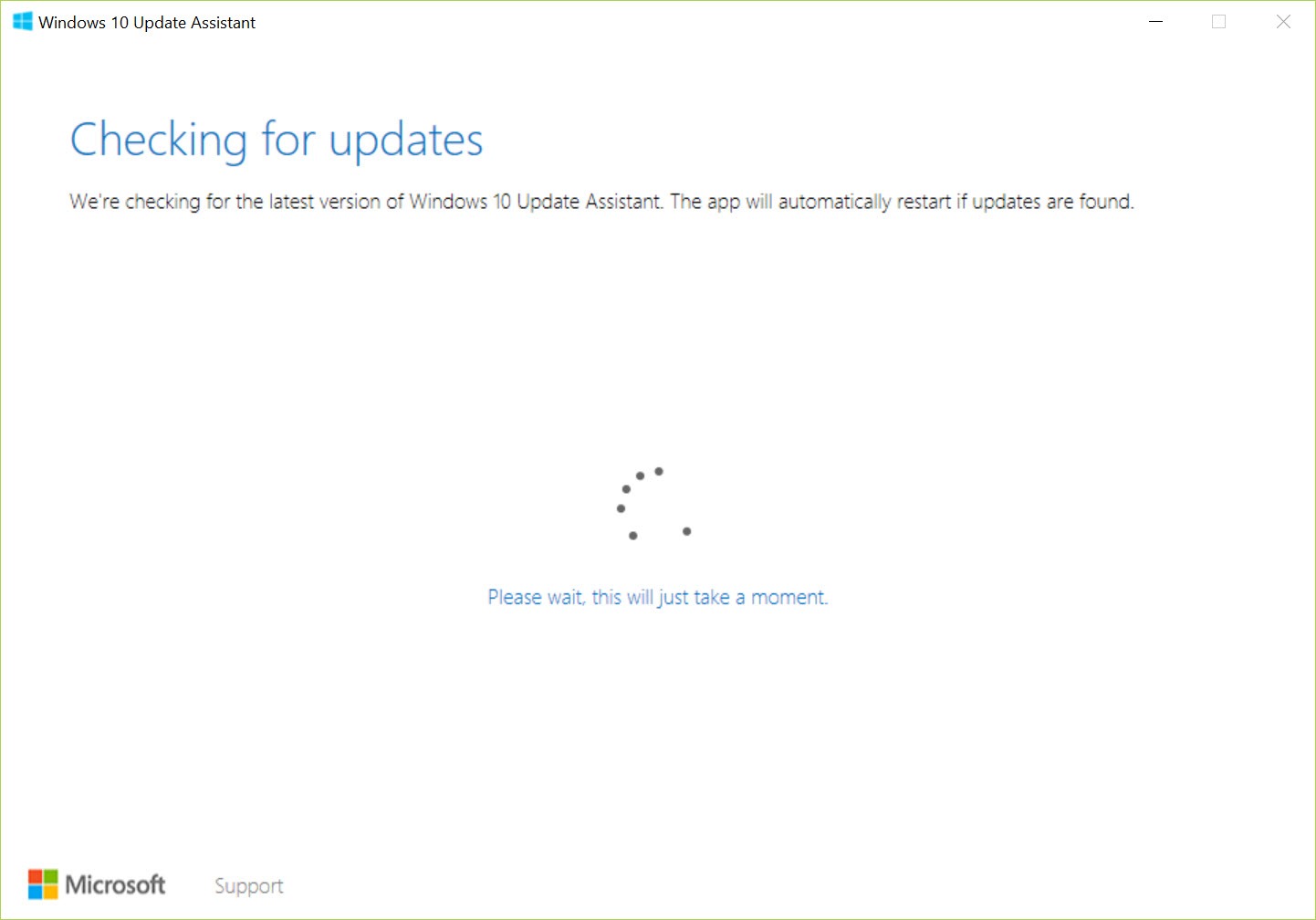
The first Windows 10 Upgrade Assistant screen compares the installed release with the final one and offers to update when they differ. It then checks the processor, the memory and the free disk space against the requirements and reports a failure plainly, usually disk space on a small drive, which is the common cause of a machine never having received the update on its own.
Pass the check and the download begins, several gigabytes fetched in the background while the machine stays usable.
The upgrade itself, and the rollback
Installation runs when the download completes, with a prompt to restart that can be postponed, and the upgrade keeps everything in place. Programs and documents survive, as do drivers and settings, and a rollback option remains for a short period afterwards if something has gone wrong.
The tool runs only on the common processor architecture and not on the ARM-based machines, which have their own update path.
Why the update service left a machine behind
A machine arrives at Windows 10 Upgrade Assistant because the automatic service skipped it. The reasons are familiar, a drive too full for the staging files, a driver the update had flagged as incompatible, a pending update that failed and blocked the rest, or a policy or a blocking tool that paused feature updates and was never released. The assistant steps past the queue and the gating, which is its value, and it also hits the same wall if the underlying cause is real.
When it fails partway, the error code is the clue, and the usual fixes are freeing disk space, removing an old antivirus, disconnecting peripherals and clearing the update cache, which FixWin does from a menu. Anyone who deliberately paused feature updates needs to release that pause first, since the assistant cannot push past a block that was put there on purpose.
A second run after the cause is fixed usually succeeds, since the download is kept from the first attempt only until the machine restarts.
Where it stops, and what comes next
Windows 10 Upgrade Assistant takes a machine to the final release of Windows 10 and no further. The successor operating system is installed by a different assistant, which checks for the newer hardware requirements and refuses machines without them, and by Media Creation Tool, which also writes a stick or an ISO for a clean installation.
A machine that passes those requirements should go that way, since the old system’s extended updates are a bridge rather than a destination. A machine that fails them stays on the final release, enrols in the extended updates for as long as they last, and is the case this tool was kept alive for.
The practical irritations
The download is large and repeats on every run, the installation takes an hour or more, and a failure leaves a partially staged upgrade that the update troubleshooter has to clear. None of that is unusual for a feature update, and the assistant is the least fussy way to get one onto a machine that was passed over.
Users who hold updates back deliberately with KillUpdate will find the two tools pull in opposite directions, and the block has to come off before the assistant can do anything.
Conclusion
Windows 10 Upgrade Assistant suits anyone with a computer stuck on an earlier release of Windows 10 that the automatic service never moved, and who needs it on the final release to keep receiving the extended security updates. The in-place upgrade keeps everything, the checks say what is wrong when it will not proceed, and the whole process asks for nothing but time and disk space.
It goes no further than the final release of a system whose ordinary support has ended, and a machine that can run the successor should take the other assistant instead. Clear the disk space, release any update block, run it once, and the machine is current with the only release that still has a future.
Pros & Cons
- Upgrades an older release to the final one in place, keeping files and programs along with settings
- Checks hardware and disk space first and reports plainly when something fails
- Downloads in the background while the machine stays usable
- Rollback available for a short period after the upgrade
- One small executable with no media to prepare
- Only reaches the final release of Windows 10, not the successor system
- Does not run on ARM-based machines
- Large download repeated on every run
- Fails on the same underlying causes that blocked the automatic update
Frequently asked questions
No. It upgrades to the final release of Windows 10 only. The successor has its own installation assistant and media creation tool.
Because only the final release qualifies for the extended security updates. A machine stuck on an earlier release needs this upgrade before it can enrol.
No. The upgrade is installed in place and keeps documents and programs, with drivers and settings, with a rollback option for a short period afterwards.
Usually the same reason the automatic update did, most often insufficient disk space, an incompatible driver or old antivirus, or a paused update policy. The error code points at which.


