

reWASD


 (57 votes, average: 3.46 out of 5)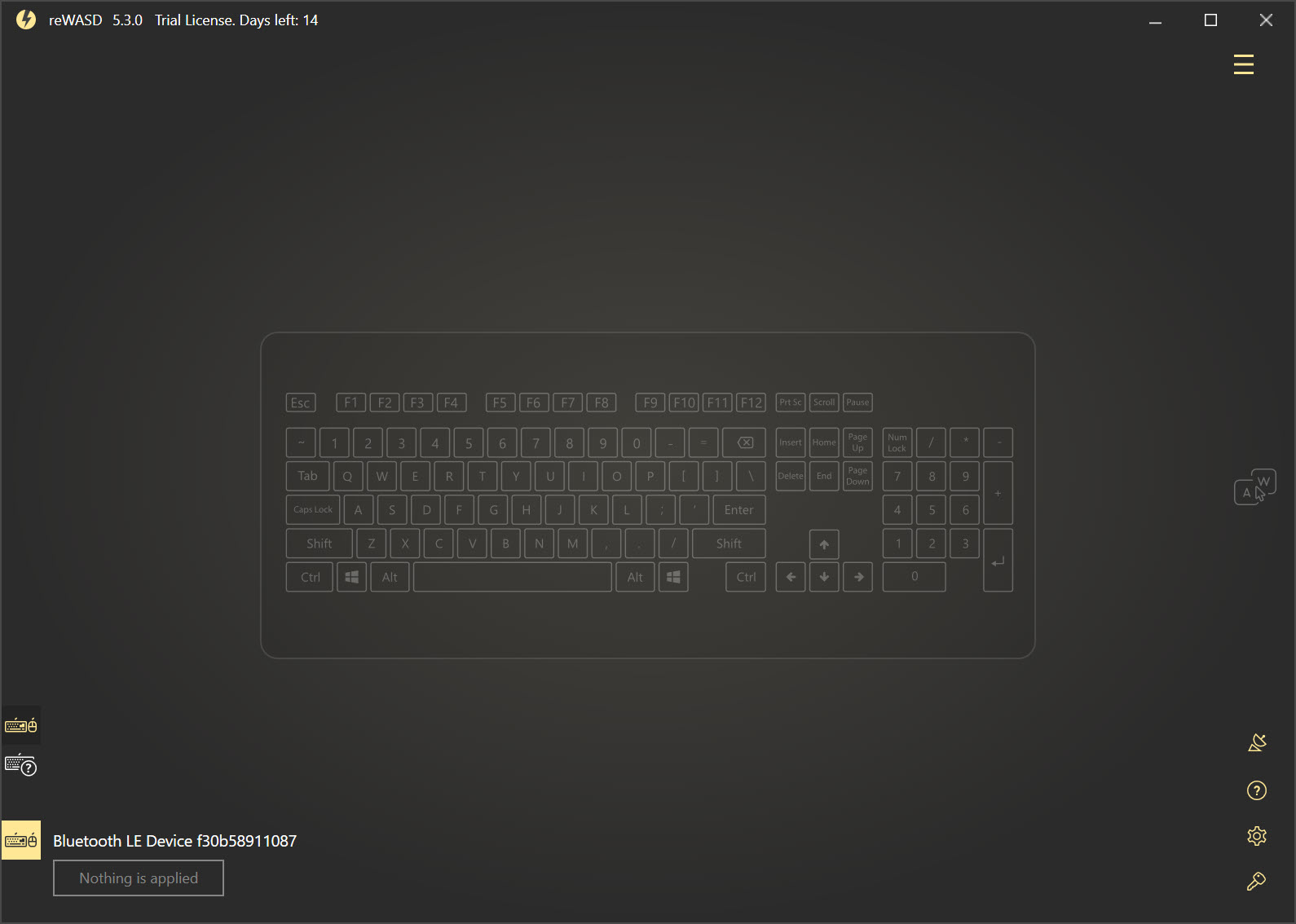
About reWASD
Anyone who has spent meaningful time gaming on PC eventually hits the moment where standard controller behavior just isn’t enough. Maybe a particular game has terrible controller support and you’d kill for keyboard inputs to be mapped to your gamepad. Maybe the default control scheme of a fighting game wastes the back paddles on your Xbox Elite controller.
Maybe you want to turn a single button press into a complex sequence of inputs that would be impossible to execute manually. The standard answer, going back many years, was hoping the game itself supported remapping or wrestling with AutoHotkey scripts that mostly worked.
reWASD is the dedicated solution that turned this into a polished, accessible process, with the kind of depth that has made it the go-to controller remapping tool for serious PC gamers.
This software has built a substantial following over the years specifically because it handles controller customization at a level that no built-in solution and few competitors can match. The supported controller list spans Xbox One, Xbox Series X/S, Xbox 360, Xbox Elite, DualShock 3, DualShock 4, DualSense, Nintendo Switch Pro, Joy-Cons, Steam Controller, and various others. For users who own these controllers and want to push them beyond their default behavior, this software provides essentially unlimited customization potential.
Comprehensive remapping that actually does what you want
The defining feature of reWASD is the depth of remapping it offers. Where built-in controller customization in Windows or Steam typically lets you swap a few button assignments, this software lets you map essentially anything to anything. Buttons can produce keyboard inputs, mouse clicks, mouse movements, other controller buttons, or complex sequences combining all of these. Analog sticks can be remapped to mouse movement, WASD keys, or different stick positions. Triggers can fire keyboard shortcuts at specific pressure thresholds.
The granularity matters because real customization needs are rarely simple. A user might want their controller’s right stick to function as mouse movement for first-person aiming while keeping the left stick as movement input, with the bumpers mapped to specific keyboard keys for context-specific actions, while the back paddles trigger custom macros.
Built-in solutions rarely accommodate this combination; this software handles it as routine configuration.
The visual interface presents the controller graphically with each button clearly labeled, and clicking any button opens the assignment dialog where you choose what input that button should produce. The workflow is intuitive enough that experimentation is practical, with the ability to test mappings immediately rather than committing to them blindly.
Macro creation for complex input sequences
Beyond simple remapping, the software handles macro creation for situations where a single button press should produce a sequence of actions. Open the macro editor, record or manually specify the sequence of inputs you want, save it under a name, and assign it to whatever controller button should trigger it.
The macro depth covers timing precisely, with millisecond-accurate delays between inputs so that complex sequences fire exactly as needed. For fighting games where specific combos require precise frame timing, this accuracy matters substantially. For productivity scenarios where a controller button should automate a complex software interaction, the same precision applies.
The Combo feature handles the variation where holding a button modifies what other buttons do, similar to how Shift modifies regular keys on a keyboard. Press button A normally, get one action. Hold B and press A, get a different action.
This dramatically expands the effective number of actions accessible from a single controller without changing physical button count.
Controller-as-mouse for games with broken controller support
A particularly useful capability is using a controller as a mouse for games that don’t have proper controller support. Some indie games, older titles, and various strategy games either lack controller support entirely or implement it in ways that don’t work well. reWASD lets you configure a profile that maps controller analog input to mouse movement, with the remaining buttons mapped to whatever keyboard inputs the game expects.
The mouse emulation includes settings for sensitivity, acceleration, and dead zones that let you tune the response to feel right for specific games. Different profiles for different games handle the variation, with the software switching profiles automatically based on which application is in focus.
For users who prefer playing certain games from the couch with a controller rather than at a desk with mouse and keyboard, this capability transforms the playable game library. Strategy games, point-and-click adventures, and various other genres become controller-friendly through this software when the games themselves don’t support controllers natively.
Profile management and game-specific configurations
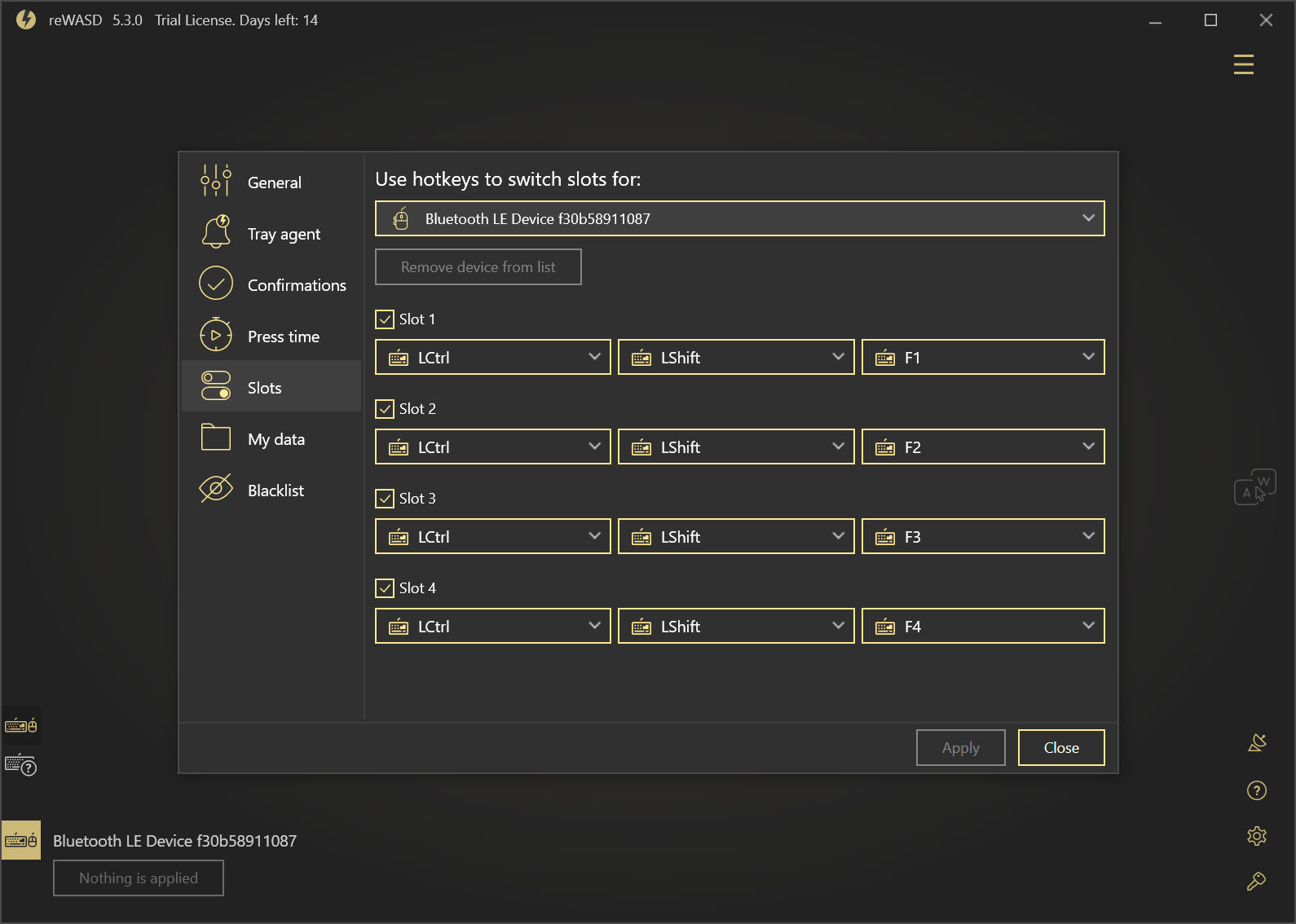
Real users don’t have one set of controller mappings; they have many, each tuned for specific games or contexts. reWASD handles this through its profile system, with unlimited profiles that can be associated with specific applications. Launch a game, the appropriate profile loads automatically. Switch to a different game, a different profile takes over.
The profile editor lets you organize configurations logically, with descriptions, tags, and groupings that help manage large collections. For users who play many different games and want each to have its optimal controller setup, the profile system scales to handle hundreds of configurations without becoming unmanageable.
The community sharing aspect deserves mention because the software includes access to community-shared configurations. If you don’t want to build your own profile from scratch for a particular game, browsing community submissions often reveals well-thought-out configurations that work well as starting points or final solutions.
This community library has grown substantially over the years, covering most major games with multiple alternative configurations available.
The anti-cheat and banning question, addressed honestly
The most-asked questions in forum discussions about this software involve whether it gets you banned in competitive games. The honest answer requires acknowledging that the situation varies substantially across games and over time. Some games’ anti-cheat systems treat input remapping software as suspicious and may flag or ban users running it. Others tolerate input remapping that doesn’t provide unfair advantages.
Specifically for major competitive games: Call of Duty, Valorant, Apex Legends, and similar titles have anti-cheat systems that may detect this software’s drivers as potentially incompatible. Whether they actually ban for this varies by game, by version, and by what specific features you’re using.
Users playing competitive games at high stakes need to research the current situation for their specific game rather than assuming everything will be fine.
For non-competitive gaming, single-player games, and most online games without aggressive anti-cheat, this software functions without issues. The remapping doesn’t provide cheating advantages in any technical sense; it just changes which physical inputs produce which game inputs. But the technical implementation involves drivers that some anti-cheat systems treat with suspicion regardless of intent.
The practical advice is to check current information about your specific game before using the software for it, particularly if you play competitively. The developer maintains some compatibility information, but the situation evolves as games update their anti-cheat and policies.
Rapid Fire and turbo modes
For genres where rapid repeated button presses are useful, the software includes rapid fire functionality that automatically triggers a button at a configurable rate while held down. This was a standard feature on early console controllers and exists in some current ones, but having it available across any controller through software extends the capability to hardware that doesn’t include it natively.
Rate adjustment lets you tune the rapid fire to specific game requirements, with some games benefiting from faster repetition and others working better at slower rates. Toggle modes let you enable rapid fire on specific buttons rather than applying it globally, which matters when only certain actions in a game benefit from rapid input.
For shooting games, retro arcade-style titles, and various other scenarios where rapid input matters, this feature transforms what would be physical strain (or impossibility, depending on the rate needed) into automatic functionality.
Combined with the broader remapping capability, this turns ordinary controllers into something approaching arcade-grade input devices for users who want that capability.
Radial Menu for accessing many actions
The Radial Menu feature addresses the limitation that controllers have only so many buttons, while some games require access to many different actions. Activating the radial menu through a button press displays a circular menu of options, and you select among them by tilting an analog stick in the appropriate direction.
This effectively multiplies the number of actions accessible from a single controller. Rather than having only the physical buttons available, you gain access to as many radial menu entries as you choose to configure. For complex games with extensive command sets (strategy games, MMOs, simulation games), this can transform controller play from “missing too many actions” to “all actions accessible with reasonable effort.”
The menu design supports nesting, with menu entries that lead to sub-menus for users who want to organize their radial menus hierarchically. For really complex command sets, this nested structure keeps the immediate menu uncluttered while still providing access to the full range of available actions.
Considerations and limitations
The anti-cheat compatibility issue is genuinely worth concern for competitive gamers. Users who play games with strict anti-cheat systems should research current compatibility for their specific games before relying on this software, and accept that compatibility may change with game updates.
The learning curve is non-trivial for users who want to use advanced features. Basic remapping is straightforward, but configuring complex Combo behaviors, multi-layered profiles, and sophisticated macros requires investment in learning the system. The documentation and tutorials help, but mastery takes time.
The driver-based architecture means installation requires administrative privileges and the drivers persist on the system. Users who prefer minimal system modifications may find this off-putting, though the implementation is generally clean and the uninstall process removes the drivers properly when needed.
Some users have reported occasional compatibility issues with specific controller models or firmware versions, particularly for newer hardware that may not be fully supported until updates ship. The supported device list is extensive but not absolute, and unusual or very recent controllers may not work as expected.
Conclusion
reWASD has earned its reputation as the most capable controller remapping tool available on Windows by offering depth and flexibility that no built-in solution and few competitors can match. For users who want serious customization of how their controllers behave, whether for accessibility reasons, gameplay optimization, or just personal preference, this software delivers tools that genuinely transform what’s possible with a gamepad on PC.
It’s not for everyone. Casual users who are happy with default controller behavior won’t find much reason to invest time in learning the system, and competitive gamers in games with strict anti-cheat need to weigh compatibility concerns carefully.
But for the substantial audience of PC gamers who want their controllers to do exactly what they want, with macros, mouse emulation, profile switching, and customization depth that matches their imagination, reWASD delivers exactly that, with the kind of focused capability that comes from years of dedicated development in this specific niche.
Pros & Cons
- Comprehensive controller remapping covering keyboard, mouse, and inter-controller mapping
- Extensive macro support with millisecond-accurate timing
- Mouse emulation enables controller use in games without controller support
- Profile management with automatic switching based on running application
- Community-shared profile library covers most major games with ready configurations
- Rapid Fire functionality adds turbo capability to any controller
- Radial Menu expands accessible actions beyond physical button limitations
- Wide controller support across Xbox, PlayStation, Nintendo, and Steam controllers
- Anti-cheat compatibility varies and may cause issues in competitive games
- Learning curve for advanced features requires investment in configuration
- Driver-based architecture requires administrative privileges and system-level installation
- Pricing has changed multiple times, occasionally confusing users about current options
- Some newer or unusual controllers may have compatibility limitations until updates ship
Frequently asked questions
This software is a controller remapping and emulation tool that lets you customize how gamepads behave on PC. You can remap buttons to keyboard keys, mouse clicks, or other controller inputs; create complex macros that produce sequences of inputs from single button presses; emulate mouse movement through analog sticks for games without controller support; and build profiles that automatically switch based on which game is running. The tool supports Xbox, PlayStation, Nintendo, and Steam controllers along with various others.
This depends on the specific game and its anti-cheat system. Some games' anti-cheat tolerates input remapping software, while others may detect and flag it. Games like Call of Duty and Valorant have aggressive anti-cheat systems where compatibility is uncertain and varies over time. For competitive play, research the current situation for your specific game before relying on this software. For non-competitive and single-player gaming, the tool generally functions without issues.
Steam Input handles basic to intermediate controller remapping for games launched through Steam, working well for many use cases. This software offers more depth (more sophisticated macros, broader controller support beyond Steam-launched games, more advanced features like Radial Menu) at the cost of a paid license. For users whose needs fit Steam Input's capabilities, it remains a free alternative; for users wanting maximum customization power, this tool offers substantially more.
Yes, both DualSense (PS5) and Xbox Series X/S controllers are fully supported, along with their predecessors. The software handles the various features specific to these controllers, including the additional inputs available on premium models like Xbox Elite controllers.
Yes, this is one of the common use cases. Configure a profile that maps your controller to whatever keyboard and mouse inputs the game expects, optionally including mouse emulation for games that need cursor control, and you can play essentially any PC game from a controller-based setup. Profile switching ensures different games get their appropriate configurations automatically.


