

PeaZip


 (25 votes, average: 3.80 out of 5)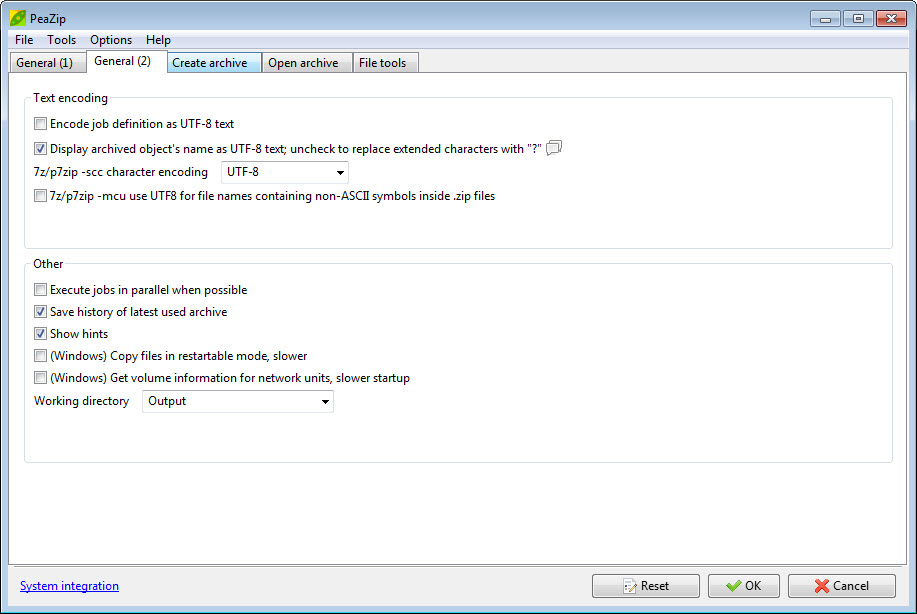
About PeaZip
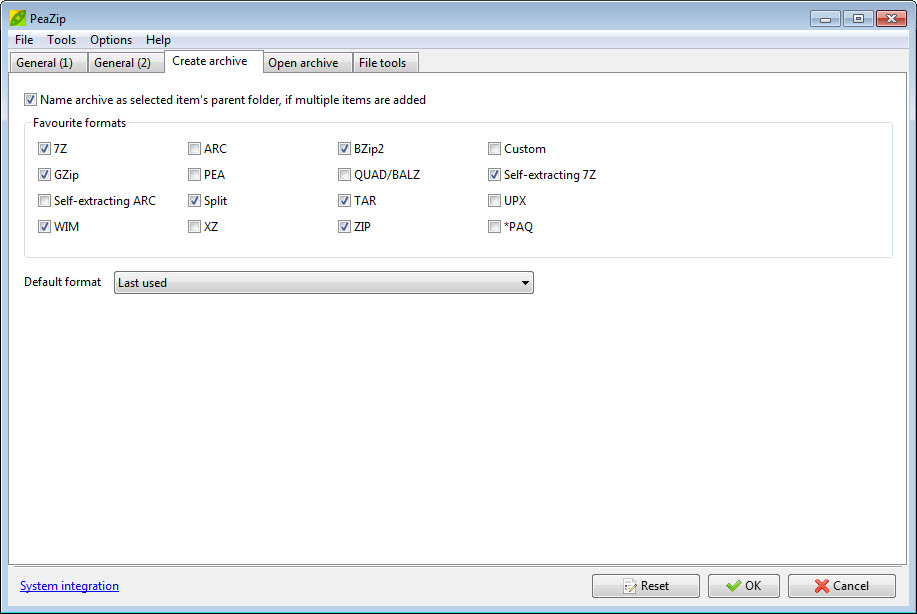
Archivers split into two camps, the terse engines that compress brilliantly and explain nothing, and the friendly shells that trade power for approachability. PeaZip is the rare project that runs both flags at once. It’s an open-source archive manager that wraps a whole stable of compression engines behind one interface, writes more than ten formats including the modern Zstandard and Brotli, opens over two hundred, and layers on security tools (authenticated encryption, keyfiles, secure deletion, a password manager) that no other mainstream archiver bundles.
The comparison everyone asks about first can be answered upfront. Against 7-Zip, the 7z format itself compresses identically here, since the same engine does the work. What this program adds is everything around the compression, and what it costs is a busier interface and a touch of front-end overhead.
That trade is the whole review in miniature.
Ten formats out, two hundred in
Creation covers the practical spectrum and then some. The 7z and ZIP staples are present with full options, TAR for the archival crowd, self-extracting archives and split volumes for delivery problems, and its own PEA format for integrity-obsessed storage. The modern additions matter more than they sound. Zstandard compresses at speeds that make archiving big folders feel instant, at ratios respectable enough for daily work, and Brotli plays a similar role, both formats increasingly standard in the wider computing world and rare in desktop archivers.
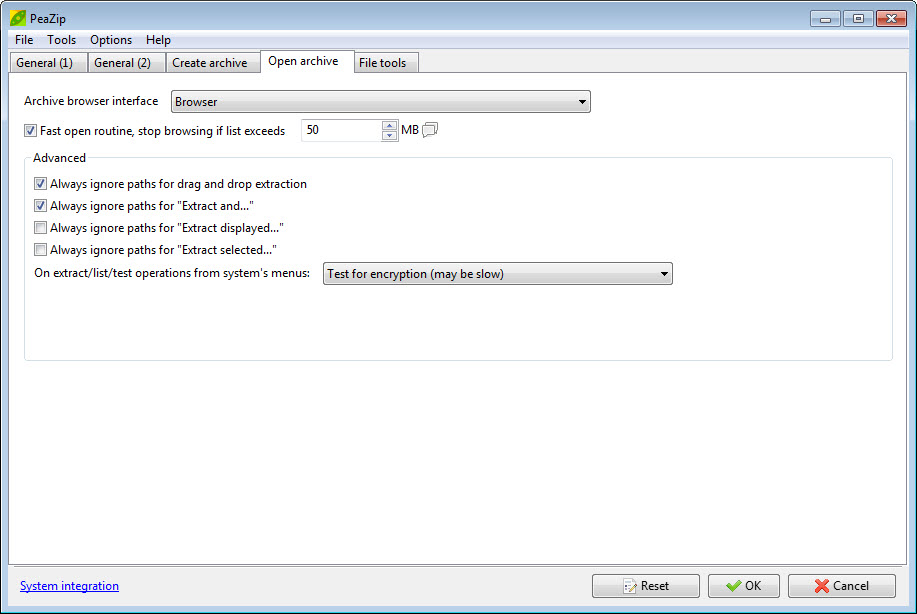
Extraction is effectively universal. RAR, ISO, CAB, installer packages, disk images, and the long tail of obscure containers open here, over two hundred formats in total, which retires the drawer of single-purpose unpackers. RAR creation remains impossible, as it does everywhere outside WinRAR itself, and that’s licensing, not laziness.
Archive conversion, the sleeper feature
Buried in the tools is the function that quietly saves the most time in bulk work, direct conversion between archive formats. Point it at a folder of old ZIP files and convert them all to 7z, or migrate an archive collection to Zstandard for speed, in one batch, with the extraction and recompression handled internally. Anyone maintaining years of accumulated archives, download hoards, or backup sets knows how tedious that migration is by hand, and here it’s a selection and a click.
Batch philosophy runs through the whole program. Multiple archives extract in one queue, jobs can be scheduled through exported scripts, and the console dump feature shows the exact command line the interface is about to run, which doubles as a free education for anyone drifting toward automation.
Learn from the GUI, paste into your scripts.
Encryption with a second factor
Security is where PeaZip clearly outruns the category. Archives encrypt with AES-256 or, for the particular, Twofish and Serpent, and encryption can require both a password and a keyfile, a real two-factor arrangement where a stolen password alone opens nothing. The PEA format goes further with authenticated encryption that detects tampering, not just wrong passwords, and integrity checking throughout.
Around the archives sit tools that usually require separate downloads. A secure deletion function overwrites files beyond casual recovery, a full checksum utility computes and verifies hashes across the modern algorithm menu, a duplicate finder hunts redundant files by content, and an encrypted password manager keeps your archive passwords organized behind a master key.
None of these is the deepest of its kind, and together they turn the archiver into a small privacy toolkit.
The interface, and the cost of abundance
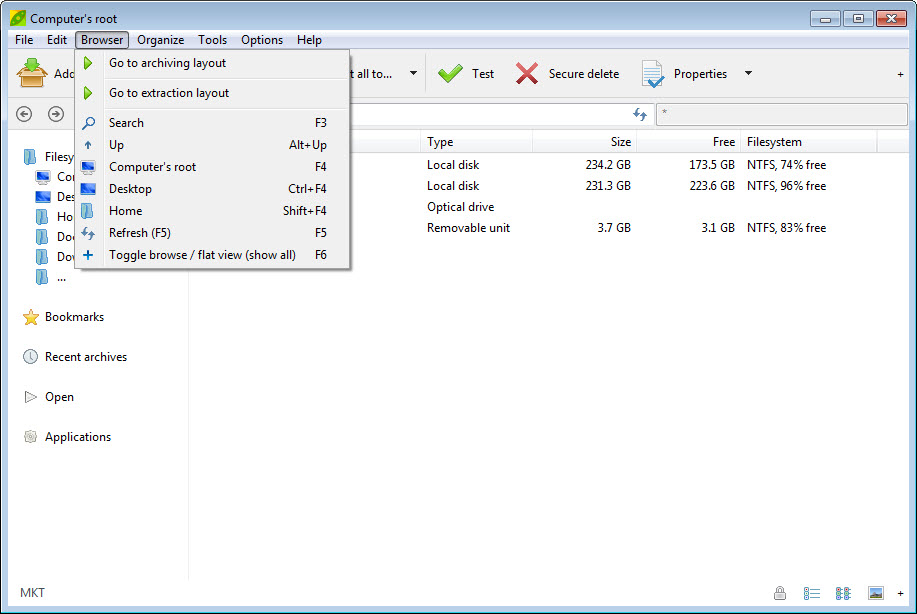
Now the honest paragraph. The main window presents itself as a full file manager with bookmarks, flat views, and a toolbar of functions, and first contact can feel like walking into a hardware store when you wanted a hammer. Options dialogs run deep, some labels assume vocabulary, and casual users who only ever right-click and extract will find a leaner shell like Bandizip friendlier for that single reflex. Performance tells a similar story at the margins, where the front-end adds a beat of overhead to operations the bare engines run instantly.
The counterargument is that nothing forces the depth on you. The right-click menu handles the daily extract-and-create reflexes exactly as expected, portable versions run without installation, themes calm the toolbar down, and the abundance waits quietly until the day you need an archive converted, a file shredded, or a hash verified, at which point it’s already installed.
Conclusion
PeaZip fits the user whose relationship with archives goes past extraction. Hoarders migrating old collections, privacy-minded users encrypting with keyfiles and shredding the leftovers, and tinkerers who want modern codecs with a look at the command line underneath are all squarely in its audience. It’s the most complete open-source package the category offers.
Someone who touches archives twice a month is honestly better served by something leaner, and loses nothing by the choice. For everyone deeper in, the abundance stops being clutter and starts being the point.
Pros & Cons
- Writes over ten formats including Zstandard and Brotli, extracts over two hundred
- Batch conversion migrates whole archive collections between formats
- Two-factor encryption with password plus keyfile, and authenticated PEA format
- Bundled secure delete, checksum tools, duplicate finder, and password manager
- Console dump teaches the command line behind every operation
- Fully open source with portable versions
- Interface density overwhelms users who only extract archives
- Slight front-end overhead compared to bare compression engines
- Cannot create RAR archives
- Some advanced options carry cryptic labels
Frequently asked questions
At compressing 7z archives, they're identical, since the same engine works underneath. This program adds format breadth, batch conversion, stronger encryption options, and bundled security tools, at the cost of a busier interface.
Yes, in batch. A folder of ZIP archives can become 7z or Zstandard archives in one operation, with extraction and recompression handled internally.
Archives can require both a password and a keyfile to open. Without the file, the correct password alone decrypts nothing, which protects against password theft and reuse.
It layers authenticated encryption and integrity verification into the archive itself, so tampering and corruption are detected explicitly rather than surfacing as mysterious extraction errors.
Yes, both creating and extracting. Zstandard compresses dramatically faster than classic formats at respectable ratios, which suits large routine archiving where time matters more than the last percent of size.


