

HotShots
About HotShots
HotShots is a screen capture tool with a genuine annotation editor attached, and its natural habitat is documentation work. Anyone who produces manuals, tutorials or bug reports spends half their life taking a screenshot, drawing an arrow on it, numbering three steps and sending the result somewhere, and this program was shaped around exactly that loop.
Two things set it apart from the crowd of snipping utilities. The editor treats annotations as living objects you can rearrange and restyle, not paint splashed on pixels. And a saved editing session can be reopened later with every arrow still movable, which, for anyone who maintains documentation over time, is worth more than any other feature on the list.
Five ways to frame a capture
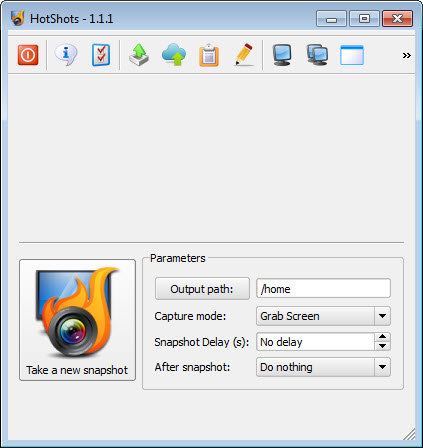
The capture menu in HotShots covers the full range. The current screen, all monitors stitched together for multi-display setups, the active window, a drawn rectangle, or a freehand region traced by hand for those odd-shaped captures nothing else accommodates. A delay timer handles the menus and tooltips that vanish the moment a key is pressed.
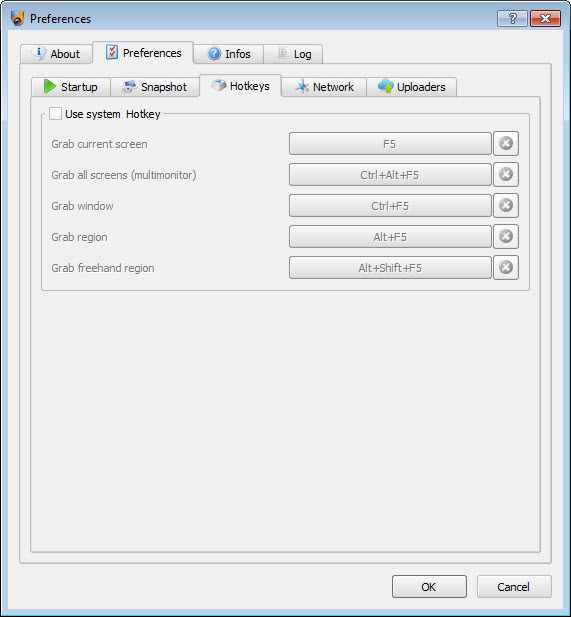
Everything hangs off customizable hotkeys, the program waits in the system tray, and it can start with the machine, so the capture reflex works all day without the main window ever appearing. A built-in magnifier helps aim region captures to the pixel, which matters when the target is a 16-pixel icon.
And on the image itself, a magnification annotation can enlarge one detail of the capture in place, the classic documentation trick for pointing at a tiny control without cropping the context away.
The capture decides its own next step
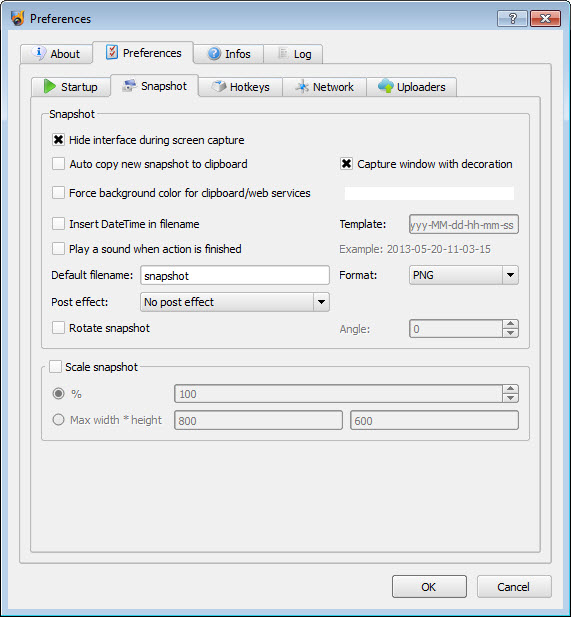
What happens after the grab is a setting, not a ritual. A fresh capture can save itself to disk under a filename template you define, land on the clipboard, or open directly in the editor, and it can scale itself to a fixed size on the way, which spares you resizing every image to the width your documentation layout demands.
Printing gets a direct line too. A capture can go straight from the program to the printer, which sounds trivial until the day somebody wants a hard copy of an error dialog for a meeting, and the usual detour through saving and opening a viewer suddenly feels like three steps too many.
Post-effects can also apply themselves automatically, adding a drop shadow, a border, a slight rotation or torn edges to every capture. Used with restraint, the shadow-and-border treatment is what makes screenshots in a manual look deliberately produced rather than pasted in raw.
Used without restraint, torn edges will transport your readers straight back to an older internet, so choose with care.
An editor that thinks in objects, not pixels
The annotation editor supplies arrows, lines, curves, polygons, rectangles, ellipses, highlights, text and numbered tags, and the numbered tags deserve singling out, since step-by-step instructions practically write themselves when every click on the image drops the next number.
The crucial design choice is that each item stays an object after placement. Select an arrow and move it, recolour it, give it a shadow, or grab several items at once and shift the whole group, and edit the nodes of a polygon or curve after drawing it. A paint-style editor makes every misplaced arrow a redo, and this one makes it a drag.
For actual pixel work, cloning and retouching, the image still belongs in a full editor, but for annotation the object model wins outright.
Sessions you can reopen, formats you can choose
HotShots saves editing sessions in its own format alongside the exported image, and reopening a session restores every annotation as an editable object. The payoff arrives months later, when the interface in your manual changes and the screenshot needs redoing. Recapture, swap the background, nudge the arrows, done, with nothing redrawn from scratch.
Export, meanwhile, reaches almost comically far beyond the usual suspects, from PNG and JPG through TIFF, SVG, WebP, TGA and even layered-editor formats. Nobody needs thirty output formats, but the three you do need are guaranteed to be in there.
Uploading, and the march of time
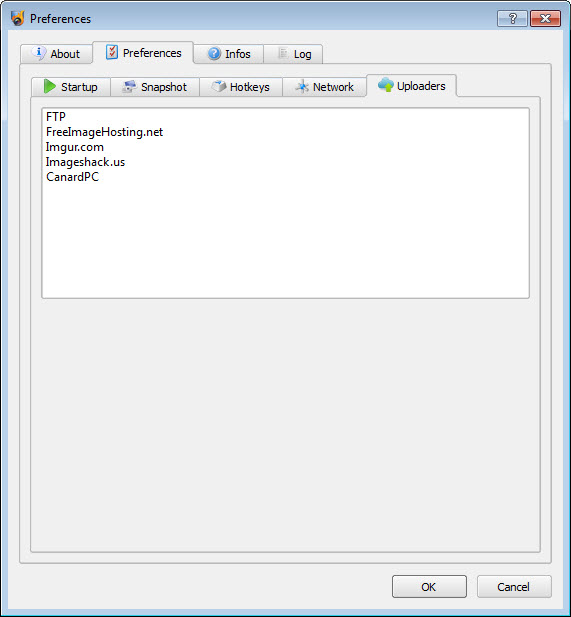
Finished captures can upload straight to an FTP server, with a configurable path template and the resulting link handed back for pasting, which remains the dependable route for teams hosting their own screenshots. A set of built-in image hosting services exists as well, with the honest caveat that this list has aged and several of those services have since gone dark, so treat FTP as the serious option and the rest as a lottery.
That aging is the real critique of an otherwise sturdy tool. Development has long been quiet, and anyone wanting modern upload targets or automation should look at a capture suite with every workflow imaginable.
What time has not touched is the editor, and the editor is the reason to be here.
Conclusion
HotShots earns its place with people who annotate for a living. Technical writers and support staff get numbered tags, object-based editing and reopenable sessions, three features that together turn screenshot maintenance from redrawing into rearranging.
Its weaknesses are the weaknesses of age, dead upload services and a frozen feature set, so anyone needing modern integrations should pick a younger tool and accept its bulk. For the capture-annotate-export loop, this one still does the core job with uncommon intelligence.
Features & benefits
Pros & Cons
- Capture modes run from freehand regions to all monitors at once, with a delay timer
- Captures can auto-save, auto-scale and auto-apply border and shadow effects
- Annotations are movable, restylable objects rather than painted pixels
- Numbered tags make step-by-step documentation fast
- Saved sessions reopen with every annotation still editable
- Exports to an enormous range of image formats, SVG and WebP included
- Several built-in upload services no longer exist
- No scrolling capture for long pages
- Development has been quiet for a long time, so expect no new features
- The interface looks dated even if it works fine
Frequently asked questions
Yes, if you save the editing session in its own format alongside the exported image. Reopening the session restores every annotation as a movable object, which makes updating old documentation painless.
Yes, one mode grabs all monitors as a single image, alongside current-screen, window, rectangle and freehand region captures.
It uploads to FTP servers with a configurable path template, which works reliably. The built-in image hosting services are hit and miss, since several have shut down over the years.
Far more than most tools, including PNG, JPG, BMP, TIFF, SVG, WebP, TGA and layered formats, so whatever a documentation pipeline expects is almost certainly covered.


