

DriverHub

 (39 votes, average: 4.10 out of 5)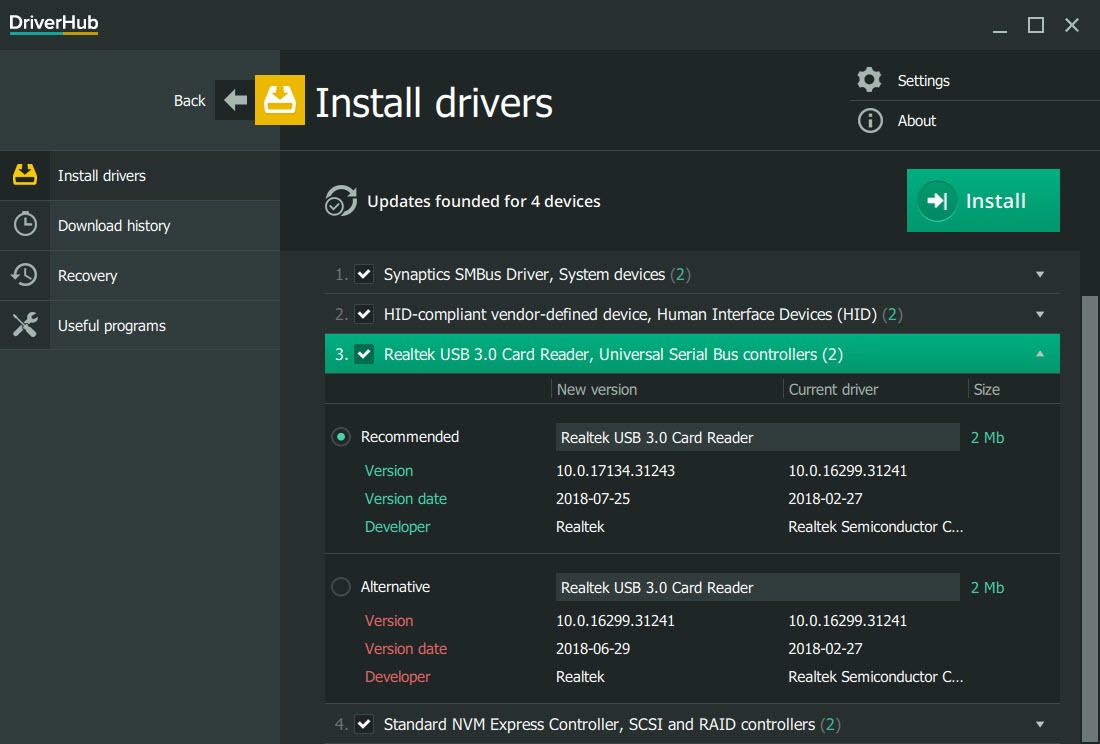
About DriverHub
DriverHub is a driver updater that scans your system for outdated, missing, or incorrectly installed device drivers, then downloads and installs the appropriate replacements automatically.
The application identifies your hardware components through their Hardware IDs (the unique identifiers each device exposes through the operating system), matches those IDs against its driver database, and offers updates when newer or more compatible versions are available than what’s currently installed.
Before applying any changes, the application creates a system restore point and backs up your existing drivers, which means failed updates or compatibility issues can be reversed without manual recovery work.
The audience is genuinely practical rather than aspirational. Most users encounter driver problems specifically (audio not working after a clean install, network adapter showing as unknown device, graphics card running on generic drivers instead of vendor-specific ones, USB ports behaving erratically), and the tool addresses these scenarios through automated detection rather than requiring users to hunt through manufacturer websites for each individual component.
The application is free without paid tiers or feature restrictions, with active development continuing through regular database updates that add support for newer hardware as it appears in the market. The interface is deliberately simple compared to more elaborate driver management tools, with most users completing their work through three or four clicks rather than navigating elaborate configuration screens.
For the specific use case the application targets, this directness fits the actual workflow better than feature-heavy alternatives that produce decision fatigue around basic operations.
How hardware identification actually works
The detection mechanism reads the Hardware IDs that the operating system maintains for every connected device. Each component (graphics card, network adapter, audio chipset, chipset itself, USB controllers, anything else attached to the system) reports a Vendor ID and Device ID combination that uniquely identifies what the hardware actually is, regardless of what generic name the operating system displays.
DriverHub queries these IDs and matches them against its database of available drivers, returning specific driver versions that the database identifies as compatible.
The matching process is more reliable than name-based identification because hardware names change across product variations while Hardware IDs stay consistent. A graphics card labeled “GeForce RTX 4060” might actually be one of several different physical implementations from different board partners, with each variant potentially needing slightly different drivers.
The Hardware ID approach identifies the specific implementation rather than the marketing name, which produces more accurate driver matching than what generic name-based searches can achieve.
For users who’ve struggled with finding the right driver for unusual hardware (older laptops where the manufacturer no longer provides downloads, hardware from defunct companies whose original support resources have disappeared, embedded chipsets that aren’t well-documented), the Hardware ID approach often finds drivers that manual searches don’t surface.
The database contains drivers from multiple sources, with the matching producing results that no single manufacturer download page would offer.
The backup and restore safety net
Before applying any driver update, the application creates two safety mechanisms. A Windows system restore point captures the operating system state at the point before changes, providing a rollback option if the new driver causes problems with applications or system stability beyond just the affected device.
A driver-specific backup captures the current driver files and configuration, providing a more targeted rollback that affects only the specific device being updated.
The dual-layer approach matters because driver problems manifest in different ways. Sometimes a new driver works correctly for the device itself but produces conflicts with other software, and the system restore point handles these scenarios. Other times the driver simply doesn’t work for the specific hardware variant despite identifying as compatible, and the driver-specific backup handles those cases without affecting other system state.
For users who’ve experienced driver update problems before (the audio that suddenly stops working after a Windows Update, the graphics driver that produces black screens, the network adapter that loses connectivity), this safety net provides genuine confidence.
Try the new driver, verify it works, keep it. If problems appear, restore the previous version through the application’s interface and the system returns to its working state without elaborate recovery procedures.
Driver database and manufacturer sourcing
The database contains drivers compiled from multiple sources, with the application accessing manufacturer-published drivers, OEM-customized variants, and various other versions that match specific hardware configurations.
The breadth of coverage matters substantially because a single hardware component might have several different driver versions across different operating system versions, hardware revisions, and manufacturer release schedules.
For common hardware (Intel network adapters, Realtek audio chips, AMD chipset components, NVIDIA graphics cards), the database typically contains current versions that match what manufacturer websites would provide for direct download.
For older or less common hardware, the database often contains drivers that aren’t easily findable through normal search, with archived versions from defunct manufacturers occasionally being available when the original sources have disappeared.
The driver versions match what manufacturers actually publish rather than being modified or repackaged. This matters for users concerned about driver authenticity, with the application essentially acting as an automated download mechanism rather than a driver modification tool. The drivers installed are the same files that direct manufacturer downloads would provide.
Scanning workflow and what it actually finds
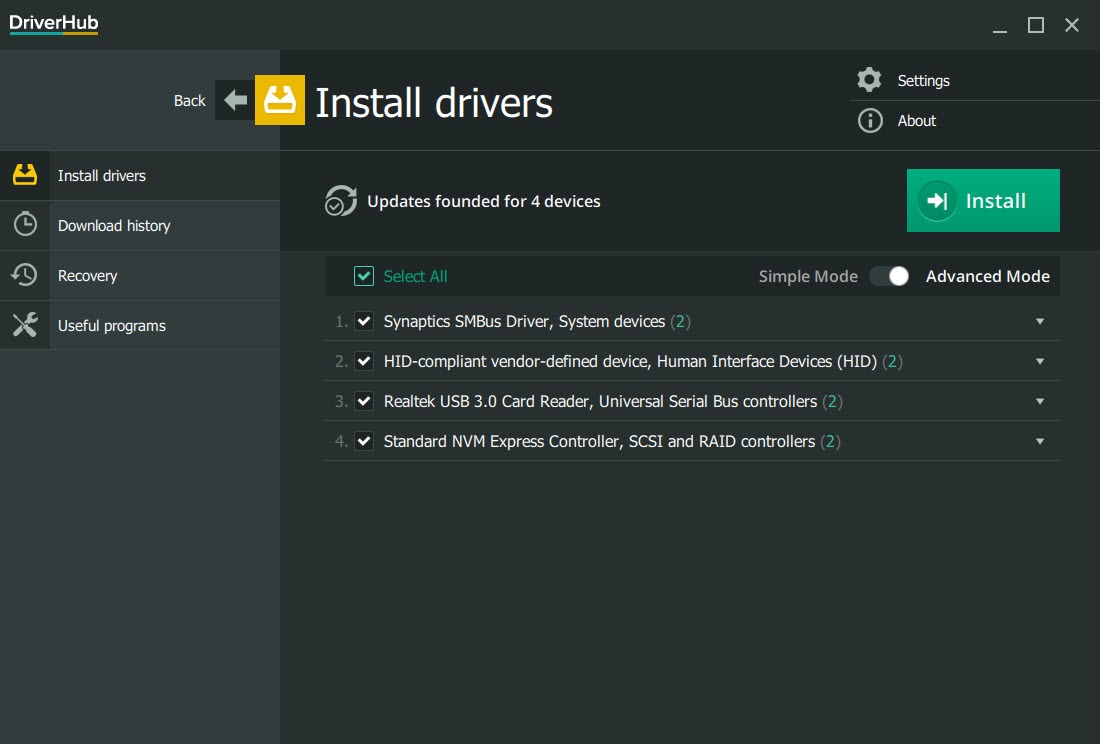
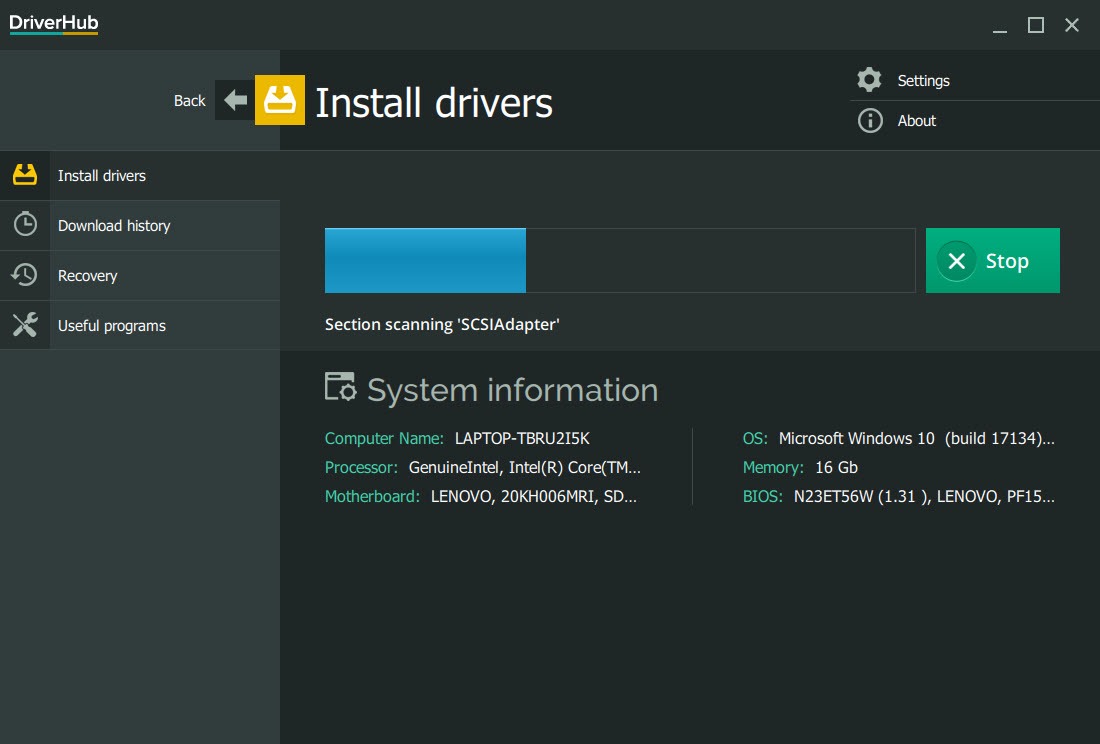
The scan process completes in a few minutes on typical systems, with the time depending mostly on how many devices need checking and how responsive the database servers are. Results appear in a list showing each device that has driver updates available, with the current version, available version, and brief explanation of what the update changes.
For each detected update, you can choose to install or skip individually rather than being forced into all-or-nothing batch operations. This granular control matters because not every available update is necessarily worth installing.
Stable systems sometimes benefit from staying on known-working drivers rather than updating to newer versions just because they exist, with the choice being yours rather than the application’s.
Updates that require system restart get flagged clearly, with the application managing the restart through standard Windows mechanisms rather than forcing immediate reboots. Multiple updates can be queued for installation followed by a single restart, which keeps the disruption to normal work minimal even when several drivers need updating simultaneously.
What it doesn’t try to do
The application is deliberately scoped to driver management rather than expanding into broader system optimization territory. There’s no registry cleaner included. No startup manager. No general PC optimization features. No bundled antivirus. The single-purpose focus produces a smaller, faster application that does its specific job without trying to be all things to all users.
This narrow scope contrasts with some competitors that bundle driver updating with various other system maintenance features. The trade-off is real and depends on what you actually want. Users wanting integrated PC maintenance tools find broader applications fitting better. Users wanting focused driver management without scope creep find the deliberate restraint here matching their preferences.
The application also doesn’t attempt to fix non-driver problems that sometimes get blamed on drivers. Performance issues from background processes, disk fragmentation problems, malware infections, hardware failures, and various other issues that produce symptoms similar to driver problems aren’t addressed because they’re not actually driver issues.
Users diagnosing system problems should consider whether their specific symptoms actually indicate driver problems before assuming this software will resolve them.
Comparison with the alternatives
The driver updater category has several entries with different positioning. IObit Driver Booster has more aggressive marketing and a substantial feature set, with the trade-off being more aggressive paid-tier promotion within the application.
Driver Easy has been around longer and has both free and paid tiers, with the free tier having download speed limits that push toward the paid version. Snappy Driver Installer is more technical and works offline with downloaded driver packs, fitting users who want full control over what gets installed.
DriverHub sits in a middle ground that balances ease of use against feature completeness. Less aggressive than IObit’s marketing approach, less restrictive than Driver Easy’s free tier limitations, more accessible than Snappy Driver Installer‘s offline pack workflow. For users who want straightforward driver updates without managing tier upgrades or learning specialized workflows, this positioning fits the use case.
The built-in Windows Update also handles many driver updates automatically without requiring third-party software at all. For modern systems with mainstream hardware, Windows Update covers most driver needs through its included driver delivery. The cases where third-party driver updaters add value are typically older systems, unusual hardware combinations, or scenarios where Windows Update isn’t finding drivers that the hardware actually needs.
For users with very recent hardware that’s mainstream and well-supported, Windows Update may be sufficient without additional driver utilities. For users with older systems, less-common hardware, or specific driver needs that Windows Update isn’t addressing, third-party utilities like this one fill gaps that the built-in mechanism doesn’t cover.
Considerations and limitations
Driver updaters in general have a complicated reputation in technical communities. The category has historically included tools that were aggressive about promoting paid versions, bundled adware with their installers, or made unsubstantiated claims about driver problems to drive update urgency. DriverHub specifically avoids these practices, but users approaching the category should understand the reputation context.
Not every driver update is necessarily an improvement. Manufacturers occasionally release drivers with regressions that affect specific configurations, with newer not always meaning better.
The general principle of “if it’s working, don’t update unnecessarily” applies to drivers as much as to operating system features, with the application’s selective installation approach supporting this conservative philosophy when users want it.
Some specific hardware configurations require manufacturer-specific tools beyond what general driver utilities provide. NVIDIA graphics cards benefit from GeForce Experience for game-ready driver releases. AMD graphics cards have AMD Software Adrenalin Edition for similar functionality.
Audio interfaces and pro audio hardware often require manufacturer applications for full functionality beyond basic driver installation. The application handles standard driver updates well but doesn’t replace these manufacturer-specific tools for users with hardware that needs them.
Driver matching against Hardware IDs is generally reliable but isn’t perfect. Some hardware reports IDs that match multiple driver options, and the database’s selection might not always be the optimal choice for every specific configuration. For users encountering issues after driver updates from any tool (this one included), the rollback mechanism becomes practically important rather than theoretical.
The application requires internet connectivity for both scanning and downloading. Offline driver management isn’t supported, which means systems without network access can’t use the application to address driver problems.
For users specifically dealing with network adapter problems where the system has no network access, this dependency creates a chicken-and-egg situation that requires temporary network access through alternative means before the application can help.
Conclusion
For users dealing with outdated drivers, missing drivers after fresh installations, or unusual hardware that’s hard to find drivers for through normal means, DriverHub delivers a focused driver management workflow through Hardware ID matching, system restore safety nets, and a database that covers both current and older hardware.
The deliberate simplicity of the application matches the practical reality that most users want straightforward driver updates rather than elaborate system management tools, with the lack of paid-tier promotion and bundled features producing a cleaner experience than some category competitors offer.
The reasons to consider alternatives are mostly about specific scenarios. Users with very recent mainstream hardware often find Windows Update sufficient without third-party utilities. Users wanting offline driver management benefit from Snappy Driver Installer’s pack-based workflow.
Users with hardware requiring manufacturer-specific tools (NVIDIA, AMD, pro audio interfaces, specialized peripherals) need those manufacturer applications regardless of which general driver utility they use. But for the practical scenario of automated driver detection and installation across typical hardware configurations, this software remains one of the more accessible options without the aggressive monetization that affects other entries in the category.
Pros & Cons
- Hardware ID-based detection produces accurate matching across hardware variations
- System restore points and driver backups provide rollback options before installation
- Database includes manufacturer drivers across current and older hardware
- Selective installation lets you choose which updates to apply rather than batch-installing everything
- Single-purpose design avoids feature bloat that broader system utilities accumulate
- Active development with regular database updates for new hardware
- Scanning completes in a few minutes on typical systems
- No paid tier or feature restrictions
- Coverage extends to older hardware where manufacturer support has disappeared
- Internet connectivity required for scanning and downloads, problematic for network adapter issues
- Driver updater category historically includes products with mixed reputations
- Modern systems with mainstream hardware often don't need third-party driver utilities
- Specific hardware configurations require manufacturer-specific tools for full functionality
- Not every available update is necessarily an improvement over current drivers
- Doesn't handle non-driver problems that produce similar symptoms
Frequently asked questions
This software is a driver updater that scans your system for outdated, missing, or incorrectly installed device drivers, downloads compatible replacements from its database, and installs them with system restore points and driver backups providing rollback options. It identifies hardware through Hardware ID matching rather than name-based searches, which produces more accurate driver selection across hardware variations than generic identification approaches.
The application reads Hardware IDs from connected devices through standard system APIs, then queries its database for matching drivers. When updates are available, you see a list of devices with their current drivers, available updates, and brief explanations of what the updates change. Selecting devices for update triggers system restore point creation, driver backup, download, and installation through standard Windows driver installation mechanisms. Restart prompts appear when required by specific updates.
It automates the driver update process that would otherwise require visiting manufacturer websites for each component, identifying the correct driver version, downloading, and installing manually. The application handles all of this through automated scanning and matching, with selective installation control that lets you choose which updates to apply. The backup and restore mechanisms provide recovery options if specific updates cause problems.
Run the application and click the scan button to identify available updates. Review the list of devices with available updates, deselecting any you don't want to install. Click install to begin the update process, which creates a system restore point, backs up current drivers, downloads the new versions, and installs them through standard mechanisms. Restart your computer if any updates require it, after which the new drivers take effect.
Yes, the application supports older versions of the operating system in addition to current releases. The driver database often contains versions for older hardware that manufacturers no longer actively maintain, which makes the application particularly useful for older systems where finding appropriate drivers manually is difficult. Users with very old hardware should verify that the database actually contains drivers for their specific components before assuming coverage is universal.
Both target the driver updater category with overlapping capabilities. IObit Driver Booster has more aggressive marketing, a larger marketing presence, and tier-based pricing with paid features. DriverHub is free without paid tiers and has a deliberately simpler interface focused on the core driver update workflow. For users wanting the most aggressively-marketed option with bundled features, Driver Booster fits. For users wanting straightforward driver updates without paid-tier promotion or feature bloat, this software fits better.
Snappy Driver Installer (SDI) is more technical and supports offline operation through downloaded driver packs. The trade-off is a more complex workflow that requires understanding driver pack management and a larger storage footprint for downloaded packs. DriverHub is more accessible for users who want online-driven automatic updates without managing offline driver packs, with the trade-off being internet connectivity dependency that SDI doesn't have. Users who specifically need offline driver management benefit from SDI, while users wanting accessible online updates find this software more practical.
The application's restore feature lists previous driver versions that were backed up before recent updates. Select the device and version to restore, and the application reverts to the backed-up driver. For more comprehensive rollback affecting broader system state, the system restore points created before each update provide operating-system-level rollback through standard Windows System Restore. The dual-layer approach handles both targeted device rollback and broader system rollback depending on what the situation requires.
Devices that report incomplete or non-standard Hardware IDs sometimes don't match cleanly against the driver database, producing detection gaps. Hardware with very recent release dates may not be in the database yet if the database hasn't been updated since the hardware launched. Custom or OEM-modified hardware sometimes reports IDs that don't match the standard driver matching against the underlying chipset. For these cases, manufacturer-specific driver downloads typically work better than generic driver utilities.


