

Cinebench
About Cinebench
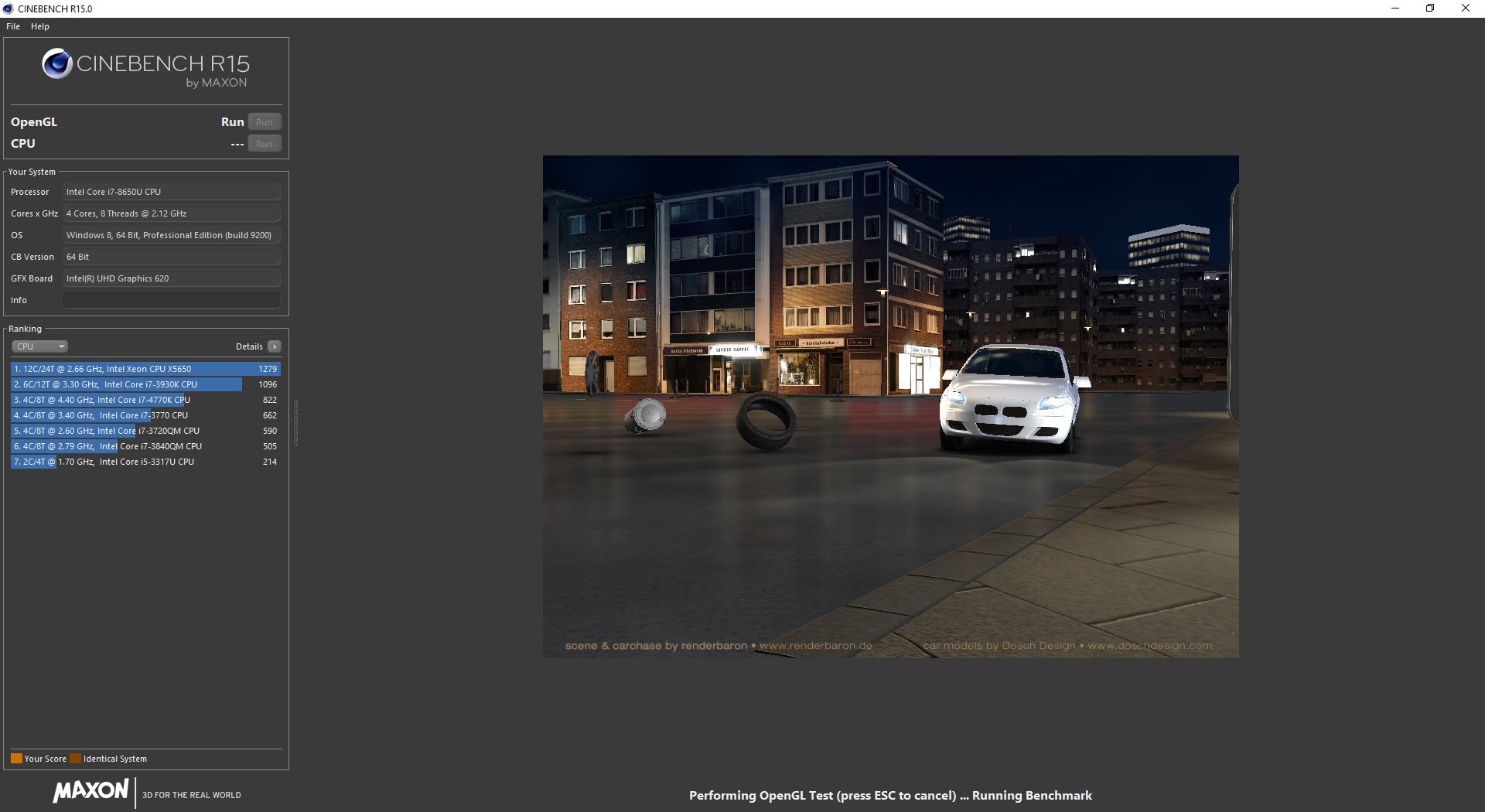
Cinebench is the benchmark that renders a 3D scene and turns the time it took into a score. It uses the Redshift engine, the same renderer that ships inside Cinema 4D, so the number you get is not an abstraction. It is how fast your processor, or your graphics card, chews through the exact kind of work a 3D artist hands it all day. That is why it has become the default yardstick in processor reviews.
The test suite covers a CPU single-thread run, a CPU multi-thread run, a newer single-core run on a core with simultaneous multithreading active, and a GPU run on cards that meet the requirements.
Where 3DMark measures how a system games, Cinebench measures how it renders, and the two can disagree sharply on the same machine, because a chip with a dozen slow cores wins here and loses there.
What a score actually measures
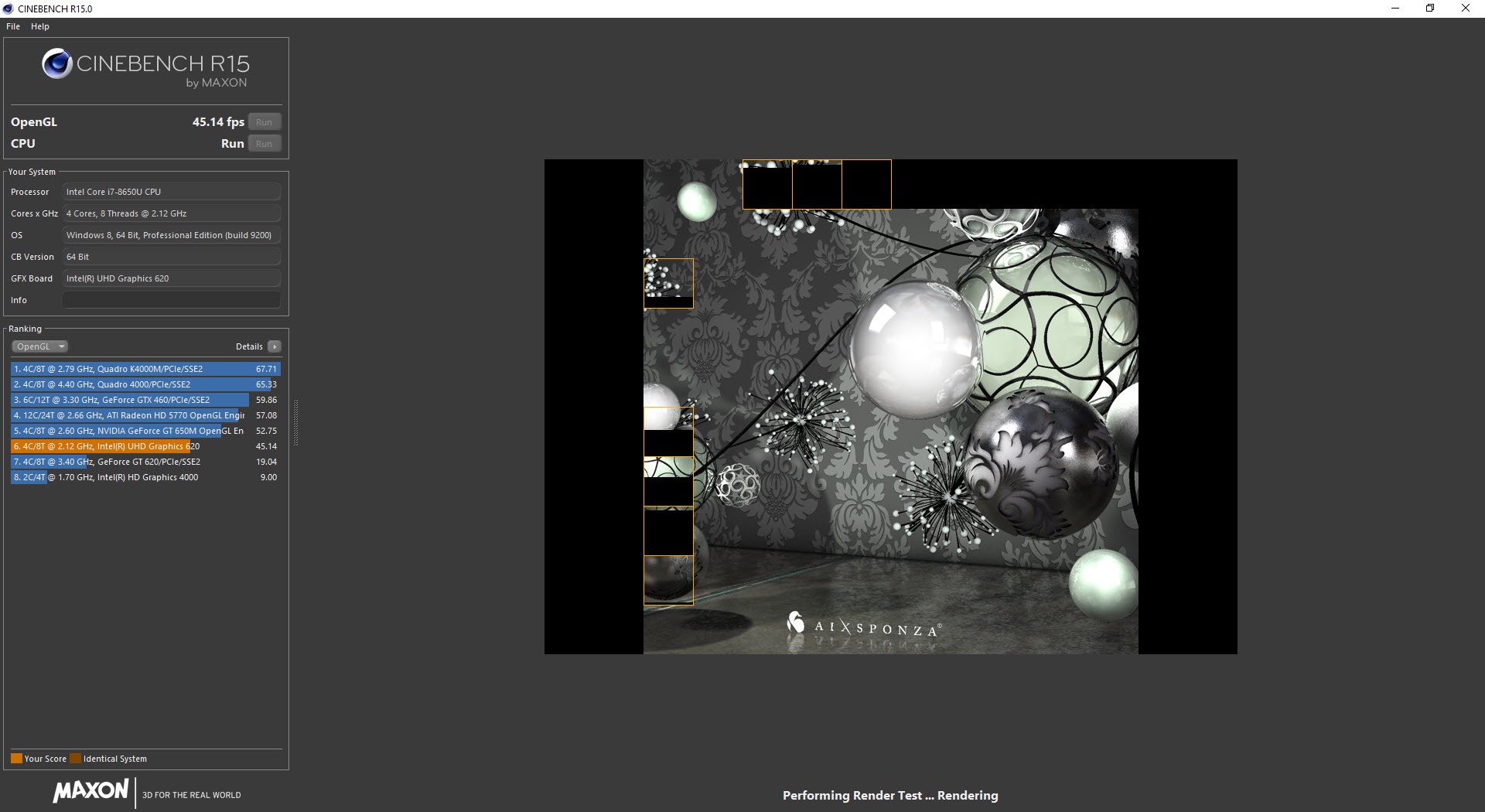
The scene is a single, deliberately heavy render. On the multi-thread test every core takes a tile and the image fills in as a mosaic, which is oddly satisfying to watch and also tells you something, since a core that stalls leaves its tile grey while the rest complete. The computational load of the current scene is roughly six times what the older editions asked of a processor, which is the reason scores from the present edition cannot be compared with any earlier one. A chip scoring 1800 in an old run and 1100 now has not slowed down. The ruler changed.
The single-thread score is the number that predicts how snappy a machine feels in everyday software, and the multi-thread score predicts how it handles rendering, encoding and compiling. The ratio between the two, displayed as MP Ratio, shows how well the chip scales.
A desktop part with eight cores and strong boost sits around 8 to 10. A laptop chip that throttles under all-core load shows a smaller ratio than its core count promises, and that single figure exposes a thin cooling design faster than any marketing sheet.
The ten minutes you did not ask for
By default Cinebench does not stop when the render finishes. It keeps looping the test until a minimum duration has passed, ten minutes out of the box, and reports the result from the sustained run rather than the first pass.
That is a real change in philosophy. A short run measures how fast a chip can sprint before it heats up. A ten-minute loop measures what it does once the cooler is saturated and the boost clocks have settled, which is the number that matters for anyone who renders for a living.
The downside is obvious. A full suite on a modest laptop is a long time to wait, and the fans will let everyone in the room know about it. Open Advanced benchmark in the File menu and the minimum duration becomes editable, down to off for a quick comparison or up to an hour if you are using the tool as a stability test for a new overclock.
For that second job it is better than most dedicated stress tools, because a render that produces a wrong pixel or crashes under thermal pressure is a failure you can see, where Prime95 only tells you a calculation went wrong.
The GPU test and the cards it refuses
The Cinebench graphics test runs the same scene through Redshift on the card, and the entry requirements are strict. Cards need 8 GB of video memory at minimum, and the test is built on CUDA on one side and HIP on the other, so integrated graphics, older architectures and anything below the memory line are silently excluded. Run it on an unsupported card and the GPU section is simply greyed out with no score.
On a card that qualifies the test can still take several minutes, and on a mid-range one it crawls. The score is also in a different unit from the CPU numbers, so a card scoring 15,000 is not fifteen times faster than a processor scoring 1,000. Compare GPU to GPU, CPU to CPU, and keep the two columns apart.
Requirements that bite
Cinebench will not launch on a processor without AVX2, which rules out a generation of still-working machines that older benchmarks ran on happily. It wants 16 GB of memory, and while the CPU tests will start on 8 or 12 GB, the scene has to be loaded into RAM and a system that starts paging during the render produces a score that is quietly wrong rather than obviously failed.
If memory is short enough that the scene cannot load at all, the affected test is skipped with a warning instead of a crash, which is the right behaviour but still leaves you with no number.
Running it from a script
Reviewers and anyone testing a batch of machines do not click through the interface. A set of command-line switches runs individual tests, one each for the single-thread, multi-thread and SMT single-core runs, plus an AllTests switch that chains the lot.
A matching switch sets the minimum duration in seconds, so a 100-second run for a quick pass or a 3600-second run for a burn-in is one argument away.
Results print to the console rather than to a file, so capturing them means redirecting output yourself.
What it does not tell you
Rendering is one workload. A processor that tops the chart here can be unremarkable in a game or a database, because those lean on cache and latency rather than on raw throughput across every core. Cinebench also records nothing about power.
Two chips with identical scores can differ by 80 watts, and nothing on screen will hint at it, so pair a run with a temperature monitor if the question is whether the cooler is coping rather than whether the chip is fast.
Results drift, too. A machine that has been benchmarking for an hour in a warm room scores lower than the same machine cold, background updates steal cores mid-run, and a browser left open with twenty tabs shaves off a visible percentage. Close everything, run it twice, and trust the second number.
Conclusion
Cinebench is for two audiences. People who render, encode or compile for a living and want to know what a chip does once it is hot, and people who argue about processors and need a number everyone else recognises. For both, the sustained default and the production engine make it more honest than the quick synthetic tests it is often lumped with.
If your question is about gaming, a laptop on a tight memory budget, or anything older than AVX2, it either will not run or will not answer what you asked. Know which question you have before you press Start.
Pros & Cons
- Scores map directly to real rendering work in a production engine
- Sustained ten-minute default exposes throttling that short tests hide
- Single-thread, multi-thread and SMT results separate boost speed from scaling
- Command-line switches allow unattended batch testing
- Render tiles make a stalled or faulty core visible during the run
- Scores cannot be compared with any earlier edition
- GPU test excludes cards under 8 GB and older architectures entirely
- Needs AVX2 and 16 GB of RAM for trustworthy results
- Console output is not saved to a file
- Measures throughput only, with no power or efficiency figure
Frequently asked questions
Because the current edition renders a far heavier scene with a different engine, and scores were recalibrated. Only compare results produced by the same edition.
At least ten minutes per CPU test by default, since the tool loops until a minimum duration passes. The Advanced benchmark option in the File menu lets you shorten that or switch it off.
The card does not meet the requirements, usually because it has less than 8 GB of video memory or lacks the CUDA or HIP support the Redshift engine needs. Integrated graphics never qualify.
Yes. Set the minimum duration to 30 or 60 minutes in Advanced benchmark and watch for crashes, wrong pixels or a score that drops as the run goes on, which signals thermal throttling.


