

Xshell
About Xshell
Anyone who manages more than a couple of remote servers eventually outgrows the one-window-per-connection life. Xshell is an SSH and terminal client built for exactly that moment.
It keeps dozens of sessions organized in tabs and tiled panes, remembers every host you’ve ever configured in a searchable session manager, and can broadcast a command you type once to twenty servers at the same time.
Protocol coverage runs the full administrative spectrum, SSH with modern key handling at the center, plus SFTP, TELNET, RLOGIN, and serial connections for the switch or router that only talks over a console cable.
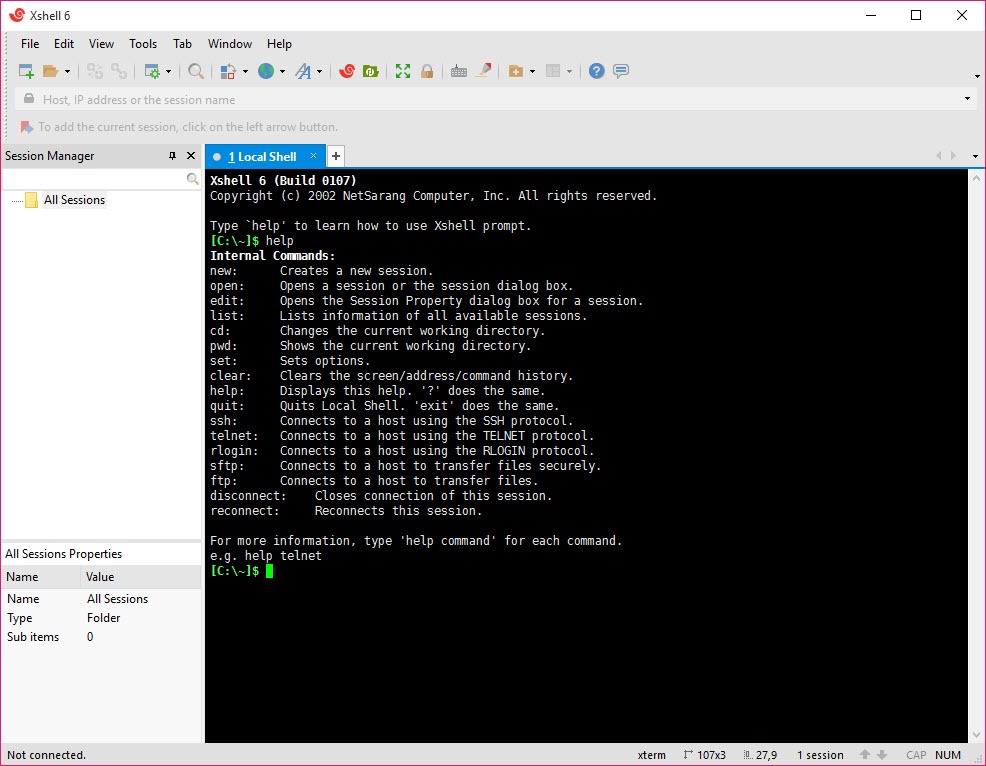
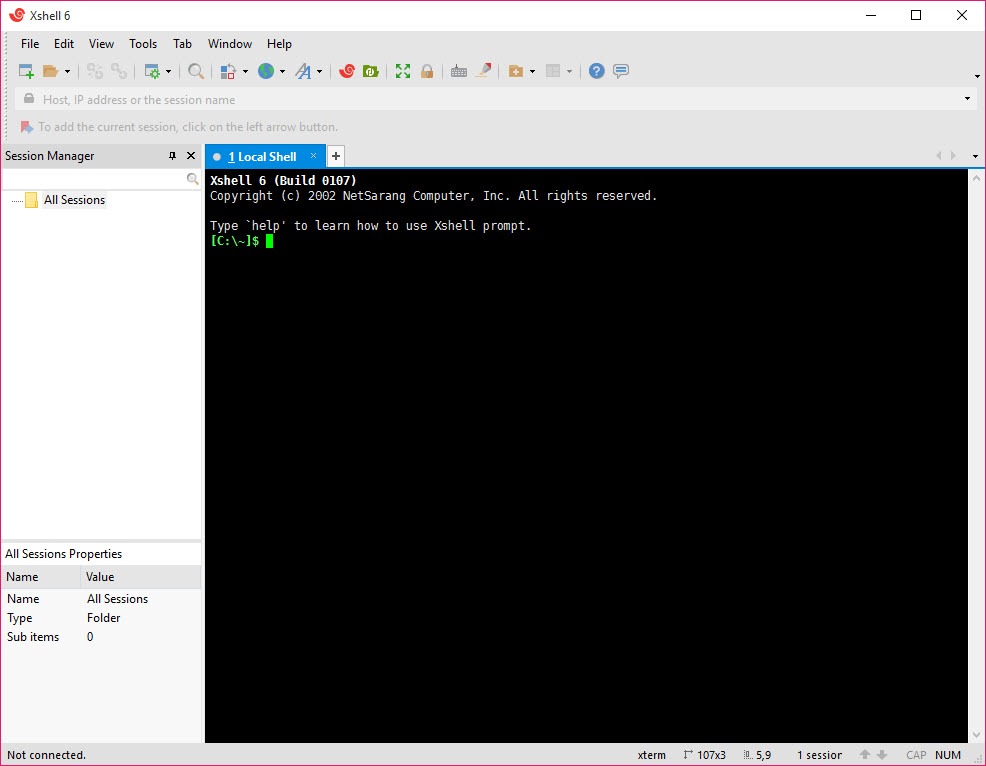
A local shell tab rounds it out, so quick jobs on your own machine don’t require leaving the program.
Sessions as a managed library, not a pile
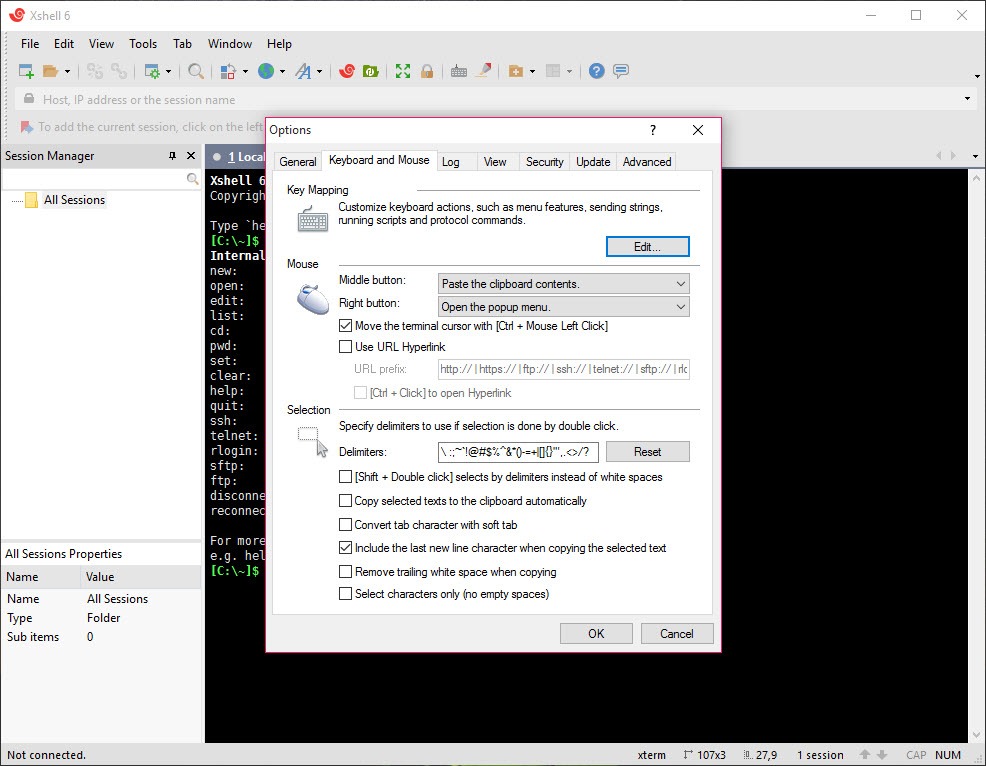
The session manager is the feature that quietly reorganizes your work life. Every host lives as a saved entry with its address, credentials, key, and per-session appearance, filed into folders you arrange however your infrastructure looks, production here, staging there, the client’s servers in their own tree. Connecting is a double-click, and a search box finds any host by name faster than you can remember its address.
Compare that with the famously spartan PuTTY, where saved sessions are a flat list and every convenience is somebody’s add-on. Wrappers like SuperPuTTY and MTPuTTY exist precisely to bolt tabs onto it.
Here the organization is native, and it shows in the details, like inheriting settings from folder defaults so a hundred sessions don’t need individual editing when your key changes.
One keyboard, twenty servers
The compose pane is the power feature administrators talk about. Type a command in the bar at the bottom, choose which open sessions receive it, and it executes everywhere at once. Checking disk space across a fleet, restarting the same service on every node, or pushing an identical config edit stops being a copy-paste marathon. Tiled layouts put the sessions side by side while you do it, so the results scroll in parallel where you can actually compare them.
Highlight sets make those parallel screens readable. Define color rules (errors in red, a hostname in yellow, “warning” in orange) and the patterns jump out of the scrollback instead of hiding in it.
On a wall of log output from six servers at once, that recoloring is the difference between spotting the one failing node and missing it.
Tunnels, keys, and the rest of the plumbing
Port forwarding is handled properly, local, remote, and dynamic tunnels included, so the database that only listens inside the private network becomes reachable through an encrypted hop without any extra software. A dedicated tunneling tool like Doffen SSH Tunnel offers more visual management of complex chains, but for the everyday forward, the built-in dialog is enough. X11 forwarding is present for the occasional graphical application running remotely.
Xshell‘s key management covers generation, agent use, and per-session key assignment, and session logging writes complete transcripts for the audits and postmortems that server work eventually produces.
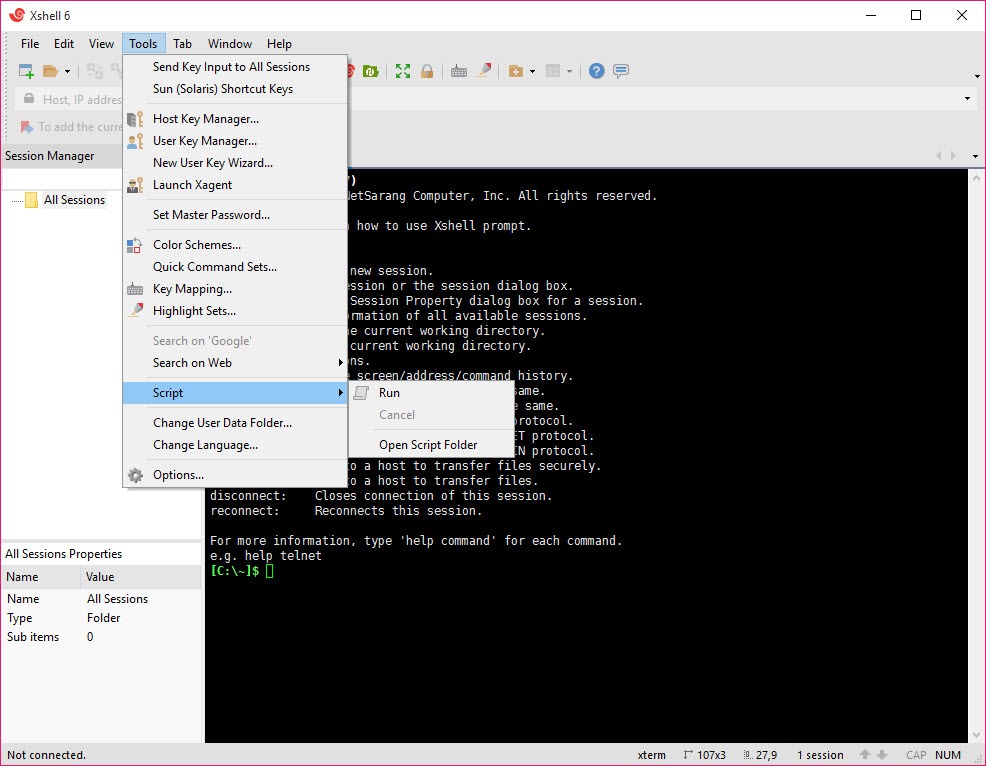
Scripting pushes further, with support for automating interactions in common scripting languages, the sort of thing that turns a nightly maintenance checklist into a file you run.
File transfer is the one job delegated rather than absorbed. The client pairs tightly with its sibling Xftp, opening a transfer window into the current host with one click, and anyone preferring a standalone tool will find WinSCP covers the same ground. The pairing is smooth, but it does mean another install for a workflow some competitors, notably MobaXterm, bundle into a single package.
That comparison frames the honest positioning. MobaXterm crams sessions, transfers, and a toolbox of extras into one busy window, while this client keeps a cleaner, more deliberate interface and executes the terminal fundamentals with more polish.
Tastes differ, and both approaches have their defenders. What’s harder to defend is facing a fleet of servers with a stack of disconnected single windows.
Conclusion
Xshell is aimed at the administrator with a fleet, the person juggling production, staging, and client servers who needs organized sessions, parallel command execution, and output that highlights its own problems. For that daily grind, it’s one of the most polished terminals available, and the compose pane alone repays the setup time within a week.
The hobbyist with one home server can stay happy with simpler tools and lose nothing. This client’s argument begins at the second server, gets loud at the tenth, and by the fiftieth becomes the reason your evenings end on time.
Pros & Cons
- Session manager with folders, inherited defaults, and instant search
- Compose pane sends one command to many sessions simultaneously
- Tabbed and tiled layouts keep parallel sessions comparable
- Highlight sets color-code errors and keywords in live output
- Full tunneling support with local, remote, and dynamic forwarding
- Session logging and scripting for audits and automation
- File transfers require the companion application rather than being built in
- Feature depth is overkill for someone with a single server
- Configuration dialogs run deep and take time to learn
- Rivals bundle more extras into a single install
Frequently asked questions
SSH, SFTP, TELNET, RLOGIN, and serial connections, plus a local shell tab, which covers modern servers, legacy equipment, and console-cable hardware in one client.
Yes, through the compose pane. You type the command once, select which open sessions receive it, and it executes across all of them simultaneously, with tiled views showing the results side by side.
Fully. It generates key pairs, assigns keys per session, and supports agent-style workflows, so password-free, key-based fleets are the natural way to use it.
Through its companion tool Xftp, launched into the current session with one click. The handoff is smooth, but the transfer program is a separate installation.
Yes, complete session transcripts can be written to log files, which is standard practice for audits, troubleshooting, and documenting maintenance work.


