

Raccoon
About Raccoon
Raccoon is a desktop client for the official phone app catalogue that downloads apps as APK files to your PC instead of installing them on a phone. Sign in with your store account and search for an app. The installer package lands in a local archive, ready to be copied to any device that accepts APK files or pushed straight to a phone over USB.
The reasons people want that are practical. A tablet without the store, a device the app refuses to support, or a wish to keep an older version before an update ruins it. Some people simply want to check an app’s permissions on a big screen before letting it near a phone.
The program handles paid apps you own and the modern bundled apps that come split into several files, which most download tools do not.
Search, download, archive
The main window is a search box over the store catalogue, and for moving a finished APK to a phone without a cable, a phone companion with wireless file transfer complements it. Type an app name, pick the right entry, and press Download. Raccoon fetches the package into an archive, a folder it manages, and shows the app’s details, permissions and version alongside. Several archives can exist, which keeps work apps apart from games or one device’s collection apart from another’s.
Downloaded apps stay in the Raccoon archive with their version numbers, so you can keep earlier releases and go back to one if a new version breaks something or removes a feature.
That version history is a quiet strength, because the store itself offers no way back once an update has rolled out.
Split apps, paid apps and the account question
Many apps are now published as bundles, a base package plus pieces for your screen size and language, and installing them by hand means juggling several files in the right order. The program downloads all parts together and, when installing over USB, pushes them as one set, which spares you the manual procedure entirely.
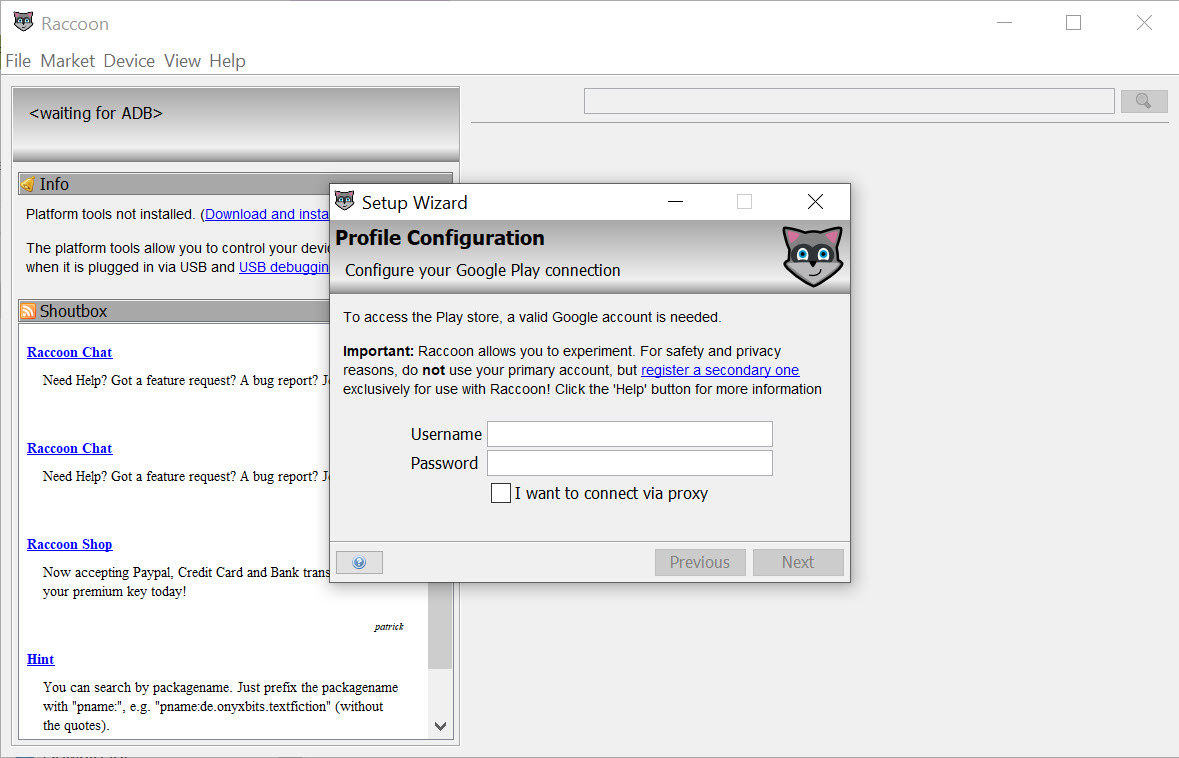
Apps you have bought can be downloaded as well, since the client signs in as your account and the store treats it as another device. That sign-in is also the main friction. The account must have been used in the store at least once, and newer login protections sometimes block the attempt. The program’s own guidance recommends a separate throwaway account rather than your main one. Take that advice.
A device identifier can be entered optionally to make the store treat the client as a specific hardware model, which helps with apps that filter by device.
Installing over USB
With the phone’s debugging mode enabled and the platform tools installed, which the program offers to fetch for you, a downloaded app can be installed directly over a USB cable. That turns the PC into a staging point. Download once, install on three devices, no mobile data used and no store sign-in on the devices themselves.
The same route works for tablets that never had the store in the first place, including the ones sold by a large online retailer, where a toolbox built for those tablets handles the wider setup and this client supplies the apps.
What to know before relying on it
Raccoon depends on the store’s private interface, which changes without notice. Updates have followed each change so far, but there are periods when logins fail or downloads stop until a fix arrives. Sign-in problems are the most common complaint. It also needs a Java runtime, which the installer offers to add.
Proxy support exists for people whose store catalogue depends on their region, and a command-line mode allows scripted downloads of apps you already track. Once apps are installed on a device over the same debugging connection, Debloater can silence the preinstalled ones that came with it.
Nothing here bypasses purchases or licences. The program simply moves the download step from the phone to the PC, and what you may install where remains governed by each app’s own terms.
Conclusion
Raccoon suits people who manage apps across several devices, keep tablets or TVs that lack the store, or want control over versions and permissions that the store never offers. The archive, bundle handling and USB install make it far more than a download button.
Its dependence on a private interface means occasional breakage, and the account requirement deserves the throwaway approach its own guidance suggests. With those understood, it is the most capable desktop route to APK files available.
Pros & Cons
- Downloads apps from the store as APK files to a local archive
- Handles paid apps you own and bundled apps split into several files
- Keeps earlier versions so you can roll back after a bad update
- Installs directly to a connected device over USB
- Shows permissions and details before anything touches a phone
- Store login changes periodically break sign-in until an update arrives
- Requires a store account, ideally a separate one
- Needs a Java runtime and, for USB installs, the platform tools
Frequently asked questions
Usually because the account has never been used in the store or a newer login protection blocks third-party clients. Use an account that has signed in to the store at least once, and check the program's guidance for the current workaround.
Yes. Bundled apps are downloaded as a complete set, and the USB install pushes all parts together so they install correctly.
Yes, if you kept it. The archive stores each downloaded version, and any of them can be installed over USB or copied to a device.


