

Hybrid
About Hybrid
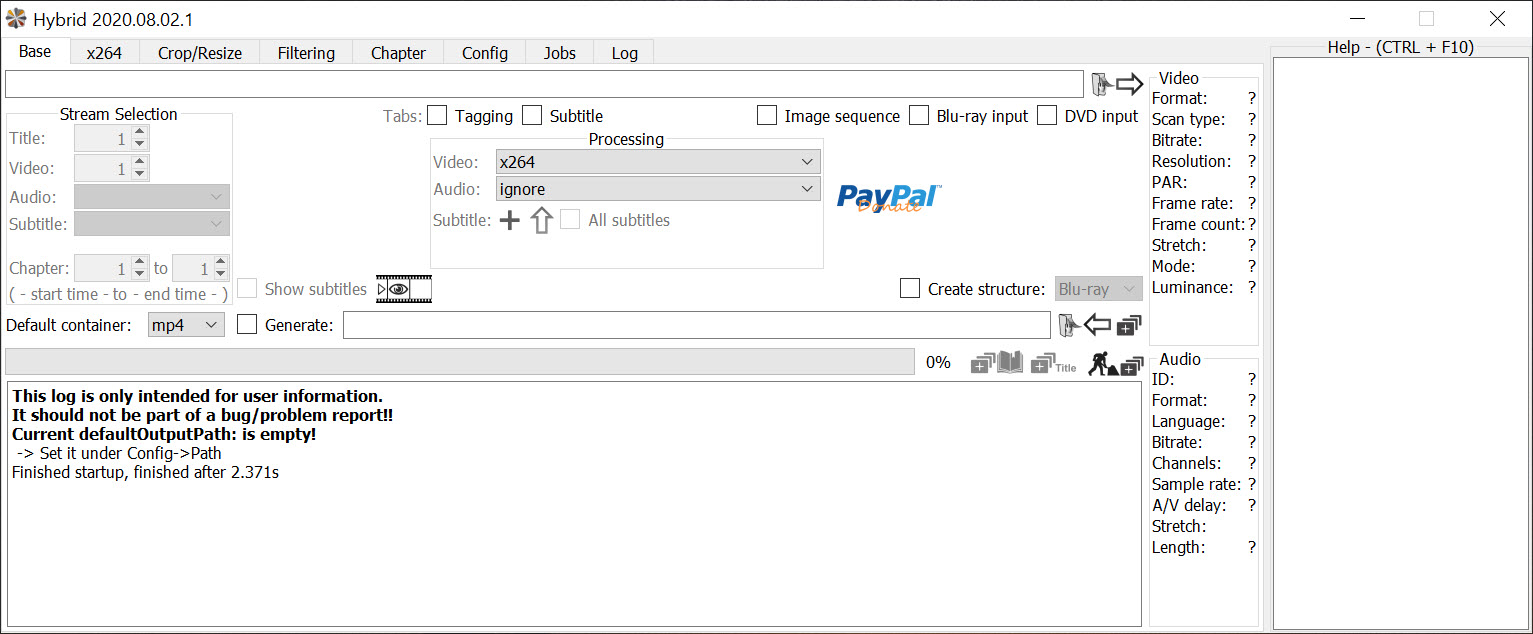
Hybrid is a front end that puts a dozen command-line video encoders and two filter frameworks under one window. Load almost any video, a single file, a folder, a disc structure or a script, choose an output container and a video encoder from a list that runs from the classic x264 and x265 through the hardware encoders of the three graphics card makers to the AV1 encoders, set the audio and subtitle tracks and press add to queue. The program writes the command lines, runs the tools in order, and produces a file that would have taken an hour of typing by hand.
Filtering happens through VapourSynth or AviSynth, with hundreds of their filters exposed as checkboxes and sliders, so deinterlacing, denoising, resizing, colour correction and the newer machine-learning upscalers are set up by pointing rather than scripting.
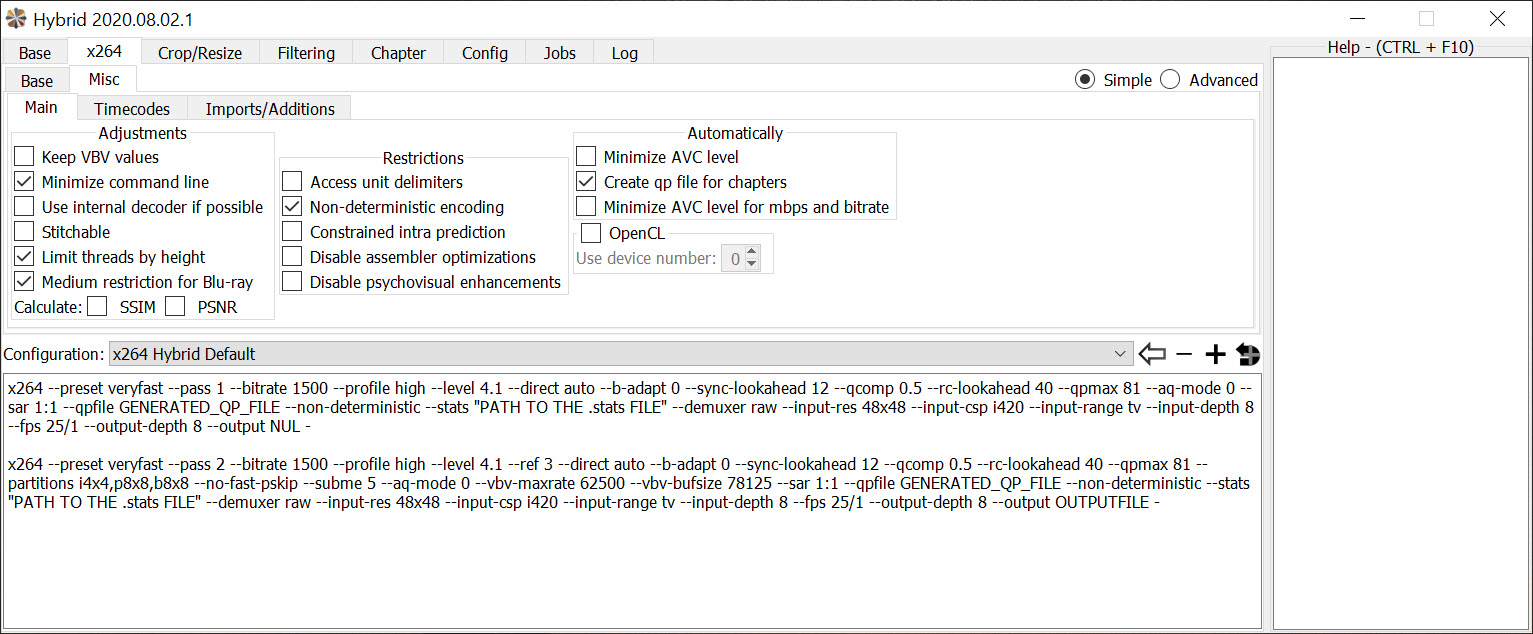
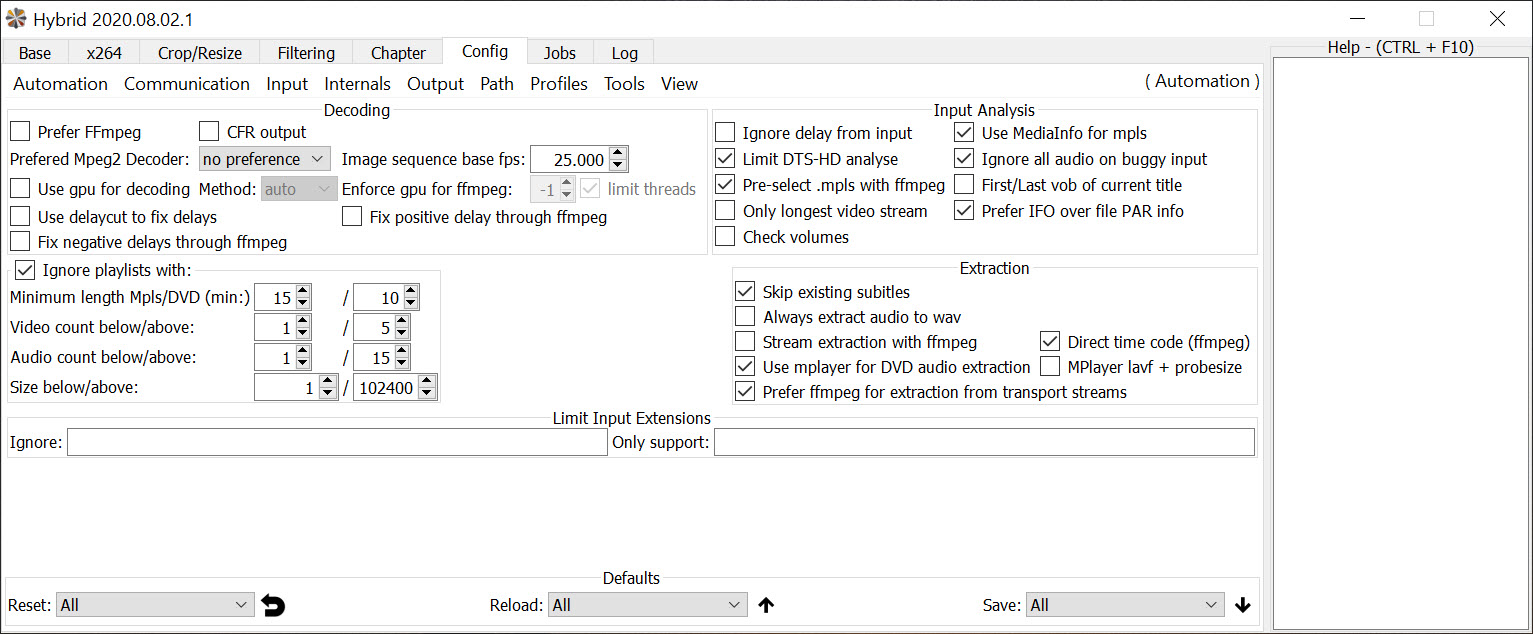
That breadth is the product and also the warning. Every option of every encoder is reachable, which means the window carries thousands of controls across tabs within tabs, and a first look is intimidating in a way that no other encoding tool quite manages. Hybrid is for the person who already knows what a rate factor is and wants to reach every knob without writing a script, and it is a poor fit for someone who wants to shrink a phone video. The sections below walk through the input, the encoders, the filtering, the audio and subtitles, the queue and the preview, and then say where the depth becomes a burden.
Input, and what it decodes
Almost anything opens in Hybrid. The decoding side reads whatever the bundled FFmpeg can read, which covers the consumer and professional formats, raw elementary streams of the common codecs, disc folders and existing AviSynth or VapourSynth scripts, with image sequences assembled into video. Frame rate, interlacing, colour range and aspect ratio are detected on load and shown in the base tab, where a wrong detection can be overridden before it propagates into the filter chain and the encoder.
Chapters are read from discs and containers and can be created by hand, with the option to encode a single title or chapter range rather than the whole file. Several inputs can be queued as separate jobs or combined, and a long input can be cut by chapter selection before any filtering. The decode path can be forced through a particular source filter when the automatic choice makes a mess of a stubborn file, which is the sort of control the program is built around.
The encoders
Hybrid video output covers the modern codecs through their best-known encoders. The AVC and HEVC families come through x264 and x265 with every parameter exposed, and through the hardware encoders of the three graphics card makers for speed with a small quality penalty. The VP8 and VP9 encoders, the AV1 encoders, the lossless and intermediate codecs used for editing and archiving, and the legacy MPEG-4 ASP encoder are all present. Each encoder has its own tab tree, with rate control and presets at the top, tuning beside them, and the profile-level and restriction settings for disc or device compatibility beneath.
The Hybrid rate control section carries a bitrate calculator that works backwards from a target file size, two-pass encoding for the encoders that support it, and constant quality for the ones that do it well. Profiles save the whole video configuration separately from audio and filter profiles, so a favourite x265 setup is one click on the next job. For someone who wants only the x264 or x265 side of this, StaxRIP covers that with a gentler window.
Filtering through VapourSynth and AviSynth
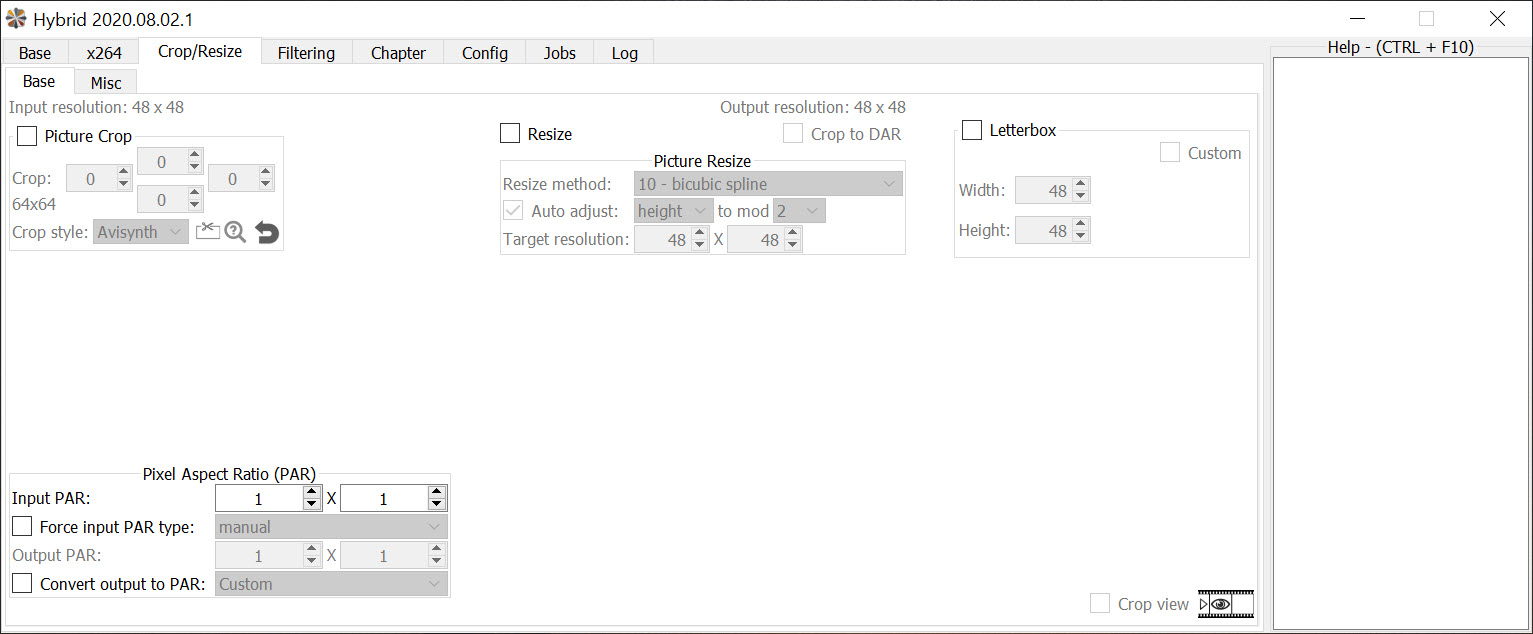
The filtering tab is the heart of Hybrid and the reason enthusiasts use it. Deinterlacing with the quality methods, inverse telecine for film transferred to video, denoising from the fast filters to the heavy temporal ones, deblocking, debanding, sharpening, resizing with every resampler, cropping and colour adjustment, tone mapping for HDR to SDR conversion, frame rate conversion with motion interpolation, and the machine-learning upscalers and restoration models that need a capable graphics card, all appear as controls with their parameters beside them. The filter chain is ordered and previewable, and it saves as a profile.
VapourSynth is the default framework and the one that keeps growing, with AviSynth available as an add-on for the filters that only exist there. The program writes the script, and the script is readable in a tab for anyone who wants to see or edit what the controls produced. That is the bridge between the pointing interface and the scripting world, and it is how people learn the frameworks by reading what their choices became. Benchmarking a chain’s speed before committing to an overnight encode is the job of AVSMeter on the generated script.
Audio and subtitles
Hybrid lists audio tracks from the input with language and format, and each can be passed through untouched, re-encoded to AAC, Opus, Vorbis, MP3, FLAC or the surround formats through a choice of encoders, or filtered through resampling and normalisation, with delay adjustment. Several tracks can be kept in one output, with the order and the default flag set. Subtitles from the input, from external files or from disc image formats are passed into Matroska and MP4 containers or burned into the picture, with the image-based disc subtitles handled as streams or converted.
Tagging and chapter naming for the containers round out the muxing side, and the whole audio configuration saves as its own profile. For a job that is only subtitle work, a dedicated Matroska muxer does the job more directly, and this program is for the cases where the picture is being re-encoded anyway.
The job queue
Jobs go into a queue that runs them in order, with each job carrying its full configuration, so a dozen episodes with the same settings are set up once and left to run overnight. Jobs can be paused or reordered, and edited while others run, and the program can shut the machine down at the end. Each job’s log is kept, so a failed encode at three in the morning explains itself in the morning, and a job can be cloned with one change for the next attempt.
Previewing the filter chain
A Hybrid preview window shows the filtered output beside the source, scrubbable frame by frame, which is how a deinterlacing choice or a denoise strength gets judged before an hour of encoding proves it wrong. The preview covers the filter chain rather than the encoder, so bitrate decisions still rest on the calculator and experience. A short test encode of a few seconds from the preview position is the usual way to settle them before the full run.
Where the depth becomes a burden
The Hybrid interface is the obstacle. Options sit several tabs deep, labelled with the encoder’s own parameter names, and a setting on one tab can silently constrain another, so the learning curve is measured in evenings rather than hours. The program assumes you know what the frameworks and encoders do, and its documentation is a forum thread and a wiki rather than a manual. Updates arrive often and occasionally move things. None of that is carelessness, since the program is doing what the alternatives refuse to, which is hiding nothing.
It is simply the shape of a tool that exposes everything, and the person who needs every knob will forgive it while the person who needs three will not.
Conclusion
Hybrid suits enthusiasts and archivists who re-encode film and video with care, who want deinterlacing and denoising done properly, who compare encoders on the same source and who would rather point at a filter than type its parameters. Nothing else puts this many encoders and this much of the two filter frameworks behind one window, and the readable script makes it a teacher as well as a tool.
It is the wrong choice for anyone who wants a simple conversion with a preset, where HandBrake does the job in three clicks, and its interface will defeat a casual user within minutes. Start with one source, one encoder and the preview, save a profile once something works, and the thousand controls become a workshop rather than a wall.
Pros & Cons
- A dozen encoders from x264 and x265 to the AV1 and hardware encoders, every parameter exposed
- VapourSynth and AviSynth filtering as controls, with the generated script readable
- Deinterlacing, inverse telecine, denoising, tone mapping and machine-learning upscaling in one chain
- Audio re-encoding to every common format with multiple tracks and subtitles muxed or burned in
- Job queue with reordering, editing while running and automatic shutdown
- Separate profiles for video and audio, and for filters, for repeatable setups
- Thousands of controls across nested tabs, with a steep learning curve
- Assumes knowledge of the encoders and frameworks it wraps
- Documentation lives in a forum thread rather than a manual
- Settings on one tab can constrain another without saying so
Frequently asked questions
No. Filters and encoders are set through controls, and the program writes the VapourSynth or AviSynth script, which is shown in a tab for anyone who wants to read or edit it.
Yes. The hardware encoders of the three graphics card makers are available alongside the software encoders, faster with a small quality penalty.
Yes, through tone mapping filters in the filter chain, which are previewable before encoding.
Yes. Each file becomes a job in the queue carrying its full configuration, and the queue runs them in order with optional shutdown at the end.
It can do one, but the interface is heavy for that. A preset-based transcoder is quicker for shrinking a phone video, and this program is for encodes that need control.


