

Steam Game Idler
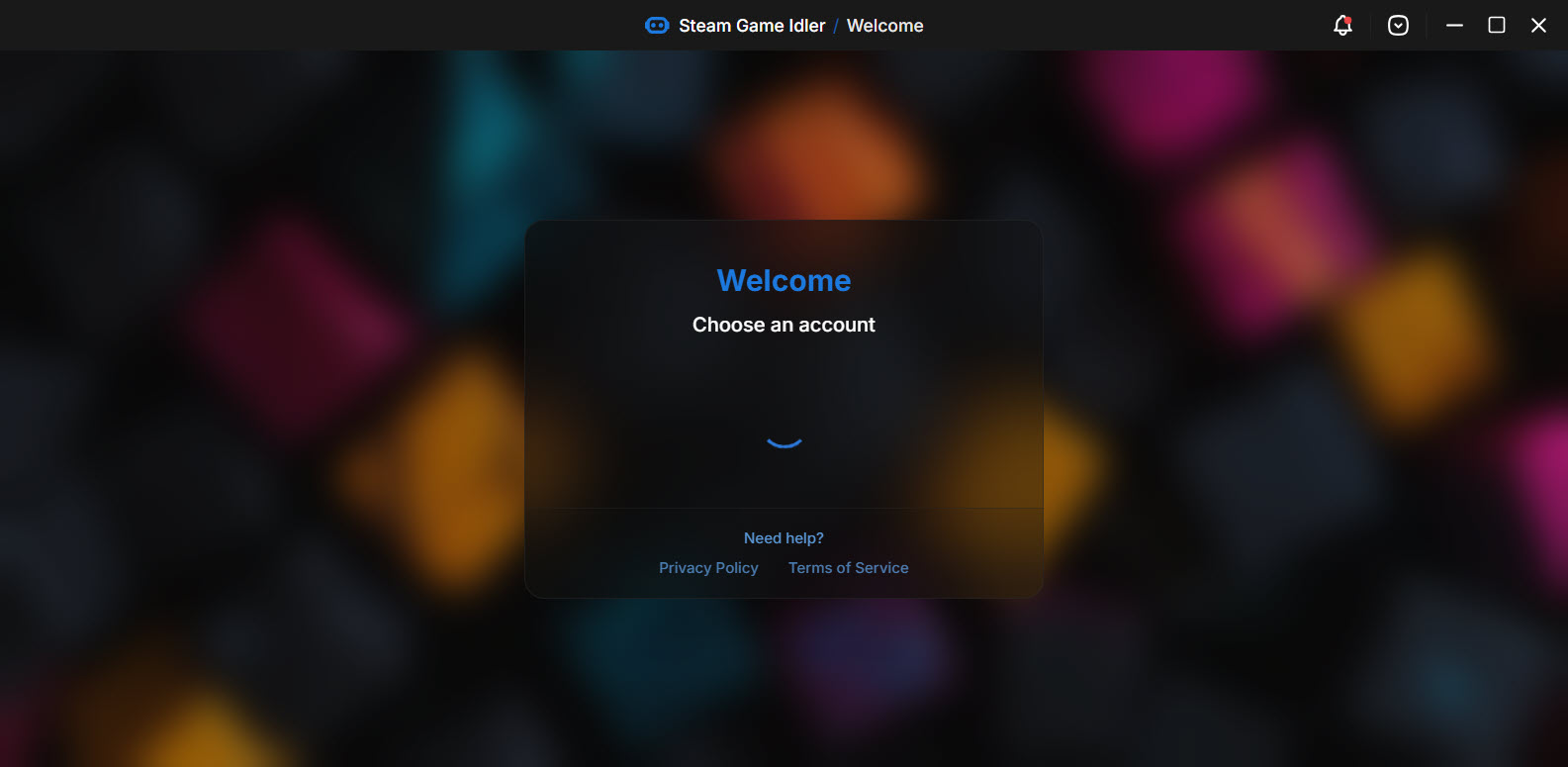
About Steam Game Idler
Steam Game Idler keeps Steam games appearing as “running” without actually launching them, which lets the platform award trading cards, accumulate playtime hours, and trigger anything else that depends on a game being active. The application talks to the local Steam client through the same APIs that legitimate games use, so Steam sees what looks like a real game session even though no game executable is loaded into memory.
The use case is specific. Steam awards trading cards as drops while you play games that have them, with the drop rate based on session time. For users with large libraries of card-eligible games, manually launching each one and leaving it running for hours is impractical.
Steam Game Idler automates that process, cycling through your library, signalling each game as active until card drops complete, then moving to the next game. The result is a queue of trading cards collected over time without keeping actual games loaded, which would otherwise consume significant memory, CPU, and storage activity.
How the idling actually works
The technical mechanism is worth understanding because it’s both simpler and weirder than most users assume. Steam exposes interfaces that let connected applications register themselves as the active game for a specific App ID. When a game launches normally, the game itself calls into these interfaces to notify Steam of its presence, which is how achievements get unlocked, playtime gets logged, and trading card drops get triggered. Steam Game Idler uses the same notification path without running the actual game, telling Steam “App ID 12345 is now running” and letting the platform handle everything else.
This means no game files are loaded, no graphics are rendered, no audio plays, and no save data is written. The application appears in Steam’s view of your activity as a normal game session, with the friends list showing you as currently playing, the playtime counter incrementing, and the card drop logic running its course. From the user’s perspective, the actual game never enters the picture.
The approach has a hard limit. Card drops only happen for games that have remaining drops available on the account, and most games stop dropping cards after the user has played enough hours to receive the full set.
The application can’t generate cards that don’t exist. What it does is unlock the cards Steam was already going to award if you played the games normally, without requiring you to actually play them.
Library scanning and the queue system
When you first run the application and authenticate with your account, it scans your library for games that have trading cards and remaining card drops. The scanning takes time on large libraries, with most of the delay coming from API rate limits rather than local processing. Once the scan completes, the application presents a list of games sorted by how many card drops remain on each.
The queue lets you select games to idle in sequence, with configurable durations per game or until card drops finish naturally. Some users let the queue run through their entire eligible library over multiple days. Others target specific games with cards they specifically want for badge crafting.
The flexibility matters because card drop timing is unpredictable. Some games drop cards every 30 minutes of session time. Others drop them in bursts after long idle periods. The application doesn’t accelerate the drop rate, it just keeps the session timer running.
For users juggling multiple Steam accounts (which the platform allows for different family members, different regions, or different language preferences), pairing with Steam Account Manager or Steam Quick Switch handles the account switching workflow alongside the idling.
Trading card economics and what idling actually produces
Understanding what idling produces matters for setting realistic expectations. Steam trading cards drop in roughly half-sets for most games, with the rest of the cards obtainable through trading, marketplace purchases, or random booster pack drops. A typical AAA game with cards might award 4-6 cards through play, with the full set running 8-12 cards. To complete a set, users either trade with other players or buy the missing cards from the Steam marketplace.
Completed sets unlock the ability to craft a badge for that game, which awards a small amount of XP toward Steam profile level, an emoticon, a profile background, and a small chance of a coupon or booster pack drop.
The economic value of any individual card is typically modest (most cards sell on the marketplace for a few cents), and the time to collect them through idling far exceeds what selling them would earn at minimum wage. The activity makes sense as a passive background process rather than as something economically productive.
The Steam wallet credits earned by selling collected cards stay locked in the Steam ecosystem (you can spend them on games, in-app purchases, marketplace items) and can’t be withdrawn as cash. This shapes the use case toward users who already spend on Steam regularly and want to offset some of that spending through accumulated card sales.
Limitations and Steam’s stance
The application operates in a gray area technically. Steam allows the underlying API integration that makes idling possible (legitimate games use the same hooks), and it hasn’t actively banned accounts for using third-party idlers. But Steam’s terms of service prohibit automated activity, and the platform reserves the right to take action against accounts that abuse the system. The risk has historically been low, but it isn’t zero.
Practical considerations also limit how much idling makes sense. The application requires the Steam client to be running and signed in, which means an active session on the account. Some users dedicate a secondary machine or a virtual machine to idling, leaving it running for extended periods. Others idle in the background on their primary machine, accepting that they appear “in-game” to friends and that any actual gaming they do gets logged against whichever game the idler is currently signalling.
The card drop rate also slows significantly as account-eligible drops get exhausted. New users with large card-eligible libraries see fast initial results. Veteran users who have idled extensively in the past see diminishing returns until new cards become available through Steam events, account level milestones, or new game purchases.
Conclusion
Steam Game Idler is the right choice for users with large Steam libraries who want to collect trading cards passively without dedicating active play time to games they don’t intend to actually play. The target audience covers Steam profile collectors building badges for level progression, traders who sell cards on the marketplace for wallet credit, completionists who want to unlock all available cards from their library, and users with backlogs of game purchases whose card drops have been sitting unclaimed.
It’s the wrong choice for users who actively dislike the gray-area aspect of automated activity, for users whose Steam libraries don’t include many card-eligible games, or for anyone expecting meaningful economic returns from the activity. The application solves a specific problem within Steam’s ecosystem with minimal system overhead, but the broader context (modest card values, account TOS considerations, diminishing returns over time) shapes whether it’s worth running at all.
For users who already accept the trade-offs, the automation removes a tedious manual process and turns passive idle time into a small but steady accumulation of platform rewards.
Pros & Cons
- Automates trading card collection from large libraries without manually launching games
- Queue system processes multiple games sequentially without manual intervention
- No game files load, so memory and storage footprint stays minimal
- Library scanning identifies which games have remaining card drops available
- Accumulates playtime hours for games that have time-based goals beyond cards
- Works through Steam's standard application APIs rather than reverse-engineered protocols
- Operates in a gray area under Steam's terms of service against automated activity
- Cannot create card drops that the account isn't already eligible for
- Requires Steam client to be running with active sign-in for the entire idling session
- Friend list shows the account as playing whichever game is currently idling
- Trading card economic value is modest relative to time invested
- Diminishing returns after the initial backlog of card drops is exhausted
Frequently asked questions
It signals Steam that specific games are running without actually launching them. This lets the platform award trading cards, accumulate playtime hours, and trigger anything else that depends on game session activity, all without loading the actual games.
The application doesn't load game files, render graphics, or play audio. It only sends Steam the same activity notifications that real games send, which makes Steam treat the session as legitimate. The user sees no game window and the system experiences no gaming workload.
The application uses Steam's standard application APIs without modifying the client or violating client-side protections. Steam's terms of service do prohibit automated activity, but historical enforcement against idlers has been limited. The risk is low but not zero.
There's no functional difference from Steam's perspective. Card drops happen based on session time regardless of whether the user is actively playing. Idling just removes the requirement that the user actually be present and engaged with the game.
No. Achievements require specific in-game actions to trigger and can't be unlocked by simply signalling that a game is running. The application is limited to card drops, playtime accumulation, and other passive session-time rewards. For achievement-related tasks, Steam Achievement Manager handles that side separately.
The application can idle any game in the user's library, but card drops only happen for games that have trading cards and remaining drops available on the account. Games without cards produce no drops regardless of how long they're idled.
Steam allocates a finite number of card drops per game per account based on the original game purchase. Once those drops are exhausted, additional idling on the same game produces no further cards until new cards become available through events, account level milestones, or new purchases.


