

TeXstudio
About TeXstudio
Writing LaTeX in a plain text editor works and is miserable. You type commands from memory, compile in a terminal, read an error mentioning a line number that bears no relation to the mistake, and scroll through a document looking for the paragraph you just changed. TeXstudio removes each of those irritations without hiding the language underneath.
The first thing to establish is what it is not. It is an editor, and the typesetting is done by a separate LaTeX distribution that has to be installed independently. Without one, this opens files and compiles nothing.
That distribution is a substantial download of its own, and MiKTeX is the usual choice, installing packages on demand as documents call for them rather than delivering everything at once.
Forward and inverse search
Of everything here, this is the feature that changes how the work feels, and people who have not used it underestimate it completely.
The viewer sits beside the editor. Put the cursor on a line of source and the viewer jumps to where that line appears in the output. Click a passage in the output and the editor jumps to the source that produced it.
On a two-page document that is a convenience. On a hundred-page thesis it is the difference between an editor and a filing exercise, because the alternative is remembering roughly where you were and scrolling until you recognise something. TeXstudio keeps the two representations tied together permanently.
Completion, structure, references
TeXstudio completion covers the language itself, offering commands and environments as you type, which removes a large share of the syntax errors beginners generate.
More useful is what it does with your own document. Citation keys complete from the bibliography files you referenced, so inserting a citation means typing two letters and choosing, rather than opening the bibliography to remind yourself what you called something. Labels for cross-references work the same way.
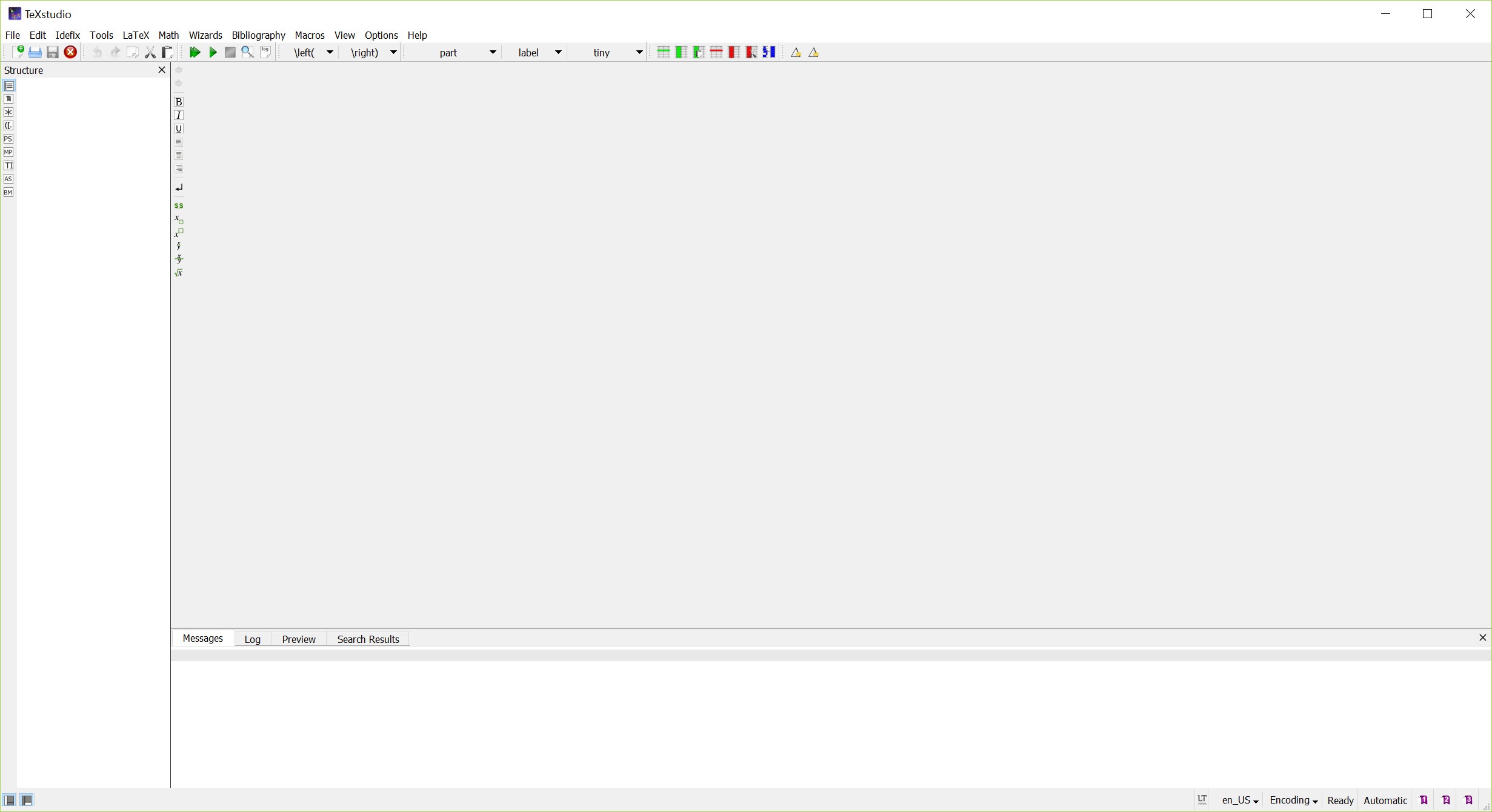
The structure panel lists the document’s sections, its labels and the notes you left for yourself, and clicking any of them jumps straight there. On a long document that panel becomes the primary way you move around, and the notes appearing as a checkable list is a small thing that saves real time before submission.
The assistants, and the mathematics
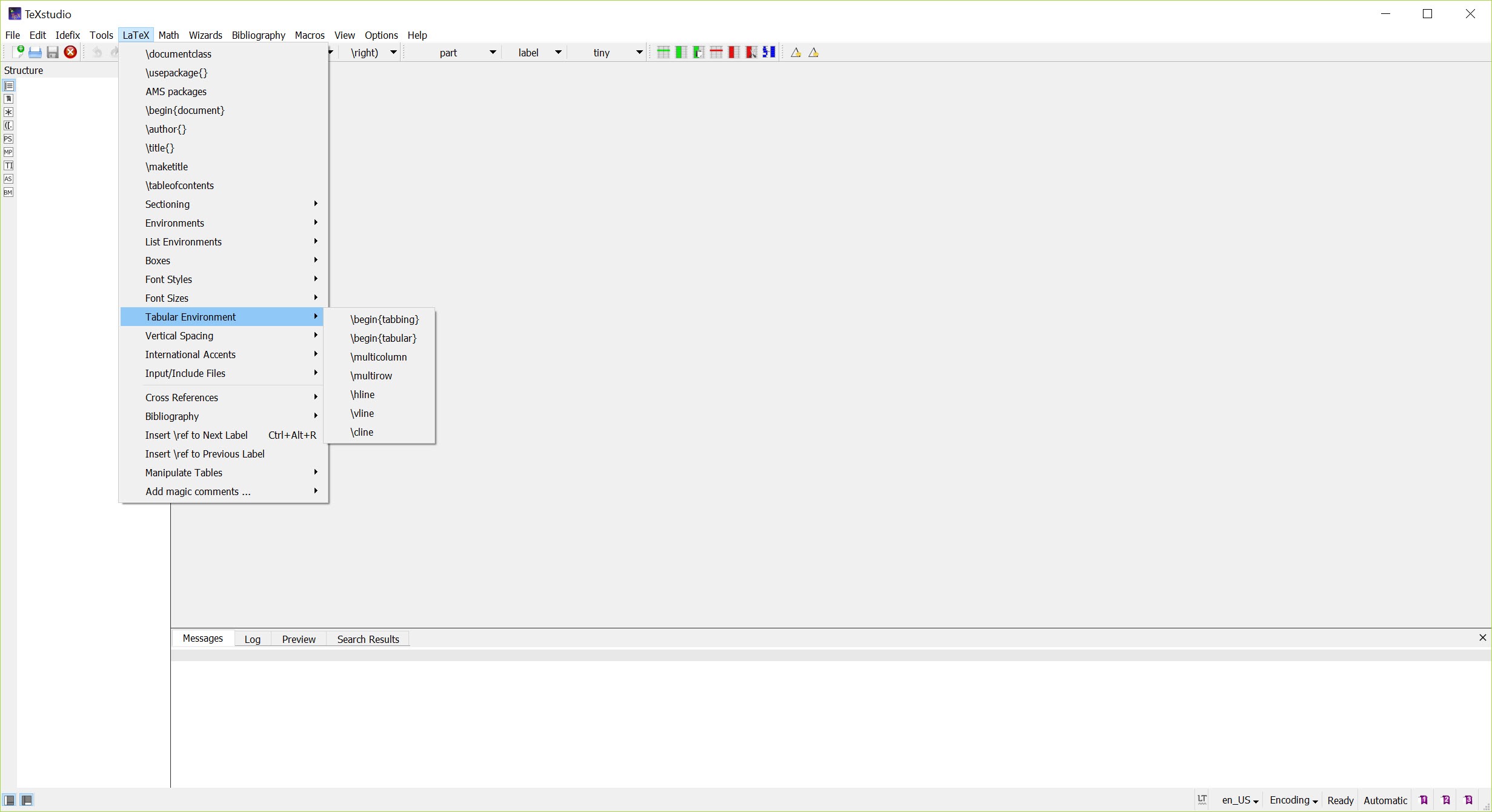
Several parts of LaTeX are tedious rather than difficult, and the TeXstudio assistants target exactly those. Document setup with class and package selection, table and array construction, plus inserting graphics with the options spelled out rather than remembered.
Tables deserve the mention specifically. The syntax for a table with merged cells and alignment is unpleasant to write by hand and trivial to specify in a grid, and the assistant produces the code for you to adjust.
Mathematics gets symbol panels covering the enormous set of available symbols, organised by category, which beats searching for the command for an obscure operator. Formula preview renders an equation inline while you write it, so an error in a long expression shows up immediately rather than after a compilation.
Figures come from elsewhere, and a vector editor that exports directly to the formats LaTeX accepts is the usual companion for diagrams.
Reading the errors
LaTeX error messages are famously unhelpful, and the TeXstudio log parser is what makes them workable. Errors and warnings appear in a list, and clicking one moves the cursor to the line the log named.
Be honest about the limit, though. The parser presents the messages clearly and cannot make them meaningful, because the underlying problem is that LaTeX reports where it noticed the trouble rather than where you caused it. A missing closing brace produces an error hundreds of lines later, in a place where nothing is wrong.
The habit that helps is compiling often. An error appearing after three lines of new text is findable, and the same error appearing after an afternoon of writing is a search. TeXstudio makes compiling quick enough that the habit is effortless.
For reading the finished document away from the editor, a light viewer that reloads a file automatically when it changes is the traditional companion and does not lock the file while open.
Build configurations
Different engines suit different documents, and TeXstudio makes switching a menu rather than a command line. The traditional engine, the one handling system fonts and Unicode properly, and the newer scriptable one are all configurable, along with the bibliography and index tools that run between passes.
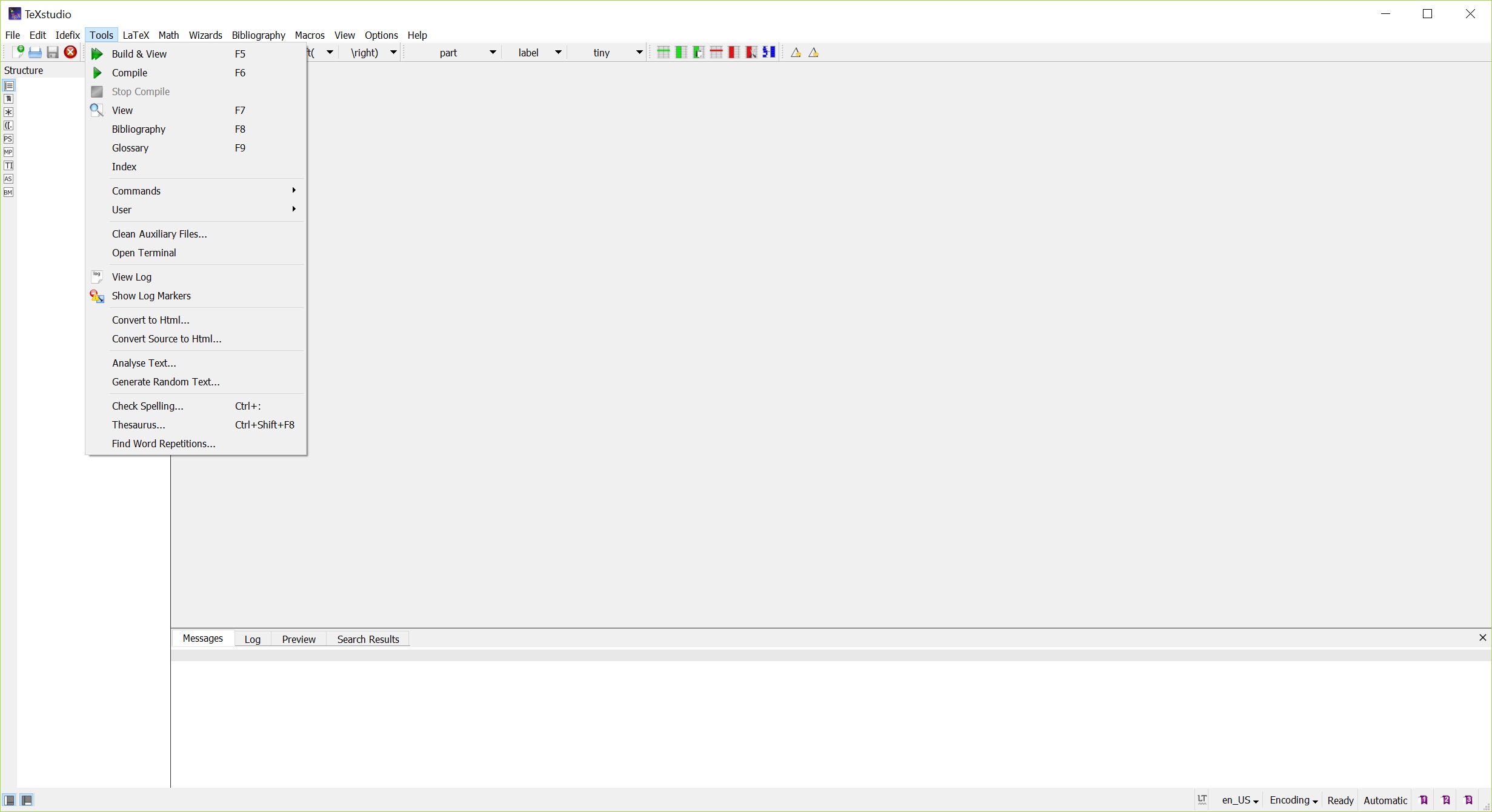
Compilation sequences matter more in LaTeX than in most systems, since a document with references needs several passes in the right order. Build profiles handle that, so producing a final document is one action rather than four remembered commands.
Session handling reopens the files you had open, which on a thesis split across twenty files is not a small thing.
Where it sits
Texmaker is the ancestor this grew out of, and the two remain similar enough that skills transfer directly. This one has moved further, particularly in completion and the structure panel, while the older program remains lighter and simpler.
The honest summary is that TeXstudio makes LaTeX pleasant without making it easy. The language still has to be learned, the distribution still has to be installed, and the errors still require interpretation. What the editor removes is the friction around those things rather than the things themselves.
Conclusion
TeXstudio is the editor to start with if you write LaTeX on a desktop. The linked source and output view alone justifies it, the completion of your own citations and labels saves more time than any other single feature, and the assistants handle the parts of the language nobody enjoys typing.
Set the expectation correctly before installing. This is one half of a system, and the distribution underneath it is the other half and a separate download. The editor makes the language comfortable to work in rather than making it simpler, so a newcomer still has LaTeX to learn. Anybody already writing it who is doing so in a plain text editor should switch this afternoon.
Pros & Cons
- Forward and inverse search keep the source and the output tied together permanently
- Citation and label completion reads your own bibliography and cross-references
- Structure panel turns a long document into something navigable
- Assistants generate the code for tables, graphics and document setup
- Symbol panels and inline formula preview remove guesswork from mathematics
- Log parser turns errors into clickable lines rather than raw output
- Build profiles handle multi-pass compilation as a single action
- Sessions reopen a document split across many files
- Does nothing without a separate LaTeX distribution installed first
- Error messages remain cryptic however clearly they are presented
- The language itself still has to be learned, with a real curve
- Interface is dense, with more panels and toolbars than a newcomer needs
- Heavier than a plain editor, which matters on modest hardware
Frequently asked questions
No. It is an editor, and the typesetting is performed by a separate distribution you install independently. Without one it will open and edit files while compiling nothing at all.
Clicking a passage in the compiled output moves the editor cursor to the source that produced it, and the reverse works too. On a long document this replaces scrolling and guessing with a single click.
Yes, with support for multiple languages, and it understands enough of the syntax to avoid flagging commands as misspellings, which is the failure that makes general-purpose spell checkers useless for this.
Because LaTeX reports where it noticed a problem rather than where the problem was created. A missing brace can surface hundreds of lines later. Compiling frequently keeps the distance between the two small enough to find.
The two share an ancestry and remain similar. This one has gone further with completion, the structure panel and the assistants, while the older program is lighter and presents less on screen.


