

Arduino

 (195 votes, average: 3.98 out of 5)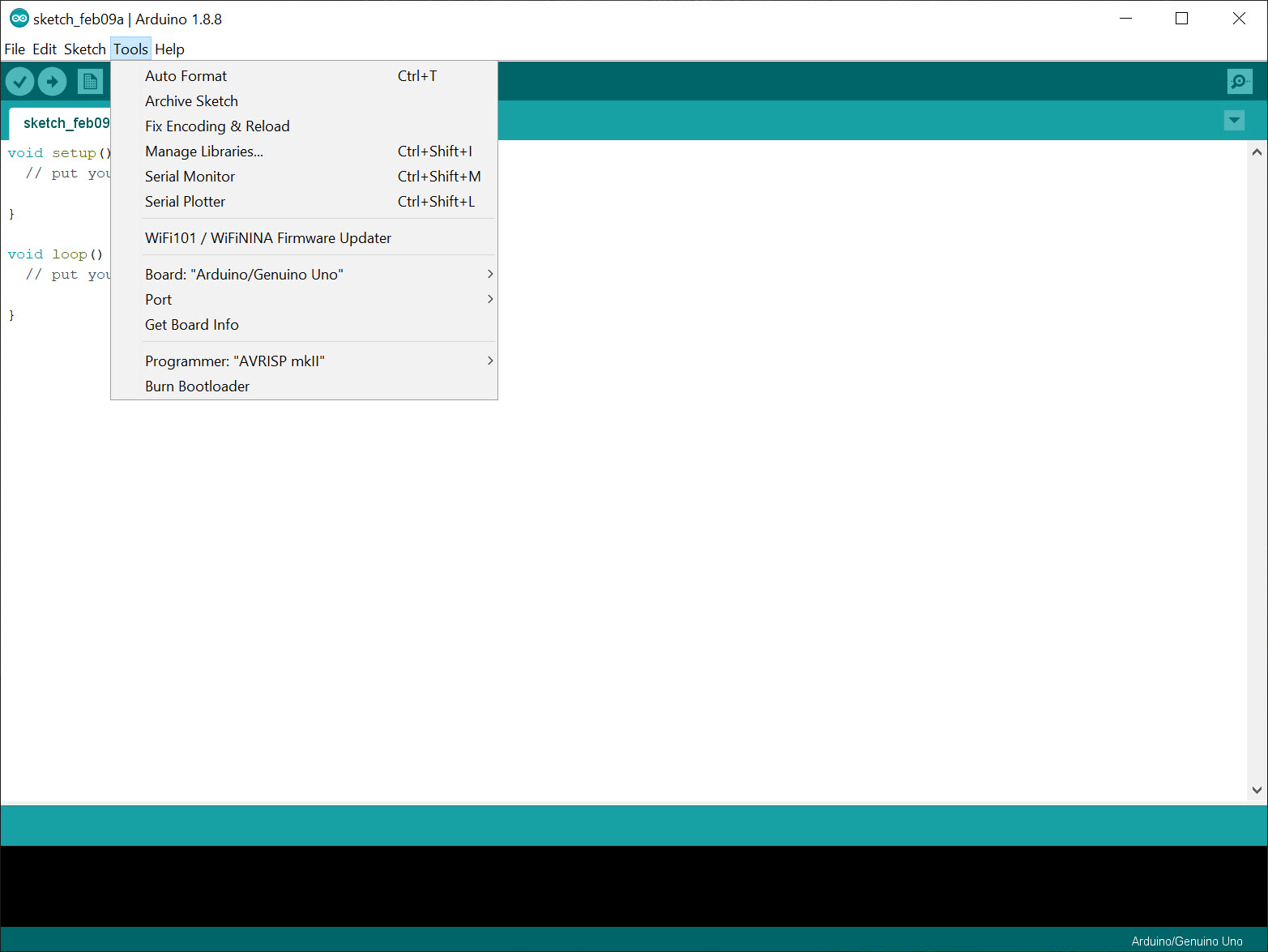
About Arduino
Arduino is the desktop application most people mean when they say they are “going to write some code for an Arduino.” It is the editor, compiler, board manager, and uploader rolled into one window, designed so that a complete beginner can plug in a microcontroller board, write a few lines of code, click Upload, and watch an LED blink within ten minutes of installing the application.
That deliberate ease-of-entry shaped every design decision in the software, and it explains both why the platform became as widely adopted as it is and why experienced embedded developers eventually outgrow it.
The application talks to a specific hardware ecosystem. Arduino-branded boards (Uno, Nano, Mega, Leonardo, Mini, MKR series, Portenta, GIGA, Nicla, and many more) are the first-class citizens, but the same software programs a huge field of third-party boards built around compatible microcontrollers. ESP8266 and ESP32 boards. Teensy. Adafruit Feather. STM32 BlackPill. RP2040-based boards. SAMD-based modules.
Pretty much anything the maker community has touched gets an Arduino-compatible toolchain eventually, and the application is the front door to all of it.
The two generations of the IDE
There are two distinct versions of the application running in parallel, and choosing between them matters more than the name suggests. The classic IDE is the older Java-based editor that the platform was built on. It is small, fast to launch, has a simple text editor with basic syntax highlighting, and uses a sidebar-free single-window layout.
The newer IDE is a complete rewrite on a modern Electron and Monaco foundation, with features that the classic version never had: real autocomplete, real go-to-definition, integrated debugging for supported boards, dark themes, multi-file project navigation, and a serial plotter that does not feel like an afterthought.
The new version is heavier in memory and slower to launch. The old version still works perfectly well for simple sketches and remains the recommended choice for low-powered machines.
Both versions program the same boards, accept the same code, and use the same underlying toolchains. The choice is about how you prefer to work, not about what you can do.
The sketch model and what hides underneath it
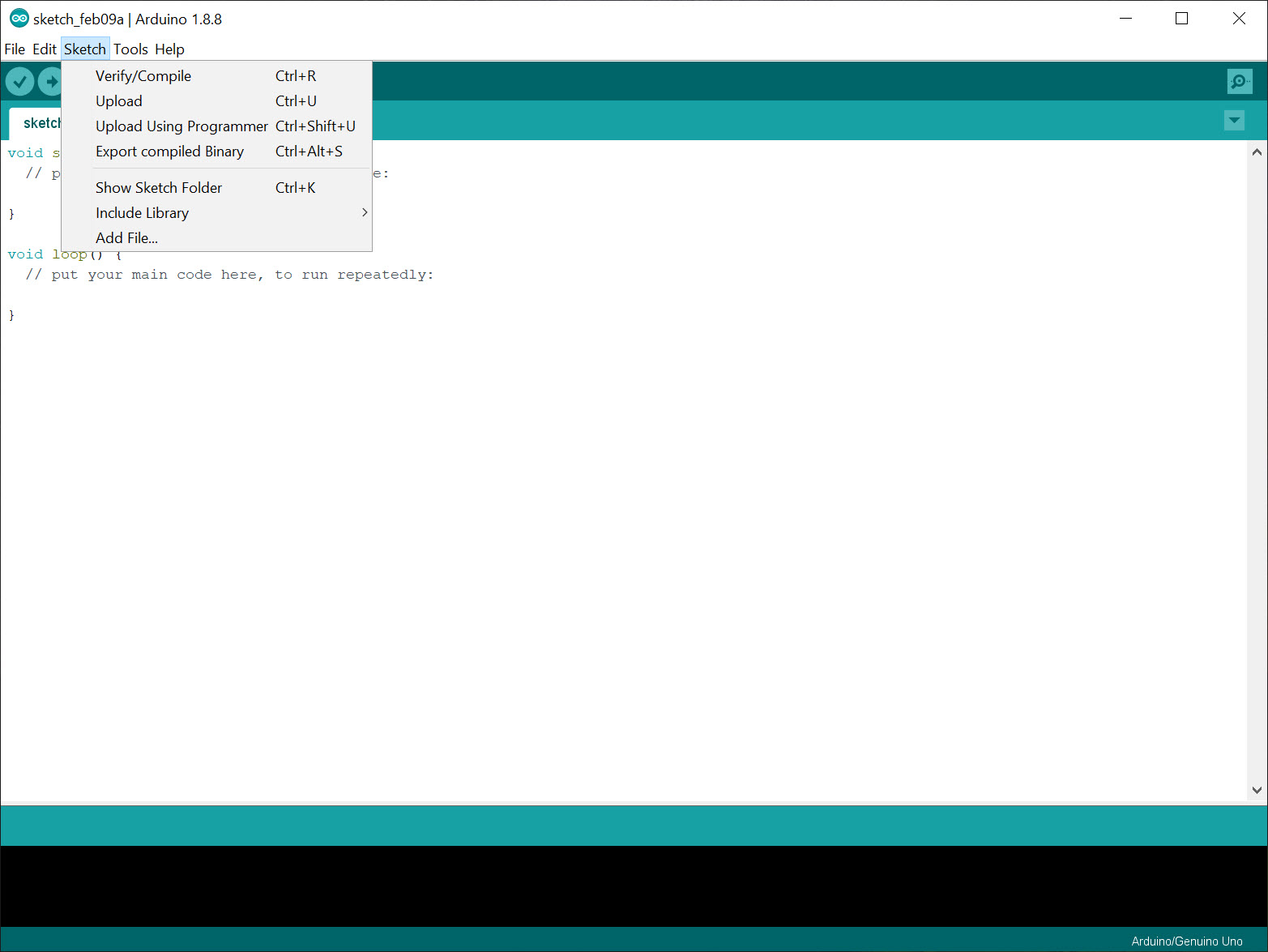
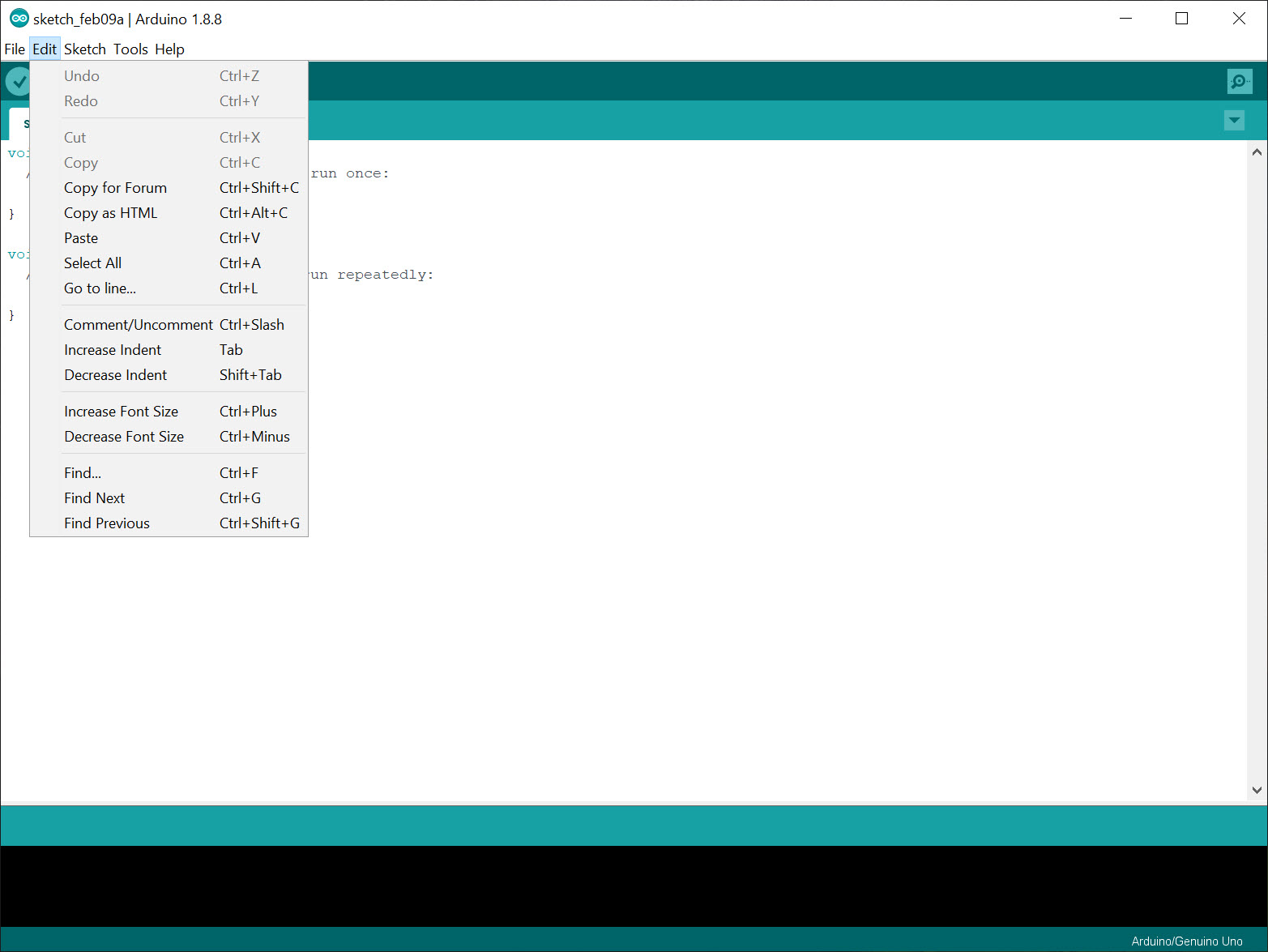
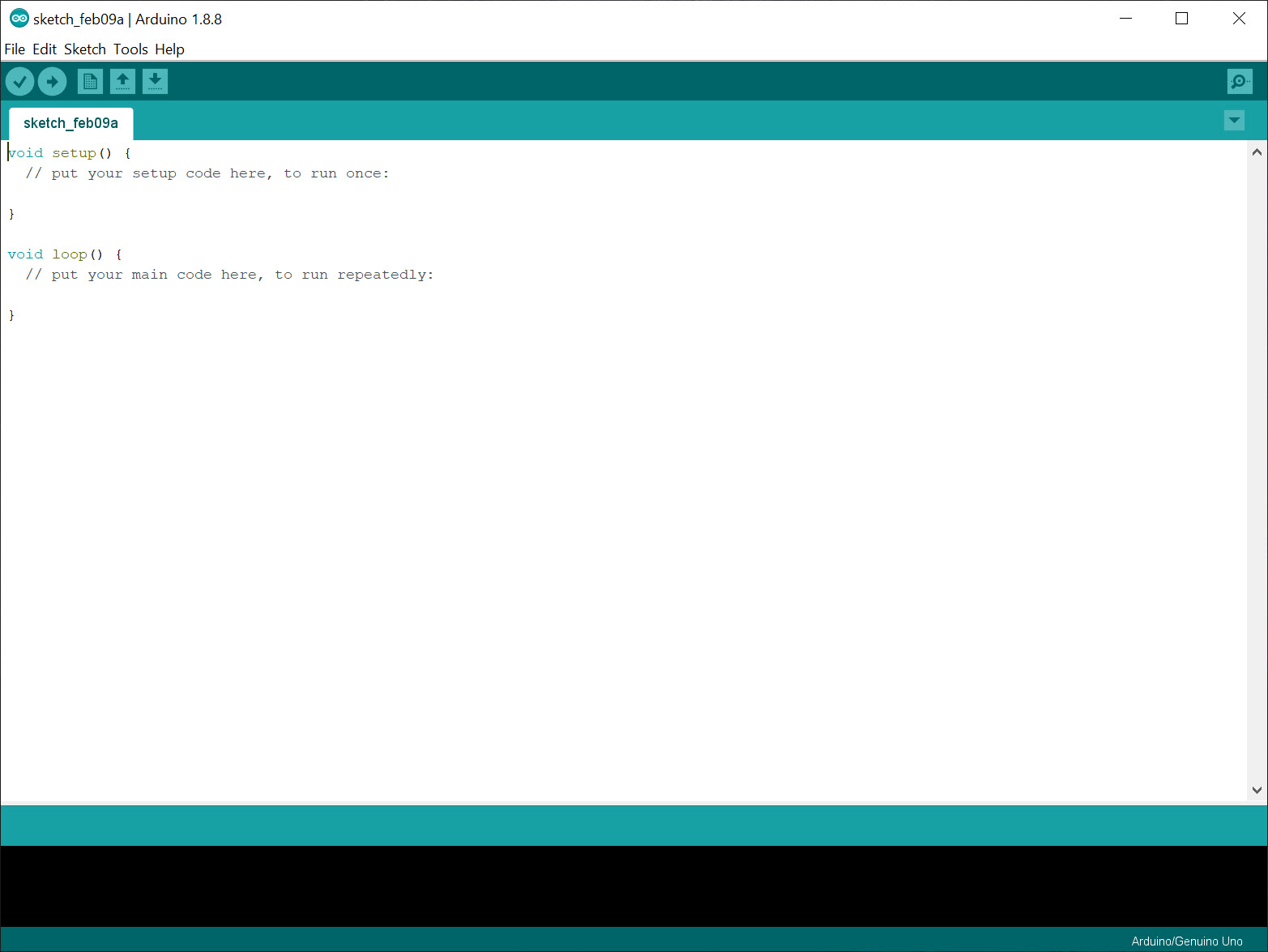
The fundamental code unit is the sketch. A folder with a .ino file inside that contains your program. Every sketch needs two functions, setup() which runs once at boot, and loop() which runs continuously after that. The .ino syntax looks like C++ because it essentially is C++, with the rough edges sanded off through a preprocessing step. The application takes your .ino file, generates the necessary include directives and function prototypes, wraps it in a hidden main() function, and hands the result to a real GCC toolchain that targets your specific board’s architecture.
This abstraction is why someone with no embedded background can write working microcontroller code on day one. It hides the linker scripts, the startup files, the register-level initialization, the choice of toolchain, the build system. All of that is real and necessary, but the application handles it without making you look at it.
The cost is that when something goes wrong at a level below the sketch (a memory layout problem, a bootloader mismatch, a clock configuration issue), the abstraction can make the problem harder to diagnose than it would be in a more transparent environment.
Board Manager and the third-party ecosystem
The Board Manager is the part of the application that explains why this software has stayed relevant as the microcontroller world expanded far beyond original Arduino hardware. Adding support for a new board family is a matter of pasting a URL into preferences, opening the Board Manager, and clicking install. The application downloads the GCC toolchain for that architecture, the core libraries that implement the Arduino API for that chip, the upload tools, and the bootloader files. Then your new board appears in the dropdown and works the same way as everything else.
This is how the ESP8266 became the default cheap WiFi microcontroller for hobbyists. Espressif published an Arduino core. Suddenly anyone who knew the Arduino API could write WiFi-connected code on a two-dollar chip. The same pattern happened with ESP32, with RP2040 from the Raspberry Pi side, with various STM32 cores, and with countless smaller chips.
The application became a common front-end to wildly different silicon, which is one of the more impressive ecosystem-engineering accomplishments in the embedded space.
Library Manager and the cost of convenience
The Library Manager solves the dependency problem for sketches that need to talk to specific sensors, displays, motor drivers, or communication protocols. Search for the device or function you need, find a library, click install, include the header in your sketch, and the API is available. There are libraries for thousands of common peripherals, often multiple competing libraries for the same hardware, with quality ranging from excellent to actively broken.
The catch is that this convenience trains beginners to assume “there is a library for that” rather than reading datasheets and writing peripheral drivers from scratch. For learning, that trade is fine. For production work, library quality becomes a real concern, and the application offers no quality signal beyond the rating system and download count. Reading the source of a library before relying on it is a habit that does not develop unless something pushes you toward it.
The Serial Monitor and Serial Plotter
The Serial Monitor is one of the genuinely well-executed parts of the application. Open it, set the baud rate, and it shows everything your board prints over the USB serial connection. You can send text back to the board, change line-ending conventions, and clear the buffer. It is the primary debugging tool for almost every Arduino project, because most boards do not support proper hardware debugging without external probes, and printf-style debugging through the serial port is what people fall back on.
The Serial Plotter takes numeric data your sketch prints (one value per line, or several values separated by tabs) and graphs them in real time. For visualizing sensor readings, this is a small but very useful feature. For anything more sophisticated than basic plotting, the limitations show quickly. The axis scaling is automatic and not adjustable, you cannot pause and scroll back through history, and there is no data logging built into the plotter itself.
For more serious debugging of serial protocols, a dedicated terminal like Hercules SETUP gives you raw byte-level control and protocol analysis that the application’s monitor does not.
Where it fits in a wider toolchain
For circuit design and prototyping before you write code, Fritzing handles the breadboard-to-PCB design workflow with a visual style that matches the platform’s beginner-friendly approach. For analog circuit simulation that complements digital firmware work, LTspice is the standard. For users who outgrow the bundled editor and want a more capable code editor while keeping the same build system, sketches can be edited in Notepad++ or Geany and compiled through the command-line interface of the application, which exposes the build and upload commands directly.
The natural progression for users who want more serious embedded development is to move to PlatformIO, an extension that runs inside VS Code and uses the same underlying toolchains.
PlatformIO trades the simplicity of the application for proper dependency management, real version pinning of board cores and libraries, multi-target builds, and unit testing support. The skills transfer cleanly because the API code stays the same, only the surrounding workflow changes.
Limitations worth being honest about
The build system is opaque in ways that hurt when you need to do something custom. Want to change a specific compiler flag for one source file? You can, but the path involves editing platform.txt files in places the documentation barely mentions. Want to use a specific version of a library? You can install one version. Switching between versions for different projects is awkward. Want to share a project with someone such that they get exactly the toolchain and library versions you used? The application does not have a clean answer.
Compile times are slower than they need to be because the toolchain rebuilds more than is strictly necessary on each compile. The new IDE caches better than the old one, but neither approaches what a properly configured CMake or Make build would deliver.
Debugging through hardware probes works on a limited set of boards in the new IDE, and the experience is less polished than what you get with vendor IDEs like STM32CubeIDE or Microchip’s MPLAB X. For someone who actually needs step-through debugging on production firmware, the application is rarely the right answer.
Conclusion
Arduino is the right answer for someone learning microcontrollers, for educators teaching embedded programming, for hobbyists building one-off projects, and for makers prototyping ideas before deciding whether to invest in more serious tools.
The combination of low entry barrier, broad hardware support through the Board Manager, and a deep library ecosystem covers a wider range of projects than any single tool has any right to. The platform’s influence on the maker movement is hard to overstate, and the application is the practical front door to all of it.
For embedded developers working on production firmware, the limitations of the build system, the opacity of the toolchain, and the awkward library versioning eventually push them toward PlatformIO or vendor IDEs. That is the right outcome.
The application was never designed to be the final tool, it was designed to be the first tool, and at that job it remains close to unbeatable. Most embedded careers start in this window, and a surprising number of professional embedded systems still ship code written with it.
Pros & Cons
- Brings beginners from zero to a working microcontroller program faster than any other embedded environment, by a wide margin
- Board Manager makes adding support for new microcontroller families a one-URL paste, which keeps the platform relevant as new silicon appears
- Library Manager provides ready-to-use drivers for thousands of common sensors, displays, and peripherals
- Cross-platform with identical behavior on supported operating systems, and the sketch format moves cleanly between machines
- Serial Monitor and Serial Plotter cover the basic debugging needs for the vast majority of beginner and hobbyist projects
- Open source with an active community, comprehensive documentation, and decades of accumulated example code
- Build system is opaque and hard to customize when you need to do something the IDE did not anticipate
- Library Manager has no quality signal beyond ratings, so beginners get pushed toward libraries of varying reliability without realizing it
- Compile times are slower than necessary because the toolchain rebuilds more than it should
- Step-through hardware debugging is limited and rougher than what vendor IDEs provide for the same chips
- Project portability with exact library and core versions is awkward, the application is not built around reproducible builds
- New IDE is heavier and slower to launch than the classic version, but the classic version lacks modern editor features
Frequently asked questions
A desktop application that lets you write code for Arduino-compatible microcontroller boards, compile it for the specific chip on those boards, and upload the resulting firmware over USB. It bundles an editor, a build system, a board and library manager, and a serial monitor in one window.
The new IDE has modern editor features like autocomplete, debugging, and dark themes, but is heavier in memory and slower to start. The classic IDE is lighter, faster to launch, and adequate for simple sketches. Both program the same boards with the same code, so the choice is about workflow preference, not capability.
No. The Board Manager lets you add support for many third-party microcontroller families. ESP8266, ESP32, RP2040 from Raspberry Pi, STM32 chips, Teensy boards, SAMD-based modules, and many other architectures work through the same application once you install their respective cores.
Sketches are written in a dialect that looks like a simplified C++. The application preprocesses your .ino file into valid C++, generates necessary boilerplate, and hands the result to a real GCC toolchain for the target architecture. So while you write what looks like Arduino code, you are effectively writing C++ at a higher level of abstraction.
The default build system rebuilds more than strictly necessary, particularly on the classic IDE. The new IDE has better caching, but neither matches what a properly configured CMake build would deliver. For large projects, moving to PlatformIO in VS Code typically gives faster incremental builds because of its smarter caching.
For prototyping and educational work, yes. For production firmware with strict requirements around debugging, reproducible builds, and library version pinning, most developers eventually move to PlatformIO or to vendor-specific IDEs from chip manufacturers. The application is excellent at the beginner-to-intermediate range and progressively less suited to professional embedded workflows above that.
It shows text data sent from your board over the USB serial connection and lets you send text back. This is the primary debugging tool for most projects because most beginner boards do not support hardware debugging without external probes. You use Serial.print() in your sketch to log what your code is doing, and the Serial Monitor displays the output in real time.


It is a very good app for the future.