

Logitech G HUB
About Logitech G HUB
A modern gaming mouse ships with more configurable hardware than an old PC, and none of it does anything until software gives it orders. Logitech G HUB is that command center for the Logitech G family, mice, keyboards, headsets, webcams, and wheels, one dark-themed dashboard where sensitivity, buttons, lighting, and microphone processing all get decided.
Plug in a supported device and it appears as a card on the home screen, click it, and every adjustable thing about it opens up.
The software’s reputation is a tale of two halves, real depth of configuration on one side and a famously moody temperament on the other, and a review that skips either half isn’t reviewing the real thing. Both are coming.
Profiles that switch themselves
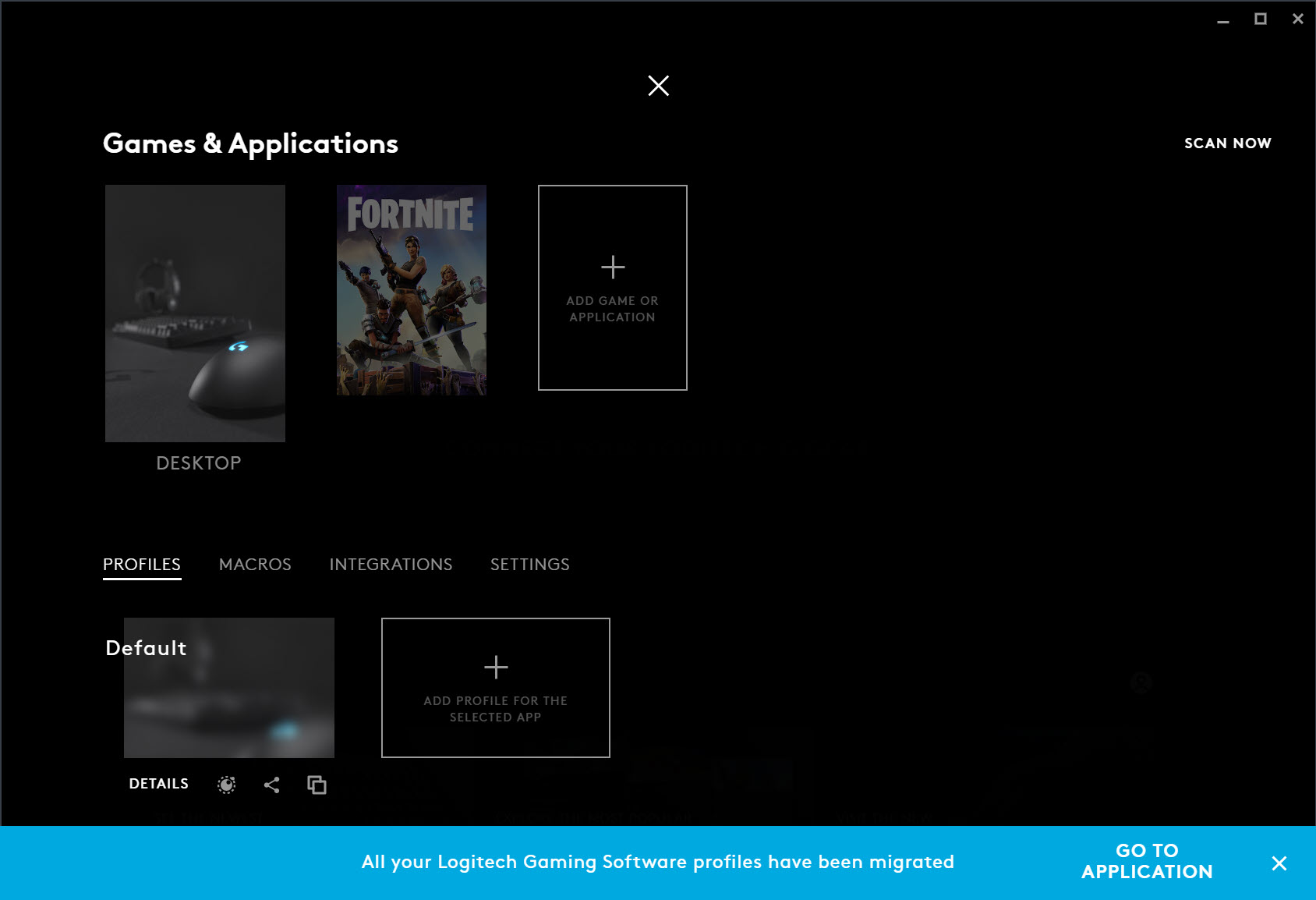
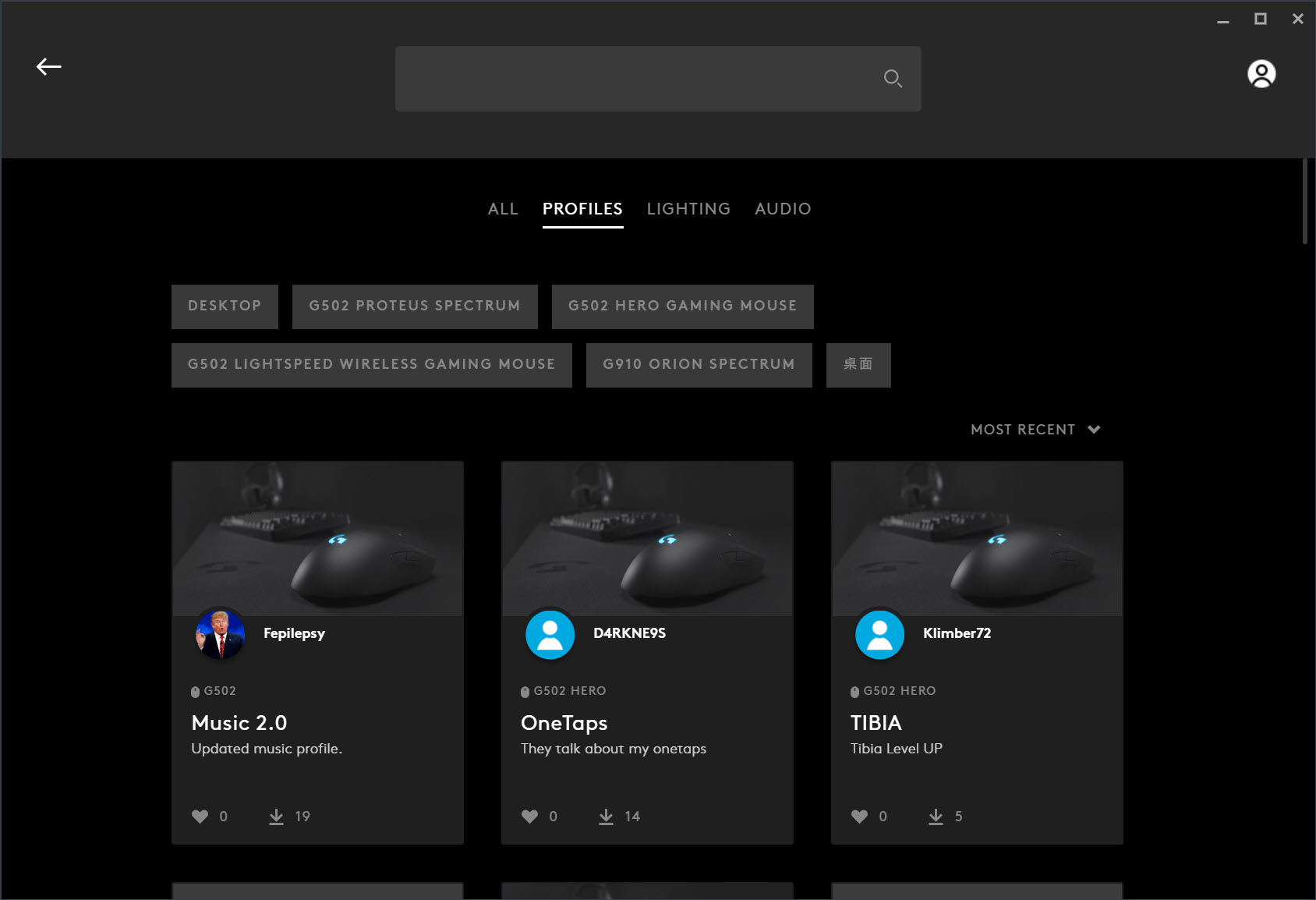
The organizing idea in Logitech G HUB is the per-game profile. Every game gets its own complete configuration, button assignments, DPI stages, keybinds, lighting, and the software switches between them automatically as games launch, detected from your installed library. The shooter gets its low sensitivity and grenade macro, the strategy game gets its command keys, and the desktop gets civilian settings, with no manual switching ever.
Assignments go deep for the patient. Any button can carry a keystroke, a macro with recorded delays, a system action, or a command from integrated apps, and the G-Shift function effectively doubles a mouse, holding one button re-maps every other while held.
Macro recording covers the honest uses, crafting sequences and productivity shortcuts, with the usual sportsmanship caveat that competitive titles police automation on their own terms.
One desk, one light show
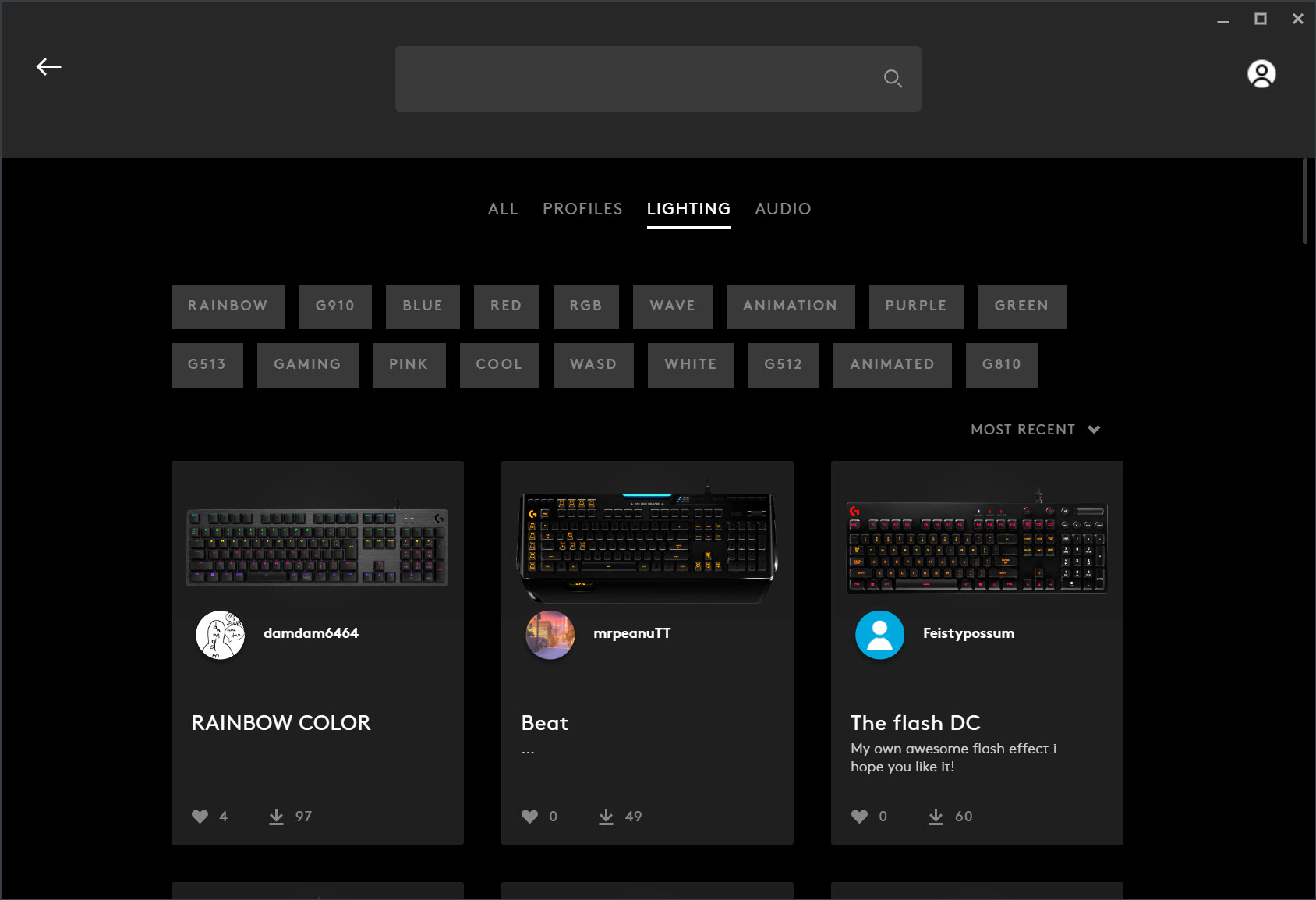
LIGHTSYNC is the lighting engine, and its trick is scope. Effects synchronize across every supported device at once, so the keyboard, mouse, and headset breathe the same colors rather than three separate rainbows. The screen sampler extends game visuals onto the desk, edges of the display bleeding onto your peripherals, and an audio visualizer pulses the kit to whatever is playing.
It’s cosmetic, obviously, and it’s also the feature people open the software for on day one. The per-profile lighting means the effects can be informational too, a different color per weapon group or cooldown key, which is where the light show quietly becomes an interface.
Owners of the rival ecosystems know the same game from the competing utility engine, and the honest comparison is that this implementation is among the easier ones to actually configure.
Blue VO!CE and the audio half
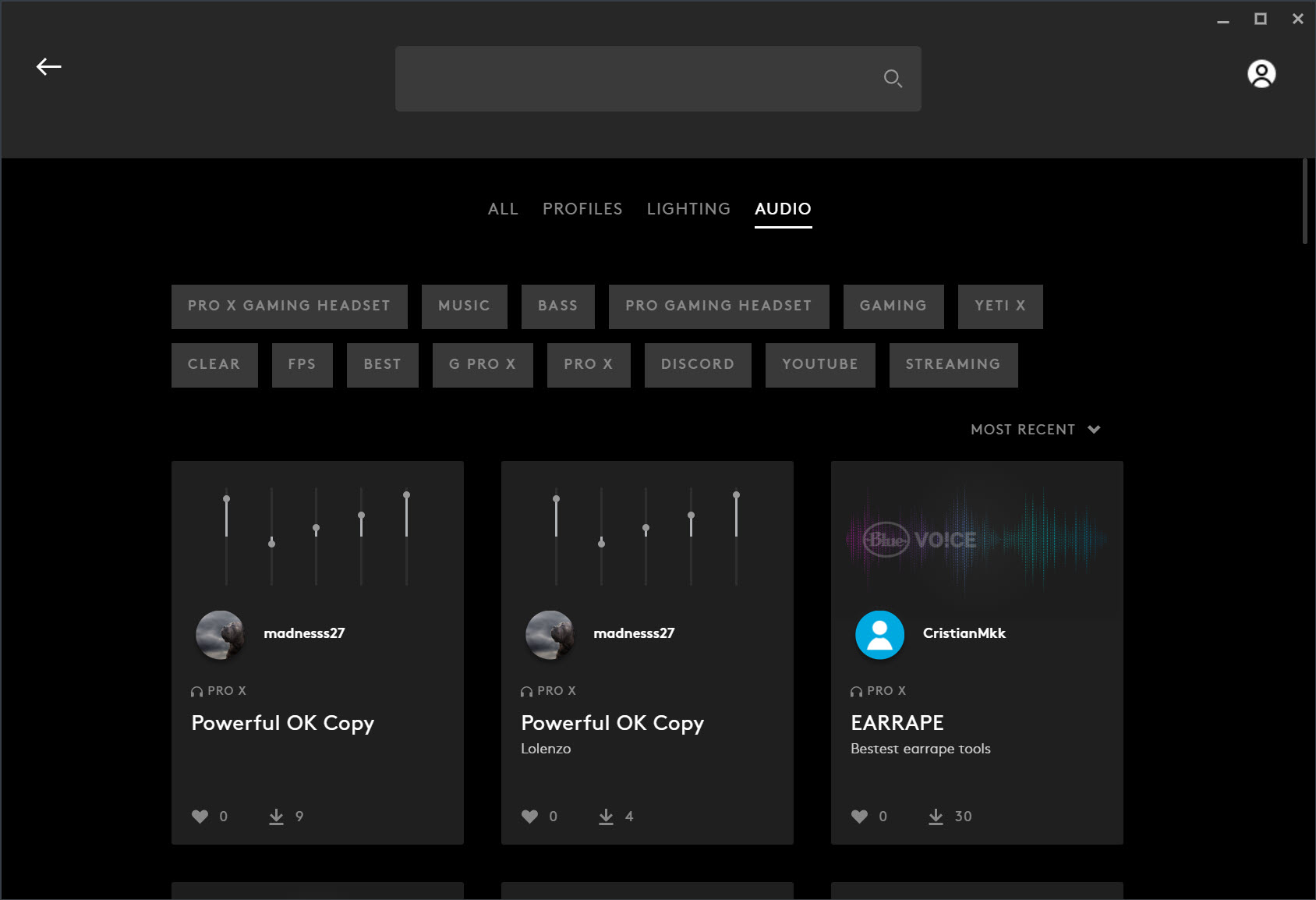
Headset owners get a full equalizer with presets and custom curves, surround processing where the hardware supports it, and sidetone control for hearing your own voice. The standout is Blue VO!CE on supported microphones, a processing chain of noise reduction, compression, de-essing, and EQ that turns a raw gaming mic into something broadcast-adjacent, with real-time preview while you tune it.
The streaming crowd gets direct integrations, sample-triggered soundboards and controls that talk to Streamlabs Desktop and its kin, so scene switches and clips can live on spare G-keys.
Webcam owners doing more than chatting will notice recording itself lives elsewhere, in a dedicated capture companion, with this software handling the device settings side.
Onboard memory, the escape hatch
The feature tournament players and multi-PC owners should know about is onboard memory mode. Profiles save into the device’s own storage, DPI stages, assignments, lighting, and the hardware then carries its configuration anywhere, working identically on machines that have never seen this software. Set it up once at home, and the mouse behaves at the tournament, the office, or the friend’s house with nothing installed.
It’s also the pragmatic answer to the software’s background weight. Configure, commit to onboard memory, and the launcher doesn’t even need to run for daily use, a workflow a surprising number of veterans settle into.
The reliability question, answered straight
Now the second half of the reputation. This software’s complaint file is real and consistent, slow starts, sessions where a device simply isn’t detected until a replug or restart, updates that occasionally loop, and a background footprint heavier than a settings panel seems to justify. Most installations behave, plenty never hiccup at all, but the pattern is common enough that pretending otherwise would insult the reader’s search history. The standard remedies are unglamorous and effective, a clean reinstall, letting the updater finish before judging, and the onboard-memory workflow above for anyone tired of negotiating.
Owners of older G-series gear have one more honorable option. The predecessor, Logitech Gaming Software, still configures the classic devices with a fraction of the weight, and a devoted minority stays on it precisely for that leanness. New hardware requires the new software, but the old guard’s loyalty tells you something true about both programs.
Conclusion
Logitech G HUB is unavoidable and, at its best, excellent. The owner of a G-series desk gets automatic per-game personalities, a synchronized light show, serious microphone processing, and the onboard-memory trick that makes all of it portable. When the software cooperates, it’s one of the more capable control panels in the peripheral world.
The temperament is the asterisk, and the honest advice is to configure thoroughly, commit to onboard memory, and let the software matter as little as possible afterward. Your hardware deserves the depth. Your patience deserves the escape hatch.
Pros & Cons
- Per-game profiles switch automatically as games launch
- Deep assignments with macros, G-Shift doubling, and app integrations
- LIGHTSYNC synchronizes effects, screen sampling, and audio across all devices
- Blue VO!CE microphone processing approaches broadcast polish
- Onboard memory carries full configurations to software-free machines
- Direct streaming integrations put scenes and clips on spare keys
- Recurring detection and startup complaints across its history
- Heavier background presence than a configuration tool warrants
- Occasional update loops that require patience or reinstalls
- Older devices lived lighter on the predecessor software
Frequently asked questions
The Logitech G gaming family, mice, keyboards, headsets, webcams, wheels, and streaming gear. Each connected device appears as a card with its full settings behind it.
Yes, that's its core design. Each game gets a complete profile of assignments, sensitivity, and lighting, applied automatically when the game launches and dropped when it closes.
Yes, if saved to onboard memory. Supported devices store profiles in their own hardware and behave identically on machines with nothing installed, which is the standard tournament preparation.
It's the software's most common complaint. Replugging the device, restarting the software, and letting any pending update complete resolves most cases, with a clean reinstall as the reliable last resort.
A microphone processing suite on supported mics, noise reduction, compression, and EQ with live preview, that noticeably upgrades voice quality for streams and calls.
Yes, the predecessor Logitech Gaming Software still runs the classic G-series gear with far less overhead, and remains a reasonable choice for hardware it supports.


