

LaunchBox
About LaunchBox
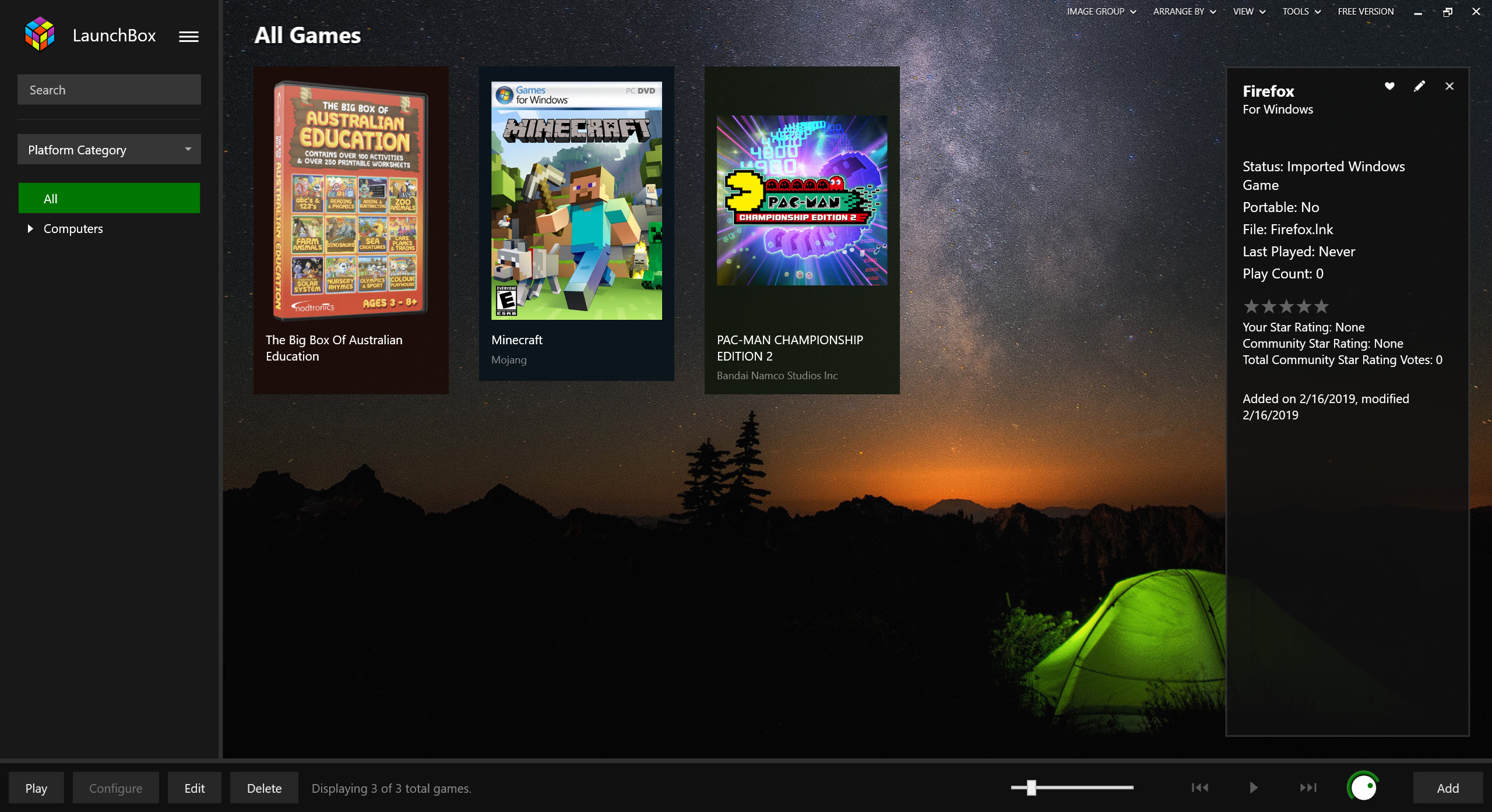
A games collection assembled over years lives in several places at once. Some titles are installed, some sit inside a digital storefront, and the older ones are files in folders waiting for whichever emulator understands them. LaunchBox gathers all of it into a single list where a game is a game regardless of where it came from.
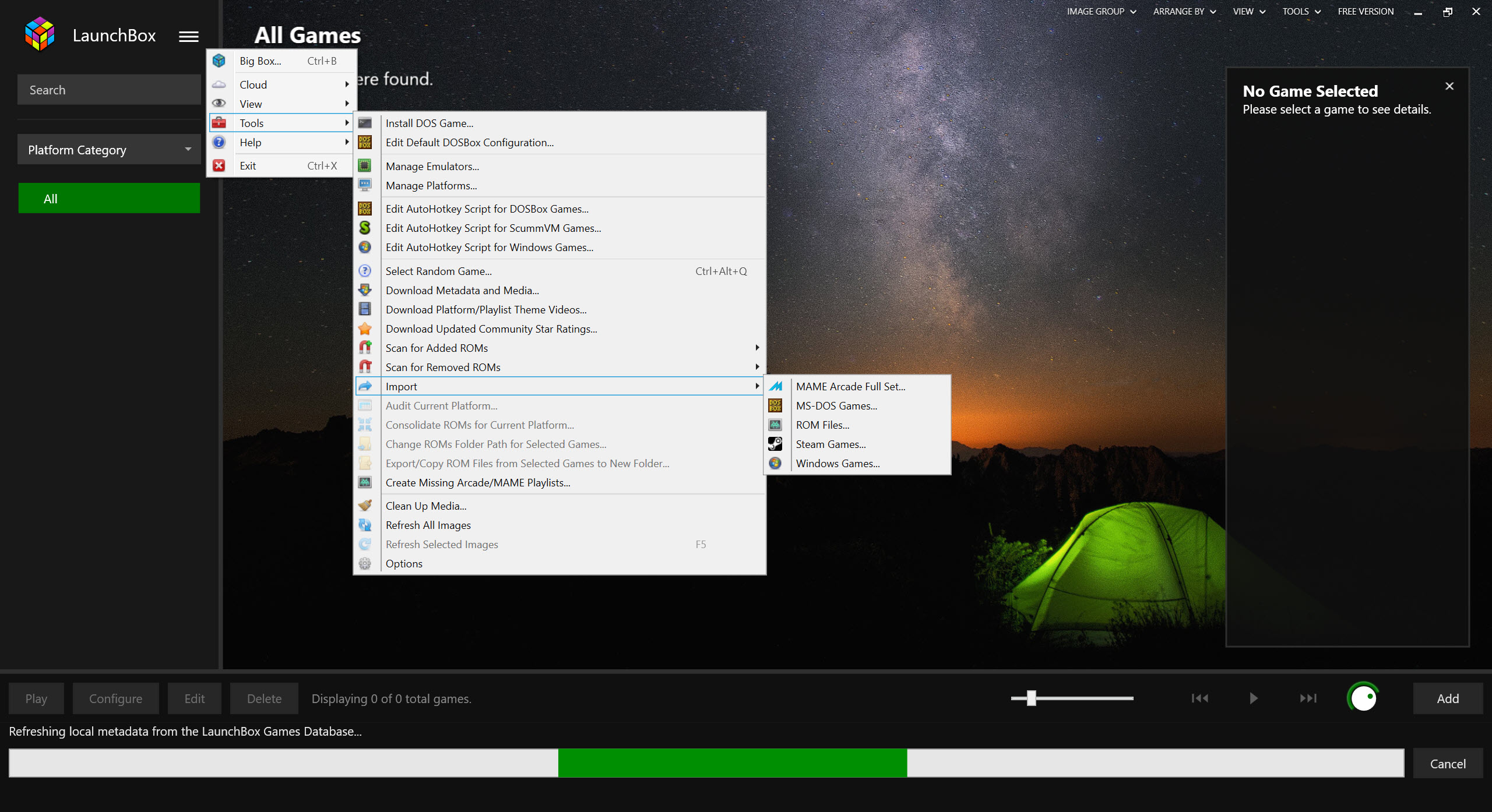
LaunchBox does the gathering with import wizards. Point one at a folder of files for a particular system, or let it read what a storefront has installed, and the titles appear in the library ready to launch.
That unification is the whole proposition, and everything else in the program exists to make the resulting list worth looking at.
The artwork is what turns files into a library
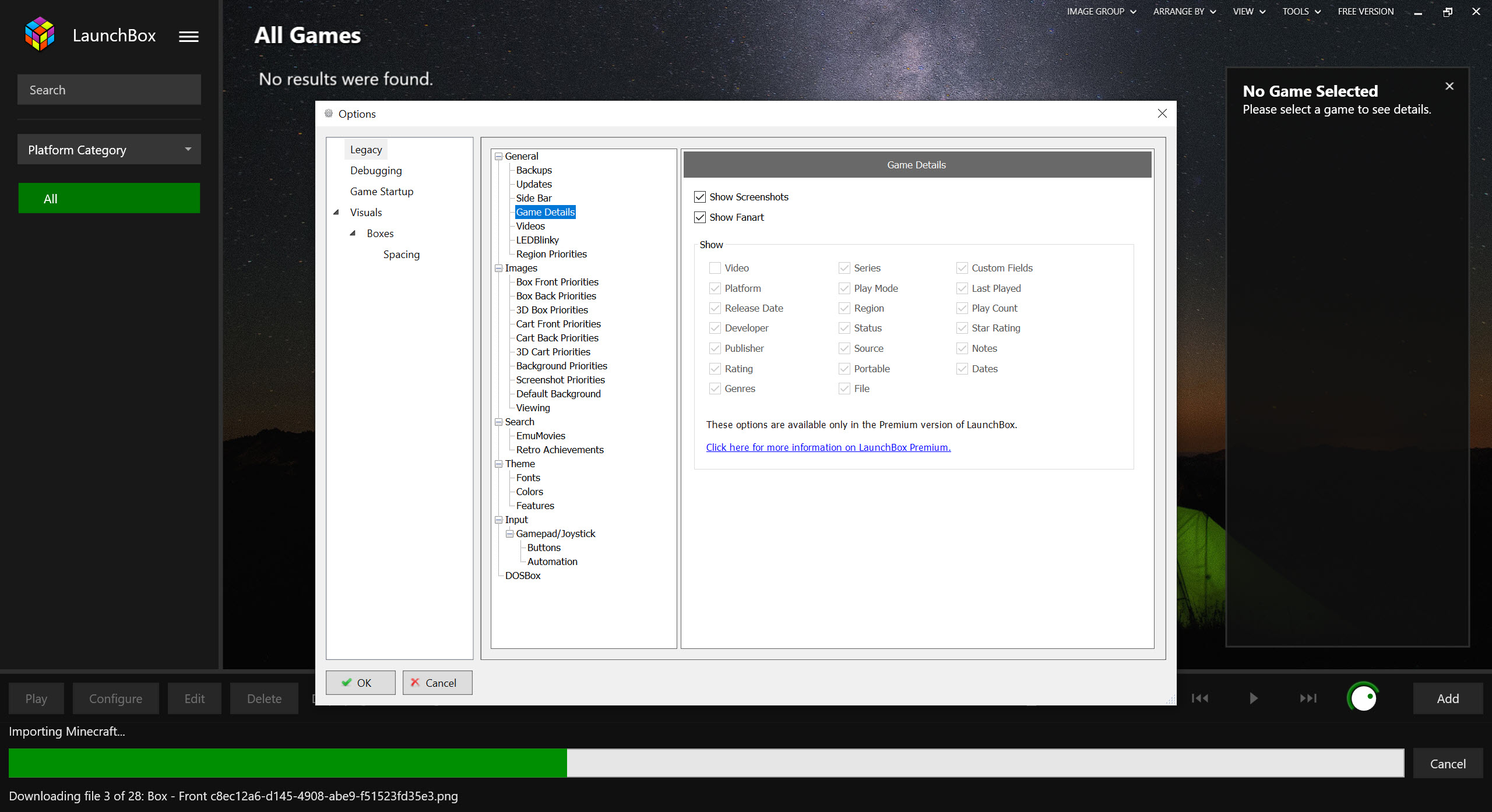
A folder of filenames is not a collection. LaunchBox pulls box art, screenshots, descriptions, short video clips from a community-maintained database, so what you end up with looks like a shelf rather than a directory listing.
The difference that makes is out of proportion to the effort. Browsing a wall of cover art brings back games you had forgotten owning, which is exactly what a folder of abbreviated filenames does not.
Matching is automatic and imperfect. Obscure titles, regional variants and files named by whoever created them get matched to the wrong entry or to nothing at all, and correcting those by hand is part of setting up any collection of size. The database is good and it is not telepathic.
Emulators are still your job
Here is the LaunchBox expectation to set correctly, because it is where people are disappointed. The program launches emulators and manages which one handles which system, including per-game overrides where one title needs different settings. It does not supply them, and it does not understand them for you.
Each emulator still has its own configuration, its own controller mapping and its own quirks, and getting a system running properly means learning that emulator. What this removes is the friction of remembering which program opens which file and hunting through folders to start something.
A console emulator of the kind it drives is the sort of thing you install separately and then point the library at, and the same applies for every system you want represented.
The big-screen mode, and where the paid line falls
The feature people most associate with this is the full-screen interface built for a television and a controller, with animated themes and no keyboard required. It is impressive, and it belongs to the paid tier.
That division matters when deciding what to install. The library, the artwork, the emulator management and the launching all work without paying. The living-room experience is the upgrade, and it is the reason most people who pay do so.
HyperSpin occupies the same territory as a front end built around that presentation from the start, with a considerably steeper setup and a devoted following of its own.
Controllers, playlists, statistics
LaunchBox controller support extends past launching. Pads are detected and configured with some automation, and the interface itself is navigable with one, which is what makes the whole arrangement work from a sofa.
Playlists and filters organise the library beyond the platform it came from, so a list of games you actually intend to finish, or everything from a particular year, sits alongside the automatic groupings.
Statistics accumulate quietly. Play time per title and when you last opened something turn out to be more interesting than expected once a library has been in use for a while. Where a controller is recognised badly rather than not at all, DS4Windows resolves it at the system level before the library ever sees it.
What it does not supply
Being unambiguous about this saves confusion. LaunchBox organises what you already have. It contains no games, no emulators and no files of any kind, and it does not fetch them.
The library is a catalogue and a launcher, and everything in it points at something already on your disk that you put there. For the systems you want represented, the emulators are separate downloads, and Project64 is one example of the sort of program that ends up registered inside it.
That also means the legality of what sits in your library is determined entirely by where those files came from, which is a question about your collection rather than about this software.
Conclusion
LaunchBox solves the problem of a collection that has outgrown the ways you acquired it. Bringing installed games, storefront libraries and decades of emulated titles into one artwork-driven list changes how you use a collection, because you browse it rather than remembering what is in it.
Two expectations should be right before starting. It organises rather than provides, so emulators and games remain your responsibility and the configuration of each emulator remains your problem. And the television interface everybody has seen in videos is the paid part, while the library underneath it is not.
Set a weekend aside for a large collection, correct the mismatched artwork as you go, and the result is worth considerably more than the sum of the folders it replaced.
Pros & Cons
- Installed games, storefront libraries and emulated titles appear in one list
- Import wizards handle folders of files and installed storefronts automatically
- Box art, screenshots, descriptions and video clips arrive from a community database
- Emulators are managed per platform with per-game overrides where needed
- Playlists and filters organise a collection beyond its original platforms
- Play time and last-played statistics accumulate without any effort
- Controllers are detected and the interface is navigable without a keyboard
- Metadata matching goes wrong on obscure titles and needs correcting by hand
- Emulators are neither supplied nor configured for you, only launched
- The full-screen television interface belongs to the paid tier
- Initial setup of a large collection is a project rather than an afternoon
- Nothing here provides games, so the library is only as good as what you own
Frequently asked questions
Neither. It catalogues and launches what is already on your machine, so every game and every emulator has to be obtained and installed separately before the library has anything to point at.
From a community-maintained database, matched automatically during import. Obscure titles and oddly named files get matched incorrectly or not at all, so expect to correct some entries by hand on a large collection.
No, that belongs to the paid tier. The library, the artwork, the emulator management and launching all work without it, and the controller-driven full-screen mode is the upgrade most people pay for.
It manages which emulator handles which system and allows per-game overrides, and each emulator still has its own settings and controller mapping to learn. The friction it removes is launching, not configuration.
Yes, and that is its main argument. Titles from a storefront, games installed conventionally and files run through emulators all appear in the same list with the same artwork treatment.


