

Freedom
About Freedom
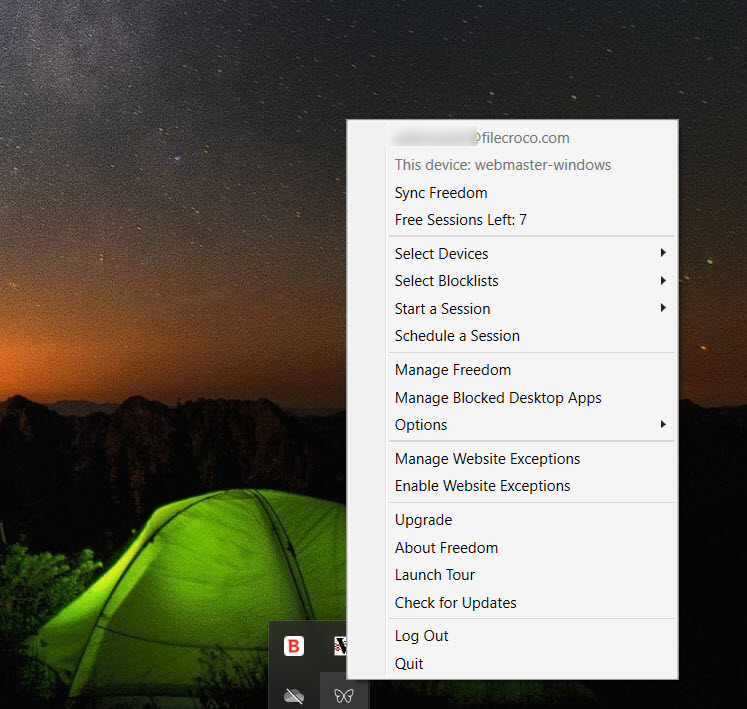
Freedom is a distraction blocker. It cuts off chosen websites and desktop programs for a session you define, from twenty minutes to a whole working day, and if you ask it to, the entire internet. Sessions can start now, at a scheduled time or on a recurring timetable. A locked mode removes the option of quitting early, which is the feature people install it for and the one they curse at four in the afternoon.
Everything runs from one account. The blocklists and schedules you set up on the PC apply to every other device signed in with the same account. The news site blocked on the desktop stays blocked on the laptop in the next room.
That is the main difference between this and the browser-only blockers, which stop at the browser they live in.
Blocklists, from one site to the whole internet
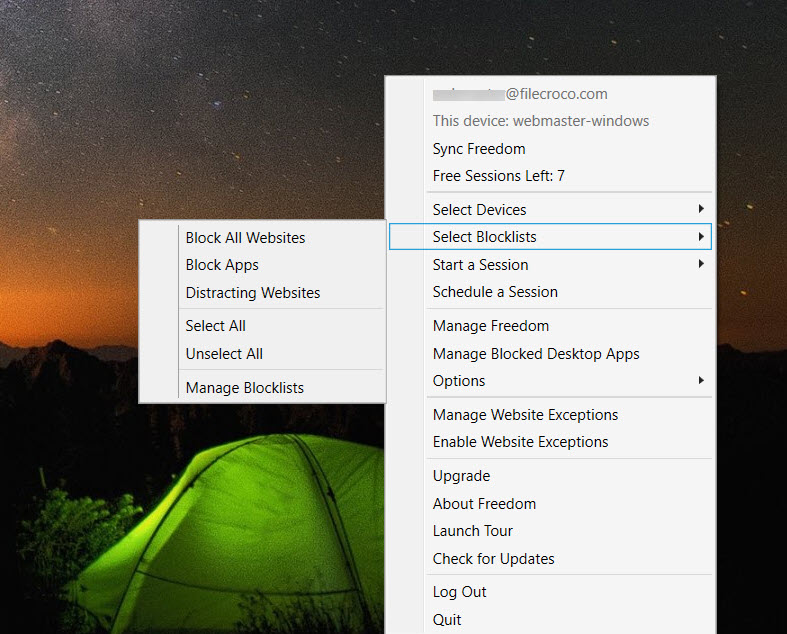
Blocklists are the raw material. Pick from preset lists covering social media and other time sinks, or build your own with any website you like, and keep as many lists as you need for different situations. A writing session might block everything social, while a study session blocks video sites and games. People who only want a quiet writing window can get part of the effect from a distraction-free text editor without blocking anything.
Desktop programs can be blocked as well as websites, so a game launcher or a chat client disappears for the duration. The nuclear option blocks all internet access, and offline programs keep working, which suits drafting a document or working through a spreadsheet.
Website exceptions reverse the logic on the desktop, allowing only the handful of sites you name and blocking everything else, handy when work lives in a web app but the rest of the web does not.
Sessions and locked mode
A session in Freedom is a blocklist plus a duration. Start one on the spot, set it for later in the day, or create a recurring schedule, such as social media blocked every weekday from nine to one. Recurring sessions are what turn the tool from an occasional emergency measure into a routine, because the block arrives whether or not you felt like starting it.
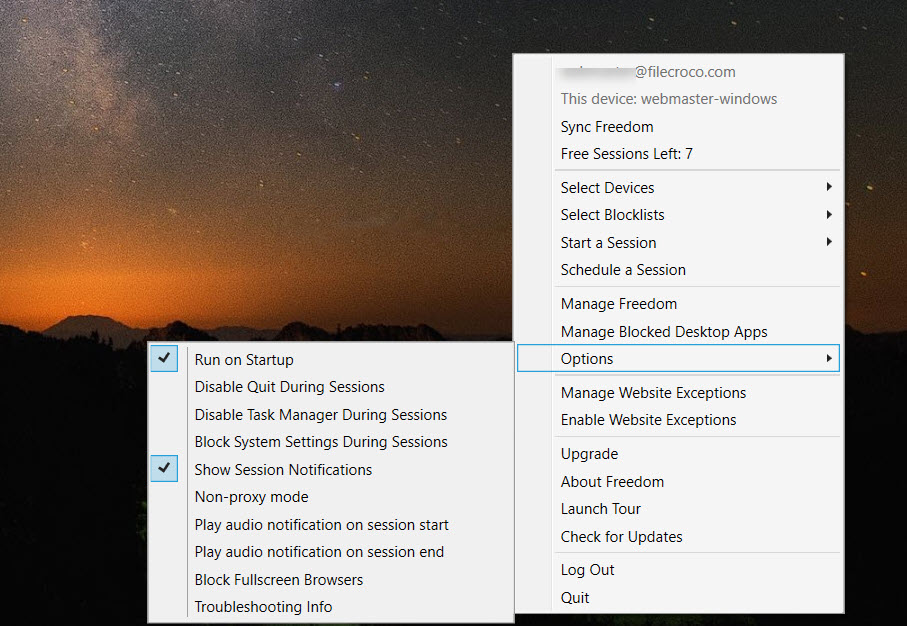
Locked mode is the commitment device. Switch it on and an active session cannot be ended, its blocklist cannot be edited and the program cannot be quit until the timer runs out. A newer session break feature allows a five-minute pause without ending the session, which takes some of the edge off.
Think carefully before locking a long session, because support cannot unlock it either, and that is precisely the point.
Focus sounds and browser extras
Freedom also plays ambient audio during sessions, with café chatter, nature recordings, office noise and music built for concentration, plus guided pomodoro tracks that structure work and rest. It is a small thing that many users keep on even outside sessions.
Session history records every block with optional notes, so you can see how many focused hours a week actually happened. Three browser extensions complete the Freedom set. Pause inserts a short delay before a distracting site loads, Insight shows how much time goes to each site, and Limit sets daily caps on specific sites. The extensions work on the browser alone, while the main program works at the network level across the whole machine.
Blocking a few websites by hand is also possible through a hosts file editor, though without timers.
Where it falls short
The blocking in Freedom runs through a local filter on the PC, and users do report sessions that failed to block on one device while working on another, especially after system updates. Checking that the program is running and signed in before relying on a session is a good habit. For a locked session that must not fail, a test run of a few minutes first is worth the time.
It also needs an account and an internet connection to manage sessions, so it is not a tool for a machine that stays offline. Anyone comfortable with firewall rules can block individual programs permanently with a small rule-based firewall, with no timer and no sync.
Conclusion
Freedom suits people whose attention keeps leaking into the same sites and apps and who want blocks that run on a schedule and cannot be talked out of. Locked mode, recurring sessions and the account-wide sync make it more than a browser extension.
It depends on an account, and the enforcement is not flawless on every machine. For those who need the commitment device rather than the willpower, it remains one of the most complete tools of its kind.
Pros & Cons
- Blocks websites, desktop programs or the whole internet for a set session
- Scheduled and recurring sessions run without willpower
- Locked mode prevents ending or editing a session early
- One account applies blocklists across every signed-in device
- Website exceptions allow only the sites you need
- Focus sounds and session history support the habit
- Needs an account and an internet connection to manage sessions
- Sessions occasionally fail to enforce on one device
- A locked session cannot be undone by anyone, including support
Frequently asked questions
Normally yes, after the first minute. With locked mode enabled the session cannot be ended, edited or quit until the timer expires.
Both on the PC. Blocklists can include installed programs, websites, or everything online at once.
Yes. Website exceptions on the desktop allow only the sites you specify and block all others for the session.


