

DWG TrueView
About DWG TrueView
DWG TrueView is the official way to open DWG drawings without owning AutoCAD, and that word official carries the whole product. DWG files render here through the same engine that created them, so linetypes, hatches, fonts, and layouts appear exactly as the original author saw them, with none of the small discrepancies that third-party viewers introduce and engineers argue about later. For contractors, clients, and managers who receive drawings but never draw, that fidelity is the point.
The feature list is deliberately short. View, measure, and print DWG, DXF, and DWF files, and batch-convert DWG files between format generations. No editing exists anywhere, not a single line can be moved, which makes the program safe to hand to anyone without fear of accidental changes making it back into a project.
The cost of the pedigree is weight. This viewer installs like the full CAD package it descends from, takes over a gigabyte of disk, and starts up with matching enthusiasm. Whether that trade makes sense depends entirely on how much the pixel-perfect rendering matters to your work.
Viewing drawings the way they were drawn
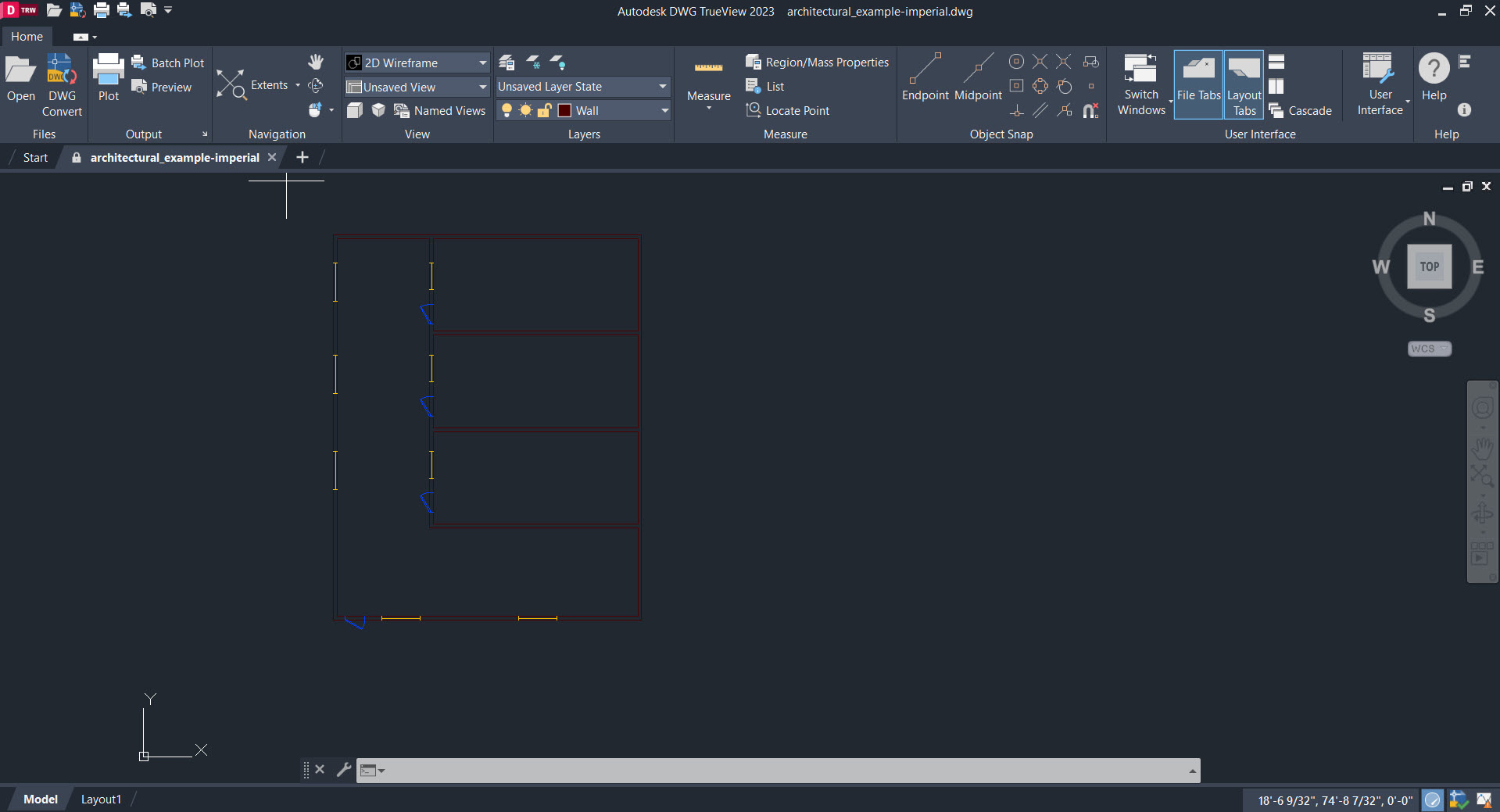
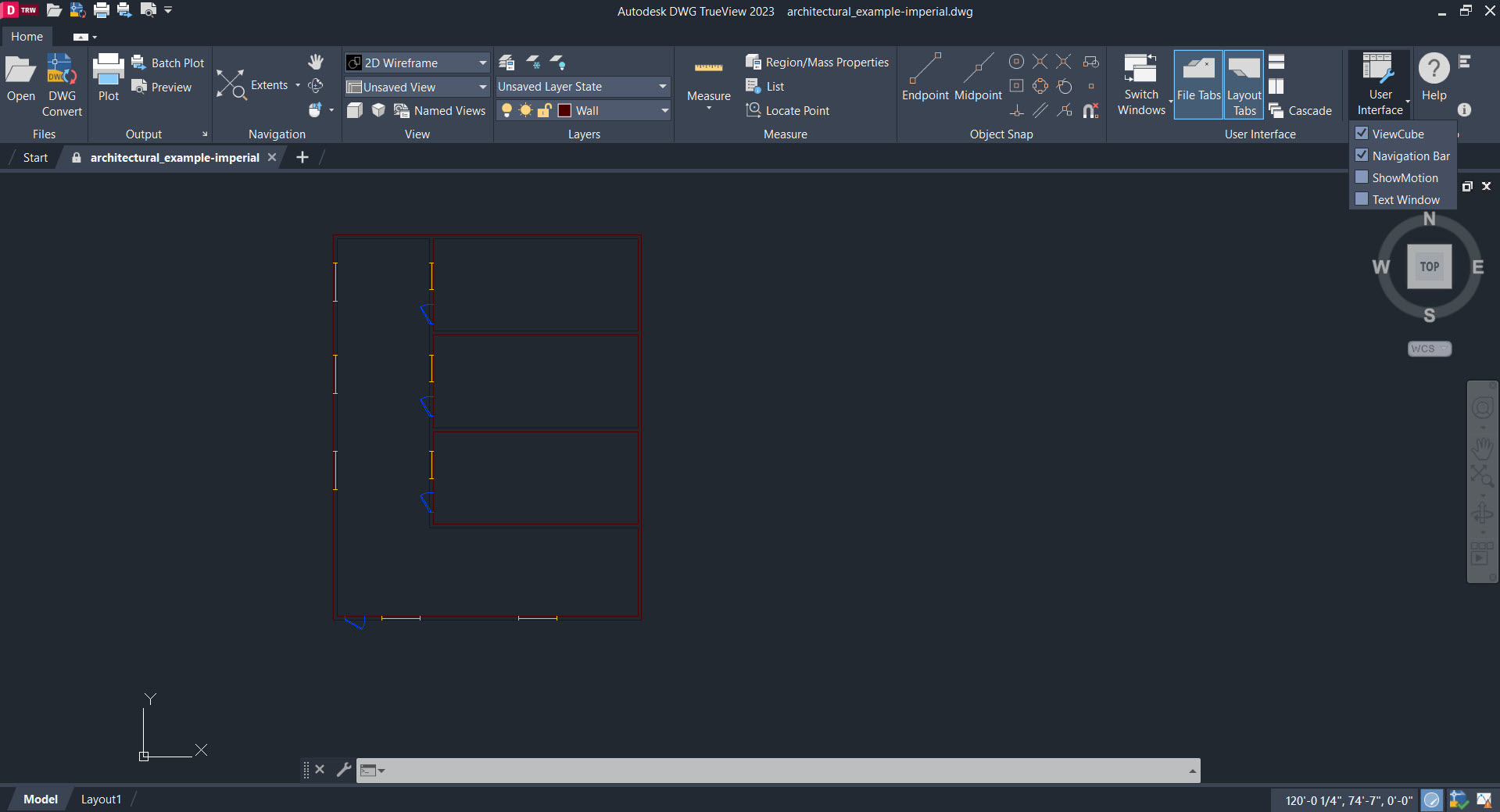
Opening a drawing lands you in a familiar dark workspace with the ribbon reduced to viewing essentials. Layers switch on and off individually, which turns a cluttered construction document into readable slices, structure only, then electrical, then plumbing. Layouts and paper space tabs appear as authored, named views jump to saved positions, and 3D models orbit freely for inspection from any angle.
The fidelity shows in the details other viewers fumble. Custom fonts display through the same font handling as the source program, complex hatches draw correctly instead of approximately, and line weights preview the way they will print.
Anyone who has watched a bare-bones viewer mangle a title block understands why review workflows standardize on this one, since a measurement or a note misread from a badly rendered drawing costs real money on site.
Measuring and printing, the everyday work
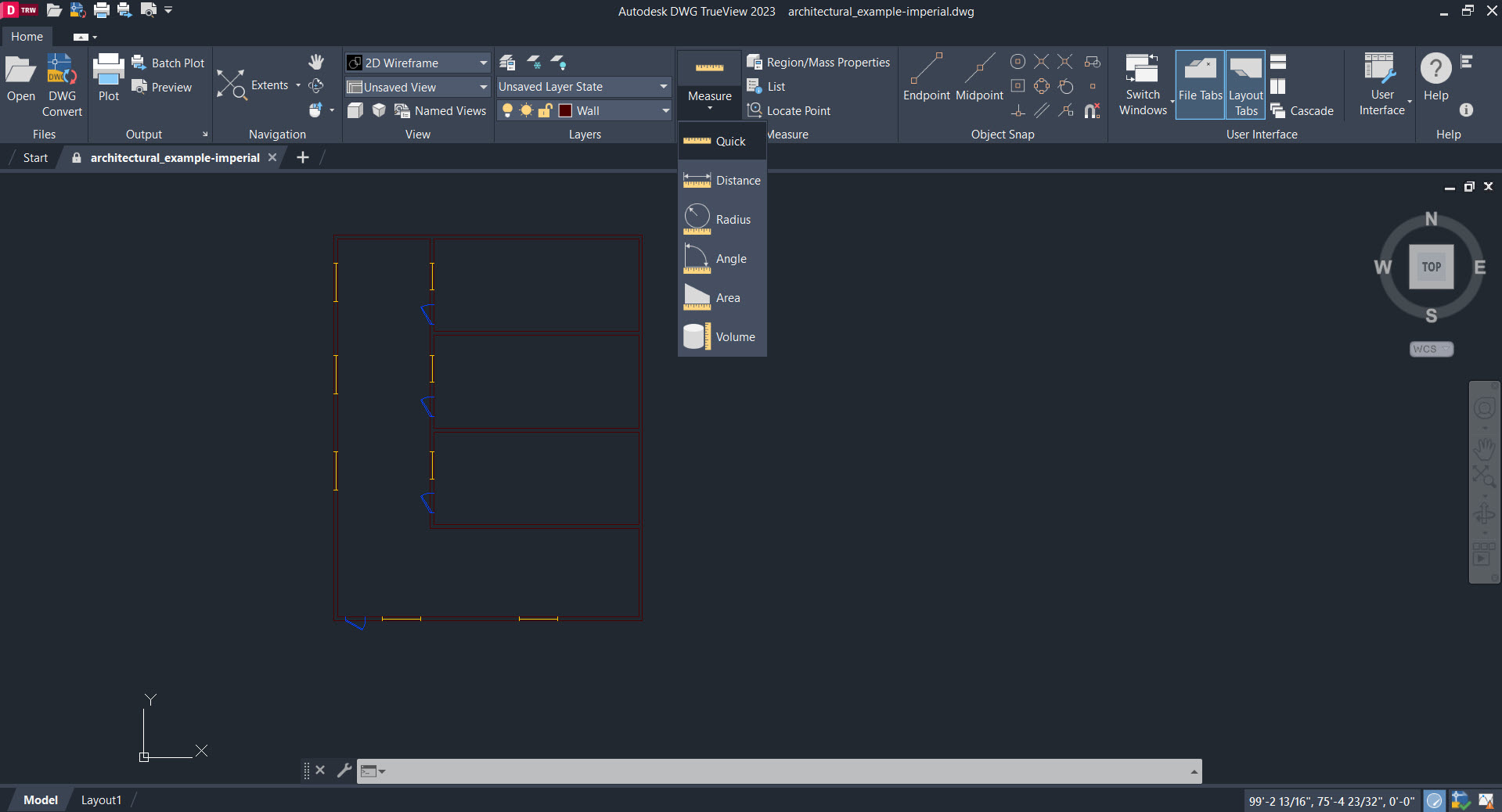
The measure tools snap to the drawing’s actual geometry, endpoints, midpoints, intersections, so distances and areas come from the model’s precision rather than from eyeballing pixels. Checking a dimension the author didn’t annotate takes seconds, and area takeoffs for a room or a plot work directly on the polylines.
Printing behaves like the full CAD environment, with plot scales, paper sizes, and plot styles honored from the file. The most common everyday job, producing a PDF from a DWG, runs through the same plot dialog, and the output respects the layout’s intended scale rather than stretching to fit.
It’s unglamorous, and it’s the reason the program sits installed in thousands of offices that never draw a line.
DWG Convert, the rescue tool hiding inside
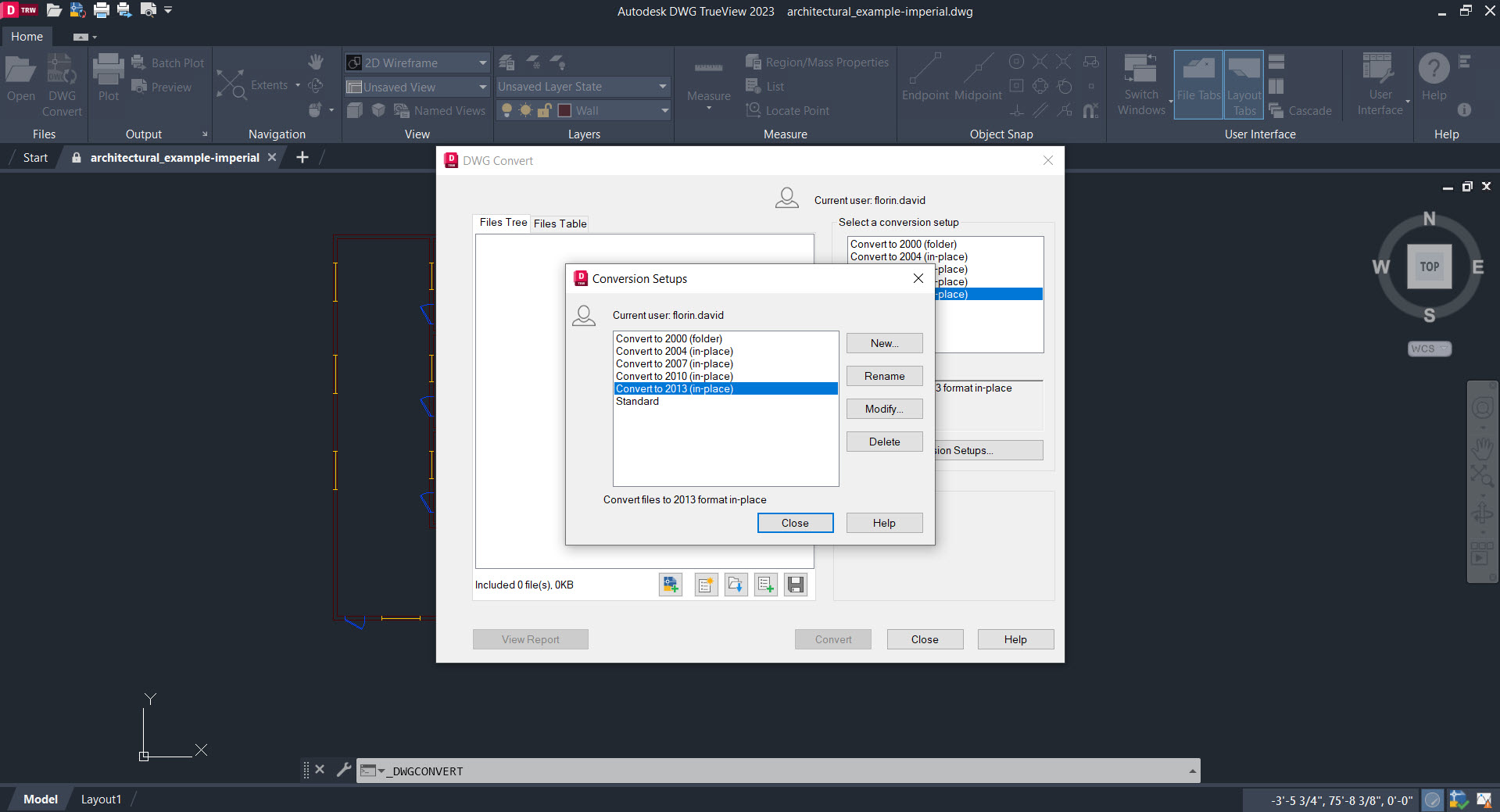
The second product inside DWG TrueView solves a chronic industry problem. DWG format generations change, and an office running an older AutoCAD release cannot open files saved in newer generations, a wall every firm hits when a partner upgrades first. DWG Convert translates files to older format generations, individually or in batches of hundreds, with settings saved as reusable setups.
The batch angle matters in practice. A consultant delivering a project to a client on older software converts the entire folder in one pass, and the setup replays next month with two clicks. Along the way the converter can also purge and audit files, which quietly fixes a share of the corrupted-drawing complaints that circulate in any office.
The weight, and what it refuses to do
Now the complaints, which are consistent and fair. The installer is enormous for a viewer, startup is slow on modest hardware, and the program demands more memory than the just-let-me-see-it use case suggests. People opening one drawing a month feel the overhead every single time.
The absence of editing is a design decision, not a gap, but the absence of markup stings more, since reviewers often want to cloud and comment rather than change geometry. Those needs escalate to an actual CAD program, and a capable one like DraftSight covers editing DWG files directly.
Modeling and parametric work live further afield in tools like FreeCAD, which also reads DWG geometry for reuse rather than for faithful presentation.
Conclusion
DWG TrueView earns its place with everyone who receives drawings professionally, contractors checking dimensions, clients reviewing progress, and offices that need newer files translated for older AutoCAD seats. When the question is whether the drawing looks exactly as its author intended, no third-party viewer answers with the same authority.
Casual users who peek at a DWG twice a year will resent the gigabyte and the wait, and reviewers who need markup must look elsewhere. As the reference viewer and the format-generation translator, it remains the standard for a reason.
Pros & Cons
- Renders DWG files with reference fidelity, exactly as authored
- Layer control, layouts, and named views work as in the source program
- Measure tools snap to true geometry for reliable dimensions and areas
- DWG Convert batch-translates files for older AutoCAD releases
- View-only design makes it safe to distribute across a whole office
- Massive installation and slow startup for a viewing-only tool
- No editing and, more painfully, no markup or commenting tools
- Heavier on memory than slimmer third-party viewers
- Overkill for people who only occasionally peek at a drawing
Frequently asked questions
No, it's strictly a viewer. You can control layers, measure, and print, but changing geometry requires an actual CAD program.
Use the plot dialog, choose the PDF output option, and keep the layout's scale settings. The result preserves line weights and scale instead of stretching the drawing to the page.
It translates DWG files between format generations, so drawings saved in a newer generation open in older AutoCAD releases. It processes whole folders in batch and saves conversion setups for reuse.
It's built on the same engine as the full CAD package, which is what guarantees the faithful rendering. The fidelity and the weight come from the same place.
Yes, the measure tools snap to the drawing's real geometry, so results reflect the model's precision. Distances and areas come from the drawn objects, not from screen estimation.


