

Electrum

 (6 votes, average: 4.17 out of 5)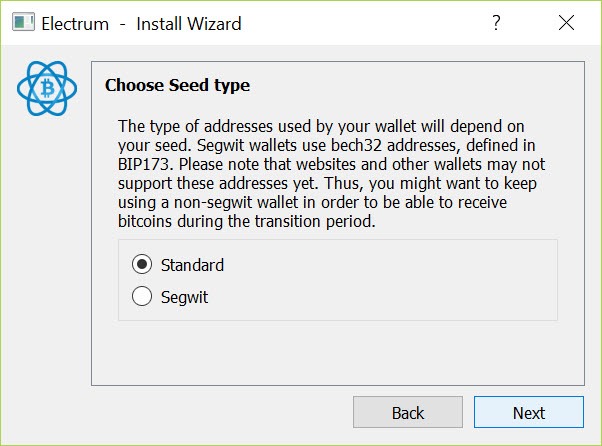
About Electrum
Electrum is a Bitcoin wallet that skips the part everyone dreads. Instead of forcing you to download the entire blockchain before you can do anything, it connects to servers that hold that data and verifies your transactions through them. The result is a wallet that opens in seconds and runs comfortably on modest hardware, while still giving you the kind of control over your coins that lighter, app-store wallets tend to hide.
At its core, the application manages your private keys and lets you send and receive Bitcoin, but the interesting part is how much it trusts you with. You set your own transaction fees. You hold your own recovery seed.
You can build a wallet that exists offline and never touches the internet, and pair it with one that only watches. For people who want real custody of their funds without running a full node, this is one of the most established answers around.
It is not the wallet for someone who wants three taps and a friendly cartoon. It is the wallet for someone who wants to understand and steer what their money is doing.
How does a lightweight wallet stay secure?
The obvious worry with a wallet that does not store the blockchain is whether it can be trusted to tell you the truth about your balance. Electrum handles this with simplified payment verification, which checks your transactions against the proof-of-work chain without holding the whole thing. It asks servers for the data it needs and verifies it cryptographically, so a malicious server cannot lie to you about whether a payment confirmed.
Your private keys never leave your machine. They are generated locally, encrypted with a password you set, and used to sign transactions on your side before anything goes out. That separation is the whole security model.
The servers see your addresses and broadcast your signed transactions, but they never see the keys that control the coins. If you want an even harder wall, you can run the wallet on a permanently offline computer, which leads to one of its best features.
Cold storage and watch-only wallets
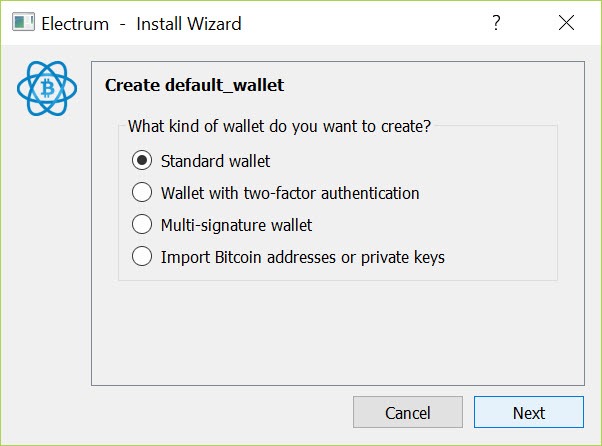
Here is where Electrum pulls ahead of most casual wallets. You can split a wallet into two halves. One lives on an offline machine that holds the private keys and never connects to anything. The other is a watch-only wallet on your everyday computer that can see incoming payments and prepare transactions but cannot sign them.
The flow works like this. You create an unsigned transaction on the online watch-only side, move it to the offline machine (by USB stick or even a QR code), sign it there where no attacker can reach the keys, then carry the signed transaction back to broadcast it. Your keys never touch an internet-connected device. For holding meaningful amounts of Bitcoin, this is the kind of setup that serious users build, and the wallet supports it natively rather than as some bolted-on afterthought.
If you are comparing approaches, the full-node route taken by Bitcoin Core gives you maximum independence at the cost of storage and sync time, while this wallet trades a sliver of that independence for speed and the slick cold-storage workflow. Different tools, different priorities.
The seed phrase and recovery
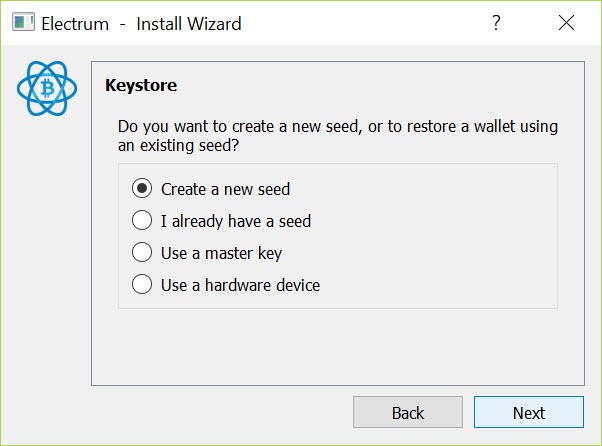
When you first create a wallet, Electrum hands you a recovery seed, a sequence of words that encodes every key the wallet will ever generate. Write it down and store it safely, because that phrase alone can restore your entire wallet on any compatible software, even if your computer dies, gets stolen, or falls in a lake.
This deterministic approach means you back up once, at the start, and never need to fuss with repeated wallet backups as you generate new addresses. The seed covers all of them, past and future.
It is a clean system, but it puts the responsibility squarely on you. Lose the seed and forget the password, and there is no support line that can recover your coins. That is the trade you accept for holding your own keys instead of trusting a custodian.
Fees, addresses, and everyday control
For day-to-day use, the application gives you levers that simpler wallets bury. You can set custom transaction fees, which matters when the network is congested and you want to decide between paying more for speed or waiting to save money. There is fee bumping for transactions stuck in limbo, so a payment you sent too cheaply does not sit forever unconfirmed.
It supports modern address formats for lower fees, lets you label transactions for your own bookkeeping, and offers multisignature wallets where several keys must approve a spend, useful for shared funds or extra security.
You can also plug in a hardware wallet so the keys live on a dedicated device while you use this software as the interface. Compared with a streamlined mobile-style client like BitPay, the trade is clear. You give up a little hand-holding and gain a lot of control.
Conclusion
Electrum suits the user who wants genuine control over their Bitcoin without the storage burden and sync wait of a full node. The cold storage workflow, the single-seed recovery, the custom fees, and the hardware wallet support all point at the same audience. These are people who take self-custody seriously and are willing to learn a few concepts to get it.
It is not the gentlest first wallet, and the plain interface will not win any design awards. But that plainness comes with substance. If you want a fast, capable wallet that hands you the keys (literally) and trusts you to manage them, this remains one of the most dependable choices for doing exactly that.
Pros & Cons
- Opens instantly without downloading the full blockchain, running on modest hardware
- Simplified payment verification keeps it secure without trusting servers blindly
- Native cold storage with offline signing and watch-only companion wallets
- Single recovery seed restores the entire wallet on any compatible software
- Custom fees, fee bumping, multisig, and hardware wallet support for real control
- Steeper learning curve than tap-and-go consumer wallets
- Relies on servers for blockchain data rather than full independence
- No recovery path if you lose both your seed and your password
- Interface is functional and plain rather than polished or beginner-friendly
Frequently asked questions
A full node downloads and verifies the entire blockchain, which takes large storage and long sync times. Electrum uses simplified payment verification to check transactions against servers instead, so it is fast and light while still verifying your payments cryptographically.
As long as you have your recovery seed, you can restore the whole wallet on a fresh install or other compatible software. If you lose both the seed and your password, the coins cannot be recovered, since no one else holds your keys.
Yes. You can run it on an offline machine that holds your keys and signs transactions, paired with a watch-only wallet online that prepares them. The keys never touch an internet-connected device, which is its cold storage setup.
Yes. You can set custom fees to balance speed against cost, and bump the fee on a transaction that is stuck unconfirmed so it gets picked up sooner.
Yes. It integrates with hardware wallets so your private keys stay on the dedicated device while you use the software as the interface for sending, receiving, and managing addresses.


