

League of Legends
About League of Legends
Two teams of five people try to destroy each other’s base. That sentence covers the whole objective of League of Legends, and everything else is the enormous amount of detail between starting and achieving it.
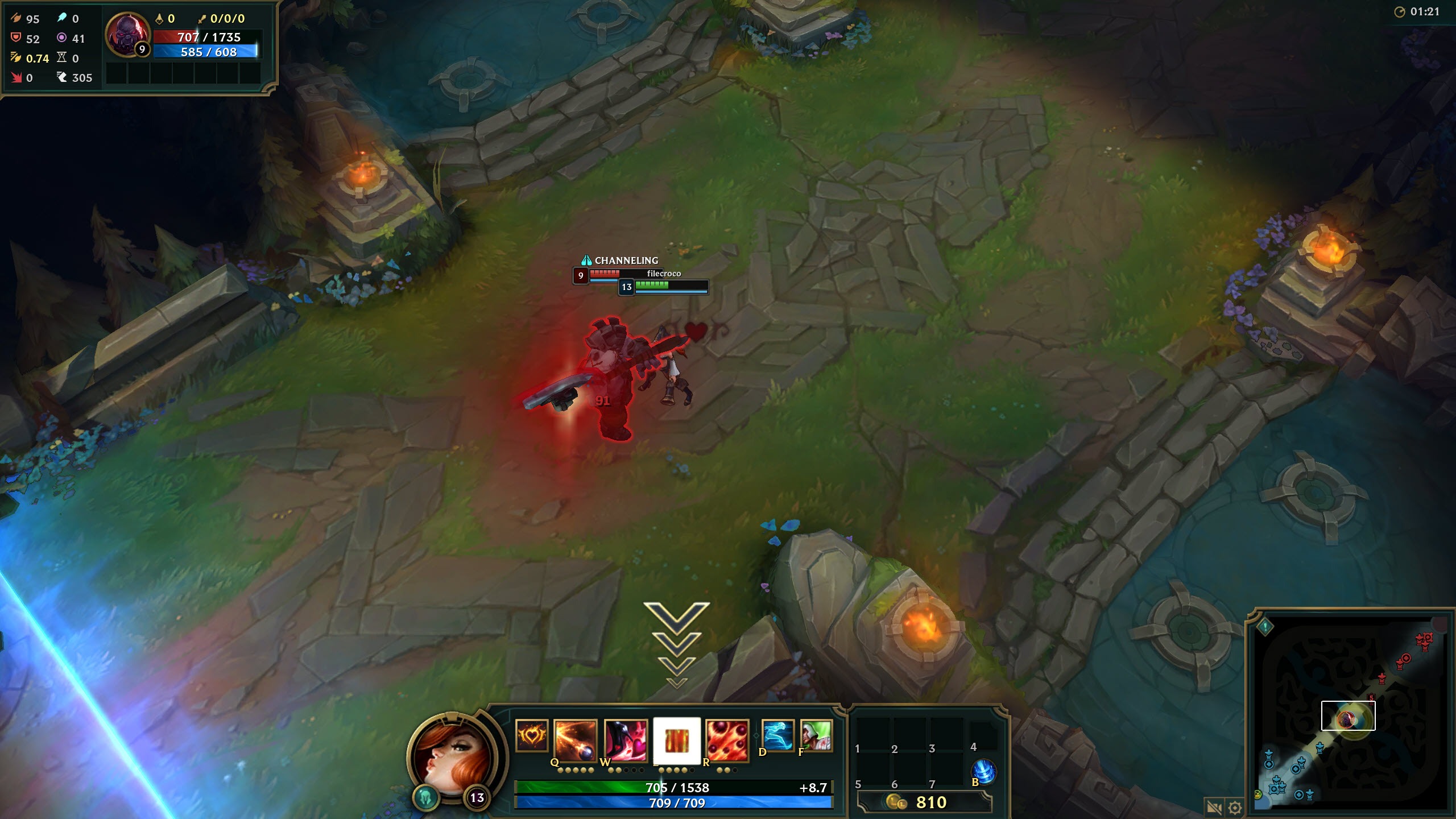
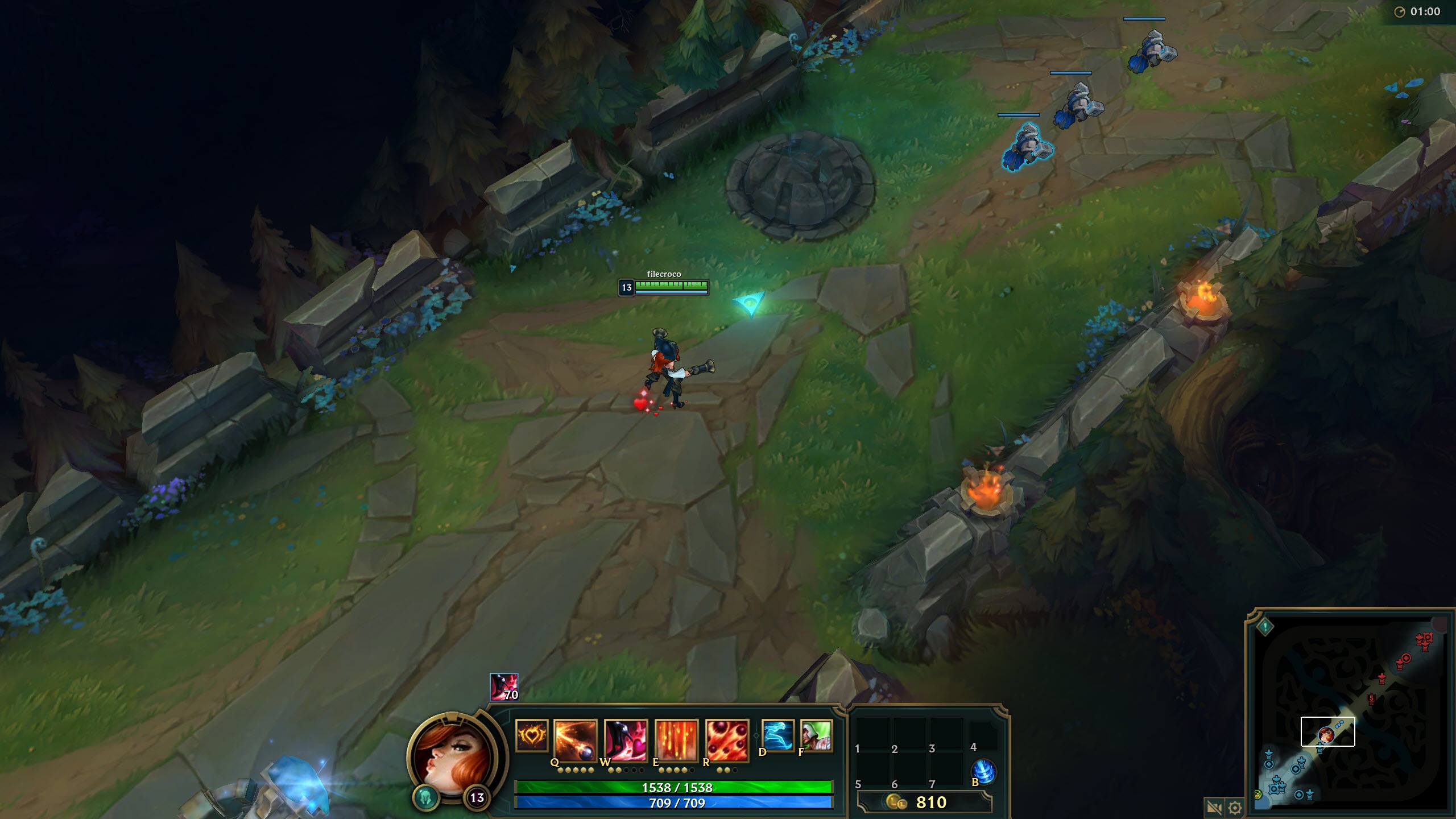
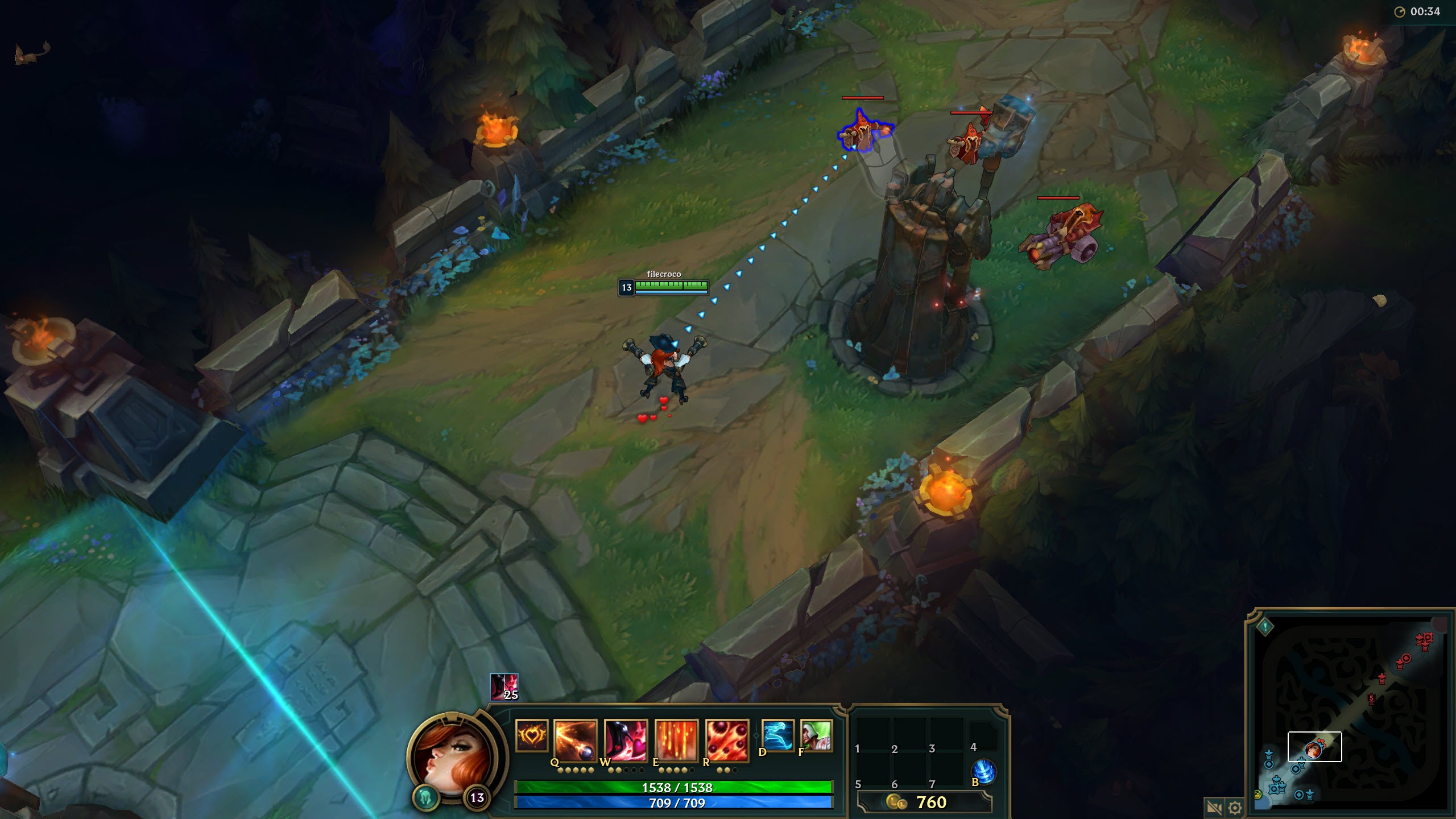
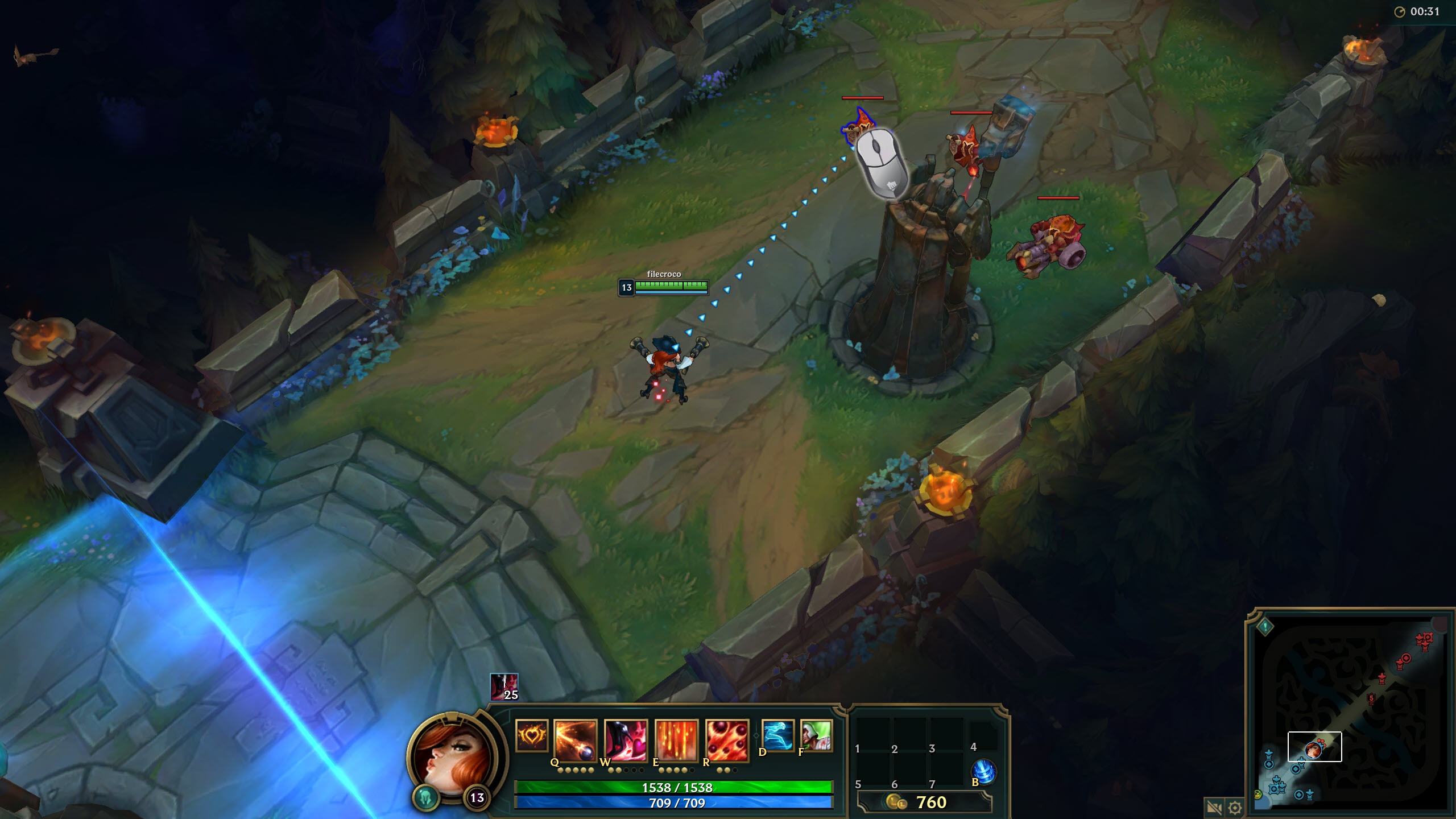
The League of Legends battlefield is fixed. Three lanes run from one base to the other, a wooded area sits between them, and each lane is guarded by towers that shoot anything hostile coming close. Waves of small computer-controlled units march down the lanes continuously, giving both sides something to fight over from the first minute.
Winning means pushing through those lanes, taking the towers down, and reaching the structure at the centre of the enemy base. Getting there takes most of an hour and is opposed the entire way.
Every match begins at zero
Here is the League of Legends decision that surprises people arriving from other games. Nothing carries over.
Whatever you achieved yesterday, your character starts each match weak, with a basic ability and no equipment. Power is built during the match, by killing units and opponents to earn gold, spending that gold on items, and gaining levels that improve your abilities.
Forty minutes later that same character is enormously more capable, and when the match ends all of it is gone. The next one starts from the beginning again.
That structure is deliberate and it is why the game rewards decision-making rather than accumulation. Nobody wins because they played more last month, which is a rarer arrangement than it sounds.
Five positions with different jobs
A League of Legends team divides into roles by where you go and what you are responsible for, and understanding them is most of understanding why a team loses.
Two lanes are held by a single player each. The middle lane is held by one. The remaining lane holds two, being a character who becomes devastating with enough gold and a partner protecting them while that happens. The fifth player works the wooded area between lanes, killing the creatures there for gold and appearing in lanes unexpectedly to create advantages.
Those jobs are different enough that being competent at one says little about the others. Somebody excellent in the middle lane can be badly out of their depth in the wooded area, because the skills involved barely overlap.
Coordinating any of it needs voice, and Discord is where the arrangements happen for anybody playing with people they know rather than with strangers.
Learning what can be done to you
Here is the real League of Legends curve, longer than newcomers expect for a reason nobody warns them about.
Learning your own character is quick. A few matches and you know your abilities, their timing and roughly what they cost.
Learning everybody else’s is the actual task. The roster is enormous, each entry has several abilities, and being defeated usually means somebody used something you did not know existed. Knowing which opponent can close a gap instantly, which can escape a certain death, and which becomes unstoppable if allowed to reach a particular item is the knowledge that separates players, and acquiring it takes months rather than weeks.
That is the honest description of the commitment. The controls take an evening and the knowledge takes a year.
The time each match demands
This deserves stating plainly, because it decides whether League of Legends fits your life.
A match cannot be paused. It cannot be left without penalty, and leaving harms the four people relying on you as well as attracting a sanction. Once it begins you are present until it resolves, which is typically well over half an hour and sometimes considerably more.
That makes it a poor fit for anybody who plays in fifteen minute gaps. It is not a game you dip into, and treating it as one produces either abandoned matches or a great deal of frustration.
Performance matters for the same reason. Frame rate problems in a match you cannot leave are worse than in one you can, and a monitoring overlay showing frame rate and temperature during play identifies whether the machine or the connection is at fault.
What spending money changes
Being clear about this is worth doing, because the arrangement is better than the category’s reputation suggests.
League of Legends costs nothing to play. Money buys appearances for characters, and it buys access to characters you have not yet unlocked through play. It does not buy statistics, abilities, advantages or anything affecting the outcome of a match.
Two players of equal skill meet on equal terms regardless of what either has spent, which is a genuine design commitment rather than marketing. What money saves is time, since the roster can be unlocked by playing, slowly.
For anybody whose machine struggles, Razer Cortex closes background processes before a match, which is a modest gain and occasionally the difference on older hardware.
Conclusion
League of Legends has held an enormous audience for a long time because the underlying design is sound. Each match starts equal, decisions matter more than accumulated progress, the five roles demand quite different abilities, and the roster is deep enough that the game keeps changing for years.
Understand what it asks before starting. Matches are long and cannot be interrupted, the knowledge required takes months rather than weeks, and the outcome depends on four other people as much as on you. If those conditions suit how you play, very little else offers the same depth for nothing. If they do not, no amount of quality in the design will make it fit.
Pros & Cons
- The objective is simple to understand even though the execution is not
- Every match starts equal, so nobody wins through accumulated progress
- Five distinct roles, each demanding a different set of skills
- An enormous roster keeps matches varied over years rather than months
- Purchases are cosmetic or unlock characters, never competitive advantage
- Costs nothing to start, with the full roster reachable through play
- Matches cannot be paused or left, and run well over half an hour
- The knowledge required takes months to acquire, not weeks
- Being defeated by an ability you did not know existed is routine early on
- Team-dependent, so individual performance does not decide the outcome
- Competitive matchmaking produces a well-documented reputation for hostility
Frequently asked questions
Destroying the structure at the centre of the opposing base. Reaching it means pushing along one of three lanes, taking down the towers guarding each, and doing so against five people trying to prevent it.
No, and that is deliberate. Every character starts each match weak and unequipped, building power through gold and levels within that match alone. Nothing accumulated is retained afterwards.
Typically well over half an hour and sometimes considerably longer. It cannot be paused and leaving carries a penalty, so it is a commitment rather than something to fit into a gap.
Appearances for characters and access to characters not yet unlocked through play. It buys nothing affecting the outcome of a match, so two players of equal skill meet on equal terms.
The controls take an evening. Learning what every other character can do to you, which is the knowledge that actually decides matches, takes months of regular play.


