

Debloater
About Debloater
Debloater is a desktop tool for silencing the apps a phone or tablet ships with and will not let you remove. Carrier extras, duplicate galleries, a second browser nobody asked for, the shopping app that keeps sending notifications. Connect the device over USB, let the program read its package list, tick what should go quiet, and apply.
The key word is quiet rather than gone. Instead of deleting system apps, which is risky and on most devices impossible without root, the tool blocks or disables them. They stop running, stop updating, vanish from the app drawer and stop nagging, yet remain on the device, so every change can be reversed with a single click if something turns out to matter after all.
Connect, read, tick, apply
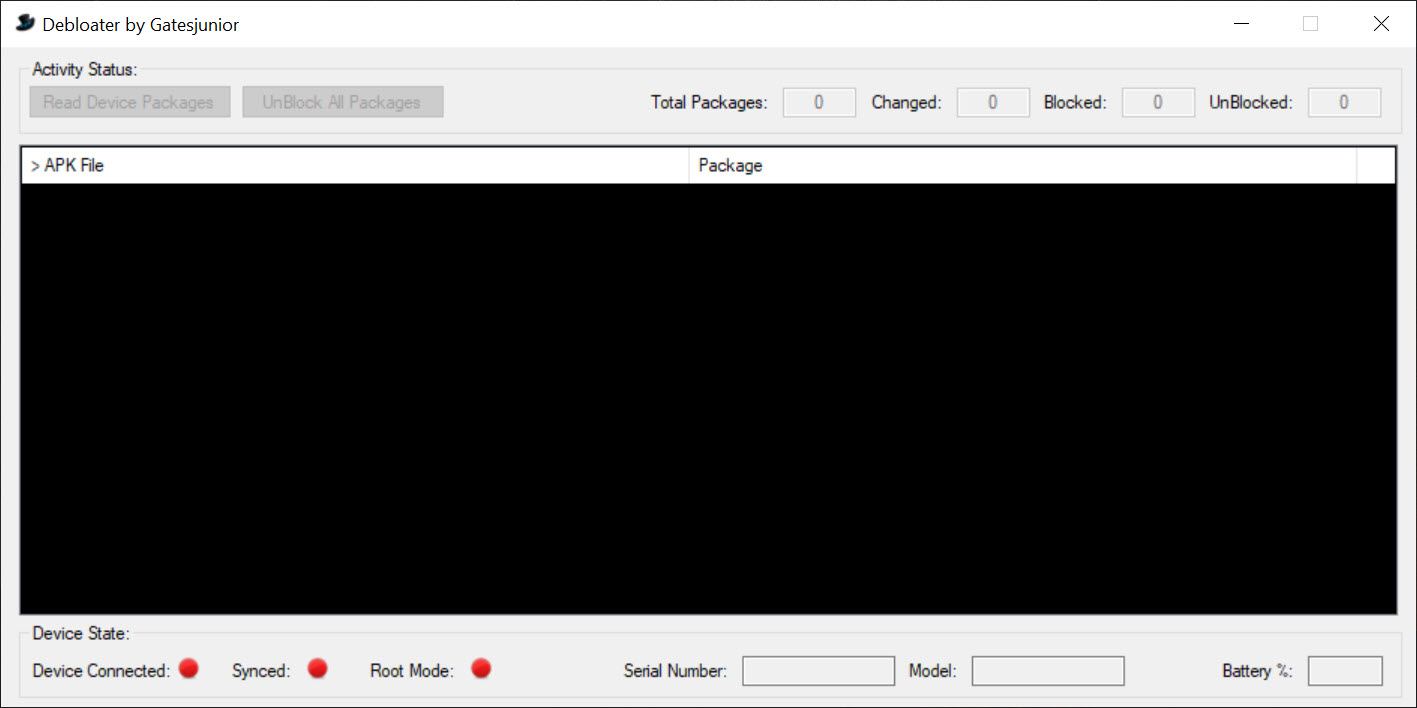
The workflow takes about a minute once the phone is prepared. USB debugging has to be switched on in the device’s hidden debugging menu, and the phone must accept the computer’s authorization prompt the first time it connects. Debloater then detects the device, reads every installed package, and lists them, system and third-party alike, with checkboxes beside each.
Changes do not happen as you click. You tick a batch of packages, review the selection, then press Apply, and the whole set is processed in one pass.
That staging step is the program’s best safety feature, because it gives you one last look before the phone’s behaviour changes.
Block mode, disable mode, and the warning that matters
Depending on what the connected device supports, the program either blocks packages outright or disables them, and it tells you which mode is active when the phone connects. Most current devices work without root. Very old ones need it, since they lack the system commands the tool relies on.
That connection message also carries a warning you should read slowly. Debloater will let you block apps the system depends on, and turning off the wrong package can break notifications, calls, the camera, the launcher or even boot. Package names are often cryptic, so research anything you do not recognise before ticking it.
The sensible pattern is a small batch, a restart, a day of normal use, then the next batch.
What blocking actually changes
A blocked package stops launching, stops running background services, stops sending notifications and stops receiving store updates, which is where most of the battery and data savings come from. Its icon disappears, and anything that tried to open it simply fails quietly.
Because nothing on the system partition is touched, official system updates keep installing normally, a real advantage over deeper modifications that can break the update path. The flip side is that a factory reset wipes the block state along with everything else, so every preinstalled app returns afterwards, ready for a second round.
Undo everything, and reuse your list
Reversal is built into the design. Untick a blocked package and apply, and it returns. If a phone starts misbehaving and you cannot tell which change caused it, the Unblock All button restores every package in one move, which turns a troubleshooting nightmare into a two-minute fix.
Block lists can also be exported and imported. Debloat one phone carefully, save the list, and apply the same selection to an identical model in seconds, which suits families with matching devices or anyone setting up a batch of work phones.
For tablets from one particular retailer, Fire Toolbox goes further, with presets built specifically around their preinstalled apps.
Conclusion
Debloater suits people who want their phone or tablet free of preinstalled clutter without rooting it or risking permanent damage. Its reversible approach, batch staging and one-click restore make it a careful way to tame carrier and manufacturer extras, and shared block lists save real time across identical devices.
It offers no guidance on what each package does, so the responsibility for choosing wisely stays with you. Go slowly, keep a list of what you changed, and it will quietly make the device feel like yours again.
Pros & Cons
- Blocks or disables preinstalled apps without deleting anything
- Works on most current devices without root
- Changes are staged and applied in one batch after review
- Unblock All restores every package in a single move
- Block lists export and import for identical devices
- Cryptic package names make it easy to block something essential
- Older devices need root before it can do anything
- No built-in descriptions or safety ratings for individual packages
- Blocked apps still occupy storage, since nothing is uninstalled
Frequently asked questions
Not on most current devices, where it disables or blocks apps through USB debugging. Very old devices lack the needed system commands and require root.
Yes. Untick any blocked package and apply to bring it back, or press Unblock All to restore every package at once if the phone starts misbehaving.
Not much. Blocked apps stop running and updating, which helps battery life and clutter, but they stay installed, so their storage is not reclaimed.
Anything you cannot identify. Packages tied to the launcher, phone calls, messaging, notifications or the system interface can break core functions, so research unfamiliar names and block in small batches.


