

Logitech G510 Driver
About Logitech G510 Driver
Plug this keyboard in without its software and you have a keyboard. It types, the media controls work, and the eighteen keys down the left side do nothing at all. The panel stays dark, the backlight stays whatever colour it was, and every reason for buying it sits there inert. Logitech G510 Driver is what turns the hardware into what it was sold as.
Worth stating plainly, because people install a driver expecting the device to work already and this one to merely improve things. Here the software is the product and the keyboard is its interface.
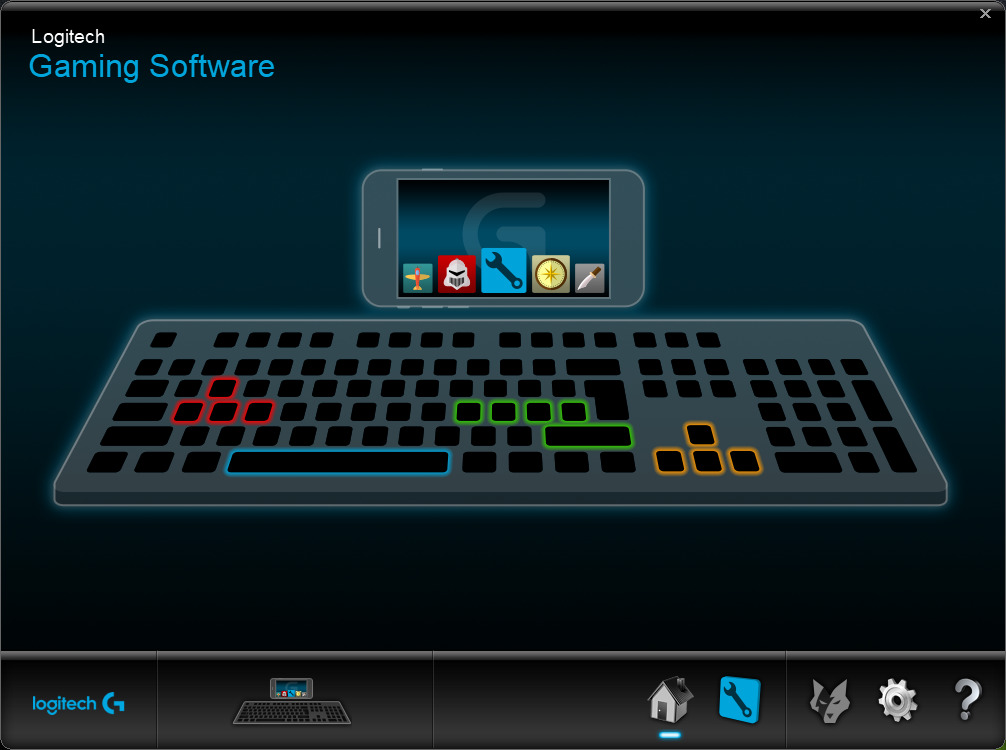
Logitech Gaming Software is the wider package driving this and the rest of the family from one window.
Eighteen keys, three modes, macros recorded mid-game
Logitech G510 Driver exposes eighteen programmable positions with three mode keys above them, so the same physical row holds fifty-four stored functions depending on which mode is active.
Assignments cover more than keystrokes. A key can replay a recorded sequence, launch a program or run a script, which is why people who never play anything use these for repetitive work.
Recording happens without leaving whatever you are doing. A dedicated button captures a sequence live, so Logitech G510 Driver builds a macro during a session rather than making you stop and type it in. Profiles then attach to applications and load themselves when that program starts.
For Logitech input devices outside the gaming range, a configuration tool for ordinary mice and keyboards covers button assignment without any of this apparatus.
The backlight is an indicator, not decoration
Logitech G510 Driver sets colour per mode, either from presets or from a full wheel, and that is the detail worth understanding. Because each of the three modes carries its own colour, the keyboard tells you which set of macros is currently live simply by what colour it is glowing.
That turns lighting into information. Somebody with a work profile in one mode and a game profile in another sees which is active without checking anything on screen.
Two honest notes. The backlight is dim, noticeably so in a bright room, and this model dropped the low-brightness setting earlier ones had. It also lights one colour at a time rather than per key. For lighting that spans several manufacturers’ devices at once, a tool that unifies lighting across brands does what no single manufacturer’s software will.
The panel, and its ecosystem
The small screen is driven by applets, and Logitech G510 Driver supplies a handful. A clock, a countdown timer, a display showing what is playing, and a monitor reporting processor and memory use.
Some applets written for other keyboards in the range work here too, and various monitoring and communication programs write to these panels directly, which is where most useful information now comes from.
Be realistic about that ecosystem. There was never a proper marketplace, most of what existed came from enthusiasts, and little remains findable. The panel remains useful for the built-in monitor and for whatever your existing software chooses to send it, and the rich third-party collection people remember is largely gone.
Which software to install
One question decides the setup, and the answer is not the obvious one. The newer configuration suite from the same maker does not support older devices like this one, so installing it and expecting the keyboard to appear leads nowhere.
The older suite is the correct choice here and remains available for exactly this reason. Logitech G HUB is the newer package, and it is the right one for recent hardware rather than for this.
Conclusion
Logitech G510 Driver is not an optional improvement, it is the half of the product that makes the hardware worth owning. Fifty-four macros, profiles that follow the application you are using, a backlight that tells you which mode is live, and a panel showing what the machine is doing are all delivered by the software rather than the keyboard.
Install the older suite rather than its replacement, expect the applet collection to be thinner than the keyboard’s reputation suggests, and accept that the lighting is subdued. Do that and a keyboard from an older generation still does things current ones charge a premium for.
Pros & Cons
- Turns eighteen dormant keys into fifty-four stored macros across three modes
- Macros record live during a session rather than needing the software opened
- Keys can launch programs and run scripts, not only replay keystrokes
- Profiles load automatically when their associated program starts
- Backlight colour per mode shows which macro set is active at a glance
- The panel displays processor and memory use without anything on screen
- The keyboard's distinctive features do nothing at all until this is installed
- The newer configuration suite does not support this hardware
- Applet availability has collapsed, leaving the built-in ones and whatever your software sends
- The backlight is dim and offers only on or off on this model
- One colour at a time rather than per-key lighting
Frequently asked questions
It types and the media controls function. The eighteen programmable keys, the panel and the backlight colour all require the software, so without it you have an ordinary keyboard with unusual buttons that do nothing.
Replay a recorded sequence of keystrokes, launch a program, or run a script. With three modes above them the eighteen keys hold fifty-four separate functions, and profiles switch automatically when a particular program starts.
Applets supplied with the software cover a clock, a countdown timer, media information and processor and memory usage. Some monitoring and communication programs write to it directly, which is where most additional information now comes from.
No. It does not support hardware of this generation, so the older package remains the correct one for this keyboard. The newer suite is for recent devices.


