

VMware Player
About VMware Player
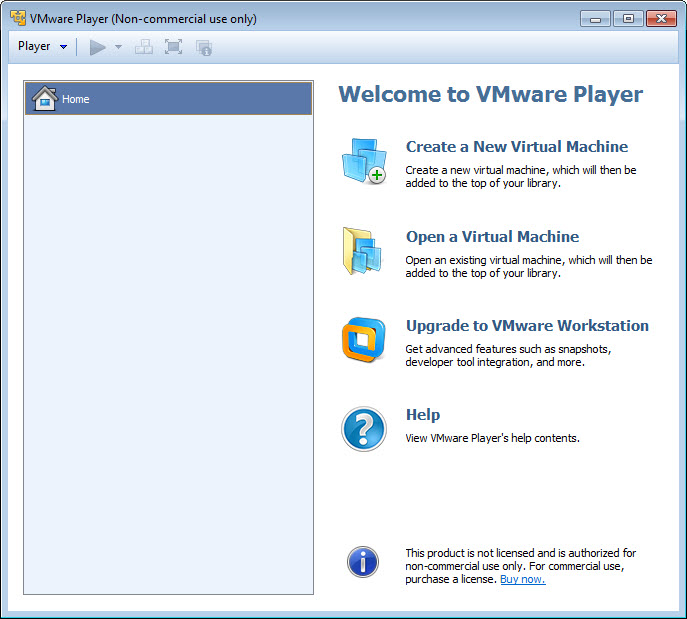
VMware Player runs a second operating system inside a window on the one you already have. Create a virtual machine, point it at an installation disc or an ISO file, and a complete computer boots inside the frame, with its own disk, its own network adapter and its own memory carved out of the host. Or open a virtual machine somebody else built, an appliance file downloaded ready to run, and it starts without any installation at all. That second case is the reason the tool exists. It is the player in the name, a way to run virtual machines rather than a workshop for building them.
The engine underneath is the same one that powers the full workstation product, which is why the guest runs fast and why the hardware it presents is convincing. USB devices pass through to the guest, shared folders bridge files between host and guest, the clipboard works across the boundary, and 3D acceleration lets the guest draw a desktop without crawling. Unity mode goes further and puts guest application windows on the host desktop as if they were native.
Two things need saying before the details. The tool runs one virtual machine at a time and takes no snapshots, which are the two omissions that define it against the full product. And it has been discontinued, with its last release past end of life and the full workstation edition now available to everyone at no charge.
VMware Player still works where it is installed, but nothing about it will change again.
Creating a machine, and what the wizard asks
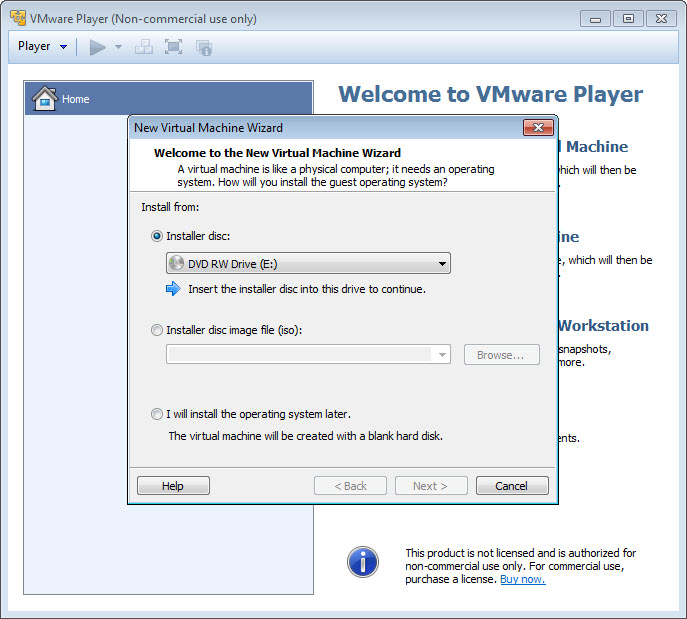
The VMware Player new machine wizard asks for an installer disc or an ISO file, the same image a bootable USB writer would burn to a stick, detects the guest system from it, and offers an easy install that answers the setup questions automatically so the guest installs unattended.
Then it asks how large the virtual disk should be and whether to store it as one file or split it into pieces, with the disk growing as the guest fills it rather than claiming the whole size up front. Memory and processor count are set from the machine settings afterwards and can be changed whenever the guest is powered off.
Hardware can be added or removed from the same settings window, extra disks, a second network adapter, a sound card, a printer bridge, a serial port for anything that still needs one. Encryption of the whole virtual machine with a password protects a guest that holds anything sensitive.
The wizard covers the common cases in a minute and the settings dialog covers the rest, and neither requires reading a manual.
Running the guest, and what passes through
Once a guest is running in VMware Player, the mouse and keyboard belong to whichever window has focus, and the guest tools package smooths the boundary so the pointer moves in and out without a keystroke to release it. Screen resolution follows the window size. Drag a file from the host onto the guest and it copies. Copy text in one and paste in the other. A shared folder appears in the guest as a network drive backed by a folder on the host, which is the sensible way to move anything large.
USB devices, from a flash drive to a phone to a hardware key, connect to the guest on demand from a menu, and the guest sees real hardware rather than a proxy. Sound plays through the host. Networking defaults to a translated connection through the host, and can be switched to a bridged connection where the guest gets its own address on the network, or to a private connection that reaches only the host.
Bridged mode is what a guest running a server needs and translated mode is what a guest that should stay out of the way needs.
Graphics, Unity and the desktop experience
The VMware Player virtual graphics adapter supports 3D acceleration, so a guest desktop renders with its effects on and modest games run, with the host graphics card doing the work. It is not a substitute for native performance and demanding games stay on the host. It is enough to make a modern guest desktop feel responsive rather than laggy.
Unity mode dissolves the guest window, an idea an application virtualisation tool from the same family takes to its conclusion by packaging a program to run without any guest at all. Applications running in the guest appear as individual windows on the host desktop with their own taskbar entries, so a program that only exists in the guest sits beside the host’s programs as if installed.
Full screen mode goes the other way and hands the whole display to the guest, with a slim toolbar at the top edge for escape. Multiple monitors can be spanned by the guest.
One machine at a time, and no snapshots
VMware Player runs a single virtual machine at a time. Start a second and it complains. That rules out a lab where a client talks to a server, a common reason to want virtualisation at all. And there are no snapshots. A snapshot freezes the guest’s disk and memory so an experiment can be undone by reverting, and without one the only rollback is a full copy of the machine folder made by hand before anything risky.
Both omissions exist because they mark the boundary with the full workstation edition, which runs many guests, takes snapshot trees, clones machines and offers virtual networking editors. That edition is now available to everyone, which removes the reason to accept the omissions in this one.
For anyone building a new setup today, the open-source hypervisor or the full workstation edition are the two live choices, and this is the one to keep only if it is already installed and doing a job.
Where it stands now
With VMware Player development finished, the guest tools package stops being updated too, and newer guest systems will eventually lose the driver support that makes shared folders and the clipboard work, and graphics acceleration with them. The final build runs on current hosts and boots current guests for now.
Appliances built to newer revisions of the virtual machine format refuse to open, which will grow more common. Anyone still on it should treat it as a way to run machines that already exist rather than a platform to build on.
Conclusion
VMware Player suits someone who already has it installed, runs one guest for one job, and wants nothing to change. For opening an appliance somebody built or keeping an old system alive in a window, it still does that competently, with pass-through and desktop integration that made it the easy choice for years.
For anything new, it is the wrong download. The full edition that superseded it removes every limitation described here and asks nothing for it, and the open-source alternative covers the same ground. Keep it if it is working. Do not start with it.
Pros & Cons
- Runs virtual machines built elsewhere without installing anything inside them
- Easy install answers the guest setup questions unattended
- USB passthrough and shared folders, plus drag and drop and a shared clipboard
- 3D acceleration and Unity mode place guest applications on the host desktop
- Bridged and translated networking, plus a private host-only mode
- Runs only one virtual machine at a time
- No snapshots, so rollback means copying the machine folder by hand
- Discontinued and past end of life, with no further updates
- Newer appliance formats will not open
- The full edition it was a cut of is now available to everyone
Frequently asked questions
No. It runs one at a time. The full workstation edition runs several, which matters for anything client-to-server.
No. To roll back an experiment, copy the virtual machine's folder before starting and restore it afterwards.
No. It was discontinued and its last release has passed end of life. Installed copies keep working but receive nothing new.
Usually, provided the machine's format revision is one this release understands. Newer machines may refuse to open.


